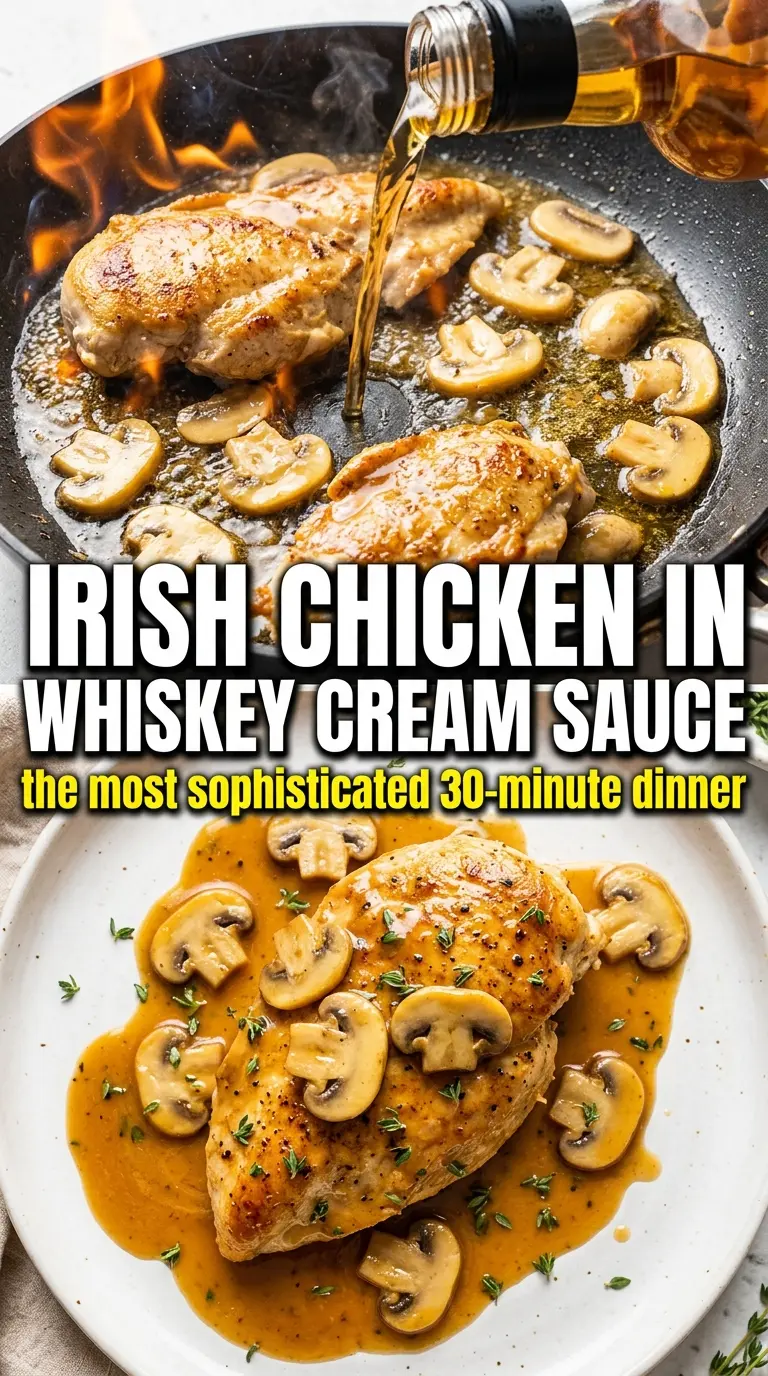
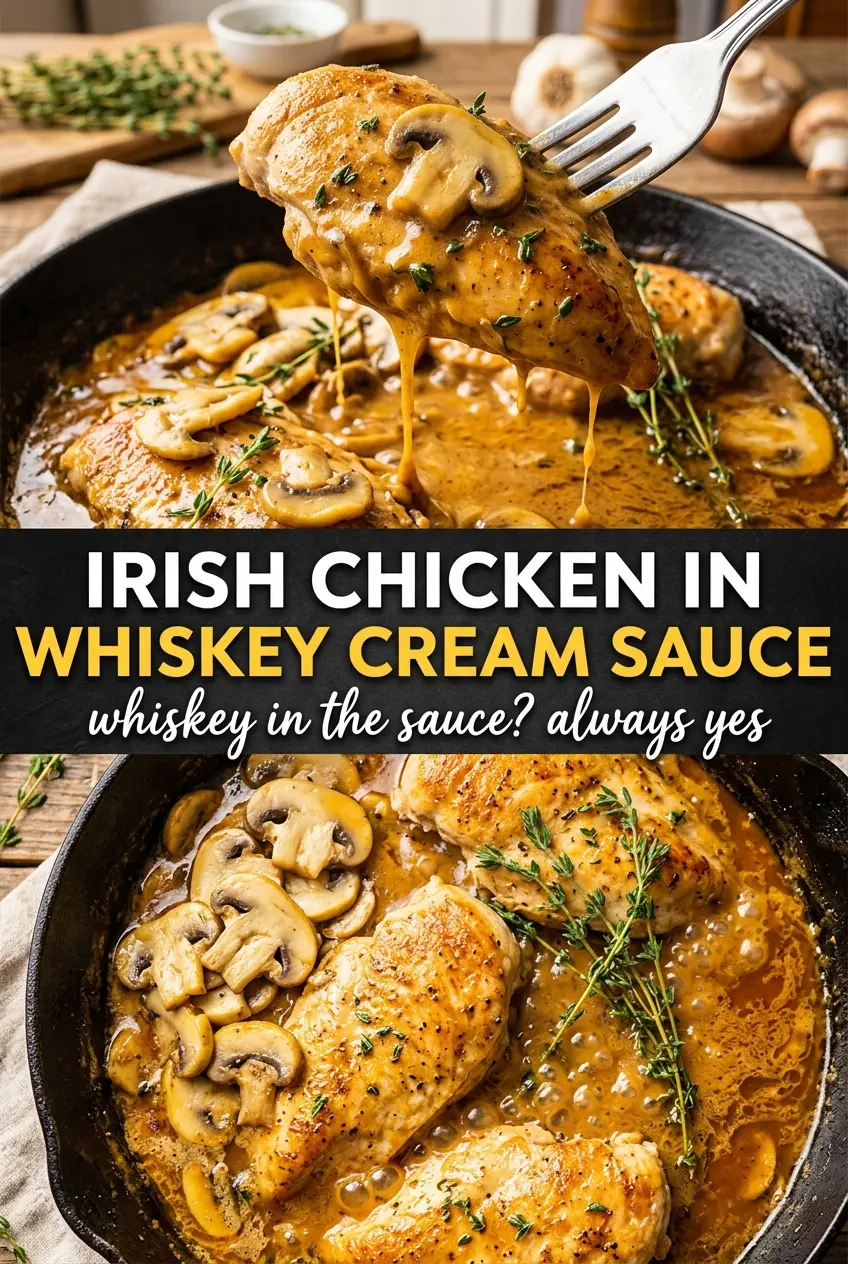
Golden seared chicken breasts in a whiskey cream sauce earn their place on the table fast. The chicken stays juicy, the mushrooms bring a deep savory note, and the sauce turns silky and amber-colored with just enough whiskey warmth to cut through the cream. It tastes elegant without asking for much more than a good skillet and a little attention at the stove.
What makes this version work is the order of the pan work. The chicken sears first, then the shallots and mushrooms pick up all those browned bits left behind, and the whiskey goes in only after the pan comes off the heat for a moment. That keeps the alcohol from flashing off too aggressively and helps you avoid a scorched sauce. Dijon adds backbone, not mustard flavor, and the cream tightens into a spoon-coating finish instead of staying thin.
You’ll find a few practical notes below on how to keep the sauce smooth, what to swap if you don’t have Irish whiskey on hand, and how to reheat it without drying out the chicken.
The sauce thickened up beautifully and stayed smooth even after I added the cream. I served it with mashed potatoes, and the mushrooms and thyme made it taste like something from a restaurant.
Save this Irish Chicken in Whiskey Cream Sauce for a dinner that turns simple seared chicken into a skillet of mushrooms, thyme, and silky whiskey gravy.
The Trick to Keeping the Whiskey Cream Sauce Smooth
The easiest way to break a cream sauce is to rush the heat. After the whiskey goes in, the pan needs a short, controlled simmer, not a hard boil. Once the cream, broth, and Dijon are added, keep the sauce at a gentle bubble and stir often so the dairy stays emulsified and the mushrooms don’t stick to the bottom.
The other thing that matters here is the skillet itself. Those browned bits from the chicken are part of the sauce, so don’t wash the pan between stages. If the mushrooms look pale, they haven’t cooked long enough to give the sauce depth. You want them browned at the edges and a little collapsed before the cream goes in.
- Irish whiskey — Use a whiskey you’d actually sip. You only need a third of a cup, but the flavor is noticeable. Jameson works well because it’s smooth and doesn’t bring harsh heat.
- Heavy cream — This is what gives the sauce its body. Half-and-half will work in a pinch, but it won’t reduce as luxuriously and it’s more likely to look thin.
- Dijon mustard — It doesn’t make the sauce taste like mustard. It sharpens the cream and keeps the sauce from tasting flat.
- Cremini mushrooms — They bring the savory backbone. White button mushrooms can stand in, but cremini have a deeper, meatier flavor that suits the whiskey.
- Shallots — Shallots are sweeter and softer than onion, which matters because they melt into the sauce instead of fighting it. If you use onion, mince it very fine so it cooks through in the same time.
What Each Ingredient Is Actually Doing in This Chicken Recipe
- Chicken (the foundation) — Quality chicken starts with good sourcing. Even simple seasoning tastes better on good meat.
- Olive oil or butter (the cooking medium) — Fat carries flavors and keeps chicken from drying. It’s also what makes food taste delicious.
- Salt and pepper (proper seasoning) — Season generously; underseasoned chicken tastes bland. Apply inside and outside so the seasoning penetrates.
- Garlic and onion (the aromatic base) — These add depth and complexity. They sweeten slightly when cooked, becoming mellow and round.
- Acid (lemon, vinegar, wine, or tomato) — This brightens the dish and prevents it from tasting heavy. It also helps balance rich sauces.
- Fresh herbs or spices (the character) — These define the personality of the dish. Choose ones that complement your other flavors.
- Cream or sauce base (optional richness) — A sauce keeps the chicken moist and flavorful. Make sure it’s balanced with acid and herbs.
- Proper cooking technique (the final step) — Whether baking, pan-searing, or simmering, the right method ensures juicy, tender results without drying out the meat.
Building the Pan Sauce in the Right Order
Searing the Chicken First
Season the chicken well before it ever hits the skillet. The surface should look dry and lightly coated with seasoning so it can brown instead of steam. Cook it over medium-high heat until the outside is a deep golden color and the center reaches 165°F. If the pan feels crowded, the chicken will release liquid and you’ll lose that crust, so sear in batches if needed.
Cooking the Mushrooms Until They Brown
After the chicken comes out, melt the butter and add the shallots and mushrooms. At first they’ll look crowded and a little soggy, then the moisture will cook off and the mushrooms will start to take on color. That browned stage is what gives the sauce its depth. Add the garlic only at the end so it perfumes the pan without burning.
Using the Whiskey Without Breaking the Sauce
Pull the pan off the heat before adding the whiskey. It can sputter, and that short pause keeps the pan from getting too hot too fast. Once it’s back over medium heat, let it simmer for a minute or two so the sharp alcohol edge cooks off. If the whiskey goes in while the pan is ripping hot, the sauce can taste harsh instead of round.
Finishing to a Spoon-Coating Texture
Stir in the cream, broth, Dijon, and thyme, then let the sauce simmer until it lightly coats the back of a spoon. It should look glossy and thick enough to cling to the chicken, not like a loose soup. Return the chicken to the skillet only after the sauce has started to thicken; otherwise the chicken juices can thin it back out before it sets.
How to Adapt This Irish Chicken for Different Kitchens and Diets
Dairy-Free Version
Swap the butter for olive oil or a dairy-free butter and use full-fat coconut cream or an unsweetened oat-based cooking cream instead of heavy cream. The sauce won’t taste exactly the same, but you’ll still get a rich finish if you keep the heat low and let it reduce gradually.
No Whiskey on Hand
Use a splash of dry white wine or extra chicken broth with a small pinch of brown sugar for warmth. You’ll lose the whiskey note, but the sauce still gets the acidic lift it needs to balance the cream.
Lower-Carb Serving
This dish is already naturally low in carbs if you serve it with cauliflower mash, roasted cabbage, or wilted greens instead of potatoes. Keep the sauce as written; the cream and mushrooms carry the meal without needing starch.
Chicken Thighs Instead of Breasts
Boneless thighs work well and stay juicy, but they need a little longer in the skillet. Cook them until they hit 165°F and use the same sauce method; the result is a richer, slightly more forgiving version of the dish.
Storage and Reheating
- Refrigerator: Store leftovers in an airtight container for up to 3 days. The sauce will thicken as it chills.
- Freezer: Freezing isn’t ideal because cream sauces can turn grainy after thawing. If you must freeze it, do so in a tightly sealed container and expect a looser texture when reheated.
- Reheating: Warm it gently in a covered skillet over low heat with a splash of broth or cream. High heat is the fastest way to split the sauce and dry out the chicken.
Answers to the Questions Worth Asking
Irish Chicken in Whiskey Cream Sauce
Ingredients
Equipment
Method
- Season the boneless skinless chicken breasts with salt, black pepper, garlic powder, and dried thyme to taste. Heat olive oil in a large skillet over medium-high heat and sear the chicken for 5-6 minutes per side until golden and cooked through to 165°F; remove.
- Melt butter in the same pan and cook the shallots and cremini mushrooms for 5-6 minutes, stirring occasionally, until golden. Add garlic and cook for 1 minute.
- Remove the pan from the heat, carefully pour in Irish whiskey, then return to medium heat and let it cook off for 1-2 minutes until the bubbling calms. Stir in heavy cream, chicken broth, Dijon mustard, and fresh thyme leaves.
- Bring the mixture to a simmer and cook for 5-6 minutes until the sauce thickens and looks amber with visible herb flecks.
- Return the chicken breasts to the pan and spoon the whiskey cream sauce over each breast. Garnish with fresh thyme sprigs right before serving.