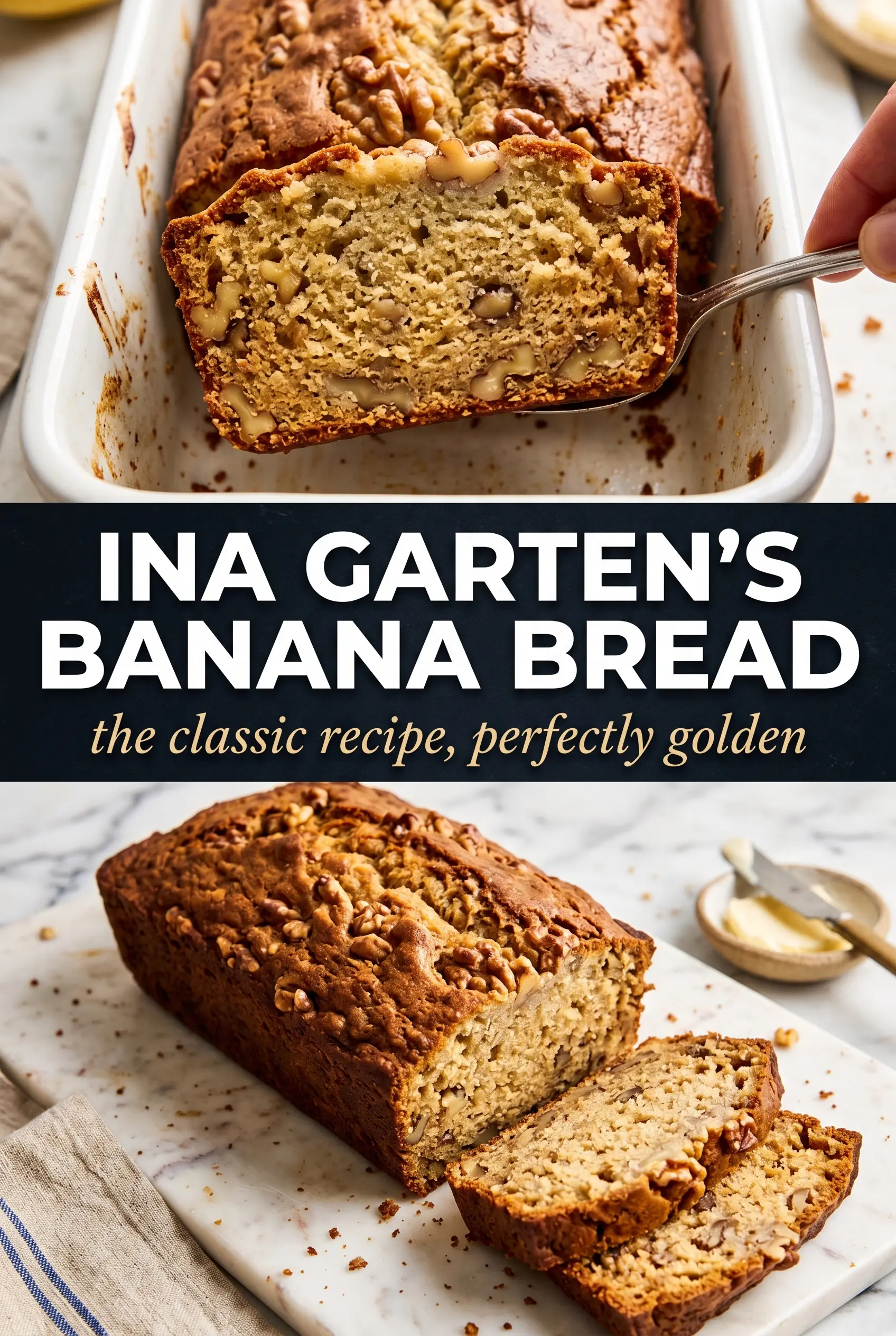
Ina Garten’s banana bread bakes up with a tall, even rise, a deep golden crust, and a crumb that stays tender for days. The sour cream gives it the kind of moisture that makes each slice feel bakery-style instead of dense or gummy, and the walnut topping adds just enough crunch to keep every bite interesting.
What sets this loaf apart is the balance. The butter and sugar are beaten long enough to build a light base, but the batter is finished gently so the bread stays soft instead of tough. Ripe bananas bring sweetness and aroma, while the sour cream keeps the crumb plush without making it heavy. Toasted walnuts add a little bitterness and texture, which keeps the loaf from tasting one-note.
Below, I’ve included the small details that matter most: why the banana texture matters, how to keep the loaf from sinking in the middle, and a few smart ways to adapt it if you want to skip the nuts or bake it ahead.
The loaf rose beautifully and the sour cream kept the crumb so moist that it sliced cleanly even the next day. I loved the toasted walnuts on top — they made it feel special without changing the classic banana bread taste.
Ina Garten banana bread with sour cream and walnuts is the one to keep for a tender, bakery-style loaf with a golden top.
The Step That Keeps This Loaf Tender Instead of Tough
The biggest mistake with banana bread is overmixing after the flour goes in. Once the dry ingredients are added, the batter should look just combined, with a few streaks still visible before the last folds disappear. If you beat it smooth at that stage, the loaf can bake up tight and rubbery instead of soft.
The other detail that matters is the balance of moisture. Sour cream gives this loaf richness without thinning the batter too much, which helps the center bake through before the outside gets too dark. If your bananas are extremely large and very wet, the batter can feel looser than expected, but the loaf still sets well as long as you stop mixing as soon as the flour disappears.
What Each Ingredient Is Doing in the Pan
- Ripe bananas — Use bananas with lots of brown spotting and a soft, fragrant interior. They should mash easily with a fork and bring both sweetness and moisture; under-ripe bananas leave the loaf flat and bland.
- Butter — Room-temperature butter creams with the sugar to create a lighter texture and a more even rise. Cold butter won’t trap air properly, and melted butter makes the loaf denser.
- Sour cream — This is the ingredient that keeps the crumb plush and fine. Plain full-fat Greek yogurt can work in a pinch, but the loaf will taste a little sharper and bake slightly less tender.
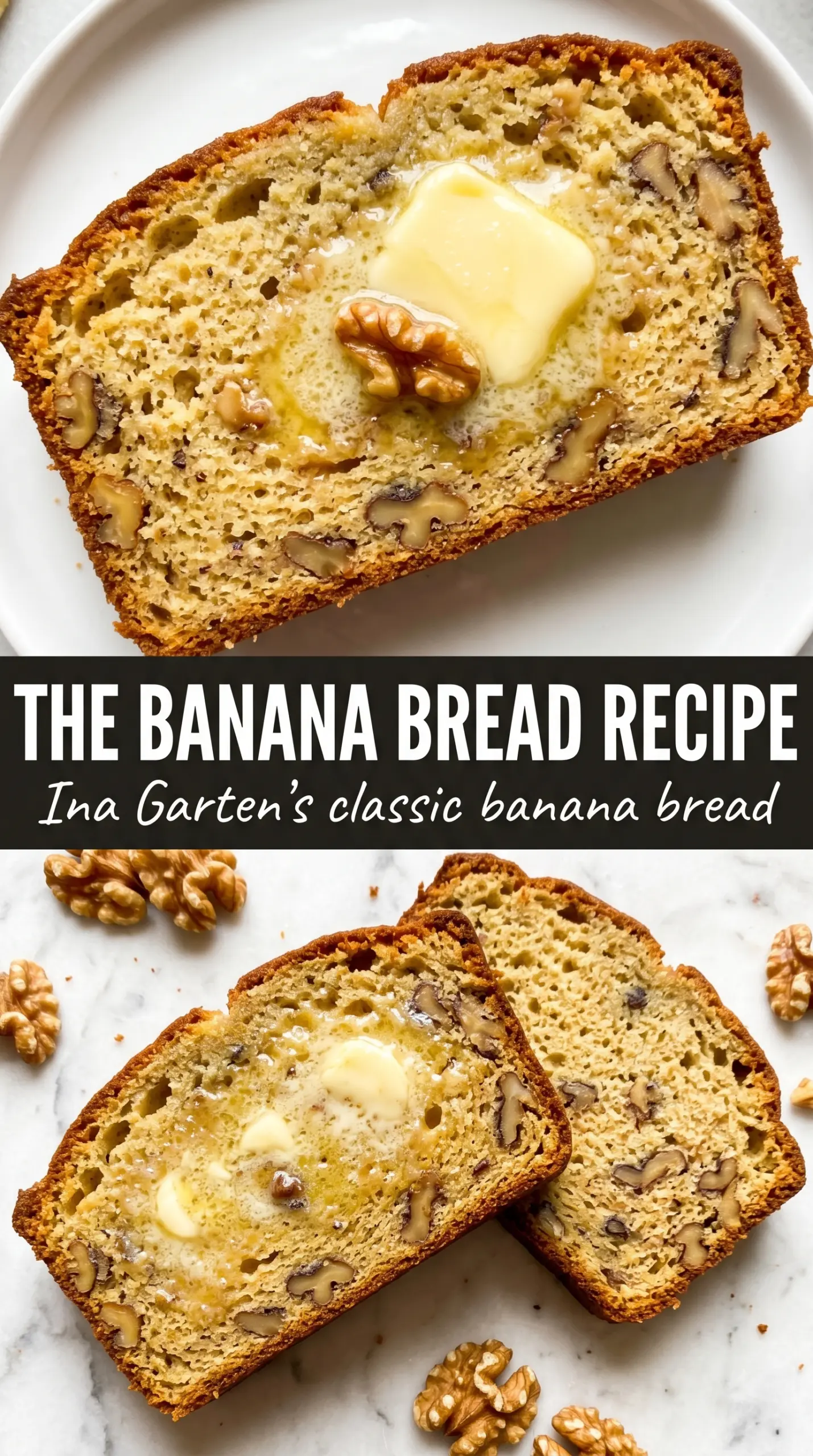
- Walnuts — Toast them first if you can. That extra step wakes up their flavor and keeps them from tasting dusty inside the sweet loaf. The whole halves on top are decorative, but they also give the crust a nice crunch.
- All-purpose flour — Standard all-purpose flour gives the right structure here. Cake flour would make the loaf too delicate, and bread flour would make it chewier than it should be.
Building the Batter Without Losing the Crumb
Creaming the Butter and Sugar
Beat the butter and sugar until the mixture turns pale and fluffy, about 3 to 4 minutes. That extra time matters because it gives the loaf its lift before the bananas and sour cream make the batter heavier. If the mixture still looks grainy and dense, it hasn’t incorporated enough air yet.
Adding the Wet Ingredients in the Right Order
Mix in the eggs one at a time, then add the vanilla and sour cream before the bananas. This keeps the batter smooth and prevents the dairy from separating. Once the bananas go in, the mixture may look a little loose, and that’s fine — the flour will bring it together.
Folding in the Dry Ingredients
Add the flour, baking soda, and salt all at once, then fold just until no dry patches remain. Stop as soon as the batter looks unified. If you keep stirring after that point, the loaf will bake up tough and the top can dome unevenly.
Watching the Bake
Pour the batter into the prepared pan, press the walnut halves down the center, and bake until the top is deep golden and a toothpick comes out clean, 65 to 70 minutes. If the top browns too quickly before the center is done, tent it loosely with foil for the last 15 minutes. Letting it rest for 15 minutes before turning it out helps the crumb set so it doesn’t tear.
How to Make It Fit Your Kitchen, Your Diet, or Your Week
Skip the walnuts
Leave them out for a smoother, softer loaf that leans all the way into banana and vanilla. The bread still rises well, but you lose the crackly top texture and the toasted nuttiness that gives this version its character.
Make it dairy-free
Use a good plant-based butter and an unsweetened thick coconut yogurt in place of the sour cream. The loaf will still be moist, though the crumb may be a touch less rich and the flavor a little less rounded.
Turn it into muffins
Divide the batter into a lined muffin tin and bake at 350°F for about 18 to 22 minutes. You’ll get a quicker bake and more of the caramelized edge in every piece, but the crumb won’t be as plush as the loaf.
Storage and Reheating
- Refrigerator: Store tightly wrapped for up to 5 days. The crumb stays moist, though the texture firms up a little once chilled.
- Freezer: This loaf freezes well. Wrap slices or the whole cooled loaf in plastic, then foil, and freeze for up to 3 months.
- Reheating: Warm slices at room temperature, in the toaster oven, or for a few seconds in the microwave. Don’t overheat it or the sour cream-rich crumb can turn dry at the edges.