Sticky, glossy hot honey baked chicken breasts hit that sweet-heat balance that keeps people coming back for another bite. The glaze cooks down into a dark amber coating that clings to the chicken instead of sliding off, and the edges pick up just enough caramelization to give every slice a little bite.
What makes this version work is the way the glaze is built before it goes on the chicken. Honey brings the shine and caramelization, hot sauce adds heat and acidity, and a little butter helps the sauce brush on smoothly and bake into a lacquer instead of a thin syrup. Baking the chicken at a high enough temperature gives you color without drying out the meat, as long as you pull it at 165°F and let it rest.
Below, I’ve included the one timing detail that matters most for keeping the chicken juicy, plus a few smart swaps if you want to adjust the heat or make the dish work with what you already have on hand.
The glaze thickened up beautifully and actually stayed on the chicken after baking. I basted it halfway through like the recipe said, and the breasts came out juicy with that sticky edge everyone fought over.
Save these hot honey baked chicken breasts for the nights when you want sticky-sweet glaze, real heat, and a fast dinner that still feels special.
The Reason the Glaze Clings Instead of Running Off
The biggest mistake with honey-glazed chicken is brushing on a sauce that’s too thin. It pools in the pan, then burns before the chicken has a chance to brown. Here, the honey gets enough help from butter and hot sauce to brush on like a true glaze, and the oven’s high heat pushes it into that tacky, lacquered finish you want.
The other piece people miss is the basting. Adding a second layer halfway through gives the chicken a deeper color and keeps the glaze from cooking into one flat, sugary note. If your oven runs hot, check early; once the glaze turns deep amber, it can go from perfect to bitter fast.
- High heat — 425°F is what gives you color before the chicken dries out. Lower heat makes the glaze loose and the meat pale.
- Butter — just enough to round out the sauce and help it coat evenly. Without it, the glaze can feel sharp and thin.
- Apple cider vinegar — this keeps the honey from tasting one-dimensional. It also helps the glaze stay lively after baking.
- Red pepper flakes — they add visible heat and texture. If you want a smoother glaze, use less and lean on the hot sauce for the spice.
What Each Ingredient Is Doing in the Pan
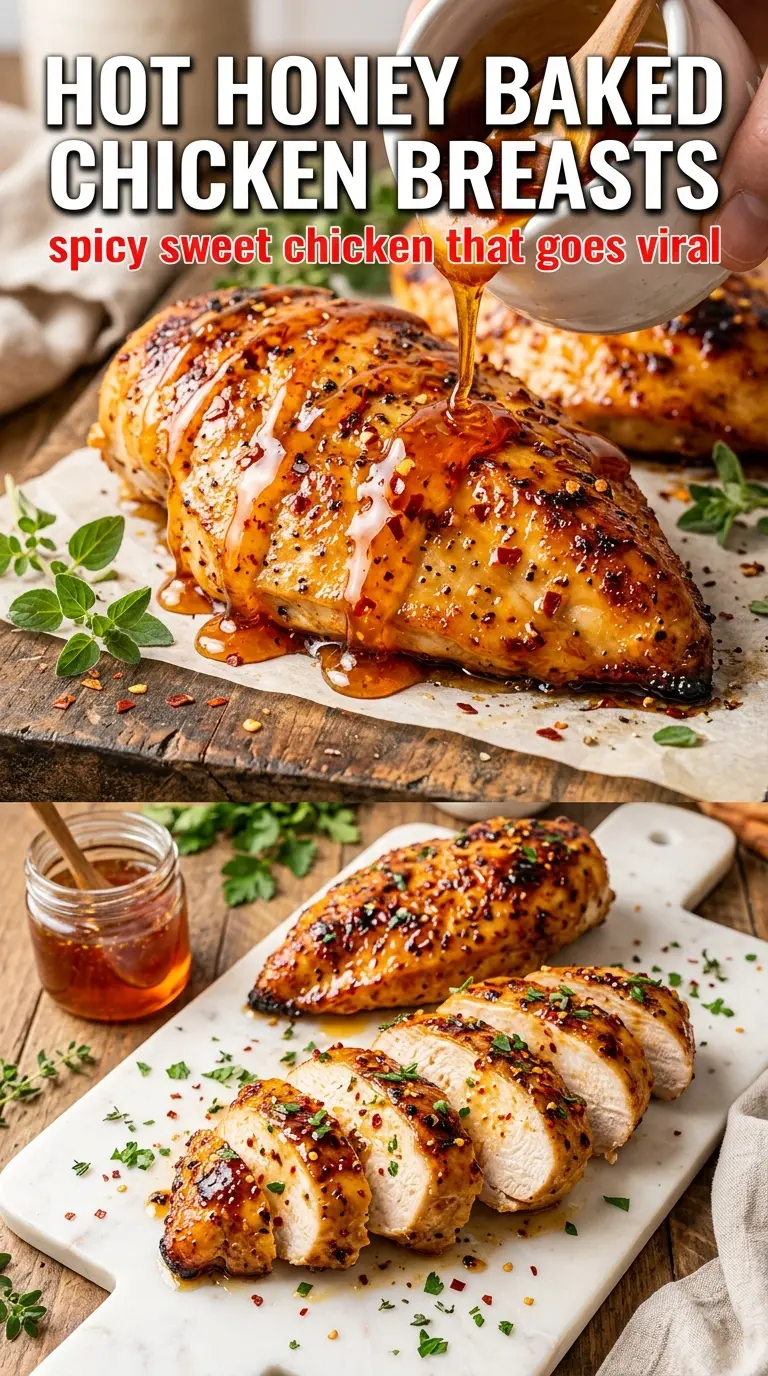
- Chicken breasts — boneless, skinless breasts keep this weeknight-friendly, but they need even thickness to cook cleanly. If one side is much thicker, pound it lightly so the thinner end doesn’t dry out before the center is done.
- Honey — this is the body of the glaze and the ingredient that gives you that glossy finish. There isn’t a real substitute for the way honey caramelizes, though maple syrup can work in a pinch with a little less shine and a slightly deeper flavor.
- Hot sauce — Frank’s brings acidity, salt, and a clean vinegary heat that cuts through the sweetness. A thicker hot sauce can work, but it may darken faster and taste heavier.
- Smoked paprika and garlic powder — these season the chicken itself so the flavor isn’t all on the surface. They matter most if your hot sauce is mild or you’re serving this with simple sides.
- Fresh thyme and flaky salt — these finish the dish with a fresh, savory edge. Don’t skip them if you want the glaze to taste balanced instead of candy-sweet.
How to Bake It So the Chicken Stays Juicy and the Glaze Turns Sticky
Season the Chicken First
Start by seasoning both sides of the chicken breasts before the glaze goes anywhere near them. That layer of salt, pepper, garlic powder, and smoked paprika gives the meat its own flavor, so every bite isn’t dependent on the sauce. If the chicken is very uneven, press the thicker end gently so it sits flatter in the pan and cooks more evenly.
Whisk the Glaze Until It Looks Smooth
Combine the honey, hot sauce, melted butter, vinegar, red pepper flakes, and garlic powder until the mixture looks fully blended and glossy. If the butter starts to separate, whisk a little longer; a smooth glaze brushes on more evenly and bakes into a cleaner coating. Don’t heat it hard on the stove unless you need to loosen it, because that can push the honey toward a candy stage before it even reaches the oven.
Brush, Bake, and Baste Once
Lay the chicken in a lightly oiled baking dish or skillet, then coat it generously with the glaze and keep some back for basting. Bake at 425°F for about 20 to 22 minutes, and brush on the reserved glaze halfway through so the surface gets that layered, sticky finish. If the pan juices start to darken quickly, that’s normal; the real clue is the internal temperature, which should reach 165°F in the thickest part.
Let the Rest Work for You
Pull the chicken out and let it sit for 5 minutes before slicing. That pause keeps the juices from running out the second you cut in, and it gives the glaze a moment to set into a tackier coating. Finish with flaky sea salt, fresh thyme, and an extra drizzle of hot honey if you want the top to look as bold as it tastes.
How to Adjust the Heat, Sweetness, or Dinner Size
Milder Hot Honey Chicken
Cut the hot sauce back to 1 tablespoon and reduce the red pepper flakes by half. You’ll still get the sweet-savory glaze and a little warmth, but the finish will be gentler and better for anyone who doesn’t want full-on heat.
Dairy-Free Version
Swap the butter for olive oil or a dairy-free butter alternative. The glaze won’t taste quite as round, but it will still brush on well and caramelize nicely, especially if you keep the oven hot and don’t overbake the chicken.
Using Chicken Thighs Instead
Boneless skinless thighs work well and stay juicier, but they may need a few extra minutes in the oven. They also handle the bold glaze a little better because the richer meat stands up to the sweet heat.
Storage and Reheating
- Refrigerator: Store leftovers in an airtight container for up to 4 days. The glaze will thicken and set as it chills, which is normal.
- Freezer: This freezes reasonably well for up to 2 months, though the glaze softens a bit after thawing. Wrap portions tightly and freeze with a little extra sauce if you can.
- Reheating: Warm gently in a 325°F oven, covered loosely with foil, until heated through. High heat will dry out the chicken and can make the honey glaze turn sticky in the wrong way.
Answers to the Questions Worth Asking

Hot Honey Baked Chicken Breasts
Ingredients
Equipment
Method
- Preheat the oven to 425°F and lightly oil a baking dish or cast iron skillet so the chicken browns without sticking.
- Season the chicken breasts on both sides with salt, pepper, garlic powder, and smoked paprika for full flavor through the surface.
- Whisk together honey, hot sauce, melted butter, apple cider vinegar, red pepper flakes, and garlic powder until smooth for a uniform fiery glaze.
- Place the chicken in the prepared dish and brush generously with the hot honey glaze, reserving some for basting so it stays glossy.
- Bake for 20-22 minutes total, basting with the remaining glaze once at the halfway point, until the internal temperature reaches 165°F and the glaze caramelizes to a dark amber.
- Rest the chicken for 5 minutes so juices settle while the caramelized glaze clings.
- Finish with flaky sea salt, fresh thyme, and an extra drizzle of hot honey for a sticky-sweet shine with visible red pepper flakes.