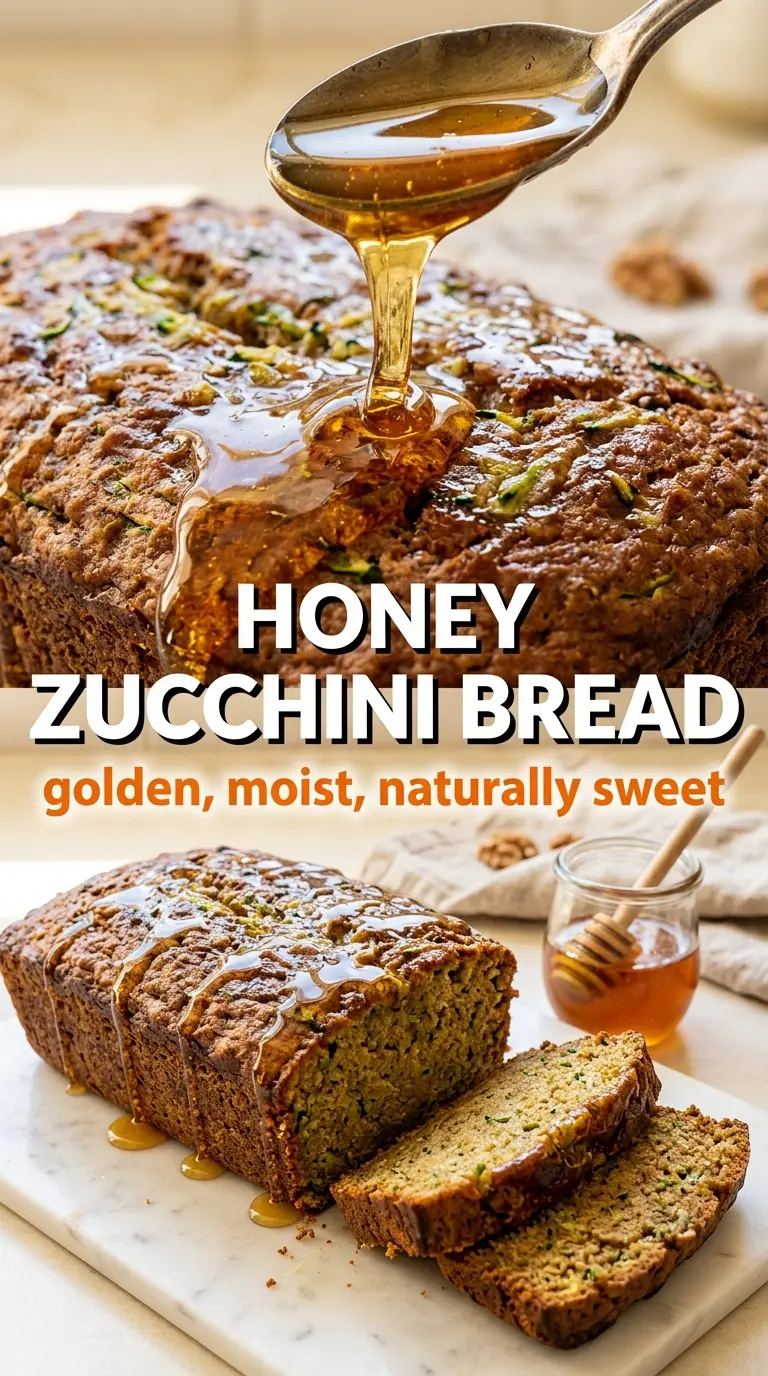
Honey zucchini bread bakes up with a soft, moist crumb and just enough sweetness to feel special without tipping into cake territory. The honey brings a floral note that regular sugar can’t quite match, and the zucchini keeps the loaf tender for days. When it’s done right, the top turns deeply golden, the center stays plush, and the glaze sinks into the warm crust instead of just sitting on top.
The trick is treating the zucchini like an ingredient with a job, not just extra moisture. Once it’s grated, it needs to be squeezed dry so the batter doesn’t turn heavy or gummy. Honey also behaves differently than granulated sugar; it adds moisture and color, so the loaf browns a little faster and needs the doneness test more than the clock. Greek yogurt gives the crumb a little lift and keeps the texture soft without making the bread greasy.
Below you’ll find the exact timing that keeps this loaf from drying out, plus a few smart swaps if you need to work with what’s in your kitchen. The glaze is simple, but it’s worth doing — it gives the top that sticky finish that makes each slice feel finished.
The loaf came out incredibly tender and the honey glaze soaked just enough into the top without making it soggy. I squeezed the zucchini dry like you said and it baked in 54 minutes with a clean toothpick.
Love that sticky honey glaze and tender zucchini crumb? Save this honey zucchini bread for the next time you want a moist quick bread with a clean honey finish.
The Reason Most Zucchini Breads Turn Heavy Before They Ever Reach the Oven
Most zucchini bread problems start before the batter is mixed. Too much liquid from the zucchini, too much stirring after the flour goes in, or too much flour packed into the cup all push the loaf toward dense and wet in the middle. Honey adds another layer of challenge because it makes the batter looser than a standard sugar-based quick bread, which is great for tenderness but unforgiving if the zucchini is wet.
The fix is simple: squeeze the zucchini until it feels barely damp, then fold the flour in just until the streaks disappear. That keeps the crumb open and soft instead of gummy. The loaf also needs a real doneness check at the center, since honey-darkened tops can look finished before the middle is fully baked.
What Each Ingredient Is Actually Doing in This Loaf
- Honey — This is the main sweetener, and it brings moisture plus a softer, more floral sweetness than white sugar. Use a good-tasting honey here, because its flavor comes through in the baked loaf and the glaze.
- Greek yogurt — This keeps the crumb tender and gives the bread a little lift without making it greasy. Plain whole-milk yogurt works too if that’s what you have, but thinner yogurt will make the batter looser.
- Vegetable oil — Oil stays soft at room temperature, which is why this loaf stays moist for days. Melted butter can be used, but the crumb will be a little firmer and less plush.
- Zucchini — The zucchini should be grated fine and squeezed dry. If you skip that step, the loaf can turn wet and squat in the center instead of baking up with a clean slice.
- Walnuts — Optional, but they add a good crunch against the soft crumb. Toast them first if you want more flavor, though they’re still perfectly fine straight from the bag.
Building the Batter So the Crumb Stays Soft
Mix the Dry Ingredients First
Whisk the flour, baking soda, baking powder, salt, cinnamon, and nutmeg together until the spices are evenly distributed. That keeps the loaf from tasting uneven or biting into a pocket of baking soda. If the flour has lumps, break them up now because once the wet ingredients go in, you’ll want to stir as little as possible.
Beat the Wet Ingredients Until Smooth
Whisk the honey, eggs, oil, yogurt, and vanilla until the mixture looks glossy and combined. The honey may take a moment to fully blend in, and that’s normal. You’re looking for a smooth, pourable base with no streaks of egg white, because a poorly mixed wet batter can leave little dense tunnels in the finished loaf.
Fold in the Zucchini and Stop Early
Stir in the grated zucchini until it’s evenly scattered through the batter, then add the dry ingredients and fold just until no dry flour remains. A few small streaks are better than overmixing, which develops gluten and tightens the crumb. If you’re using walnuts, fold them in at the end so they stay distributed instead of sinking to the bottom.
Bake Until the Center Sets
Scrape the batter into the pan and bake at 350°F until the top is deep golden and a toothpick comes out clean from the center, usually 50 to 58 minutes. If the top darkens too fast, lay a loose piece of foil over it for the last 10 to 15 minutes. Pull it from the oven as soon as the center tests done; an overbaked honey loaf dries out quickly once it cools.
Glaze While the Loaf Is Still Warm
Let the bread cool for about 15 minutes, then mix the honey glaze and drizzle it over the warm loaf. Warm bread absorbs the glaze a little, which gives you that sticky top instead of a dry sugar shell. If the loaf is too hot, the glaze runs straight off; if it’s fully cool, it won’t settle into the crust the same way.
How to Adjust This Loaf Without Losing the Texture
Dairy-Free Version
Swap the Greek yogurt for a plain unsweetened dairy-free yogurt with some body, not a thin drinking-style one. The loaf will still be tender, but the tang will be a touch milder and the crumb may be slightly less rich.
Nut-Free Loaf
Leave out the walnuts entirely or replace them with pumpkin seeds for a little crunch. The texture stays soft either way, but you’ll lose the toasty bite that nuts bring to each slice.
Gluten-Free Swap
Use a 1:1 gluten-free baking flour that includes xanthan gum. The loaf will be a little more delicate when sliced warm, but it should still hold together well once fully cooled.
Extra Honey Glaze Finish
Double the glaze if you want a sweeter, shinier top with more drip down the sides. The loaf underneath stays the same, but the slices will feel more dessert-like and a little stickier on the crust.
Storage and Reheating
- Refrigerator: Store covered for up to 5 days. The loaf stays moist, though the glaze will absorb a bit into the crust over time.
- Freezer: Freeze the unglazed loaf or individual slices tightly wrapped for up to 3 months. Add the glaze after thawing for the best finish.
- Reheating: Warm slices in a toaster oven or microwave just until heated through. Long reheating dries quick bread out fast, so use short bursts and stop while the crumb still feels soft.
Answers to the Questions Worth Asking
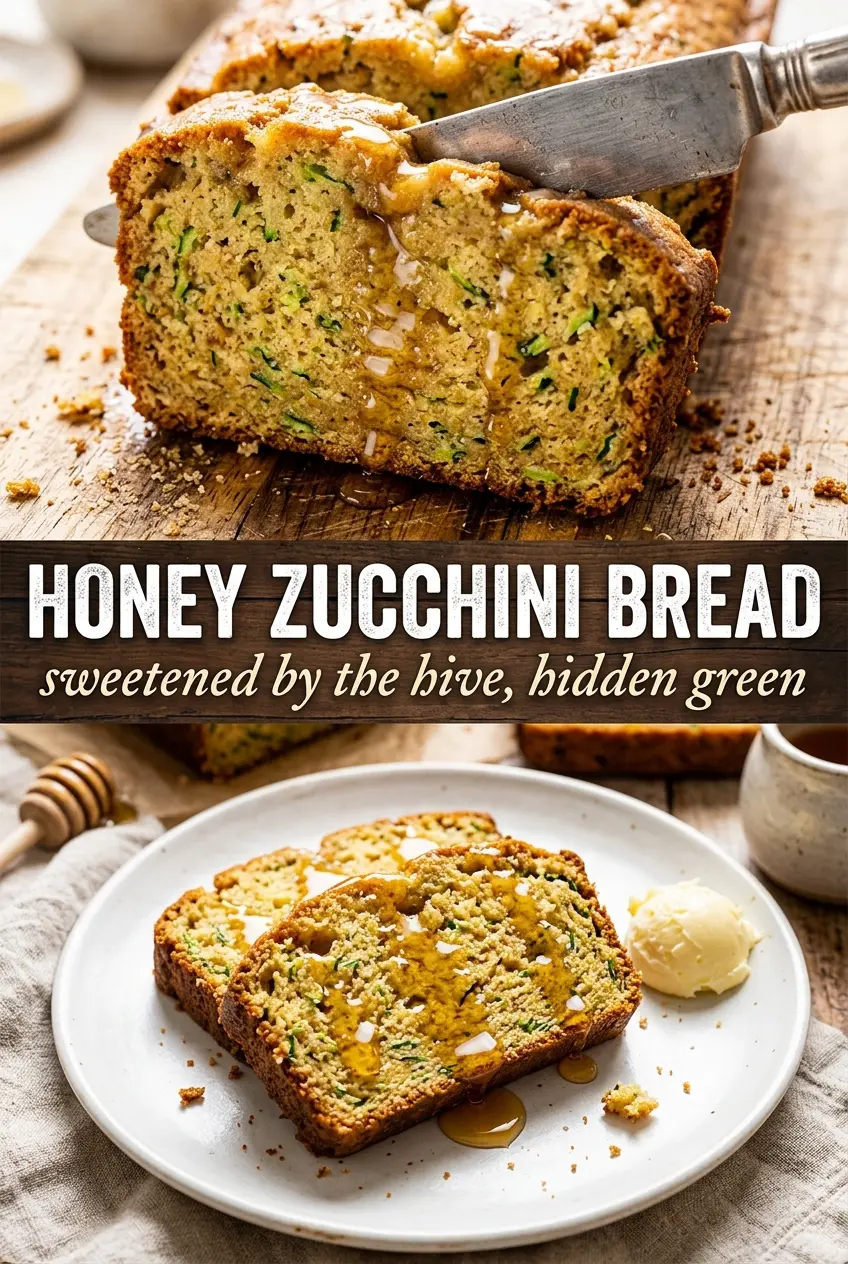
Honey Zucchini Bread
Ingredients
Equipment
Method
- Preheat the oven to 350°F and grease a 9x5 loaf pan, then set it aside for filling. Visual cue: the pan looks lightly coated with no bare metal spots.
- Whisk the all-purpose flour, baking soda, baking powder, salt, cinnamon, and nutmeg together in one bowl. Visual cue: the mixture turns evenly speckled throughout.
- Beat the honey, eggs, vegetable oil, Greek yogurt, and vanilla extract until smooth. Visual cue: the mixture looks glossy and fully combined.
- Stir in the grated, squeezed-dry zucchini. Visual cue: the batter thickens slightly and looks flecked with zucchini.
- Fold the dry ingredients into the wet ingredients just until combined, then fold in the walnuts if using. Visual cue: you no longer see dry flour streaks and the batter is thick, not overmixed.
- Pour the batter into the loaf pan and spread it level. Visual cue: the top sits flat and even before baking.
- Bake at 350°F for 50–58 minutes, until a toothpick comes out clean. Visual cue: the top is golden and a toothpick inserted in the center shows no wet batter.
- Cool the loaf for 15 minutes. Visual cue: the pan is warm but not scorching, and the loaf holds its shape.
- Mix the honey glaze ingredients (honey, powdered sugar, and warm water) until smooth, then drizzle over the warm loaf. Visual cue: the glaze pools over the sides and lightly sets on top.