Honey mustard potatoes roast up with crisp, caramelized edges and a glossy glaze that clings to every wedge. The outside turns sticky and golden while the centers stay soft and fluffy, which is exactly why this side dish disappears fast when it hits the table.
The trick is balancing the mustard and honey so the potatoes brown instead of steam. Dijon brings sharpness, whole grain mustard adds texture and little bursts of flavor, and a splash of apple cider vinegar keeps the glaze from tasting flat or overly sweet. A hot oven and a single layer on the pan do the rest.
Below, I’ve added the small details that matter most: how to keep the potatoes from sticking, what to swap if you only have one kind of mustard, and how to get that deep roasted finish without burning the glaze.
The glaze got sticky and caramelized instead of sliding off, and the potatoes had those crisp edges I was hoping for. My husband kept picking at them straight from the pan.
Save these honey mustard potatoes for the nights when you want a glossy, caramelized side dish that roasts right on one pan.
The Mistake That Keeps Potatoes from Caramelizing
Most roasted potato recipes fail in the same place: the potatoes are coated too heavily and crowded onto the pan, so the glaze turns watery before it ever has a chance to brown. Here, the mustard mixture is thin enough to coat without pooling, and the oven does the rest. That means you get actual caramelized edges instead of soft, pale potatoes with a sticky sauce underneath.
The other thing that matters is heat. A 425°F oven gives the honey enough intensity to color quickly, but not so fast that the garlic burns before the potatoes are tender. Tossing halfway through exposes new surfaces to the pan, which is what gives you those deep golden corners.
What Each Ingredient Is Doing in the Pan
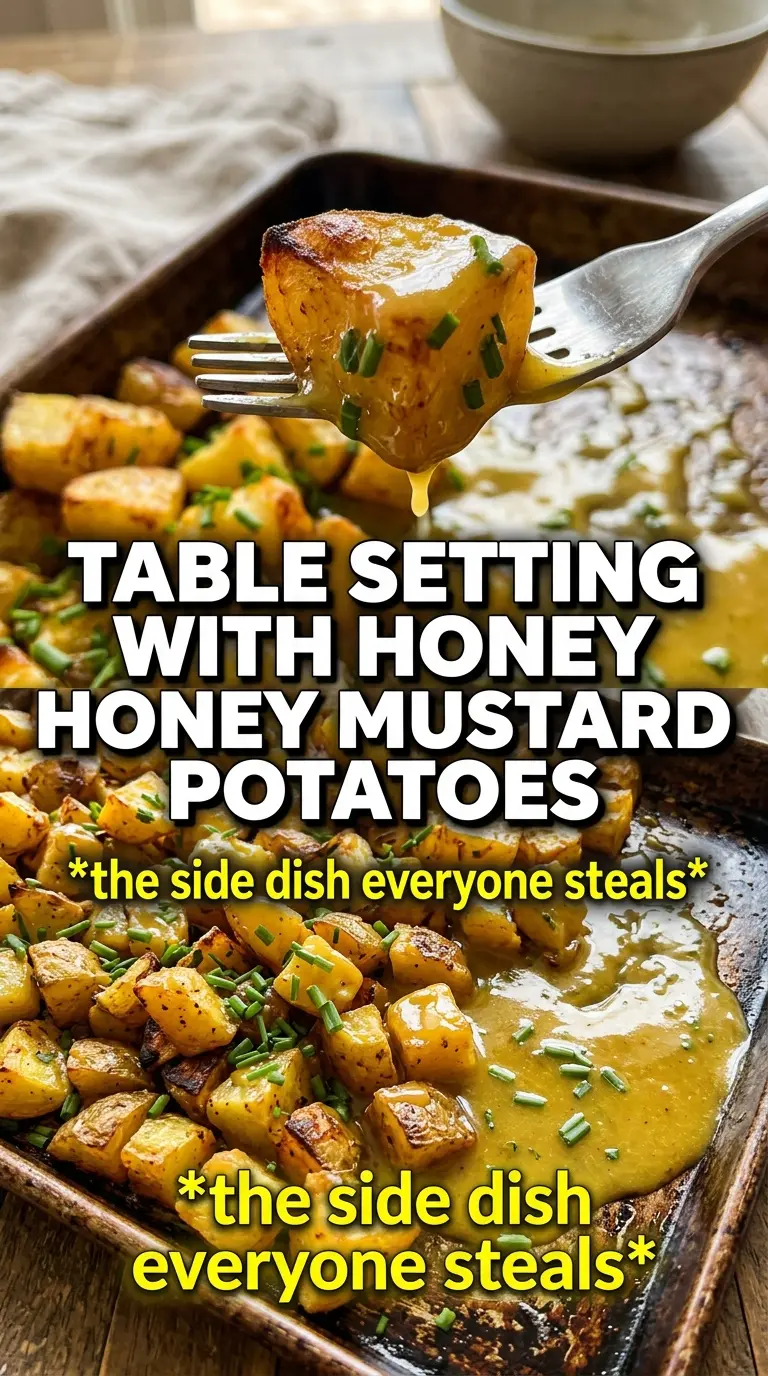
- Baby potatoes or Yukon golds — These hold their shape and turn creamy inside without falling apart. Baby potatoes give you clean wedges; Yukon golds bring a slightly richer, buttery texture. Russets can work in a pinch, but they’re drier and break down more at the edges.
- Dijon mustard — This is the backbone of the glaze. It emulsifies with the oil and honey, so the coating clings instead of separating. Yellow mustard won’t give the same depth or sharpness.
- Whole grain mustard — The seeds add texture and those little pops of flavor that make the potatoes taste layered instead of flat. If you only have Dijon, the dish still works, but it’ll be smoother and less interesting.
- Honey — This is what helps the potatoes caramelize. It also rounds out the sharpness from the mustard and vinegar. Use the real thing here; syrupy substitutes won’t brown the same way.
- Apple cider vinegar — A small amount keeps the glaze bright and keeps the honey from tasting heavy. If you swap in lemon juice, the flavor gets a little cleaner and sharper, which still works.
- Fresh rosemary and smoked paprika — Rosemary gives the potatoes a savory, woodsy edge, and paprika helps the glaze deepen in the oven. Dried rosemary can work, but use less because it’s stronger and less delicate.
Roasting the Potatoes Until the Glaze Clings
Coating the Wedges Evenly
Whisk the mustard, honey, oil, vinegar, garlic, rosemary, paprika, salt, and pepper until the mixture looks smooth and glossy. Toss the potatoes until every cut surface is coated, then stop as soon as they look lacquered rather than drippy. If the bowl has a puddle of sauce at the bottom, the potatoes are too wet and the pan will steam instead of roast.
Giving Them Enough Space to Brown
Spread the potatoes on a lined baking sheet in a single layer with the cut sides facing down where you can manage it. Crowding is the quickest way to lose the caramelized edges, because the potatoes release steam as they cook. If your pan looks packed, use two pans. That small change makes a big difference.
Finishing the Roast
Roast for 30 to 35 minutes, tossing once halfway through, until the edges are deep golden and the centers collapse easily when pierced with a fork. The glaze should look sticky and browned, not pale and wet. If the garlic or honey starts darkening too fast, move the pan up one rack and give the potatoes another gentle toss so the sugars don’t scorch in one spot.
How to Adapt These Honey Mustard Potatoes Without Losing the Good Part
Dairy-Free and Naturally Gluten-Free
This recipe already fits both needs as written, which is part of why it’s such a useful side dish. Just check your mustard label if you’re cooking for someone with a sensitivity, since some brands add extra thickeners or flavorings. The texture and roast time stay the same.
Using Only One Kind of Mustard
If you only have Dijon, use it all and add a little extra whole grain texture with chopped fresh rosemary or a pinch more paprika. If you only have whole grain mustard, the glaze will taste milder and a little less sharp, so add a touch more vinegar to keep it balanced. The flavor shifts, but the potatoes still roast up well.
Making It Sweeter or More Savory
Use an extra teaspoon of honey if you want a glaze that leans sticky and sweet, especially for serving with salty meats. For a more savory version, cut the honey back slightly and add an extra pinch of smoked paprika. Too much honey can cause faster browning, so watch the pan closely if you go that route.
Storage and Reheating
- Refrigerator: Store leftovers in an airtight container for up to 4 days. The potatoes soften a bit as they sit, but the flavor stays strong.
- Freezer: They freeze okay, but the texture gets a little mealy after thawing. If you do freeze them, cool completely first and reheat straight from frozen on a sheet pan.
- Reheating: Rewarm in a 400°F oven or air fryer until the edges crisp back up. The common mistake is microwaving them too long, which makes the glaze loose and the potatoes soggy.
Answers to the Questions Worth Asking
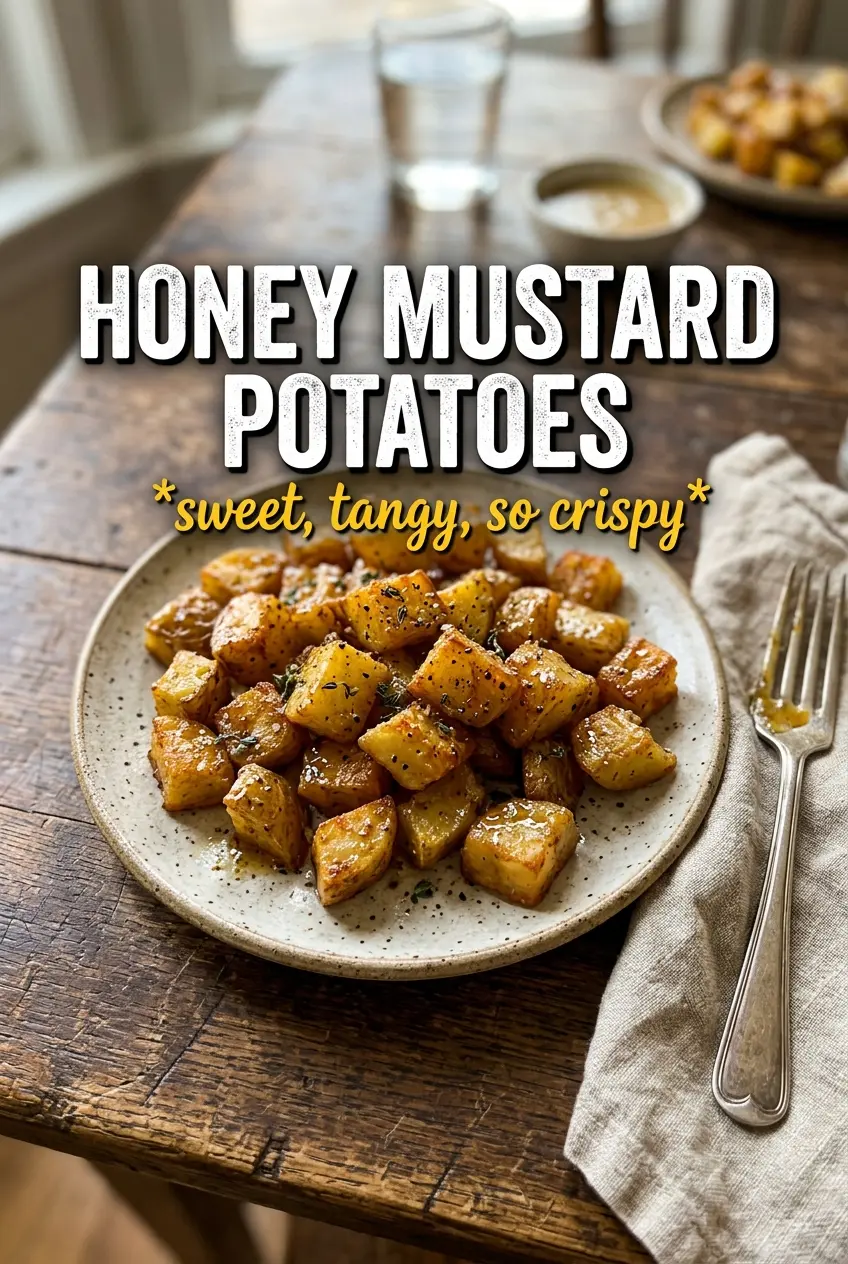
Honey Mustard Potatoes
Ingredients
Equipment
Method
- Preheat oven to 425°F and line a sheet pan with parchment or a lightly oiled surface.
- Whisk Dijon mustard, whole grain mustard, honey, olive oil, apple cider vinegar, garlic, fresh rosemary, smoked paprika, salt, and pepper until smooth.
- Toss halved baby potatoes (or Yukon golds) in the honey mustard mixture until fully coated.
- Spread potatoes in a single layer on the sheet pan, then roast for 30-35 minutes at 425°F, tossing halfway, until caramelized and golden.
- Remove from the oven and finish with fresh parsley and flaky salt.