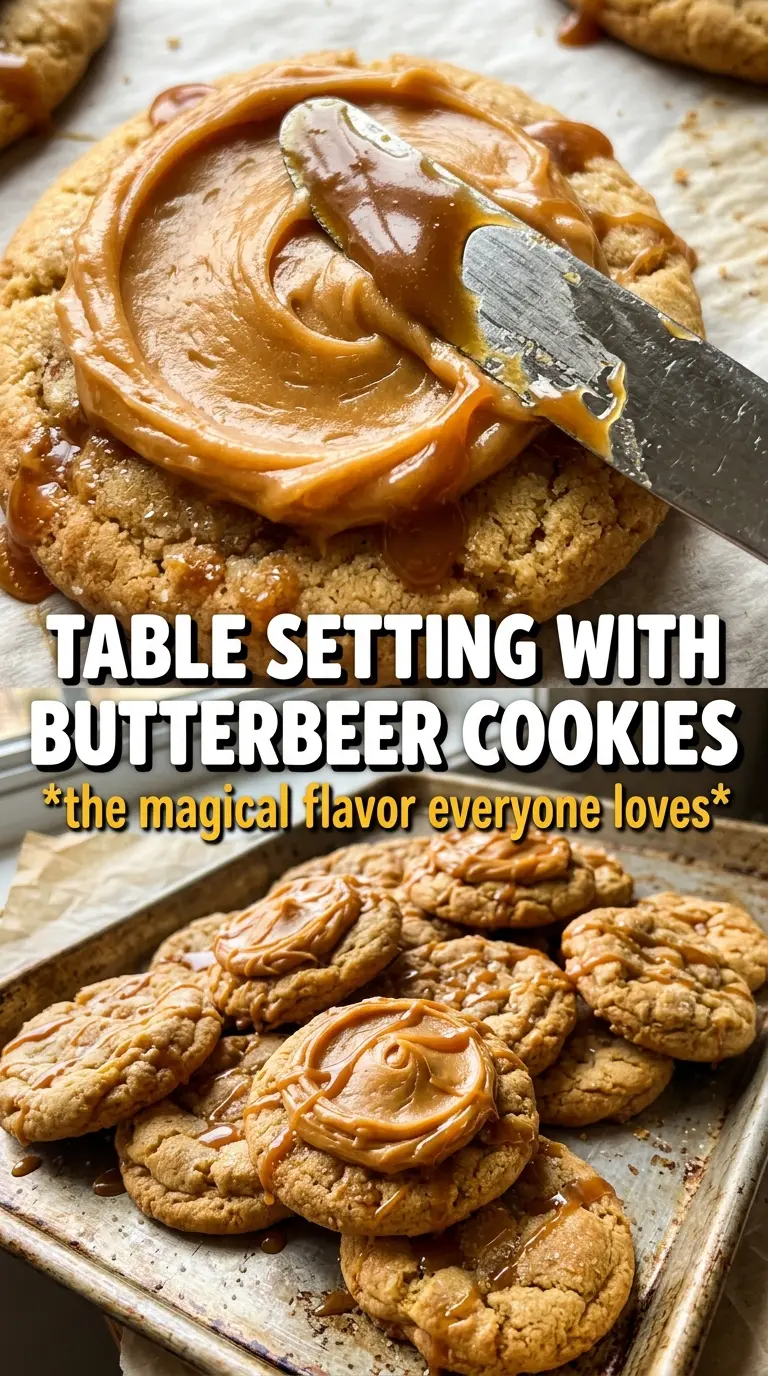
Golden butterbeer cookies bring the whole idea home in the best way: soft centers, lightly crisp edges, and that unmistakable butterscotch-cream soda combination baked right into the dough. The frosting takes them from good to bakery-level with a smooth, sweet finish that tastes like the topping on a mug of butterbeer, only in cookie form.
What makes these work is balance. Melted butterscotch chips add a deeper caramel note than plain butterscotch extract alone, while cream soda keeps the dough from tasting flat or one-note. Brown sugar does the heavy lifting for chew, and the cinnamon stays in the background just enough to round everything out without turning these into spice cookies.
Below, I’ve included the small details that matter most: how to keep the cookies soft instead of cakey, why the frosting needs to be beaten until it looks fully silky, and how to get that gold-sprinkled finish without making a mess.
The cookies stayed soft even the next day, and the frosting had that butterbeer flavor without being greasy or overly sweet. I chilled the dough for 15 minutes and they baked up with perfect little crinkled edges.
Love the soft butterbeer cookie centers and gold sugar finish? Save this one for when you want a magical butterscotch dessert that looks as good as it tastes.
The Trick to Keeping Butterbeer Cookies Soft Instead of Dry
These cookies depend on a dough that leans rich, not stiff. If you add too much flour or overbake them, they’ll lose that soft middle and turn crumbly fast. The dough should look slightly tacky when you portion it, and the centers should still look a touch underdone when you pull them from the oven.
The cream soda matters more than it sounds like it should. It adds a little lift and a subtle vanilla-caramel note that works with the brown sugar and butterscotch chips. If your cookies bake up dense, the usual culprit is packed flour or overmixing after the dry ingredients go in.
- Brown sugar — This gives the cookies their chew and keeps the crumb tender. Light or dark brown sugar both work; dark brown sugar will deepen the caramel note.
- Melted butterscotch chips — These add a real butterscotch flavor that extract alone can’t match. Let them cool for a minute before mixing them in so they don’t scramble the egg.
- Cream soda — This is the signature flavor note in the dough and frosting. Use a fresh bottle or can; flat soda loses a lot of the lift and brightness.
- Butter — Softened butter creams with the sugar and gives the cookies their structure. If it’s too warm, the dough spreads too much, so it should give slightly when pressed but still hold its shape.
What Each Ingredient Is Actually Doing in This Recipe
- Primary ingredient (the star) — Quality matters most. Choose the best you can find.
- Cooking medium (oil, butter, or broth) — This carries flavors and prevents dryness.
- Seasonings (salt, pepper, spices, herbs) — Layer flavors so nothing overpowers. Build depth gradually.
- Aromatics (garlic, onion, herbs) — Cook with fat to bloom flavors. Become the foundation.
- Supporting ingredients — Complement the main ingredient without overpowering it.
- Sauce or liquid (if applicable) — Brings flavors together. Balance richness with acid.
- Acid (lemon, vinegar, wine, or other) — Brightens and prevents flat-tasting results.
- Final finish (garnish, glaze, or sauce) — Prevents one-dimensional taste and adds visual appeal.
Building the Butterbeer Dough and Frosting Without Losing the Texture
Creaming the Base
Beat the butter and brown sugar until the mixture looks lighter and a little fluffy, but don’t keep going until it turns greasy. That step creates the structure that keeps the cookies soft in the center. Add the melted butterscotch chips only after they’ve cooled slightly, then mix in the egg, vanilla, and cream soda just until combined.
Bringing the Dough Together
Stir in the flour mixture on low speed or by hand until the last streaks disappear. If you work the dough too long, the cookies can turn tough instead of tender. Scoop 2-tablespoon portions and keep them fairly even so they bake at the same rate.
Baking to the Right Finish
Bake at 375°F until the edges are set and lightly golden, but the centers still look soft and slightly puffy. That’s the point where they’ll finish setting on the pan. If you wait until the whole top looks firm, they’ll come out dry after cooling.
Whipping the Frosting Smooth
Beat the frosting ingredients until the texture turns pale, fluffy, and spreadable. If it looks loose, add powdered sugar a spoonful at a time; if it feels stiff, a splash of cream soda loosens it right up. Let the cookies cool all the way before frosting or the topping will melt and slide.
Three Smart Ways to Adjust These Butterbeer Cookies
Make them a little more butterscotch-forward
Add a small handful of extra butterscotch chips to the dough or drizzle a little more butterscotch sauce over the frosting. The flavor gets richer and sweeter, but the cookies can become heavier, so don’t overdo it if you still want a soft, balanced bite.
Dairy-free version
Use a plant-based butter that works for baking and a dairy-free cream soda frosting. The texture will still be soft, but the frosting may need a little extra powdered sugar to reach the same pipeable consistency.
Skip the piping bag
Spread the frosting with a small offset spatula and finish with the gold sugar while it’s still soft. You lose the bakery-style swirl, but the cookies are easier to stack and still taste every bit as buttery.
Make them gluten-free
Use a cup-for-cup gluten-free flour blend that already includes xanthan gum. The cookies may spread a little less and bake up slightly more delicate, so let them cool on the pan before moving them.
Storage and Reheating
- Refrigerator: Store frosted cookies in an airtight container for up to 4 days. The frosting stays soft, but the cookie will gradually lose a little of its fresh-baked tenderness.
- Freezer: Freeze the baked, unfrosted cookies for up to 2 months. Thaw at room temperature, then frost after they’re fully defrosted for the cleanest finish.
- Reheating: If you want a cookie to taste freshly baked, warm the unfrosted cookie for 5 to 8 seconds in the microwave. Don’t heat frosted cookies or the buttercream will melt and slide off.
Questions I Get Asked About This Recipe

Harry Potter Butterbeer Cookies
Ingredients
Equipment
Method
- Preheat the oven to 375°F and line a sheet pan with parchment for easy release.
- Whisk together flour, baking soda, baking powder, cinnamon, and salt until evenly combined.
- Beat butter and brown sugar until smooth and lighter in color, then add melted butterscotch chips, egg, vanilla, and cream soda.
- Fold in the flour mixture just until no dry streaks remain, then scoop 2-tablespoon rounds onto the prepared sheet pan, spaced apart.
- Bake at 375°F for 10-12 minutes, until the edges look set and the centers still look slightly soft.
- Cool the cookies completely on the sheet pan or a rack so the frosting doesn’t melt.
- Beat the frosting ingredients (softened butter, butterscotch sauce, powdered sugar, cream soda, and vanilla) until smooth and fluffy.
- Pipe or spread the butterbeer frosting onto each cooled cookie.
- Finish with gold sugar sprinkles so they cling to the frosting.