Pasta salad gets a lot better when the dressing tastes like actual Greek salad instead of a generic tangy coating. This version stays bright, salty, and crisp, with enough feta to make every bite creamy without turning heavy. The cucumbers stay snappy, the tomatoes soften just enough to release their juices, and the olives bring that deep briny hit that keeps you going back for another forkful.
The trick is giving the pasta time to cool completely before you add the feta and vegetables. Warm pasta drinks up dressing in the wrong way and can leave the cucumbers limp. I also like using a red wine vinegar and lemon juice combo here because the vinegar brings sharpness while the lemon keeps the whole bowl tasting fresh after it chills.
Below, I’ve included the one step people skip that changes the texture, plus a few smart ways to adapt this for different crowds and make-ahead lunches.
I thought the pasta would soak up all the dressing and get mushy, but it held up beautifully after chilling. The feta stayed crumbly, and the red onion mellowed just enough by the next day.
Greek pasta salad with feta has the best texture after a full chill, when the dressing settles into the pasta and the cucumbers and tomatoes stay fresh.
Why the Pasta Has to Cool Before the Dressing Goes On
The biggest mistake in pasta salad is dressing it while the pasta is still warm. Warm noodles soak up vinaigrette fast, which sounds good until the salad turns dry by the time you serve it. Cooled pasta keeps the dressing on the surface where it belongs, so every bite tastes balanced instead of flat and heavy.
Rinsing the pasta under cold water is one of the few times I want that step. It stops the cooking fast and clears off the starch so the vegetables and dressing don’t get clumpy. If the pasta feels even a little warm in the bowl, give it another minute or two before you add the feta and olives.
What Each Ingredient Is Actually Doing in This Bowl
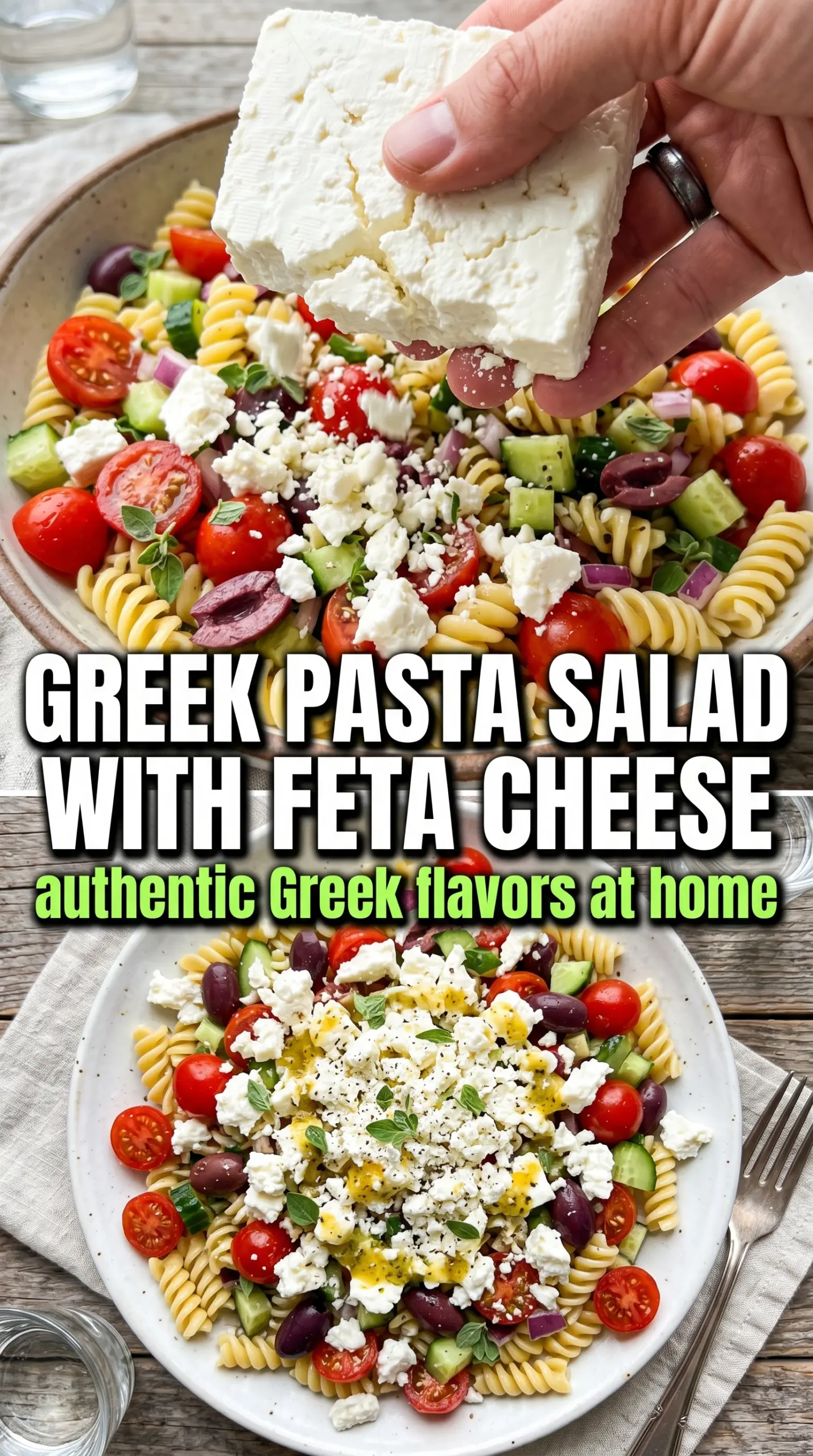
- Penne or rotini — You want a shape with ridges or curves that catches the dressing and little bits of feta. Long noodles won’t hold the cucumber and olive pieces as well, and the salad feels less structured.
- English cucumber — This gives you crunch without a watery seed core. If you only have regular cucumbers, peel them if the skin is thick and scoop out the seeds so the salad doesn’t dilute as it sits.
- Kalamata olives — These carry the Greek flavor more than any other ingredient. Black olives don’t give the same salty depth, so if you swap them, the salad tastes milder and a little less sharp.
- Feta cheese — Buy a block if you can and crumble it yourself. Pre-crumbled feta works in a pinch, but block feta stays creamier and tastes cleaner, which matters because it’s one of the main flavors here.
- Red wine vinegar and lemon juice — The vinegar gives the dressing backbone, and the lemon keeps it bright after chilling. That combination is what keeps this from tasting like plain oil-dressed pasta after an hour in the fridge.
- Dijon mustard — This helps the dressing emulsify so the oil and vinegar cling to the pasta instead of pooling at the bottom. You don’t taste mustard in the finished salad, but you’d notice if it wasn’t there.
Building the Salad So It Stays Bright After Chilling
Cook the Pasta to the Right Bite
Salt the water well, then cook the pasta just until al dente. It should still have a little firmness in the center, because it softens slightly as it sits in the dressing. Drain it and rinse under cold water until it feels fully cool, then let it drain again so you don’t carry extra water into the bowl.
Whisk a Dressing That Clings
Whisk the olive oil, vinegar, lemon juice, oregano, garlic powder, Dijon, salt, and pepper until the dressing looks glossy and slightly thickened. If it looks separated, keep whisking for a few more seconds; the Dijon is doing important work here. A loose, broken dressing slides off the pasta instead of coating it.
Toss in the Vegetables and Feta Gently
Add the cucumber, tomatoes, olives, red onion, green bell pepper, and feta after the pasta is cool. Toss with a light hand so the tomatoes stay intact and the feta doesn’t disappear into the dressing. If you stir too hard, the cheese turns the bowl cloudy and the salad loses that clean Greek salad look.
Let Time Do the Last Bit of Work
Refrigerate the salad for at least an hour before serving. That rest lets the pasta absorb some flavor while the onion mellows and the dressing settles into the ridges. Before serving, toss again and taste for salt, since the feta and olives can make the seasoning shift after chilling.
Three Ways to Adjust This Greek Pasta Salad Without Losing the Point
Make It Gluten-Free
Use a sturdy gluten-free short pasta and cook it just to the edge of done. Some gluten-free pastas soften more as they sit, so chill it, then taste before serving and refresh with a small splash of olive oil if it feels dry.
Dairy-Free Version
Skip the feta and add extra olives plus a handful of chopped parsley if you want more punch. You’ll lose the creamy, salty crumbles, but the salad still tastes balanced because the dressing and briny vegetables carry the flavor.
Turn It Into a Meal-Prep Lunch
Portion it into containers after the first chill and keep a small extra spoonful of dressing on the side if you like a looser salad. The pasta will absorb more dressing overnight, so that little reserve keeps the texture lively on day two and three.
Add Protein Without Changing the Salad
Grilled chicken, chickpeas, or cooked shrimp all fit here. Add them after the salad has chilled so they stay intact, and keep the seasoning simple because the Greek dressing already does the heavy lifting.
Storage and Reheating
- Refrigerator: Keeps for 3 to 4 days. The vegetables soften a little, but the flavor stays strong.
- Freezer: I don’t recommend freezing this one. The cucumbers, tomatoes, and feta break down and turn watery after thawing.
- Reheating: Serve it cold or at cool room temperature. If it’s been in the fridge for a while, let it sit out for 15 to 20 minutes and toss with a small splash of olive oil to loosen the dressing.
Answers to the Questions Worth Asking
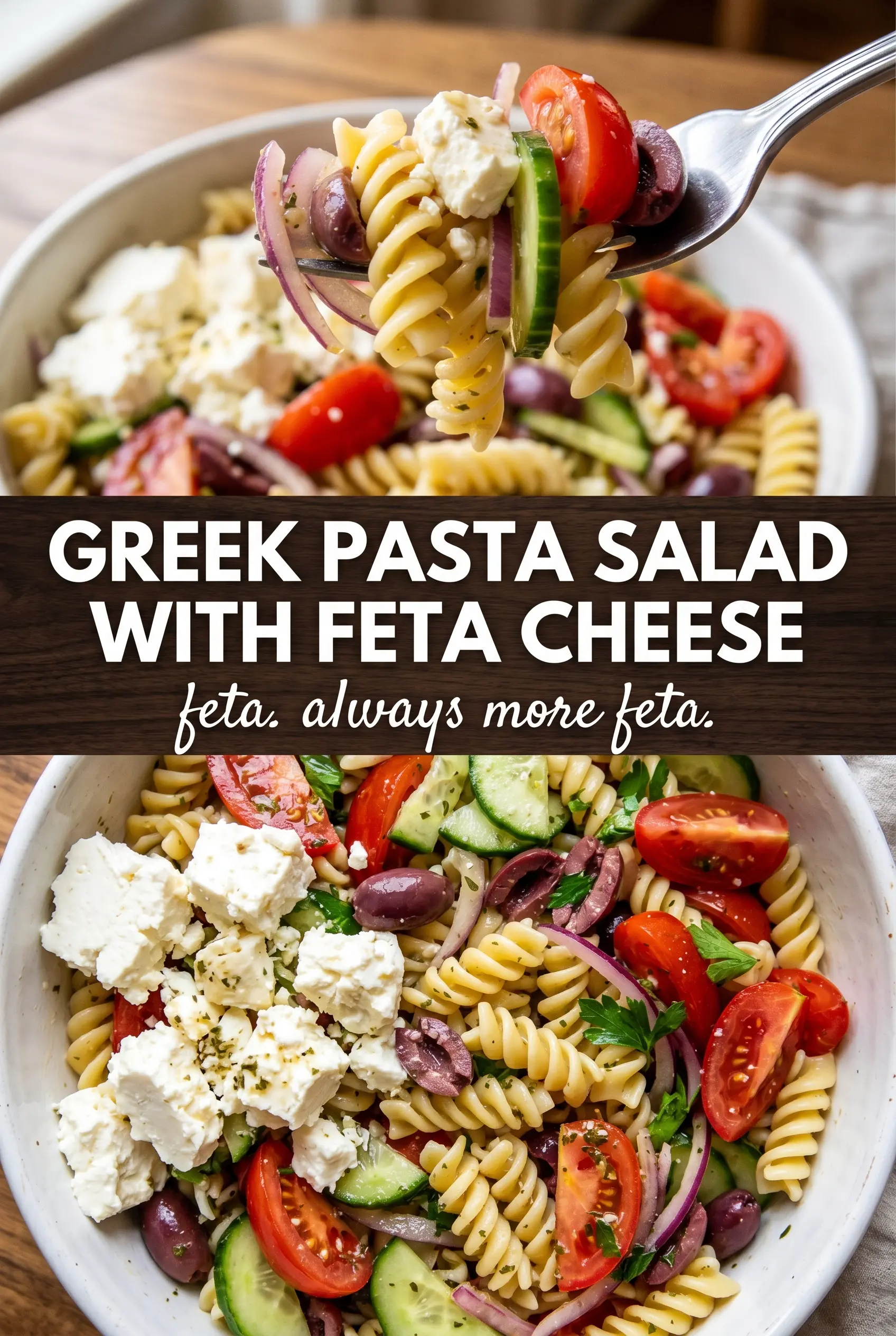
Greek Pasta Salad with Feta Cheese
Ingredients
Equipment
Method
- Bring a pot of water to a boil and cook penne or rotini until al dente. Drain and rinse the pasta under cold water, then cool until no longer hot.
- Spread the rinsed pasta on a sheet pan in an even layer to cool faster. Let it rest at room temperature until fully cooled, about 10 minutes.
- In a bowl, whisk olive oil, red wine vinegar, and lemon juice together until emulsified. Whisk in dried oregano, garlic powder, Dijon mustard, salt, and black pepper until smooth.
- In a large serving bowl, combine cooled pasta with English cucumber, cherry tomatoes, kalamata olives, feta cheese, red onion, and green bell pepper. Toss gently to distribute everything evenly.
- Pour Greek dressing over the pasta and toss until all pieces are coated. If needed, add a little extra toss time so feta stays suspended rather than sinking.
- Cover and refrigerate the salad for at least 1 hour so the flavors develop. Stir once halfway through to keep the dressing evenly distributed.
- Right before serving, toss the chilled Greek pasta salad again. Taste and re-season with salt and black pepper if needed, then serve cold.