Golden-seared Greek chicken tenders land on the plate with a lemony crust, juicy centers, and just enough oregano to make the whole dish taste bright and savory at once. The quick marinade does more than season the meat; it gives the chicken a head start on tenderness and helps the surface brown fast in the skillet. Served over cool tzatziki, the contrast is what makes this dinner memorable. Warm chicken, cold sauce, salty feta, and briny olives all work against each other in the best way.
The trick here is balance. Lemon juice and zest bring the sharpness, but olive oil carries the herbs and keeps the tenders from tasting thin. A short marinade is enough for chicken tenders, which are already tender cuts; leave them too long and the acid starts working against you instead of for you. I also use smoked paprika and a little cumin to round out the oregano without turning the dish into something heavy.
Below you’ll find the detail that matters most: how long to cook these so they stay juicy and still get those browned edges, plus a few smart swaps if you’re serving this with different sides or need to adjust for what’s in your kitchen.
The chicken stayed juicy and the lemon-oregano marinade browned beautifully in the pan. I served it over tzatziki like you suggested and my husband kept saying it tasted like something from a good little Greek cafe.
Save these Greek chicken tenders for a fast lemon-oregano dinner with crisp edges and creamy tzatziki.
The Marinade Window That Keeps Chicken Tenders Juicy Instead of Chalky
Chicken tenders cook fast, which is exactly why they punish sloppy marinating. The lemon juice gives you lift and brightness, but if the chicken sits in it too long, the surface starts to tighten and take on a mealy texture instead of staying silky. Twenty minutes is the sweet spot here: enough time for the garlic, oregano, and citrus to season the meat without crossing into that mushy, over-acidified zone.
The second mistake people make is crowding the pan and expecting browning anyway. These tenders need direct contact with heat, and the marinade needs to cling in a thin layer rather than drip off in a puddle. If the skillet is crowded or damp, the chicken steams first and sears second, which means pale spots and weak flavor. Give each piece space and let the crust develop before you turn it.
What the Lemon, Oregano, and Tzatziki Are Each Doing Here
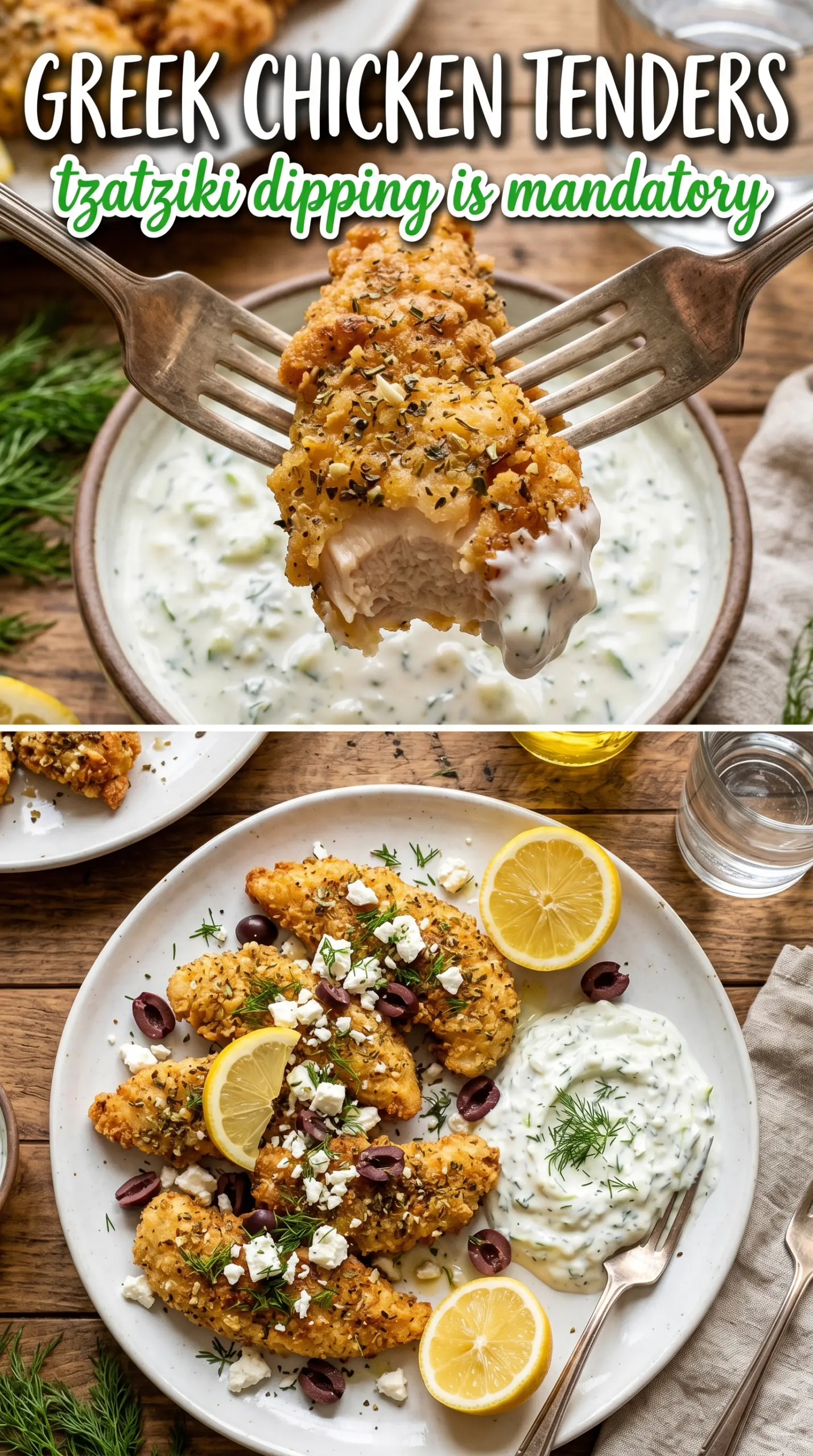
- Chicken tenders — These cook evenly and stay tender with very little effort, which makes them ideal for a quick marinade and a fast sear. Chicken breasts can work, but slice them into strips so they finish at the same time as the seasonings brown.
- Olive oil — This carries the herbs and citrus across the chicken and helps the surface brown instead of drying out. Use a decent extra-virgin olive oil if you can taste it in your kitchen; the flavor matters here.
- Fresh lemon juice and zest — The juice brings acidity, while the zest carries the louder lemon aroma that survives the heat. Don’t skip the zest; juice alone makes the marinade sharp, but zest makes it taste round and fresh.
- Dried oregano, smoked paprika, and cumin — Oregano gives the dish its Greek backbone, paprika adds color and a little depth, and cumin keeps the seasoning from tasting flat. If you need a simpler pantry version, oregano and paprika alone still get you most of the way there.
- Tzatziki, feta, olives, cucumber, and dill — These toppings turn the chicken into a full plate and give you cool, salty, crunchy contrast. Store-bought tzatziki works fine, but if it’s thick and garlicky, even better.
Getting the Sear Before the Sauce Takes Over
Mix the Marinade Until It Smells Bright and Garlicky
Whisk the olive oil, lemon juice, zest, garlic, oregano, paprika, cumin, salt, and pepper until the mixture looks glossy and slightly thickened. That coating matters because it helps the seasoning cling to the chicken instead of sliding off in the bowl. If the garlic is clumped, break it up now; raw garlic pieces can burn fast in the pan and turn bitter.
Let the Chicken Sit, But Not Too Long
Toss the tenders until every piece is coated, then let them rest for 20 minutes. The chicken should look lightly glazed, not swimming in liquid. If you marinate longer than that, especially with extra lemon juice, the outside can turn soft and a little stringy before it ever hits the heat.
Cook Hot Enough to Brown, Gentle Enough to Stay Juicy
Heat the skillet or grill pan over medium-high until it’s properly hot, then add a little olive oil and lay in the chicken. You want an immediate sizzle. Cook for 3 to 4 minutes per side until the edges turn deep golden and the center reaches 165°F. If the pan isn’t hot enough, the marinade will leak out and pool before it browns, leaving you with gray chicken and no crust.
Finish on Tzatziki, Not the Other Way Around
Spread the tzatziki on the platter first, then add the hot chicken over the top and scatter the feta, olives, cucumber, and dill around it. The warm chicken softens the sauce just enough without making it watery. Add the lemon wedges at the end so each serving can get a final squeeze of fresh citrus right before eating.
How to Adapt These Greek Chicken Tenders Without Losing the Point
Make it dairy-free
Skip the feta and use a dairy-free tzatziki or a simple lemon-herb yogurt-style sauce made with unsweetened plant-based yogurt. You’ll keep the cool contrast on the plate, but the sauce may be a little looser, so spoon it under the chicken instead of relying on it to hold shape.
Use chicken breasts instead of tenders
Slice boneless, skinless chicken breasts into even strips before marinating so they cook at the same speed as tenders. They’ll be a little meatier and less delicate, and they dry out faster if you push the cook time, so watch for the first sign of firm, opaque centers.
Turn it into a pita dinner
Slice the cooked chicken and tuck it into warm pita with tzatziki, cucumber, feta, and olives. This changes the meal from a plated main to a handheld dinner, but the flavor stays the same; just keep the chicken pieces thin so they don’t fall out when you bite in.
Meal prep for leftovers
Cook the chicken and pack the toppings separately so the cucumbers stay crisp and the tzatziki doesn’t thin out the chicken in the fridge. The flavors hold well for lunch the next day, and the lemon still tastes fresh if you add a little extra squeeze after reheating.
Storage and Reheating
- Refrigerator: Store the chicken in an airtight container for up to 4 days. The crust softens a little, but the flavor stays strong.
- Freezer: Freeze the cooked chicken without the tzatziki or fresh toppings for up to 2 months. Thaw overnight in the fridge so the texture stays tender instead of drying out.
- Reheating: Warm the chicken in a skillet over medium-low heat with a splash of water or olive oil, or heat it briefly in the microwave at 50% power. High heat makes the tenders tough fast, so go low and stop as soon as they’re hot.
Answers to the Questions Worth Asking
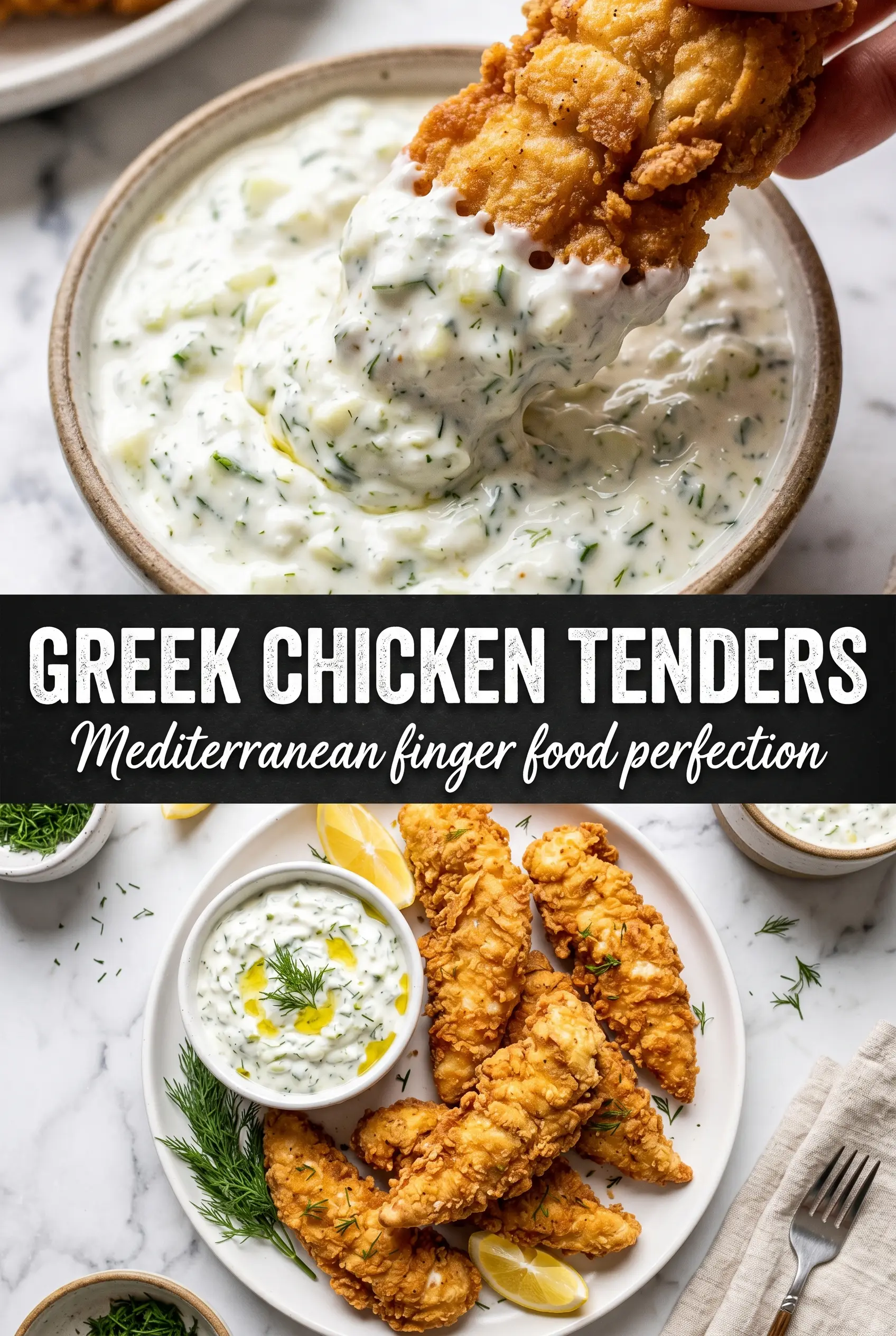
Greek Chicken Tenders
Ingredients
Equipment
Method
- Whisk together olive oil, lemon juice, lemon zest, garlic, dried oregano, smoked paprika, cumin, salt, and pepper, until evenly combined. Toss chicken tenders in the marinade, then rest for 20 minutes to soak up flavor.
- Heat a large skillet or grill pan over medium-high heat and add a drizzle of olive oil to coat the surface.
- Cook the marinated chicken tenders for 3-4 minutes per side, until golden and the internal temperature reaches 165°F. Transfer to a platter as they finish.
- Spread tzatziki on a serving platter and arrange the chicken tenders over the top for a creamy base.
- Scatter crumbled feta, Kalamata olives, cucumber slices, and fresh dill around the chicken, so the toppings look bright and fresh. Serve with warm pita and lemon wedges.