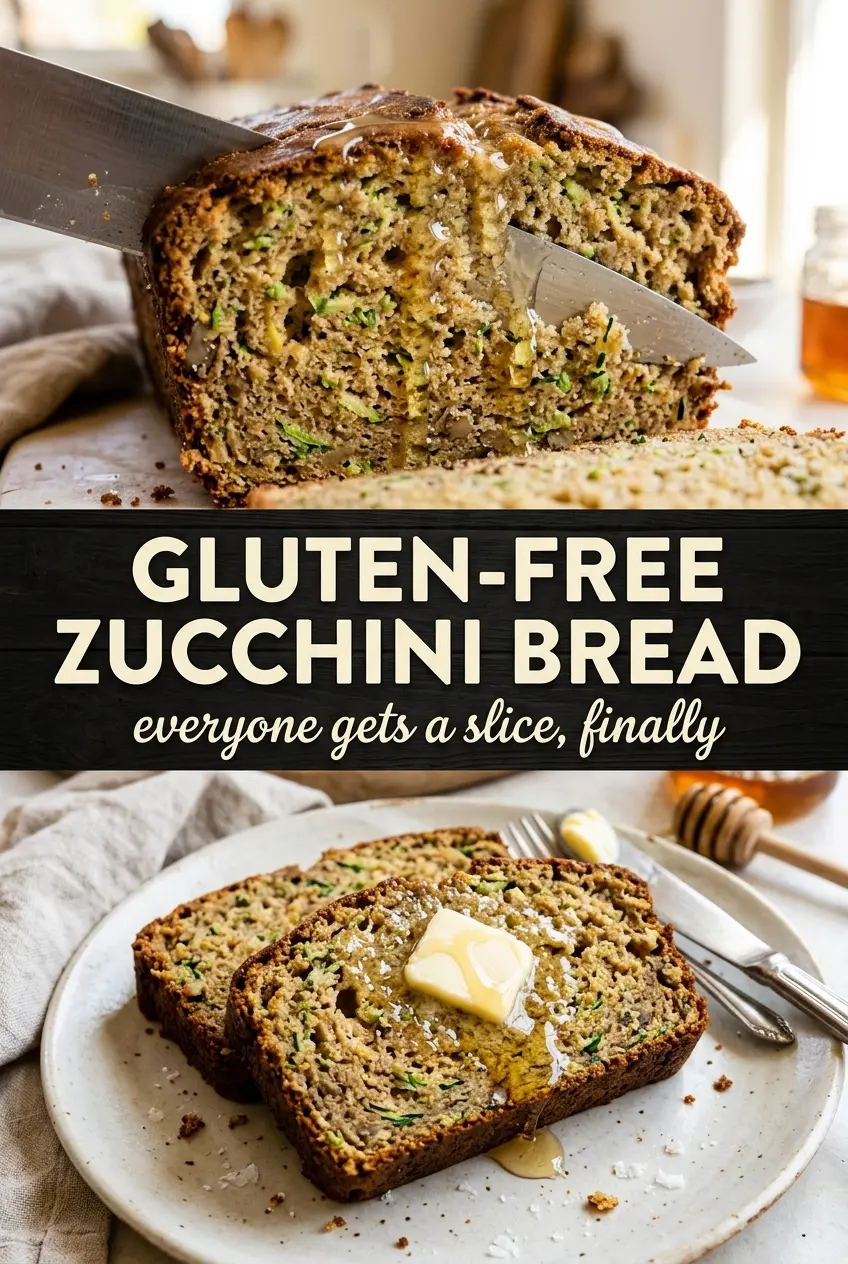
Gluten-free zucchini bread should slice cleanly, stay moist for days, and still feel like a proper quick bread instead of a fragile workaround. This version does that by leaning on almond flour for tenderness and a little tapioca starch for structure, so the loaf holds together without turning gummy or dense. The crumb bakes up soft and golden with a gentle cinnamon warmth, and the zucchini disappears into the batter in the best possible way.
The part that makes this loaf work is the moisture control. Zucchini carries a lot of water, and if you skip the squeeze, the bread can end up heavy in the middle no matter how long it bakes. I also like the combination of yogurt and oil here because it gives the loaf richness without making it greasy. If you’ve had gluten-free zucchini bread fall apart or bake up overly wet, the details below will help you avoid both problems.
I finally got a zucchini bread that slices cleanly without crumbling, and the almond flour made it taste rich instead of heavy. The center set up perfectly after cooling, just like you said.
Save this gluten-free zucchini bread for the days when you want a moist almond flour loaf with a tender crumb and no guessing at the texture.
The Zucchini Squeeze That Keeps This Loaf From Going Gummy
Most zucchini bread problems start before the batter even hits the pan. Zucchini looks harmless, but it releases enough water to throw off the whole loaf if you grate it and dump it straight in. With gluten-free baking, that extra moisture has nowhere to hide, so the middle can stay wet while the outside looks done. Squeeze the zucchini until it feels almost dry in your hands. It should still look freshly grated, just not dripping.
Almond flour makes the bread tender and rich, but it needs help holding its shape. That’s where the tapioca starch comes in. It gives the loaf a little stretch and prevents the crumb from feeling sandy or fragile. If you use a certified gluten-free all-purpose blend instead of almond flour, skip the tapioca and use the blend as written on the package, since most of those mixes already include starches and binders.
What Each Ingredient Is Doing in This Gluten-Free Loaf
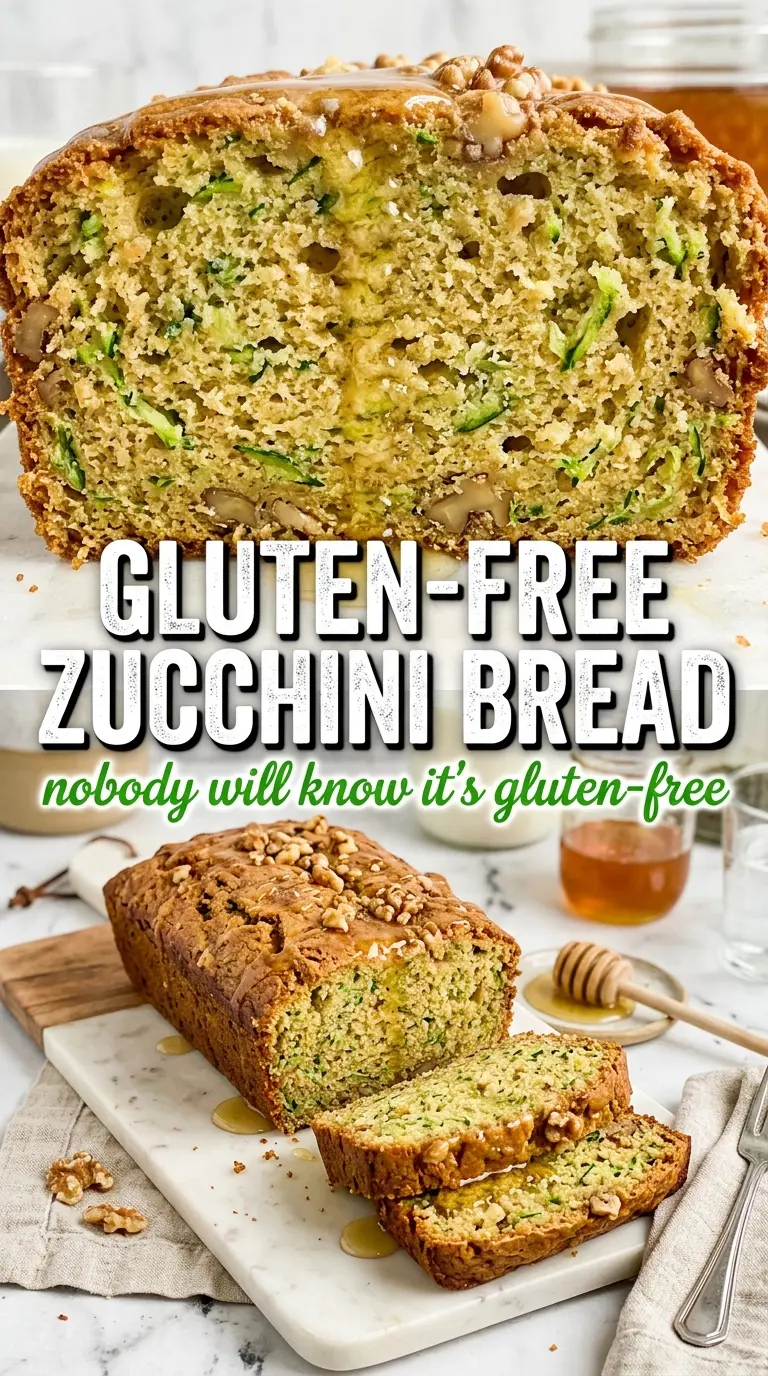
- Almond flour — This is what gives the loaf its soft, rich crumb. It bakes up more tender than most gluten-free blends, but it needs the eggs and starch to help it set. If you swap in a GF all-purpose blend, use one that measures cup for cup and expect a slightly lighter, less nutty texture.
- Tapioca starch — This is the ingredient that helps the bread hold together when you slice it. It matters most when you bake with almond flour, because almond flour alone can be too delicate for a clean-cut loaf. If you’re using a gluten-free all-purpose flour blend, leave it out unless the blend is very heavy on rice flour.
- Greek yogurt — Yogurt adds moisture and a little tang, and it keeps the loaf from tasting flat. Sour cream works the same way if that’s what you have. Use full-fat if you can; low-fat works, but the crumb won’t be quite as plush.
- Zucchini — Grate it finely enough that it melts into the batter, then squeeze it dry. That step changes everything. Wet zucchini can add enough liquid to keep the center from setting, especially in almond flour bread.
- Cinnamon and vanilla — These don’t mask the zucchini; they round it out. The bread tastes fuller and more bakery-style with both in the batter, even though the zucchini stays mild.
- Walnuts or chocolate chips — Both work, but add them only if you want extra texture. Walnuts make the loaf feel more classic, while chocolate chips push it toward a treat. Fold them in at the end so they don’t sink.
Building the Batter So It Bakes Up Tender, Not Wet
Mix the dry ingredients first
Whisk the almond flour, tapioca starch, baking soda, baking powder, salt, and cinnamon together until the mixture looks even and clump-free. Almond flour can hide little pockets of starch, and those pockets bake unevenly if you rush this part. You’re looking for a loose, sandy mixture with the cinnamon evenly distributed. If the dry ingredients stay streaky, the loaf can bake with uneven color and an odd taste in one slice.
Beat the wet ingredients until smooth
Stir the sugar, eggs, melted coconut oil, yogurt, and vanilla until the batter looks glossy and uniform. The oil should be melted, not hot, or it can start to cook the eggs and make the mixture grainy. Once the zucchini goes in, the batter will loosen slightly. That’s normal. What you don’t want is a watery bowl with liquid pooling at the bottom, which usually means the zucchini wasn’t squeezed enough.
Fold gently and stop early
Add the dry mixture to the wet ingredients and stir just until no dry pockets remain. Overmixing isn’t doing you any favors here; it can make the loaf denser and tougher around the edges. If you’re using walnuts or chocolate chips, fold them in with only a few turns. The batter should look thick but scoopable, not pourable like cake batter. That thick texture is what helps the loaf rise instead of spread.
Bake until the center is set, then let it cool
Scrape the batter into the greased loaf pan and smooth the top. Bake until the top is golden and a toothpick comes out clean from the center, usually 50 to 60 minutes. If the top browns too fast before the middle is done, tent it loosely with foil for the last 10 to 15 minutes. Cool the loaf for the full 20 minutes before slicing, because almond flour bread firms up as it cools and slices badly when it’s hot.
How to Adapt It Without Losing the Tender Crumb
Dairy-Free Version
Swap the Greek yogurt for a thick dairy-free yogurt with a plain flavor. The loaf still gets the moisture and slight tang it needs, but thinner nondairy yogurts can make the batter loose. Choose one that’s unsweetened so the bread doesn’t turn overly soft or oddly flavored.
Nut-Free Version
Use a certified gluten-free all-purpose flour blend instead of almond flour, then leave out the tapioca starch unless your blend calls for it. The loaf will be a little less rich and slightly more bread-like, but it’s the best way to keep the structure without nuts. Check the package directions because some blends already include xanthan gum and starches.
Chocolate Chip Zucchini Bread
Fold in the chocolate chips instead of walnuts for a sweeter loaf with pockets of melted chocolate throughout. The bread gets a dessert-leaning feel, but it still works for breakfast if you keep the sugar at the lower end of the range. Toss the chips with a teaspoon of the dry ingredients before folding them in if you want to keep them from sinking.
Storage and Reheating
- Refrigerator: Store slices in an airtight container for up to 5 days. The crumb stays moist, but almond flour bread can feel firmer after chilling.
- Freezer: Freezes well. Wrap the cooled loaf or individual slices tightly, then freeze for up to 3 months. Thaw at room temperature before reheating.
- Reheating: Warm slices in a toaster oven or low oven for a few minutes until just heated through. Skip the microwave if you want to keep the edges from turning rubbery.
Answers to the Questions Worth Asking
Gluten-Free Zucchini Bread
Ingredients
Equipment
Method
- Preheat oven to 350°F and grease a 9x5 loaf pan.
- Whisk almond flour, tapioca starch, baking soda, baking powder, salt, and cinnamon together.
- Beat sugar, eggs, coconut oil, yogurt, and vanilla until smooth.
- Stir in grated squeezed zucchini.
- Fold dry ingredients into wet until just combined, then fold in mix-ins if using.
- Pour batter into the pan.
- Bake 50–60 minutes until a toothpick comes out clean and the top is golden.
- Cool 20 minutes before slicing, so the loaf firms as it cools and slice cleanly.