Gluten-free Italian pasta salad lands best when the pasta still has a little bite and the dressing has had time to soak into every twist. The whole bowl tastes brighter after a short chill, with pepperoni, salami, provolone, olives, and crisp vegetables giving you the kind of salty, tangy mix that keeps people going back for one more scoop.
The trick with this version is treating the gluten-free pasta gently from the start. Rice- or chickpea-based rotini can go from firm to soft fast, so I cook it just to al dente, rinse it well, and cool it completely before mixing anything in. That keeps the noodles from clumping and stops the dressing from getting absorbed too early and disappearing into the pasta.
Below, I’m walking through the one step that matters most for texture, plus the ingredient choices that keep this salad tasting bold and balanced after it chills. There’s also a few smart swaps if you need to work around dairy or want to make it ahead for a crowd.
The dressing soaked in beautifully after chilling, and the gluten-free rotini stayed firm instead of turning gummy. I made it the night before a picnic and it held up all afternoon.
Save this gluten-free Italian pasta salad for potlucks, cookouts, and make-ahead lunches when you need bold Italian flavor without the gluten.
The Pasta Is the Risk Here, Not the Dressing
Most pasta salads fail before the dressing even goes on. Gluten-free pasta keeps cooking after it’s drained, and if you let it go past al dente, it turns soft and starts breaking apart once you toss it with the rest of the ingredients. The fix is simple: cook it until it still has a definite bite in the center, then rinse it under cold water until it’s fully cool so the texture stops changing.
The other common mistake is seasoning too early and then serving it warm. This salad needs a short chill because the pasta absorbs some dressing as it sits, and the vegetables stay more distinct once everything has had time to settle. If the pasta is even a little warm when you mix it, the cheese softens too fast and the dressing can seem thin instead of clinging.
- Cook the pasta just to al dente. One extra minute can be the difference between a salad with structure and a bowl of starch.
- Rinse thoroughly with cold water. This removes surface starch and cools the pasta fast enough to stop the cooking.
- Chill before serving. The flavor gets better after 30 minutes because the dressing settles into the ridges.
- Add a little more dressing right before serving if needed. Gluten-free pasta can drink up more than standard wheat pasta.
What the Salami, Dressing, and Pasta Shape Are Doing for You
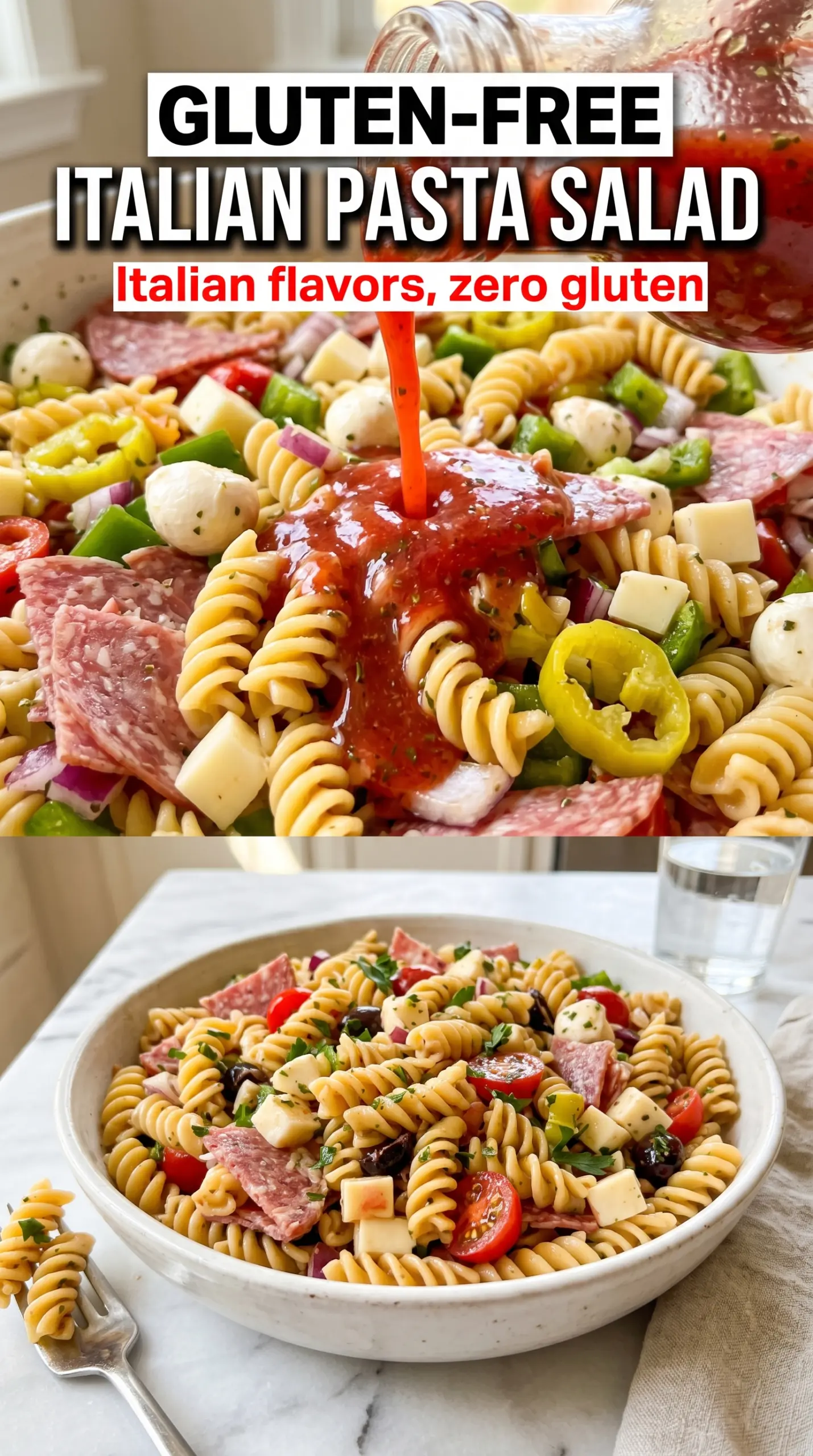
- Gluten-free rotini — Rotini holds dressing in the spirals, which matters here more than in a standard pasta salad. Rice-based pasta gives a clean, neutral bite; chickpea-based pasta adds more protein and a slightly firmer texture. Either works, but it needs close attention because gluten-free pasta can go from ideal to soft fast.
- Gluten-free Italian dressing — This does the heavy lifting on flavor, so use one you actually like straight from the bottle. A thicker dressing clings better to the pasta than a thin, watery one. If yours is sharp or salty, the extra rest time helps it mellow.
- Pepperoni and salami — These bring the salty, savory backbone that makes the salad taste like a deli-style Italian pasta salad instead of a plain vegetable bowl. Slicing them into smaller pieces helps every bite feel balanced. If you want a lighter version, cut the amount in half rather than removing both, or the salad can taste flat.
- Provolone — Cubed provolone adds creaminess and a little stretch without disappearing into the dressing. Buy a block and cube it yourself if you can; pre-shredded or ultra-soft cheese tends to smear instead of hold shape. For dairy-free, leave it out and add a few extra olives or more salami for richness.
- Bell peppers, tomatoes, red onion, and olives — These keep the salad crisp, juicy, and salty all at once. Dice the onion small so it blends instead of shouting over everything else. If you’re making this ahead, halve the tomatoes just before mixing so they don’t weep too much liquid into the bowl.
Building the Bowl So the Dressing Sticks, Not Sinks
Cooking the Pasta to the Right Bite
Cook the gluten-free rotini exactly to package timing, then start tasting a minute early. You want it tender but still springy, with no chalky center. If it’s mushy in the pot, it won’t recover in the bowl. Drain it well and rinse until the noodles are fully cool, because residual heat is what pushes gluten-free pasta over the edge.
Mixing the Cold Ingredients First
Combine the cooled pasta with the pepperoni, salami, provolone, vegetables, and olives before the dressing goes in. That order helps the bigger pieces distribute evenly instead of sinking to the bottom. If the bowl looks overloaded, use a larger one than you think you need; cramped pasta salad gets patchy and hard to toss.
Letting the Dressing Settle In
Whisk the Italian dressing with the Italian seasoning, pour it over, and toss until every spiral looks lightly coated. Then chill the salad for 30 minutes before serving. That pause gives the pasta time to absorb just enough dressing without turning dry. Toss again right before serving, and add a splash more dressing if the bowl looks tight or matte.
Make It Dairy-Free Without Losing the Salty Bite
Leave out the provolone and add a few extra olives or a little more pepperoni to keep the salad feeling full and savory. You lose the creamy cheese bite, but the dressing and cured meats still carry the flavor. This is the easiest adaptation if you need a dairy-free side dish that still eats like the original.
Use Chickpea Pasta for More Structure
Chickpea rotini gives the salad a firmer chew and a little more protein, which makes it hold up well for lunches. It can taste a bit more earthy than rice pasta, so the zesty dressing matters even more. Watch the pot closely because chickpea pasta can go from firm to soft in a narrow window.
Make It a Little Lighter
Cut the pepperoni and salami amounts in half and add extra peppers and tomatoes. You’ll still get the Italian deli flavor, but the bowl will lean fresher and less rich. This works well if you’re serving it alongside grilled food and don’t want the pasta salad to compete with the main dish.
Storage and Reheating
- Refrigerator: Store covered for up to 4 days. The pasta will soften a little as it sits, and the dressing may need a quick refresh before serving.
- Freezer: Don’t freeze this salad. The vegetables go watery and the gluten-free pasta gets unpleasantly soft after thawing.
- Reheating: This salad is meant to be served cold. If it’s been in the fridge, let it sit at room temperature for 10 to 15 minutes, then toss with a spoonful of dressing to wake it back up. Heating it changes the texture and makes the pasta mushy.
Answers to the Questions Worth Asking
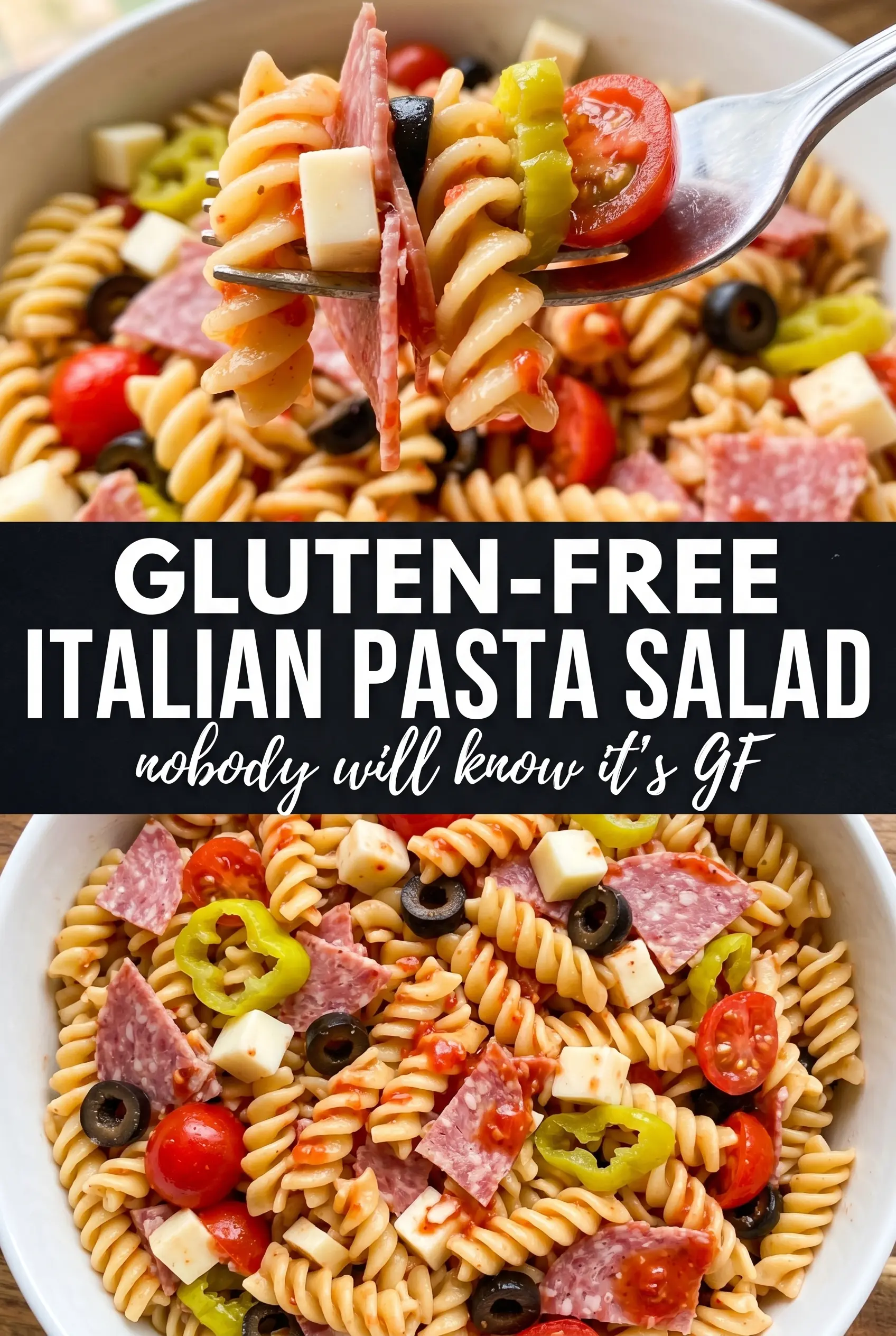
Gluten-Free Italian Pasta Salad
Ingredients
Method
- Cook the gluten-free rotini to al dente per package directions, since GF pasta can turn mushy if overcooked. Use boiling water and watch closely for the al dente stage.
- Drain the pasta, rinse thoroughly with cold water, and cool completely. This helps stop cooking and keeps the pasta firm for tossing.
- Combine the cooled pasta with pepperoni, salami, provolone, both bell peppers, black olives, cherry tomatoes, and red onion. Toss gently until the ingredients are evenly distributed.
- Mix the gluten-free Italian dressing with Italian seasoning. Stir until the seasoning is well dispersed.
- Pour the dressing over the pasta mixture and toss to coat. Refrigerate for 30 minutes so flavors meld.
- Toss again before serving and add more dressing if needed. Taste and adjust with salt and pepper if required.