Golden banana bread with a tender, moist crumb is still on the table when it’s made with almond flour, and this version earns that spot without leaning on gums or a long ingredient list. The top bakes into a clean, deep crust while the inside stays soft and sliceable, with enough structure to hold together instead of crumbling apart the second you cut into it.
The trick is in the balance: ripe bananas bring moisture and sweetness, while eggs and a little tapioca starch give the loaf enough lift and binding power to behave like bread instead of a dense bake. Almond flour keeps the texture rich and tender, but it also means the batter starts wetter than a classic wheat banana bread, so the loaf needs its full bake time and a complete cool-down before slicing.
Below, I’ve included the small details that matter most — when to tent the top, why the loaf must cool all the way through, and how to handle substitutions without turning the crumb gummy or heavy.
The loaf came out with a perfect golden top and stayed moist all the way through after cooling. I used butter instead of coconut oil, and the slices held together beautifully the next day.
Save this almond flour banana bread for the days when you want a moist, naturally gluten-free loaf with a crisp golden crust.
The Reason Almond Flour Banana Bread Stays Tender Instead of Gummy
Gluten-free banana bread fails in two predictable ways: it bakes up wet and sodden in the center, or it turns dense and greasy because there isn’t enough structure to hold all that banana. Almond flour changes the game, but it also changes the rules. It brings fat and tenderness, not the dry absorbency you get from wheat flour, so the loaf needs something else to keep it from collapsing into banana custard.
That’s where the eggs and tapioca starch matter. The eggs build body and help the loaf rise, while the starch gives the crumb just enough elasticity to slice cleanly once it cools. If your loaf sinks in the middle, it’s usually because it was pulled too early or sliced too soon. The center needs to set fully in the pan before you even think about cutting into it.
What Each Ingredient Is Doing in This Loaf
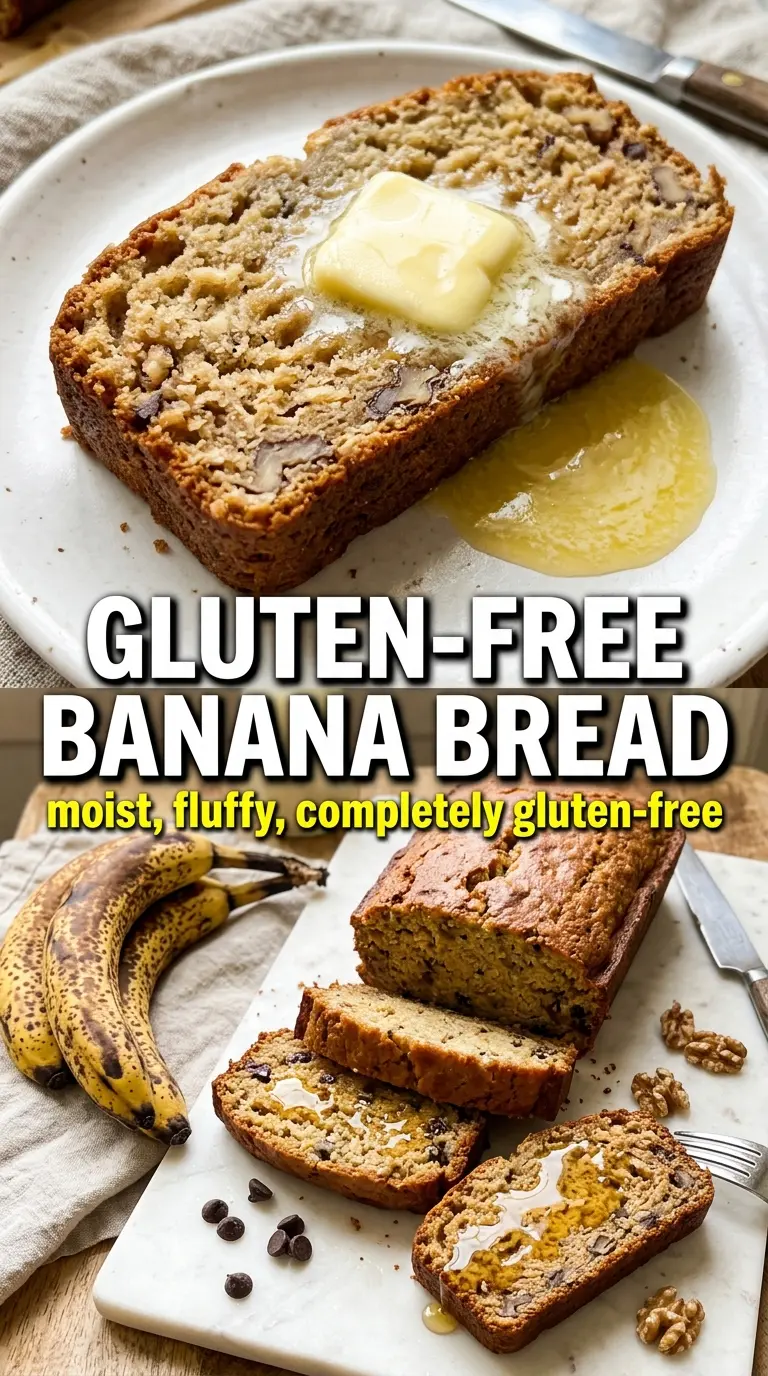
- Bananas — Use very ripe bananas with plenty of brown spots. They bring sweetness, moisture, and that classic banana bread flavor. If yours are only yellow, the loaf will bake up less fragrant and need more help from the honey or maple syrup.
- Eggs — These do the heavy lifting for structure. Almond flour alone won’t hold a loaf together the way wheat flour does, so the eggs are what keep the crumb from falling apart. There isn’t a true one-to-one replacement here if you want the same texture.
- Almond flour — Use blanched almond flour, not almond meal. Almond meal is coarser and can make the loaf feel gritty and heavy. The finer flour bakes into a softer, more even crumb.
- Tapioca starch or arrowroot — This small amount helps the loaf set and slice cleanly. It doesn’t make the bread stretchy; it just gives the crumb a little more lift and prevents it from feeling wet in the middle.
- Coconut oil or butter — Either works. Coconut oil keeps it dairy-free, while butter adds a rounder flavor. Melt it first so it mixes smoothly into the banana base and doesn’t leave little pockets of fat in the batter.
Getting the Batter, Bake, and Cool Time Right
Start with a Smooth Banana Base
Whisk the mashed bananas with the eggs, melted oil or butter, honey or maple syrup, and vanilla until the mixture looks mostly smooth. A few banana flecks are fine, but large chunks leave wet spots in the finished loaf. The batter should look loose and glossy at this stage, not thick or fluffy.
Mix the Dry Ingredients Just Until They Disappear
Stir in the almond flour, tapioca starch, baking soda, cinnamon, and salt until you don’t see dry pockets anymore. Don’t beat the batter hard. Overmixing can make the loaf heavy, and with almond flour there’s no gluten to develop anyway. The finished batter will be wetter than wheat-based banana bread, and that’s exactly what you want.
Bake for Color, Then Bake for Set
Pour the batter into the lined loaf pan and smooth the top. Bake until the loaf is deeply golden and a toothpick comes out clean, checking around the 50-minute mark. If the top is browning too fast before the center is done, tent it loosely with foil. If your oven runs hot, the outside can darken before the middle has time to set, so the foil step matters.
Let the Loaf Cool All the Way Through
This is the part people skip, and it’s the difference between a loaf that slices cleanly and one that smears into a soft pile. Leave it in the pan until completely cool. Gluten-free banana bread firms up as it loses heat, and almond flour needs that rest to finish setting the crumb.
How to Adapt This Gluten-Free Banana Bread Without Losing the Crumb
Make It Dairy-Free
Use coconut oil instead of butter and the loaf stays fully dairy-free without changing the structure. Coconut oil gives a slightly cleaner, lighter finish, while butter adds a little more richness, so pick based on what matters more to you.
Swap the Sweetener for a Less Sweet Loaf
Use maple syrup instead of honey for a slightly deeper flavor, or reduce the amount to 2 tablespoons if your bananas are very ripe. Pulling the sweetener back too far can make the loaf taste flat, so don’t cut it completely unless you’re also adding something else for balance.
Add Chocolate Chips or Chopped Walnuts
Fold in up to 3/4 cup of chocolate chips or chopped walnuts at the very end. Mix-ins add texture and make the loaf feel more like a snack cake, but too many can weigh down the center, so keep the amount moderate.
Skip the Tapioca Starch Only If You Must
Arrowroot works as written, but if you have neither starch, the loaf will still bake. It will just be a little more fragile and softer in the middle, especially on day one, so wait for a full cool before slicing or serving.
Storage and Reheating
- Refrigerator: Store in an airtight container for up to 5 days. The crumb stays moist, but the loaf firms up a bit in the fridge.
- Freezer: This freezes well. Slice first, wrap each piece tightly, and freeze for up to 3 months so you can thaw one piece at a time.
- Reheating: Warm slices gently in the microwave for 10 to 15 seconds or toast them lightly. Don’t blast it with high heat or the almond flour crumb can turn oily and dry at the same time.
Questions I Get Asked About This Recipe
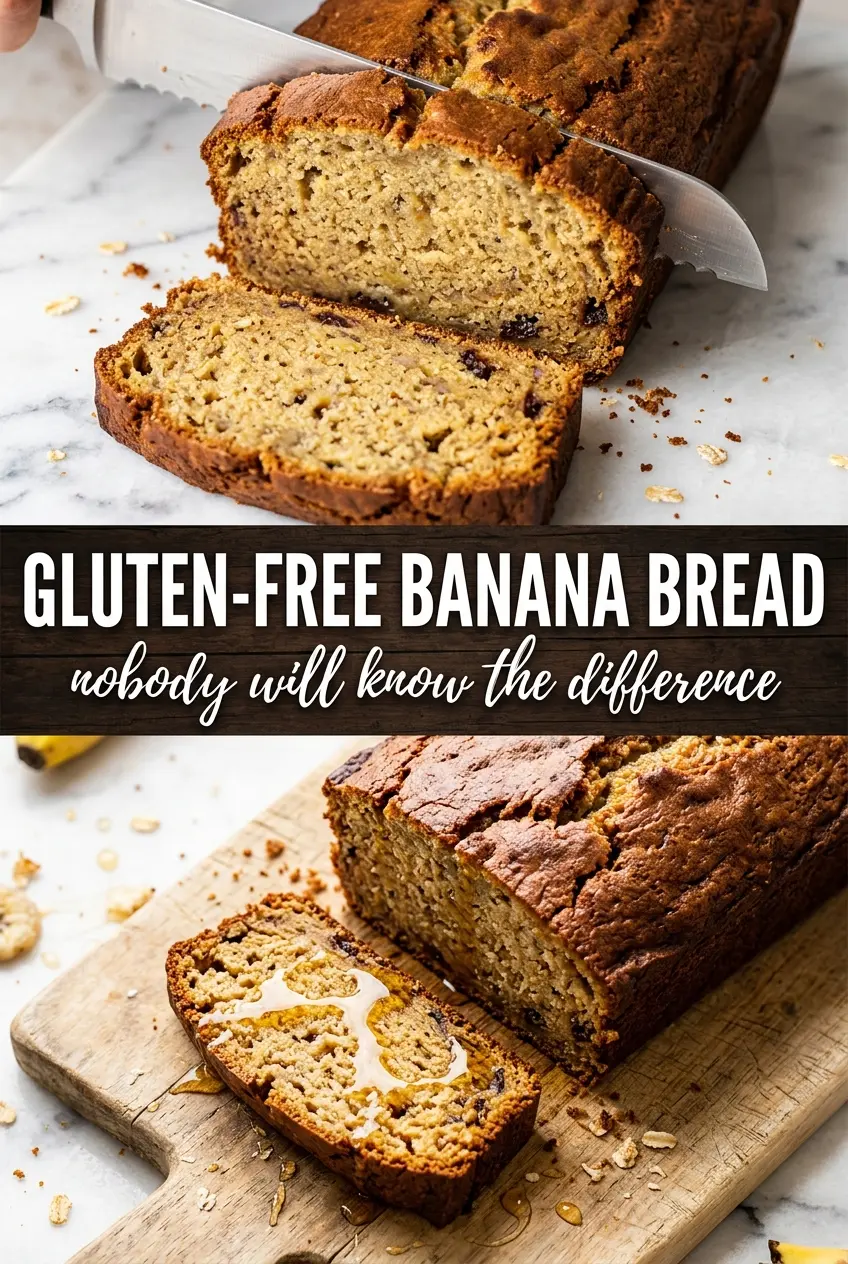
Gluten-Free Banana Bread
Ingredients
Equipment
Method
- Preheat the oven to 350°F and line a 9x5 loaf pan with parchment paper.
- Whisk mashed bananas, eggs, melted coconut oil or butter, honey or maple syrup, and vanilla extract together until smooth.
- Stir in almond flour, tapioca starch or arrowroot, baking soda, cinnamon, and salt until fully combined.
- Pour the batter into the prepared pan; the batter should look wetter than traditional banana bread.
- Bake for 55–65 minutes until the top is deeply golden and a toothpick comes out clean.
- Check the loaf at 50 minutes, and tent loosely with foil if browning too fast.
- Cool the banana bread completely in the pan before slicing so the gluten-free crumb sets.