Garlic Parmesan crockpot chicken and potatoes comes out with the kind of slow-cooked comfort that gets scraped straight from the insert before it ever reaches the table. The chicken turns fall-apart tender, the baby potatoes soak up every bit of garlic butter, and the sauce finishes thick enough to cling to the back of a spoon instead of pooling at the bottom of the bowl.
What makes this version work is the order. The potatoes sit underneath and act like a built-in rack, so the chicken lifts slightly above the liquid and the skin has a chance to stay intact instead of dissolving into the sauce. The cream and Parmesan go in at the end, after the cooking liquid has had time to concentrate, which keeps the sauce glossy instead of grainy. If you’ve ever had a slow cooker chicken dish turn watery, the issue is usually too much liquid too early.
Below, I’ve included the little details that matter most: how to keep the sauce smooth, which ingredient swaps hold up, and what to do if you want to change the texture without losing the cozy garlic-Parmesan finish.
The sauce thickened up perfectly at the end, and the potatoes were creamy all the way through without falling apart. My husband kept saying it tasted like I spent all day on it.
Save this garlic Parmesan crockpot chicken and potatoes for a low-effort dinner with creamy sauce and tender potatoes.
The Reason the Sauce Stays Creamy Instead of Turning Thin
Slow cooker sauces usually fail for one of two reasons: too much liquid at the start, or dairy added while the pot is still boiling hard. This recipe avoids both. The broth is just enough to create steam and help the potatoes cook, but not so much that the finished sauce tastes watered down. The heavy cream and Parmesan go in only after the chicken is done, when the heat is gentle enough to melt the cheese without splitting the dairy.
The other thing that matters is the potatoes underneath the chicken. As they cook, they release a little starch into the liquid, which helps the sauce body up naturally once the cream goes in. If you stir the cheese in too early, it can turn sandy. Wait until the cooking liquid has settled for a minute, then stir slowly and let the residual heat do the work.
What Each Ingredient Is Actually Doing in the Crockpot

- Bone-in, skin-on chicken thighs — These stay juicier than breasts over a long cook and bring enough richness to stand up to the Parmesan sauce. The skin won’t stay crisp in the slow cooker, but it does help protect the meat so the thighs finish tender instead of stringy.
- Baby potatoes — Halved baby potatoes hold their shape better than larger chunks and cook evenly without turning chalky. Yukon golds are the closest swap if you don’t have baby potatoes; cut them into large, even pieces so they don’t break apart.
- Butter and garlic — This is the base of the sauce flavor. Fresh garlic gives the dish its backbone, and the butter carries it through the potatoes and chicken. Garlic powder deepens the seasoning on the chicken itself, so don’t skip the fresh-and-dried combination.
- Heavy cream and grated Parmesan — These finish the dish with body and salt. Use freshly grated Parmesan if you can; pre-shredded cheese often contains anti-caking agents and can leave the sauce a little grainy. If you need a swap, half-and-half will work, but the sauce will be thinner.
- Chicken broth — This keeps the bottom of the slow cooker from scorching and gives you something to build the sauce from later. Use a low-sodium broth if your Parmesan is especially salty.
The Part of the Slow Cooker Timing That Changes Everything
Season the Chicken Before It Goes In
Coat the chicken thighs generously with salt, pepper, garlic powder, onion powder, and Italian seasoning before they hit the slow cooker. That step matters because seasoning only the sauce leaves the meat bland underneath. The chicken should look well coated, not dusted.
Build the Potatoes on the Bottom
Spread the halved potatoes across the bottom of the insert and scatter the garlic and butter over them. They’ll sit in the broth and absorb the flavor as they cook, while also creating a bed for the chicken so it doesn’t sit directly in the liquid. If the potatoes are piled too high, the top pieces can steam unevenly, so keep the layer loose and even.
Let the Slow Cooker Do the Heavy Lifting
Cook on low for 6 to 7 hours or high for 3 to 4 hours, until the potatoes are tender and the chicken pulls apart easily at the bone. The skin won’t brown in the crockpot, and that’s fine here; the goal is tenderness, not crispness. If the chicken is still tight near the bone, it needs more time, not more heat.
Finish the Sauce After the Heat Comes Down
Move the chicken to a plate, then stir in the cream and Parmesan until the sauce turns smooth and glossy. Don’t dump the cheese in all at once while the liquid is boiling; that’s when you get clumps. If the sauce seems loose, let it sit on warm for a few minutes and it will thicken as the cheese melts fully.
How to Adapt This for a Different Table or a Different Night
Use chicken breasts instead of thighs
Chicken breasts work, but they need less time and a little more attention because they dry out faster than thighs. Start checking them early on high, and pull them as soon as they’re cooked through. The sauce still works, but the meat won’t be quite as rich.
Make it dairy-free
Swap the butter for olive oil and use an unsweetened dairy-free cream that’s meant for cooking. You’ll lose some of the classic Parmesan body, so add a little extra seasoning and keep the sauce expectation closer to silky than thick. Nutritional yeast can add a savory note, but it won’t replace real Parmesan exactly.
Turn it into a gluten-free dinner
This dish is naturally gluten-free as written, as long as your broth and Parmesan are certified gluten-free. That makes it a good one to serve without extra adjustments. Just check the broth label, since that’s the place where gluten sneaks in most often.
Add vegetables without watering it down
Mushrooms, carrots, or green beans can go in, but choose vegetables that can handle a long cook. Add quick-cooking vegetables near the end so they don’t collapse into the sauce. The more watery the vegetable, the more likely it is to thin the finish, so keep that in mind when you build the pot.
Storage and Reheating
- Refrigerator: Store leftovers in an airtight container for up to 4 days. The sauce will thicken as it chills, and the potatoes will soften a little more.
- Freezer: It freezes, but the cream sauce can separate a bit when thawed. If you want to freeze it, cool it completely first and reheat gently so the sauce has a chance to come back together.
- Reheating: Warm it slowly on the stove or in the microwave at medium power with a splash of broth or cream. High heat is the mistake that turns the sauce oily and pushes the chicken past tender.
Questions I Get Asked About This Recipe
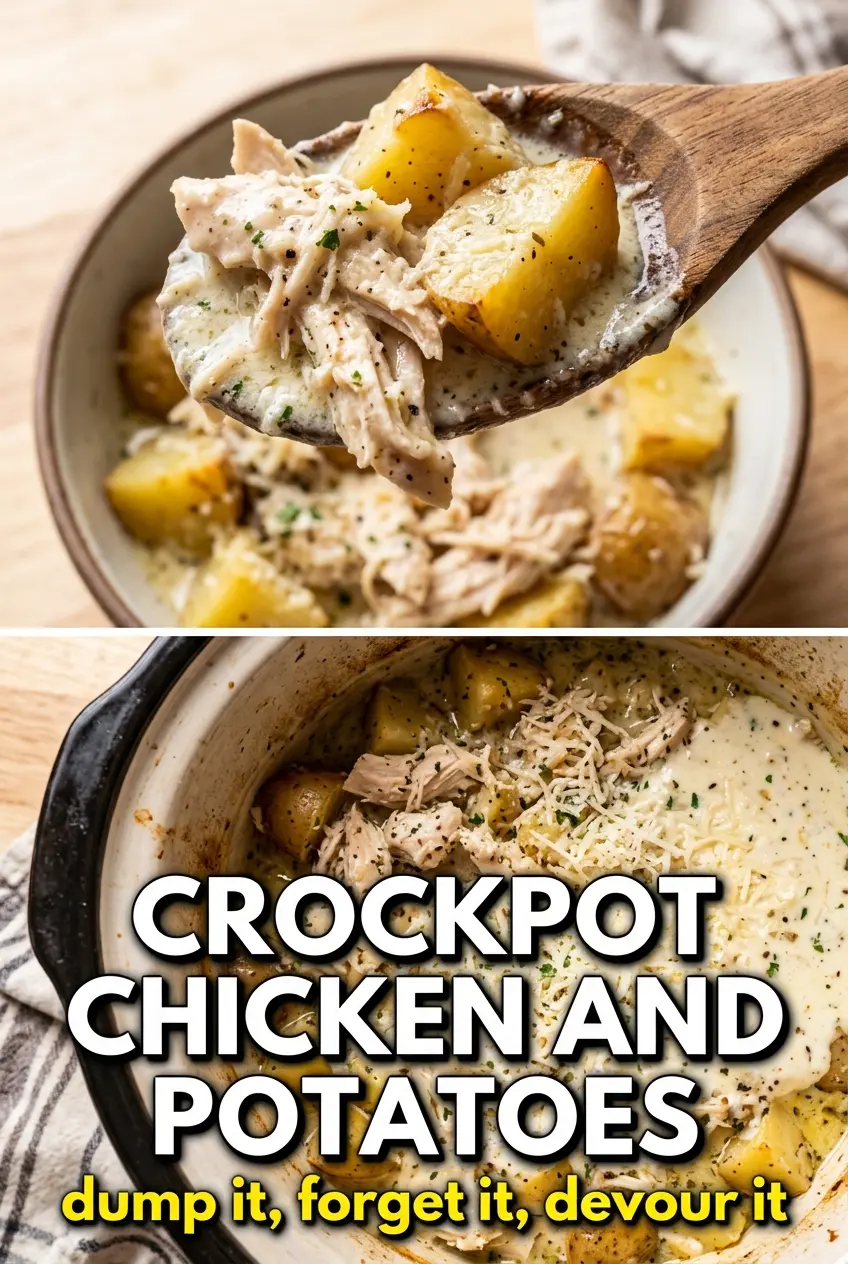
Garlic Parmesan Crockpot Chicken and Potatoes
Ingredients
Equipment
Method
- Season the chicken thighs generously with salt, pepper, garlic powder, onion powder, and Italian seasoning.
- Add the halved baby potatoes to the bottom of the slow cooker, then scatter minced garlic and butter cubes over the potatoes.
- Pour the chicken broth over the potatoes and set the seasoned chicken thighs skin-side up on top.
- Cover and cook on LOW for 6-7 hours, until the chicken is fall-apart tender and the potatoes are soft when pierced.
- If cooking on HIGH, cover and cook for 3-4 hours, until the chicken and potatoes are tender throughout.
- Transfer the chicken to a plate, then stir the heavy cream and Parmesan into the cooking liquid until a creamy sauce forms and looks thick and glossy.
- Return the chicken to the slow cooker and coat everything in the Parmesan sauce so the potatoes and chicken glisten.
- Garnish with fresh parsley and serve warm.