Garlic Parmesan chicken skewers hit that sweet spot between charred and juicy, with the kind of savory crust that clings to the chicken instead of sliding off the grill. The edges pick up a little blistered color, the garlic mellows just enough to taste sweet and nutty, and the melted butter at the end pulls everything together without making the skewers heavy.
The trick is building flavor in the marinade, not trying to rescue the chicken after it hits the heat. Olive oil carries the garlic and herbs, lemon juice wakes up the Parmesan, and a short marinate gives the chicken enough time to absorb flavor without turning the surface mushy. Freshly grated Parmesan matters here because it melts into the coating instead of disappearing into a sandy layer.
Below, I’ll walk through the grill timing, the best way to keep the cheese from burning, and a few practical swaps if you need to work with what’s already in your kitchen.
The chicken stayed juicy, and the Parmesan actually formed a crust instead of falling through the grates. I brushed the skewers with the buttery drippings at the end and that was the part everyone kept talking about.
Save these garlic Parmesan chicken skewers for the next grill night when you want juicy chicken, caramelized garlic, and a buttery Parmesan finish.
The Marinade Needs to Stick Before It Hits the Grill
With chicken skewers, the usual mistake is treating the marinade like a sauce. If the chicken is too wet or the coating is too thin, the garlic and Parmesan slide right off when the heat starts doing its job. This version leans on olive oil and freshly grated cheese to make a coating that clings, then browns instead of steaming.
The other thing that matters is the marinating time. Thirty minutes is enough to season the surface and let the lemon lift the garlic and herbs without softening the chicken too much. Go much longer and the acid starts changing the texture in a way that can make the outside a little mealy, especially with small cubes of breast meat.
- Olive oil — This carries the garlic and herbs across the chicken and helps the skewers brown instead of drying out. A good everyday olive oil is fine here.
- Freshly grated Parmesan — This is not the place for the shelf-stable powdery stuff. Fresh Parmesan melts into the marinade and leaves behind those little golden bits you want on the grill.
- Lemon juice — A small amount brightens the whole skewer and keeps the garlic from tasting flat. Don’t add much more than written or the chicken can tighten up before it cooks.
- Chicken breast cubes — Cut them into even 1.5-inch pieces so they cook at the same pace. If some pieces are tiny and others are large, the little ones dry out before the bigger ones are done.
What Each Ingredient Is Actually Doing in This Chicken Recipe

- Chicken (the foundation) — Quality chicken starts with good sourcing. Even simple seasoning tastes better on good meat.
- Olive oil or butter (the cooking medium) — Fat carries flavors and keeps chicken from drying. It’s also what makes food taste delicious.
- Salt and pepper (proper seasoning) — Season generously; underseasoned chicken tastes bland. Apply inside and outside so the seasoning penetrates.
- Garlic and onion (the aromatic base) — These add depth and complexity. They sweeten slightly when cooked, becoming mellow and round.
- Acid (lemon, vinegar, wine, or tomato) — This brightens the dish and prevents it from tasting heavy. It also helps balance rich sauces.
- Fresh herbs or spices (the character) — These define the personality of the dish. Choose ones that complement your other flavors.
- Cream or sauce base (optional richness) — A sauce keeps the chicken moist and flavorful. Make sure it’s balanced with acid and herbs.
- Proper cooking technique (the final step) — Whether baking, pan-searing, or simmering, the right method ensures juicy, tender results without drying out the meat.
Getting the Cheese to Brown Without Burning It
Coating the Chicken Evenly
Whisk the marinade until the Parmesan is spread through the oil instead of sitting in a clump at the bottom. Toss the chicken until every piece looks lightly coated, then let it rest for the full 30 minutes so the surface picks up flavor. If the chicken sits in a puddle of marinade, shake off the excess before threading so the grill doesn’t have to burn off a wet coating first.
Threading for Even Cooking
Push the chicken pieces onto soaked skewers with a little space between each cube. That gap helps the hot air reach more surface area, which is where the browning happens. Packed-together chicken steams, and steaming is the fastest way to lose that crust before it forms.
Grilling to a Deep Golden Finish
Start on a medium-high grill and oil the grates well so the Parmesan doesn’t glue itself to the metal. Turn the skewers every 4 to 6 minutes, watching for dark golden edges and small char marks rather than a pale, even color. Pull them once the internal temperature hits 165°F; if you keep going after that, the chicken breast starts to lose its juiciness fast.
The Butter and Parmesan Finish
Brush or drizzle the melted butter over the skewers the second they come off the grill, then shower on the remaining Parmesan while the surface is still hot. The heat softens the cheese enough to stick, and the butter carries the garlic-herb flavor all the way across the chicken. Finish with parsley and lemon wedges so the last bite tastes bright instead of heavy.
How to Adapt These Skewers Without Losing the Garlic-Parmesan Character
Chicken thighs for extra juiciness
Use boneless, skinless thighs if you want a richer, more forgiving skewer. They take the same marinade and grill method, but they can handle a minute or two more on the heat without drying out. The texture comes out a little silkier and less lean than breast meat.
Dairy-free version
Skip the Parmesan in the marinade and finish with a dairy-free butter or a drizzle of olive oil, then add extra garlic, Italian seasoning, and lemon zest for more punch. You’ll lose the salty, nutty crust that Parmesan gives, but the skewers will still taste bold and grill-friendly.
Oven or broiler method
If the grill isn’t an option, roast the skewers on a lined sheet pan at high heat or slide them under the broiler, turning once for color. You won’t get the same smoky edge, but the Parmesan still browns nicely if the pan is hot before the chicken goes on.
Storing leftovers for lunch
Leftover skewers keep well in an airtight container in the refrigerator for up to 3 days. Freeze the cooked chicken off the skewers if you need to, but expect the texture to soften a bit once thawed. Reheat gently in a skillet or low oven just until warm; high heat dries out the breast meat fast and makes the cheese coating brittle.
Questions I Get Asked About This Recipe
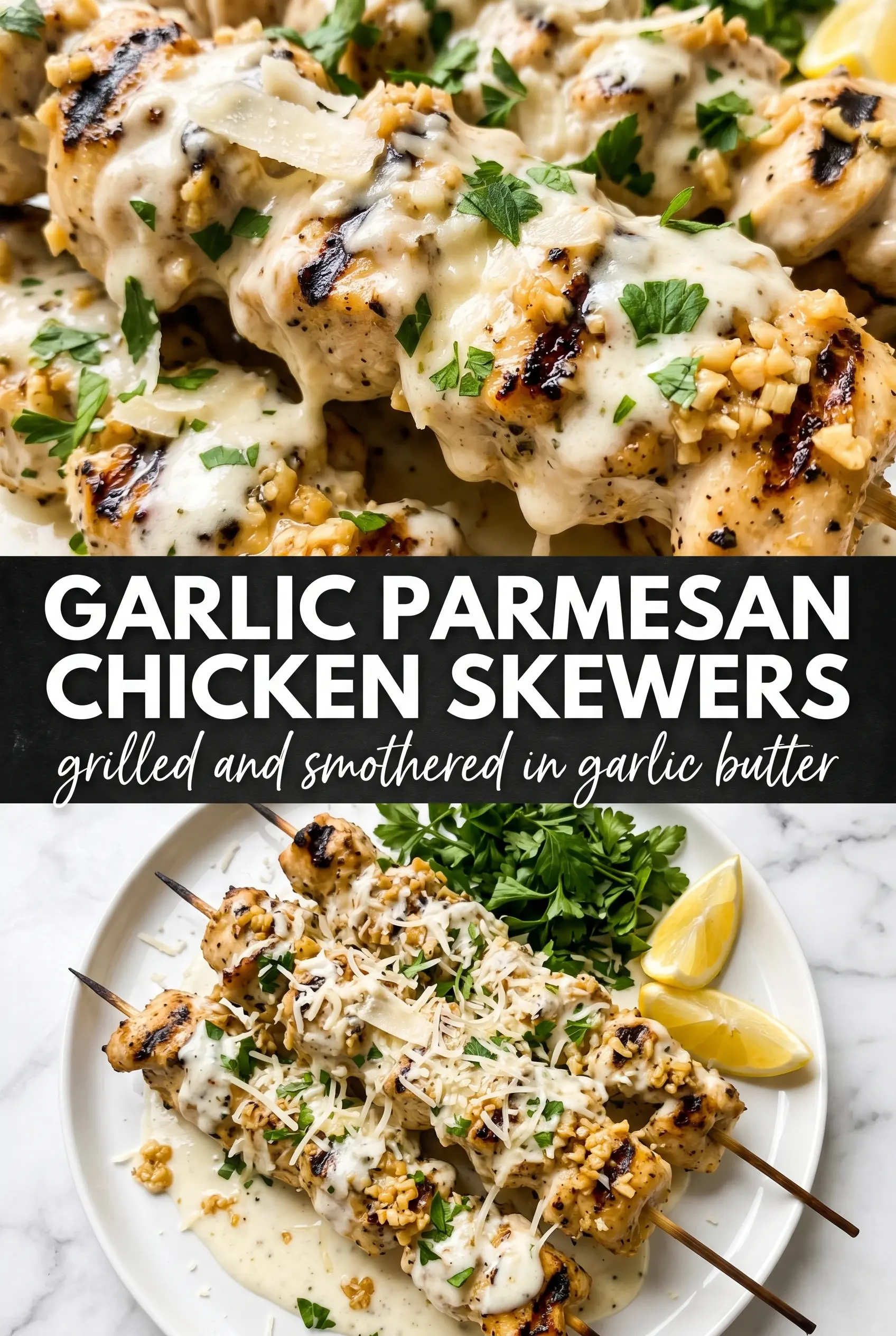
Garlic Parmesan Chicken Skewers
Ingredients
Equipment
Method
- Whisk olive oil, garlic, 1/4 cup Parmesan, lemon juice, Italian seasoning, dried basil, salt, and cracked black pepper until evenly combined.
- Add boneless skinless chicken breasts and toss until every cube is coated.
- Cover and marinate for 30 minutes so the garlic and Parmesan cling to the chicken.
- Soak wooden skewers in water for 30 minutes.
- Thread the marinated chicken onto the soaked skewers.
- Preheat the grill to medium-high heat and oil the grates to prevent sticking.
- Grill the skewers for 4-6 minutes per side, until deeply golden with visible char marks and the thickest piece reaches 165°F.
- Remove the skewers from the grill and drizzle with melted butter while they’re hot.
- Scatter the remaining Parmesan over the hot skewers so it melts into a lightly charred crust.
- Garnish with fresh parsley and serve with lemon wedges.