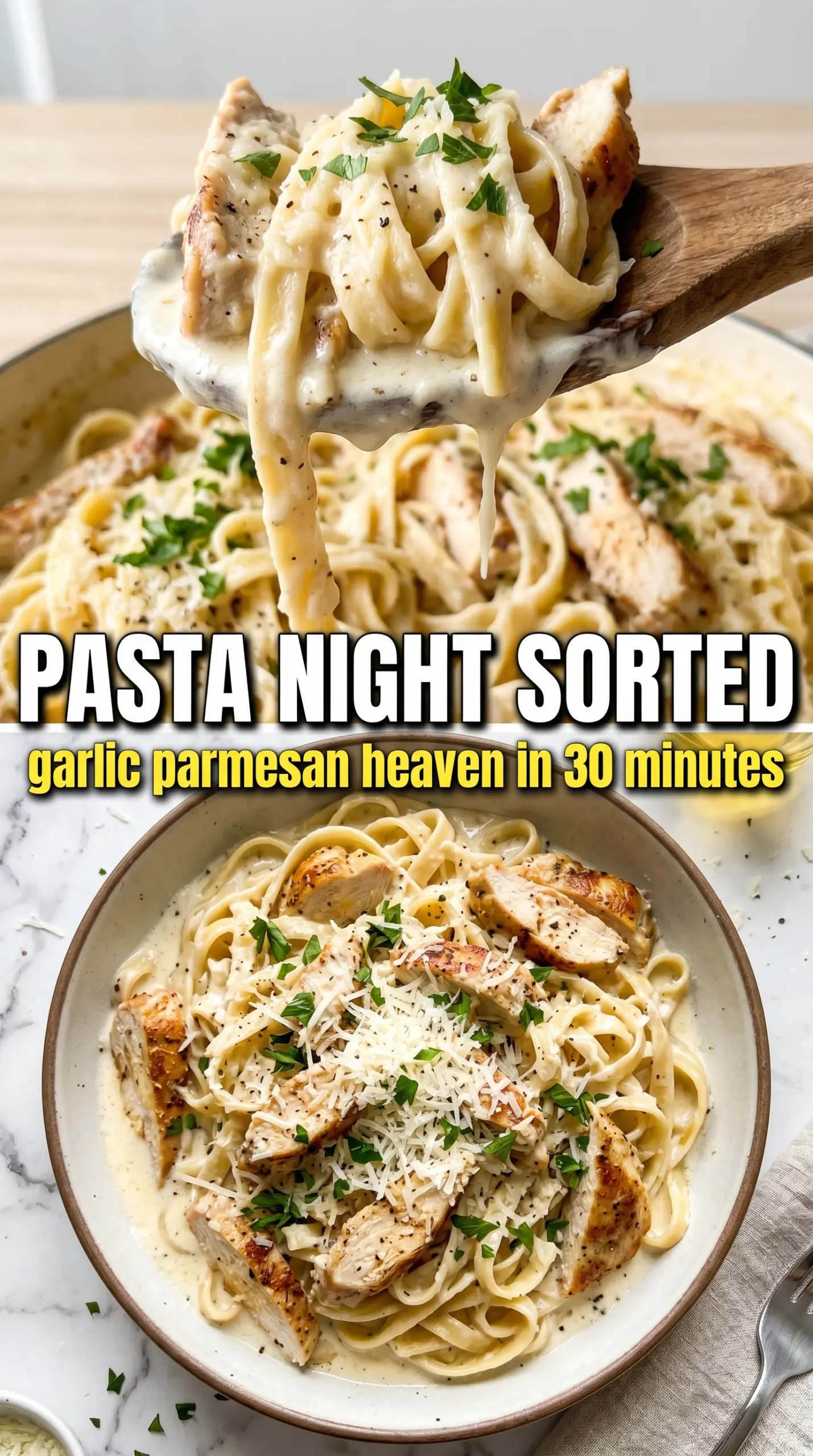
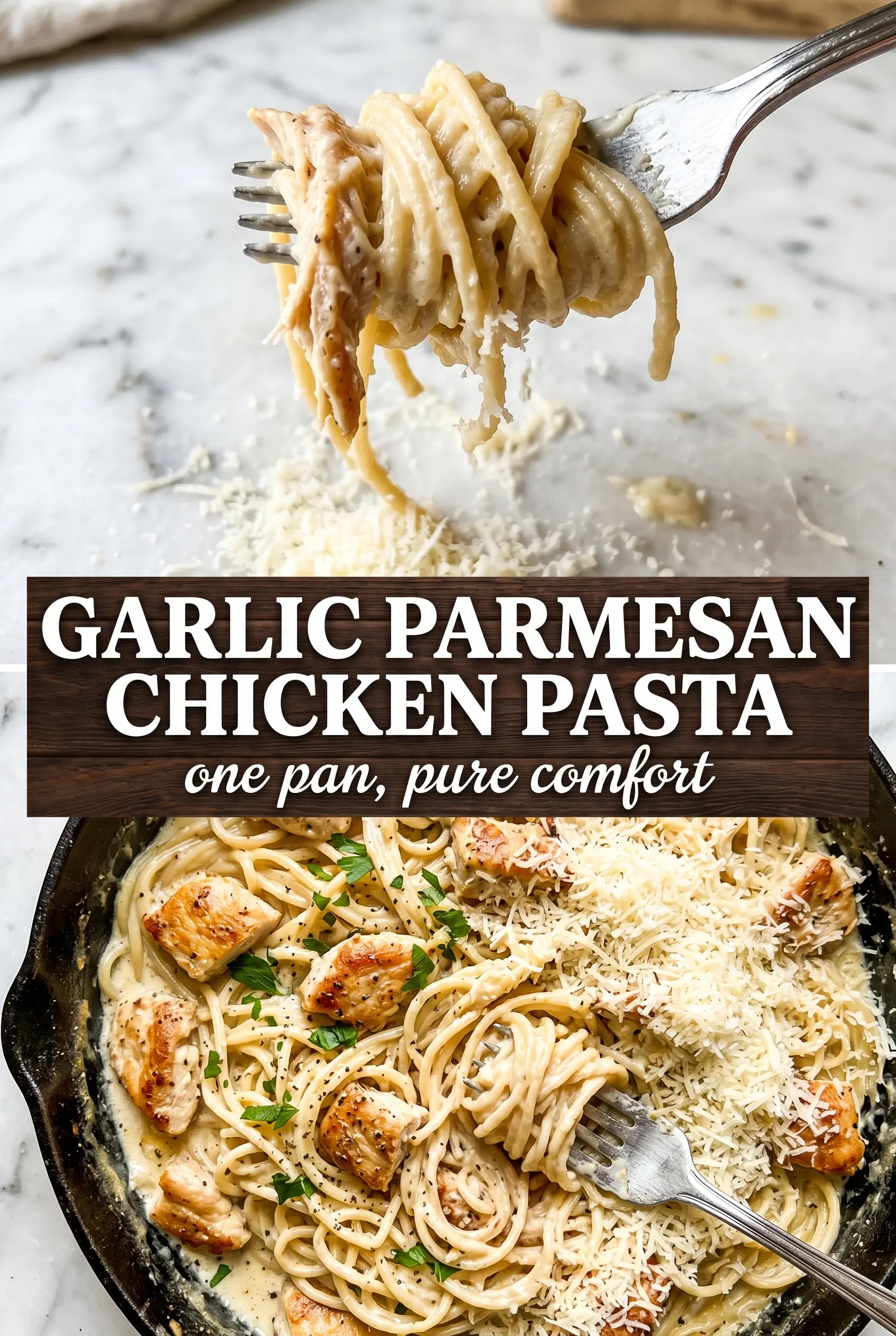
Silky garlic Parmesan sauce clings to every strand of pasta, and the golden chicken on top turns this into the kind of dinner that disappears fast. The sauce is rich without being heavy, with enough garlic to taste bold and enough Parmesan to give it that salty, nutty finish that keeps you going back for another forkful.
What makes this version work is the order. The chicken is cooked first so the skillet picks up those browned bits, then the garlic gets just a minute in butter before the cream and broth go in. That short simmer gives the sauce time to thicken before the Parmesan hits the pan, which keeps it smooth instead of grainy. A splash of pasta water ties everything together and helps the sauce coat the pasta instead of pooling underneath it.
Below, I’ve included the small details that matter most: how to keep the sauce from turning too thick, what to do if your Parmesan clumps, and a few easy ways to adapt the dish for different diets or whatever’s in your kitchen.
The sauce thickened up perfectly and the Parmesan stayed smooth, not grainy. My husband kept sneaking bites of the chicken before I could even plate it.
Save this garlic Parmesan chicken pasta for the nights when you want a creamy skillet dinner with golden chicken and no complicated cleanup.
The Trick to Keeping the Parmesan Sauce Smooth Instead of Grainy
The biggest mistake with a pasta like this is rushing the cheese. Parmesan needs a warm sauce, not a boiling one. If the pan is too hot when the cheese goes in, the fat can separate and the sauce turns sandy or clumpy instead of silky.
This recipe avoids that by simmering the cream and broth first until they thicken a little, then lowering the heat before stirring in the Parmesan. That gives the cheese enough heat to melt, but not enough to tighten up and break. The pasta water matters here too. Its starch helps the sauce cling and gives you a little control if the pan thickens more than you want.
- Chicken breasts — Slicing them thin after cooking keeps the meat tender and makes every bite easier to eat with the pasta. If your chicken breasts are thick, pound them to an even thickness first so they cook evenly and don’t dry out before the center is done.
- Freshly grated Parmesan — This is the ingredient worth buying fresh. Pre-shredded cheese is coated to keep it from clumping in the bag, and that coating can make the sauce less smooth. If you need a substitute, use a finely grated aged hard cheese, but expect a slightly different melt and a sharper finish.
- Heavy cream — It gives the sauce body and a stable, rich texture. Half-and-half can work in a pinch, but the sauce will be thinner and you’ll need a little more pasta water to help it coat properly.
- Chicken broth — This keeps the sauce from tasting flat and gives it enough savory backbone to stand up to all that cheese. Use low-sodium broth if your Parmesan is salty, because that’s the easiest way to avoid an over-seasoned sauce.
- Pasta water — Don’t skip the reserved water. It’s the fastest way to loosen the sauce without diluting the flavor, and the starch helps it cling to the pasta instead of sliding off the noodles.
What Each Ingredient Is Actually Doing in This Recipe
- Primary ingredient (the star) — Quality matters most. Choose the best you can find.
- Cooking medium (oil, butter, or broth) — This carries flavors and prevents dryness.
- Seasonings (salt, pepper, spices, herbs) — Layer flavors so nothing overpowers. Build depth gradually.
- Aromatics (garlic, onion, herbs) — Cook with fat to bloom flavors. Become the foundation.
- Supporting ingredients — Complement the main ingredient without overpowering it.
- Sauce or liquid (if applicable) — Brings flavors together. Balance richness with acid.
- Acid (lemon, vinegar, wine, or other) — Brightens and prevents flat-tasting results.
- Final finish (garnish, glaze, or sauce) — Prevents one-dimensional taste and adds visual appeal.
Building the Sauce in the Same Pan That Cooked the Chicken
Season and Sear the Chicken
Season the chicken generously with salt, pepper, garlic powder, and Italian seasoning before it hits the pan. Cook it in olive oil over medium-high heat until the outside turns deeply golden and the center reaches 165°F. If the chicken is crowded in the skillet, it steams instead of browns, so leave space between pieces or cook in batches. Let it rest before slicing so the juices stay in the meat instead of running onto the cutting board.
Wake Up the Garlic
Use the same skillet and melt the butter over medium heat, then add the garlic for about a minute. You want it fragrant and barely turning golden, not browned. Burnt garlic will make the whole sauce taste bitter, and there’s no fixing that once it happens. Those brown bits left from the chicken add depth, so don’t scrape the pan clean before starting the sauce.
Simmer the Cream and Broth
Pour in the cream and chicken broth and let the sauce simmer until it reduces slightly and looks glossy. Small bubbles around the edge are the cue here, not a hard boil. If it boils aggressively, the dairy can separate and the texture gets greasy. This is the point where you want patience more than heat.
Finish With Cheese and Pasta
Turn the heat down before adding the Parmesan, then stir until the sauce is smooth. Add the Italian seasoning, red pepper flakes, and a splash of pasta water if the sauce feels too tight. Toss the cooked pasta right in the skillet so every strand gets coated, then top with the sliced chicken and basil. If the sauce seems thin at first, give it a minute off the heat; it thickens as it settles.
How to Adapt This Garlic Parmesan Chicken Pasta Without Losing the Creamy Texture
Gluten-Free Version
Use your favorite gluten-free spaghetti or fettuccine and cook it just to al dente, because gluten-free pasta softens fast once it hits the sauce. Reserve a little extra pasta water if you can, since some gluten-free noodles need more help to carry the sauce evenly.
Lighter Cream Swap
You can use half-and-half instead of heavy cream, but the sauce will be less plush and a little more delicate. Keep the heat low and simmer it a touch longer so it has time to thicken before the cheese goes in.
Extra Garlic, Extra Punch
If you want a stronger garlic flavor, add one more minced clove with the butter, but keep a close eye on the pan. More garlic means more risk of bitterness, so the second it smells deeply fragrant, move on to the cream.
Storage and Reheating
- Refrigerator: Store leftovers in an airtight container for up to 3 days. The pasta will absorb some of the sauce, so expect it to thicken as it sits.
- Freezer: I don’t recommend freezing this one. Cream sauces can separate after thawing, and the pasta turns soft in a way that’s hard to fix.
- Reheating: Warm it gently in a skillet over low heat with a splash of broth, milk, or water. High heat is the fastest way to break the sauce, so keep it low and stir until it loosens again.
Questions I Get Asked About This Garlic Parmesan Chicken Pasta
Garlic Parmesan Chicken Pasta
Ingredients
Equipment
Method
- Season the boneless skinless chicken breasts with salt, pepper, garlic powder, and Italian seasoning to taste. Heat olive oil in a large skillet over medium-high heat, then cook the chicken for 5-6 minutes per side until golden and cooked through to 165°F, and rest before slicing thin.
- In the same skillet, cook the minced garlic in butter over medium heat for 1 minute until fragrant, then pour in the heavy cream and chicken broth. Simmer for 4-5 minutes until slightly thickened, stirring as needed.
- Stir in Parmesan, 1 teaspoon Italian seasoning, and red pepper flakes until the sauce is smooth, then add pasta water as needed to reach a silky consistency.
- Toss the cooked spaghetti or fettuccine in the garlic Parmesan sauce until fully coated and glossy. Divide among plates and top with sliced chicken.
- Garnish with fresh basil and extra Parmesan so it cascades across the pasta right before eating.