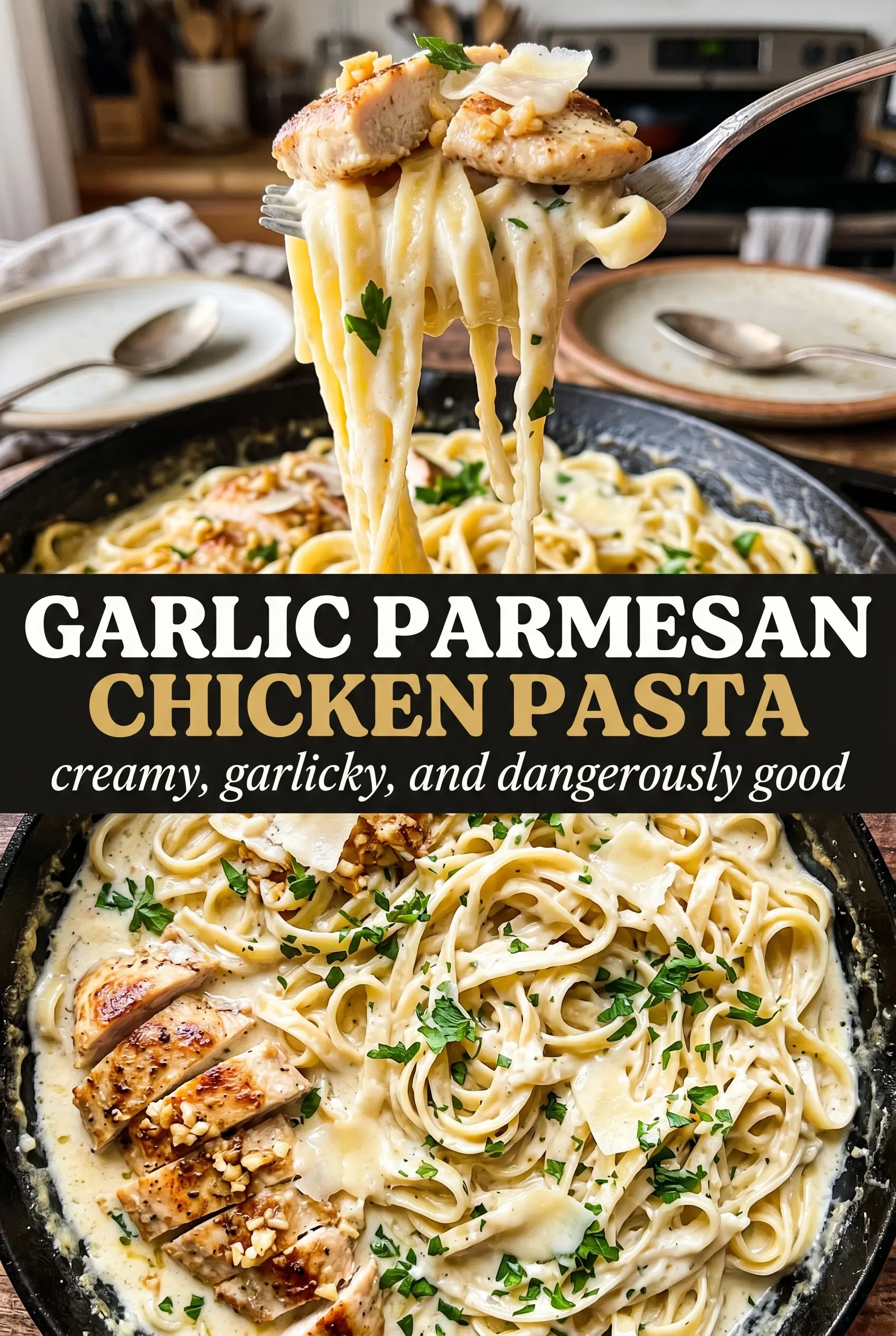
Silky garlic Parmesan sauce clings to every strand of pasta here, and the sliced chicken on top keeps the whole bowl feeling hearty instead of heavy. The best part is the balance: enough cream to make the sauce lush, enough Parmesan to give it body, and just enough broth and pasta water to keep it glossy instead of pasty.
What makes this version work is the order. The chicken gets its own hard sear first, then the same skillet becomes the sauce pan, which means the browned bits stay in play instead of getting washed away. Garlic cooks briefly in butter, just long enough to smell sweet and nutty, and the Parmesan goes in off a gentle simmer so it melts smoothly instead of turning grainy.
Below, I’ve included the small details that keep the sauce from tightening up too fast, plus a few swaps if you need to stretch this into a different kind of dinner. The recipe is straightforward, but the little choices matter here.
The sauce thickened up beautifully and never turned grainy, even after I tossed the pasta in. My husband kept going back for “just one more bite” because the garlic and Parmesan were balanced instead of overpowering.
Creamy garlic Parmesan chicken pasta with golden chicken and glossy sauce — the kind of dinner that looks like you worked harder than you did.
The Secret to Keeping the Parmesan Sauce Smooth After the Pasta Goes In
The most common failure in a dish like this is adding cheese to a sauce that’s too hot or too thin, then wondering why it turns stringy or grainy. Parmesan wants gentle heat and a little starch from the pasta water to help it emulsify. If the sauce is bubbling hard when the cheese goes in, pull it back. That one move keeps the texture velvety.
Using the same skillet for the chicken and the sauce matters more than it sounds like it should. Those browned bits at the bottom dissolve into the cream and broth, which gives the sauce a deeper, more savory base without needing extra ingredients. The pasta also needs to be underdrained by a little bit, since that reserved water is what lets the sauce coat the noodles instead of sitting in a pool underneath them.
What Each Ingredient Is Actually Doing in This Bowl
- Chicken breasts — Sliced breasts cook quickly and stay neat on top of the pasta. If yours are thick, pound them to an even thickness so the outside doesn’t overcook before the center reaches 165°F.
- Freshly grated Parmesan — This is the ingredient worth buying with care. Pre-grated cheese often has anti-caking agents that make the sauce less smooth, while freshly grated Parmesan melts into the cream instead of resisting it.
- Heavy cream — This gives the sauce its body and keeps it from breaking when it simmers. Half-and-half can work in a pinch, but the sauce will be thinner and needs more pasta water and a little extra patience.
- Chicken broth — It loosens the cream and adds a savory backbone so the sauce tastes like more than dairy. Use low-sodium broth if you want better control over the salt after the Parmesan goes in.
- Pasta water — Don’t skip the reserved cup. The starch helps the sauce cling to spaghetti or fettuccine and gives you the control to loosen it without watering it down.
- Butter and garlic — The butter carries the garlic flavor and gives the sauce a softer, rounder edge than oil alone. Cook the garlic just until fragrant; once it browns, it turns bitter fast and the whole pan tastes harsh.
Building the Sauce in the Same Pan Without Losing the Chicken
Searing the Chicken First
Season the chicken generously before it ever hits the pan. You want a deep golden crust, not pale steamed chicken, so give it room in the skillet and let it sit long enough to release on its own. If it sticks when you try to move it, it’s not ready yet. Cook until the center reaches 165°F, then rest it before slicing so the juices stay in the meat instead of running into the sauce.
Turning the Drippings Into the Base
After the chicken comes out, keep the skillet over medium heat and add the butter right into those browned bits. The garlic only needs about a minute, just until it smells sweet and cooked through. If the garlic starts to darken, the heat is too high and the sauce will taste bitter before the cream even goes in.
Finishing the Cream Sauce
Pour in the cream and broth, then let the mixture simmer until it thickens slightly and coats a spoon. This is where patience matters more than heat. Once the Parmesan goes in, stir until it melts completely, then adjust the texture with pasta water a splash at a time. The sauce should look glossy and loose enough to move around the noodles, because it will tighten as it sits.
Tossing the Pasta and Bringing It Together
Add the cooked pasta directly to the sauce and toss until every strand is coated. If the pan looks dry, add another spoonful of pasta water rather than more cream; that keeps the sauce balanced and prevents it from becoming heavy. Slice the chicken and lay it over the top so it stays visible and doesn’t disappear into the pasta.
How to Adapt This Without Losing the Creamy Garlic Character
Make It Lighter With Half-and-Half
Swap the heavy cream for half-and-half if you want a lighter sauce, but keep the heat low and expect a thinner finish. You may need a little extra Parmesan and more pasta water reduction to get back some body.
Gluten-Free Without Changing the Sauce
Use your favorite gluten-free spaghetti or fettuccine and cook it just shy of done so it can finish in the sauce. The sauce itself is naturally gluten-free, but the pasta water still matters, so save some before draining.
Swap in Chicken Thighs for Richer Flavor
Boneless thighs bring more fat and a deeper chicken flavor, which works well with the garlic cream sauce. They take a little longer to cook, so use the same golden-brown cue and confirm doneness with a thermometer instead of cutting early.
Add Vegetables Without Watering It Down
Spinach, peas, or steamed broccoli fit in cleanly here, but add them at the very end so they warm through without dumping extra water into the sauce. Mushrooms work too, as long as you cook off their moisture before the cream goes in.
Storage and Reheating
- Refrigerator: Store leftovers in an airtight container for up to 3 days. The sauce will thicken as it chills, and the pasta will absorb some of it.
- Freezer: This one doesn’t freeze well. Cream sauces can separate after thawing, and the pasta turns soft, so it’s better eaten fresh or refrigerated briefly.
- Reheating: Warm it gently in a skillet over low heat with a splash of broth, milk, or water. High heat is the mistake that makes the sauce break and the chicken dry out.
Answers to the Questions Worth Asking
Garlic Parmesan Chicken Pasta
Ingredients
Equipment
Method
- Season the chicken breasts with salt, pepper, garlic powder, and Italian seasoning. Heat olive oil in a large skillet over medium-high heat and cook chicken 5-6 minutes per side until golden and cooked through to 165°F.
- Remove the chicken to a plate and let it rest briefly, then slice thin.
- In the same skillet, cook the minced garlic in butter over medium heat for 1 minute. Pour in the heavy cream and chicken broth.
- Simmer the mixture for 4-5 minutes, stirring, until slightly thickened. Keep heat at a steady simmer, not a hard boil, to maintain a silky texture.
- Stir in Parmesan, Italian seasoning, and red pepper flakes until smooth. Add reserved pasta water as needed to reach a sauce that coats the pasta.
- Add the cooked spaghetti (or fettuccine) to the garlic Parmesan sauce and toss until every strand is coated. Use extra pasta water only if the sauce looks too thick.
- Divide the pasta among plates and top with the sliced chicken. Spoon any remaining sauce over the top so it clings to the pasta.
- Garnish with fresh basil and extra Parmesan before serving for a bright, fragrant finish.