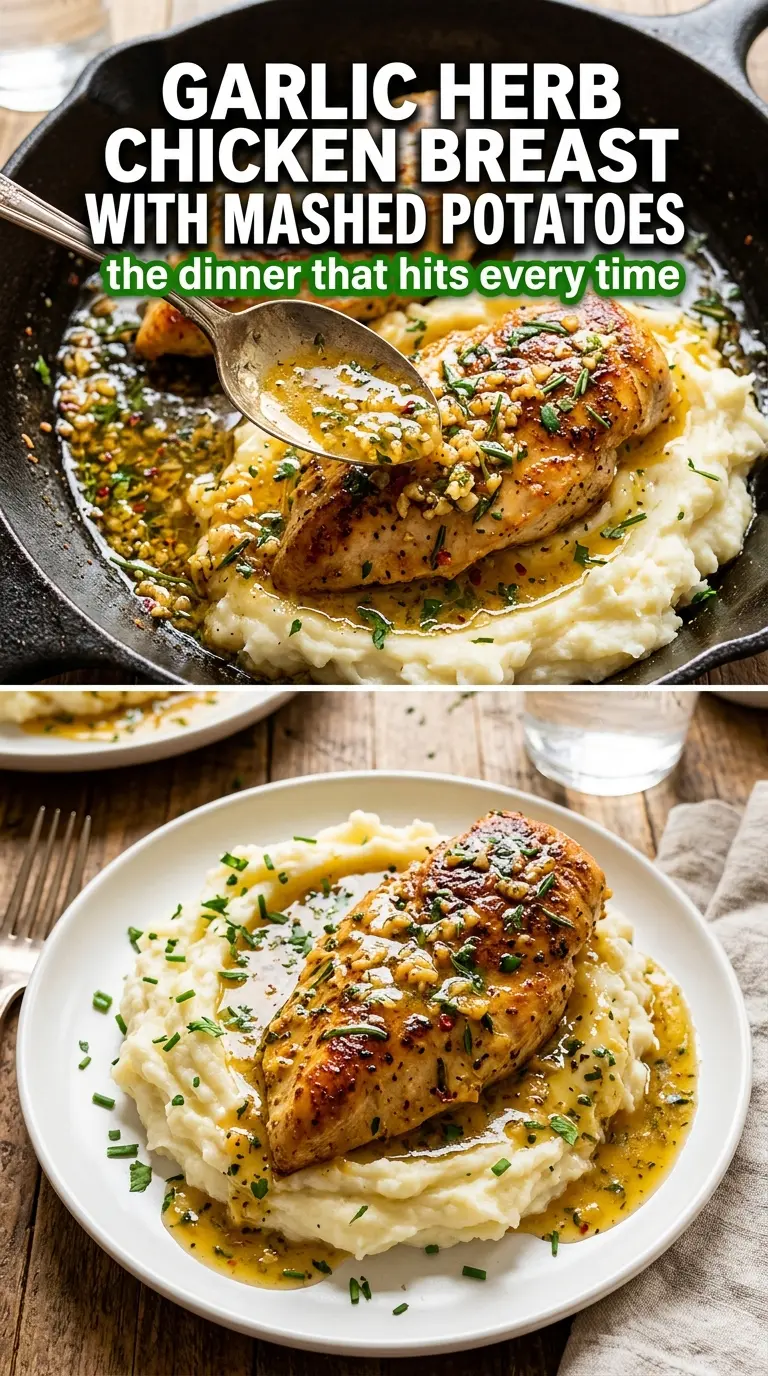
Golden-seared chicken breasts over buttery mashed potatoes are the kind of dinner that disappears fast, especially when the pan sauce gets spooned over the top and sinks into every bite. The chicken stays juicy, the potatoes stay plush, and the whole plate tastes like it took more effort than it did.
What makes this version work is the order. The chicken gets a dry seasoning blend and a proper sear, which builds the browned bits you need for the sauce. Then the pan is used again for garlic, broth, and butter, so nothing gets wasted and the flavor stays tied together. The mashed potatoes are kept simple on purpose: Yukon Golds, warm dairy, and enough butter to make them silky without turning gluey.
Below, I’ve included the small details that matter most, including how to keep the chicken from drying out and how to keep the potatoes light instead of heavy. If you want a comfort-style dinner that lands cleanly every time, this is a good one to keep close.
The sauce picked up all the browned bits from the chicken and made the potatoes taste like they came from a restaurant. My chicken stayed juicy at 165 and the mashed potatoes were perfectly smooth.
Save this garlic herb chicken breast with mashed potatoes for a dinner where the pan sauce pulls everything together.
The Sear and Sauce Depend on the Same Pan
The biggest mistake with this kind of chicken dinner is cleaning out the skillet after searing. Don’t do it. Those browned bits are the backbone of the sauce, and if the pan is wiped clean, the final dish tastes flatter no matter how good the seasoning is. The trick is getting a deep golden crust on the chicken first, then dropping the heat before the garlic goes in so it softens instead of scorching.
Another thing that matters here is thickness. Chicken breasts that are uneven will cook unevenly, and the thinner end will dry out before the thick side reaches temperature. If your breasts are bulky, pound them to an even thickness before seasoning. That gives you a cleaner sear and a better shot at juicy chicken all the way through.
What Each Ingredient Is Actually Doing in This Dish
- Chicken breasts — Boneless, skinless breasts keep the dish quick, but they need even thickness to stay tender. Pound them lightly if one end is much thicker than the other, and cook only until they hit 165°F at the center.
- Garlic powder, smoked paprika, thyme, and rosemary — This blend gives the chicken a savory crust without needing a long marinade. Garlic powder seasons more evenly than fresh garlic on the surface, and the smoked paprika adds color as well as depth.
- Yukon Gold potatoes — These mash into a creamy texture without turning watery or grainy. Russets work in a pinch, but they dry out faster and need a gentler hand when mashing.
- Heavy cream or whole milk, warmed — Warm dairy blends into the potatoes much more smoothly than cold liquid. Heavy cream makes them richer, while whole milk keeps them a touch lighter; either way, warming it first helps the potatoes stay fluffy.
- Butter — Butter finishes both the potatoes and the sauce, so don’t swap in margarine and expect the same result. If you need a dairy-free version, use a good plant-based butter with a clean flavor, but the sauce will be a little less rounded.
- Chicken broth — This loosens the pan drippings into sauce and carries the seasoning across the plate. Use a broth you’d drink on its own; weak broth makes a weak sauce.
The 20 Minutes That Matter Most
Boiling the Potatoes Until They Break Cleanly
Start the potatoes in salted water and cook them until a fork slides in with no resistance and the pieces break apart cleanly. If they still feel glassy in the center, the mash will turn lumpy no matter how long you beat it. Drain them well, then return them to the hot pot for a minute so extra steam escapes before you add butter and cream. That dry surface is what keeps the mash fluffy instead of wet.
Seasoning and Searing the Chicken
Pat the chicken dry before the seasoning goes on. Moisture on the surface blocks browning, and browning is what gives this dinner its depth. Sear over medium-high heat until the first side releases without sticking and the second side picks up a deep golden crust. If the pan is smoking hard, the heat is too high and the outside will darken before the inside is done.
Building the Pan Sauce
After the chicken comes out, lower the heat and add the butter and garlic. The garlic should smell fragrant in about a minute, not turn brown. Stir in the broth and scrape the bottom of the pan with a wooden spoon so all that flavor dissolves into the sauce. Let it simmer until it looks lightly glossy and slightly reduced, not aggressively thickened.
Mashing and Plating
Add the warm cream or milk a little at a time while mashing so you can stop as soon as the potatoes look smooth and billowy. Overworking them makes them sticky. Spoon the potatoes onto the plates first, set the chicken on top, then drizzle the sauce over everything so it runs into the edges of the mash. A little parsley at the end brightens the whole plate and cuts the richness.
How to Change This Dinner Without Losing the Point
Make It Dairy-Free
Use a plant-based butter and unsweetened oat milk or plain almond milk in the potatoes. The mash will be a little lighter and less rich, but the garlic herb chicken still carries the dish, especially if you keep the pan sauce simple and don’t rush the reduction.
Use Chicken Thighs Instead
Boneless thighs give you more forgiveness and a richer bite. They need a little longer in the skillet, but they stay juicy even if they cook past the exact minute. The sauce still works the same way, though the finished plate tastes a touch more savory.
Make the Potatoes Extra Smooth
For a silkier mash, pass the drained potatoes through a ricer before adding the butter and dairy. That gives you a smoother texture without overmixing, which is the main thing that keeps mashed potatoes from turning dense.
Storage and Reheating
- Refrigerator: Store chicken, sauce, and mashed potatoes separately for up to 4 days. The potatoes will firm up as they chill, and the sauce will thicken.
- Freezer: The chicken freezes well for up to 2 months, but the mashed potatoes are best fresh because dairy-heavy mash can turn grainy after thawing. Freeze only if you’re okay with a slightly less silky texture.
- Reheating: Reheat the chicken gently in the oven or a covered skillet with a splash of broth. Warm the potatoes over low heat with a little milk or cream, stirring often so they don’t scorch. Don’t blast either component in the microwave at full power or the chicken will dry out and the potatoes will seize up.
Answers to the Questions Worth Asking

Garlic Herb Chicken Breast with Mashed Potatoes
Ingredients
Equipment
Method
- Boil the Yukon Gold potatoes in salted water for 15-18 minutes until fork-tender, then drain thoroughly.
- Mash the potatoes with butter, warmed heavy cream or whole milk, salt, pepper, and garlic powder until smooth and fluffy; keep warm.
- Season the chicken breasts with garlic powder, smoked paprika, dried thyme, dried rosemary, salt, and pepper.
- Heat olive oil in a cast iron skillet over medium-high heat, then sear the chicken for 5-6 minutes per side until golden and cooked through to 165°F; remove to a plate.
- Melt 2 tablespoons butter in the same pan, then cook the minced garlic for 1 minute until fragrant.
- Add the chicken broth and scrape up the browned bits, then simmer for 2-3 minutes until a simple pan sauce forms.
- Spoon the mashed potatoes onto plates and place the chicken on top.
- Drizzle the pan sauce over the chicken and potatoes.
- Garnish with fresh parsley before serving.