Golden chicken breasts over buttery mashed potatoes hit that exact comfort-food sweet spot: crisp edges on the chicken, a soft mash underneath, and a garlic herb pan sauce tying everything together. When the chicken is seasoned well and seared properly, it tastes like much more than a basic weeknight dinner. The mashed potatoes give the plate something creamy to soak up the sauce, so every bite lands with a little richness and a little texture.
This version works because the seasoning goes on before the chicken ever touches the pan, which gives the herbs time to cling and bloom in the hot oil. The sauce is built in the same skillet after the chicken comes out, so all those browned bits stay in the dish instead of going down the drain. Yukon Gold potatoes make the mash especially smooth and buttery without turning gluey, and warming the cream before stirring it in keeps the texture light.
You’ll find the exact order that keeps the chicken juicy, the potatoes fluffy, and the sauce clean and savory. I also included a few swaps for dairy-free cooking and a couple of fixes for the most common mistakes people make with pan sauces and mashed potatoes.
The chicken seared up with a deep golden crust and the pan sauce picked up every bit of flavor from the skillet. The mashed potatoes were fluffy, not heavy, and my husband went back for seconds before I even sat down.
Save these garlic herb chicken breasts with mashed potatoes for a comforting dinner with a silky pan sauce and fluffy Yukon Gold mash.
The Mistake That Keeps Chicken Breast From Staying Juicy
Chicken breast dries out fast when it goes into the pan unevenly seasoned or gets flipped before the first side has had time to build color. The goal here is a deep, even crust before the chicken ever goes into the oven or rests on the plate. That crust does more than look good. It protects the meat and gives the pan sauce something worth scraping up later.
If the breasts are very thick on one end, pound them lightly or butterfly the larger side so they cook at the same pace. That matters more than people think. A chicken breast that is thin at one end and bulky at the other will be cooked through in one spot and dry in another. Medium-high heat is right for the sear, but if the pan starts smoking hard, pull it back a little. You want steady browning, not scorching.
What Each Ingredient Is Actually Doing In This Dish
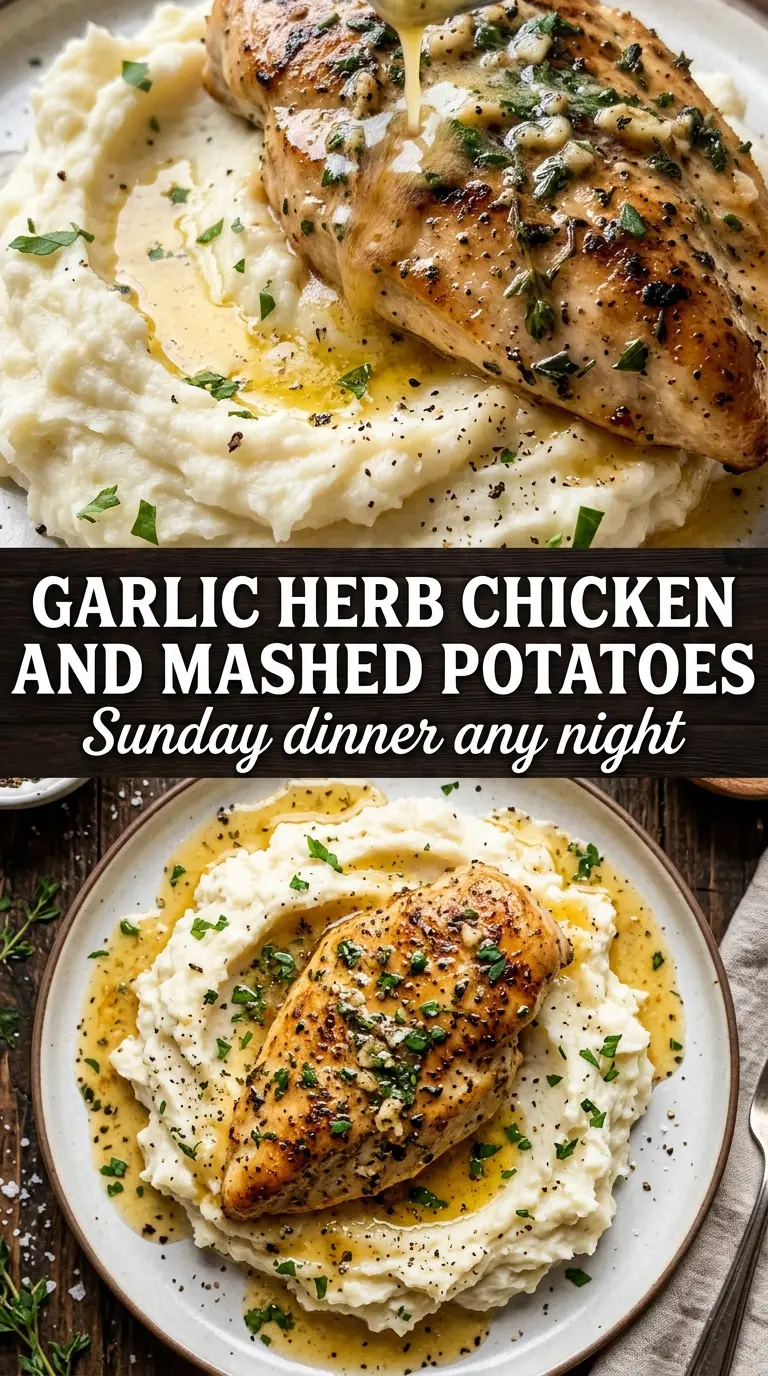
- Chicken breasts — Boneless, skinless breasts cook quickly and slice neatly over the potatoes, but they need even thickness to stay juicy. If yours are huge, split them horizontally or pound them to a more even shape so the center doesn’t lag behind the outside.
- Yukon Gold potatoes — These mash up creamy and naturally buttery without needing a lot of extra dairy. Russets work in a pinch, but they turn lighter and more fragile, so don’t overwork them or they can turn pasty.
- Butter — Butter carries the garlic and herbs in both the potatoes and the sauce. In the pan sauce, it softens the sharp edges of the garlic and gives the broth a glossy finish.
- Heavy cream or whole milk — Warming it before it goes into the potatoes keeps the mash from cooling down and turning stiff. Heavy cream gives a richer result, but whole milk still works well if you want something a little lighter.
- Garlic powder, thyme, rosemary, and smoked paprika — This seasoning blend gives the chicken a savory crust without needing a long marinade. Fresh herbs can be used, but dried herbs hold up better during the sear and give the pan more concentrated flavor.
- Chicken broth — This loosens the browned bits from the skillet and turns them into a quick pan sauce. Use a broth you’d actually drink; a bland one makes the sauce taste flat.
Building the Sauce and Potatoes Without Rushing Either One
Start the potatoes first
Get the potatoes boiling in well-salted water before you touch the chicken. They need 15 to 18 minutes, depending on the size of the cubes, and they should slip off a fork without collapsing into mush. Drain them well so the mash doesn’t get watery, then return them to the hot pot for a minute to steam off any extra moisture.
Season the chicken like it matters
Mix the garlic powder, paprika, thyme, rosemary, salt, and pepper together before you season the chicken. That keeps the coating even and helps the crust brown in a balanced way. Pat the chicken dry first. If the surface is wet, the spices slide off and the pan steams instead of sears.
Cook the chicken until the crust releases
Heat the olive oil until it shimmers, then lay the chicken in the pan and leave it alone for 5 to 6 minutes per side. If it sticks at first, it’s not ready yet. Once the crust forms, it will release more cleanly. Pull the chicken when it reaches 165°F in the thickest part, then let it rest while you finish the sauce. Resting keeps the juices inside instead of running out onto the cutting board.
Finish the pan sauce in the same skillet
Use the same pan without wiping it out. Melt the butter, stir in the garlic, and cook it for about a minute until fragrant but not browned. Add the broth and scrape the browned bits from the bottom; those bits are the point of the sauce. Simmer until it looks slightly reduced and lightly glossy. If it tastes thin, it needs another minute on the heat, not more seasoning.
Mash the potatoes until they’re fluffy, not gluey
Use a potato masher or ricer and stop as soon as the potatoes look smooth. Overmixing is what turns mashed potatoes gummy. Fold in the butter and warmed cream, then season. If they seem stiff, add a splash more warm milk. If they seem loose, let them sit uncovered for a minute and they’ll tighten slightly as the steam escapes.
How to Adapt This for Different Kitchens and Different Needs
Dairy-free version
Use olive oil instead of butter for the chicken and sauce, then swap in a good unsweetened oat milk or plain almond milk for the potatoes. The mash won’t be as rich, but it will still be creamy if you warm the milk first and season the potatoes well.
Make it with chicken thighs
Boneless thighs stay juicier and tolerate a little extra time in the pan, so they’re a good swap if you want more forgiving chicken. They’ll need a few more minutes per side, and the sauce may taste a touch richer because thighs bring more drippings.
Make the potatoes ahead
You can make the mashed potatoes a few hours ahead and keep them warm in a covered bowl over a pan of barely simmering water. Stir in an extra splash of warm cream before serving, because mashed potatoes tighten as they sit.
Gluten-free by default
This dish is naturally gluten-free as written, as long as your chicken broth is certified gluten-free. That small label check matters because broth is the one ingredient that can sneak in wheat-based additives.
Storage and Reheating
- Refrigerator: Store the chicken, sauce, and mashed potatoes separately for up to 4 days. The potatoes will firm up as they chill.
- Freezer: The chicken freezes well for up to 2 months, but the mashed potatoes may turn grainy after thawing. If you do freeze the potatoes, expect a softer texture and reheat them with extra cream.
- Reheating: Reheat the chicken covered in a 325°F oven with a spoonful of broth or sauce to keep it from drying out. Warm the potatoes slowly on the stove or in the microwave with a splash of milk, stirring halfway through so the center doesn’t stay cold.
Answers to the Questions Worth Asking

Garlic Herb Chicken Breast with Mashed Potatoes
Ingredients
Equipment
Method
- Boil the Yukon Gold potatoes in salted water for 15-18 minutes until fork-tender, then drain. Steam-dry them briefly so the mash turns smooth.
- Mash the potatoes with butter, warmed heavy cream or whole milk, salt, black pepper, and garlic powder until smooth and fluffy. Keep them warm so they stay creamy while you cook the chicken.
- Season the chicken breasts with garlic powder, smoked paprika, dried thyme, dried rosemary, salt, and black pepper. Pat the coating on so it browns nicely.
- Heat olive oil in a cast iron skillet over medium-high heat and sear the chicken for 5-6 minutes per side until golden and cooked through to 165°F. Remove the chicken to a plate when done.
- Melt 2 tablespoons butter in the same skillet, then cook the minced garlic for 1 minute. Stir until fragrant but not browned.
- Add chicken broth and scrape up the browned bits from the bottom of the skillet, then simmer for 2-3 minutes until a simple pan sauce forms. The sauce should look glossy and lightly reduced.
- Plate the mashed potatoes and place the seared chicken on top. Position the chicken so the sauce can drizzle over the top.
- Drizzle the garlic herb pan sauce over the chicken and mashed potatoes. Use a spoon to spread it across the visible surface.
- Garnish with fresh parsley. Finish with a light scatter for a fresh green cue.