Garlic butter chicken with Parmesan rice lands on the table with the kind of comfort that makes people linger after dinner. The chicken sears into a deep golden crust, then slides back into rice that has soaked up every bit of the pan drippings, garlic, and butter. What you get is tender chicken over creamy, savory rice that tastes like it took much longer than it did.
The key is building everything in the same skillet. That browned fond from the chicken becomes the base for the rice, which is why this dish tastes layered instead of flat. Toasting the rice for a minute or two before the broth goes in gives it a little more structure, and stirring in the Parmesan with the cream at the end keeps the sauce smooth instead of sticky.
Below, I’ll walk you through the exact moments that matter most: getting the chicken properly seared, keeping the rice from turning gummy, and finishing the pan so the sauce stays creamy right up to the last spoonful.
The chicken came out beautifully browned and the rice soaked up all that garlic butter without getting mushy. I liked that the sauce stayed creamy at the end instead of separating, and my husband went back for seconds before I’d even sat down.
Save this garlic butter chicken with Parmesan rice for a one-pan dinner that turns simple ingredients into a creamy, deeply savory skillet meal.
The Part That Keeps the Rice Creamy Instead of Gummy
The mistake most people make with skillet rice is rushing the liquid stage. If the broth goes in before the rice has had a minute to toast in the fat, the grains soften on the outside too quickly and the final texture turns dense. That quick toast in butter and garlic gives the rice a little protection and adds flavor before the simmer even starts.
The other place this dish can go wrong is at the end, when the Parmesan gets added. If the pan is boiling hard, the cheese can clump and the cream can look grainy. Pull the heat down low, stir gently, and let the residual heat finish the job. That’s how you get rice that looks glossy and spoonable instead of pasty.
What Each Ingredient Is Actually Doing Here
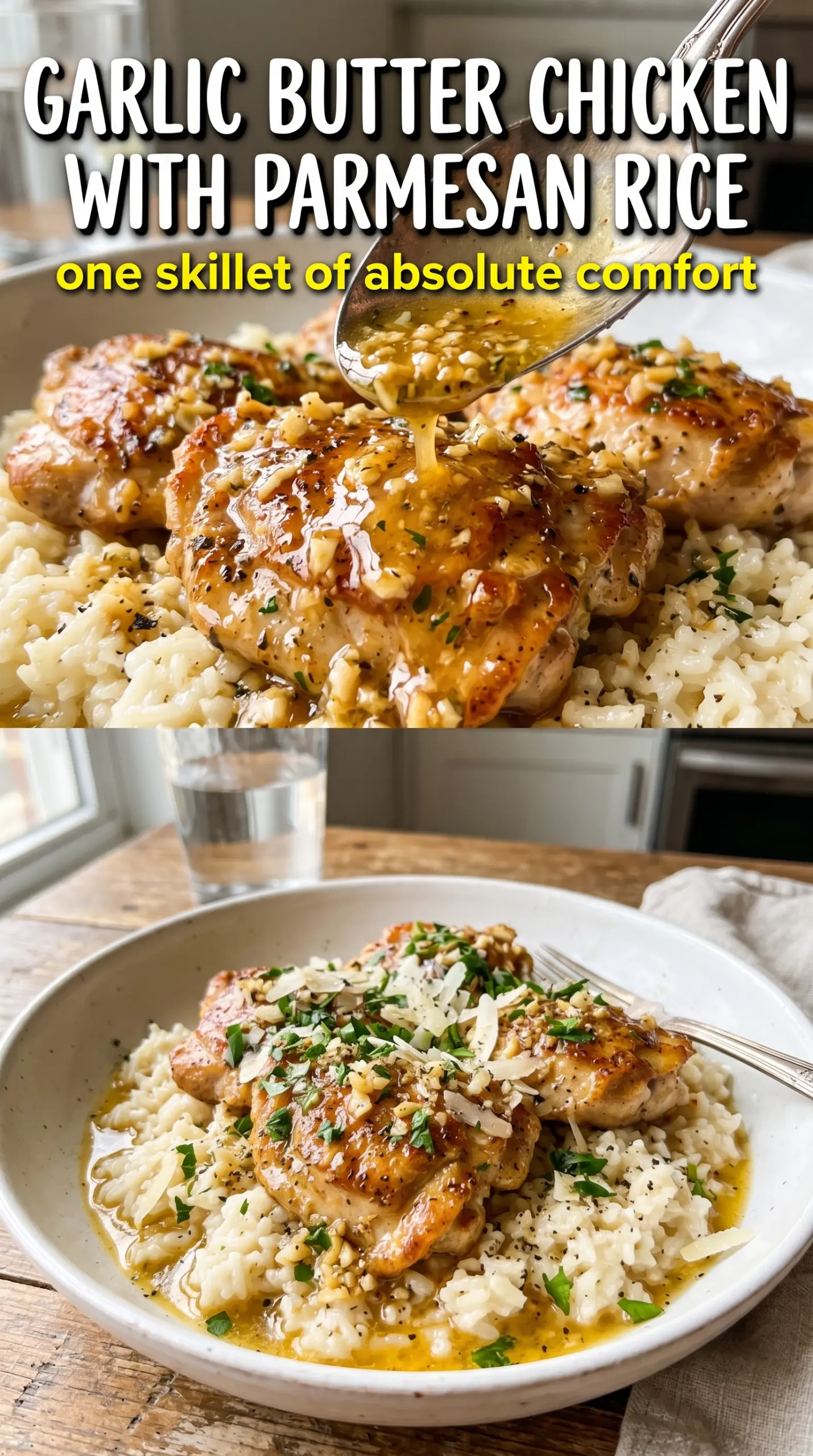
- Boneless skinless chicken thighs — These stay juicy under high heat and give you better flavor than chicken breast in a skillet dish like this. If you swap in breast, keep a close eye on the cook time and pull it as soon as it hits 165°F so it doesn’t dry out.
- Long-grain white rice — This holds its shape better than short-grain rice and gives the skillet a creamy finish without collapsing. Jasmine works fine here too, but avoid instant rice; it won’t absorb the broth and drippings the same way.
- Chicken broth — This is where most of the savory depth comes from, so use a broth you’d actually taste on its own. If yours is low-sodium, that’s ideal because it lets you control the final seasoning once the Parmesan goes in.
- Parmesan cheese — Freshly grated Parmesan melts smoothly and gives the rice its salty, nutty finish. The pre-grated kind can work in a pinch, but it often brings a dustier texture and doesn’t melt as cleanly.
- Heavy cream — This turns the rice from savory to plush. Half-and-half can be used, but the sauce will be a little lighter and less luxurious.
- Butter and garlic — These carry the flavor through the whole pan. Don’t rush the garlic past one minute or it turns bitter and takes the whole dish with it.
Building the Skillet So Every Bite Tastes Like the Pan Drippings
Searing the Chicken First
Season the thighs well, then lay them into hot olive oil and leave them alone until the first side releases cleanly. You want a deep golden crust, not pale patches, because that crust is what gives the rice its savory backbone later. If the chicken sticks when you try to turn it, it needs another minute. Once both sides are browned and the center reaches 165°F, move it out of the pan so it doesn’t overcook while the rice comes together.
Toasting the Rice in Butter and Garlic
Melt the butter in the same skillet and cook the garlic just long enough for it to smell sweet and fragrant. Add the rice and stir for about two minutes until the grains look glossy and a little translucent at the edges. That step coats the rice in fat and helps it cook evenly instead of turning chalky on the outside and hard in the center. If the garlic starts to brown, lower the heat right away.
Simmering Until the Liquid Disappears
Pour in the broth, bring it up to a boil, then cover and drop the heat to low. The lid should stay on so the steam can do its job; lifting it early lets the rice dry out before it turns tender. After about 18 minutes, the liquid should be absorbed and the rice should be soft with just a little bite left. If there’s still visible broth in the pan, give it another few minutes before stirring.
Finishing with Cream and Cheese
Stir in the Parmesan, cream, and thyme off the stronger heat and watch the rice turn silky. This is the point where people often overwork the pan and end up with sticky rice, so use a gentle hand and stop once everything looks creamy. Return the chicken to the skillet and nestle it into the rice so the juices run back into the pan instead of onto the plate.
How to Tweak This Skillet Without Losing What Makes It Good
Make It Dairy-Free
Use olive oil in place of the butter and swap the heavy cream for an unsweetened oat or cashew cooking cream. The rice won’t taste quite as rich, but you’ll still get a silky skillet sauce if you keep the heat low when the final ingredients go in.
Use Chicken Breast Instead of Thighs
Chicken breast works, but it dries out faster, so slice thicker pieces or pound them to an even thickness before searing. Pull it the moment it reaches temperature and let it finish gently in the rice at the end.
Make It Gluten-Free
This recipe is naturally gluten-free as written as long as your chicken broth is certified gluten-free. That’s the only ingredient I’d double-check, since broth is where hidden starches or additives usually show up.
Add Vegetables Without Throwing Off the Texture
Stir in a handful of baby spinach at the very end or fold in sautéed mushrooms after the rice has finished cooking. Add watery vegetables too early and the rice loses its creamy texture, so keep anything moist or quick-cooking for the finish.
Storage and Reheating
- Refrigerator: Store leftovers in an airtight container for up to 4 days. The rice thickens as it chills, so expect a firmer texture the next day.
- Freezer: It freezes well for up to 2 months, though the cream may soften a little after thawing. Freeze in portions and cool it completely before sealing.
- Reheating: Reheat gently on the stovetop or in the microwave with a splash of broth or water to loosen the rice. High heat dries out the chicken and makes the rice tighten up, so warm it slowly and stir once or twice.
Answers to the Questions Worth Asking

Garlic Butter Chicken with Parmesan Rice
Ingredients
Equipment
Method
- Season boneless skinless chicken thighs with salt, pepper, garlic powder, and smoked paprika to taste. Heat olive oil in a large skillet over medium-high until shimmering, then sear chicken for 5-6 minutes per side until golden and cooked through to 165°F and remove to a plate.
- Melt butter in the same skillet over medium heat until foaming, then cook minced garlic for 1 minute until fragrant. Add long-grain white rice and toast for 2 minutes, stirring so grains are lightly coated.
- Pour in chicken broth and bring to a boil, scraping up any browned bits from the bottom. Cover and simmer over low heat for 18 minutes until the rice is tender.
- Stir in grated Parmesan cheese, heavy cream, and dried thyme until the rice is creamy and saucy. Return the chicken to the pan, nestling it into the Parmesan rice to warm through.
- Garnish with fresh parsley for garnish and serve immediately, spooning creamy rice around and under the chicken.