Golden seared garlic butter chicken thighs over creamy Parmesan rice hit that sweet spot between comforting and practical. The chicken brings a crisp, well-seasoned surface and juicy center, while the rice underneath soaks up every bit of garlic butter and broth from the pan. Nothing gets left bland or dry here.
What makes this version work is the order. The chicken is seared first, then the rice cooks in the same skillet so it can pick up the browned bits that usually get wiped away. Parmesan goes in near the end, after the rice has softened, so the sauce turns silky instead of gluey.
You’ll find a few small details below that matter more than they look on paper: how to keep the garlic from burning, when the rice is actually ready for the dairy, and what to change if you want to make this with chicken breasts instead.
The rice came out creamy without turning mushy, and the garlic butter from the chicken made the whole skillet taste like I’d been cooking all afternoon. Even the leftovers held up the next day.
Save this garlic butter chicken with Parmesan rice for a one-pan dinner that turns simple pantry ingredients into a creamy skillet meal.
The Reason the Rice Stays Creamy Instead of Turning Thick and Sticky
The biggest mistake in skillet rice is adding the dairy too early or cranking the heat when the Parmesan goes in. Rice needs steady moisture to cook through first. If cream and cheese hit the pan before the grains are tender, the starch tightens up and you end up with a heavy, pasty texture instead of a spoonable one.
This recipe avoids that by cooking the rice in broth until it’s fully tender, then finishing with Parmesan and cream off the highest heat. That gives the cheese time to melt into the liquid already in the pan without seizing or clumping. The chicken also helps by bringing its juices back into the skillet at the end, which loosens everything just enough to stay creamy.
What Each Ingredient Is Actually Doing in This Skillet

- Chicken thighs — Thighs stay juicy during the sear and hold up better than breasts once they go back into the rice. If you swap in chicken breasts, cut them thinner so they cook through before the rice is done, or they’ll dry out while waiting on the starch to finish.
- Butter and garlic — This is the backbone of the dish, and the garlic should cook just until fragrant, not browned. Burnt garlic turns bitter fast, so if the pan looks too hot after searing, pull it off the burner for a minute before adding the butter.
- Long-grain white rice — Long-grain rice keeps its shape and gives you separate tender grains under the sauce. Short-grain rice will make the dish heavier and more risotto-like; it’s not wrong, just a different texture.
- Chicken broth — The broth seasons the rice from the inside out and carries the browned chicken flavor through the whole pan. Low-sodium broth works best here because the Parmesan adds its own salt.
- Parmesan cheese — Freshly grated Parmesan melts smoother than the shelf-stable kind, which can go grainy. If you only have pre-grated cheese, add it slowly and keep the heat low so it has a chance to soften instead of clumping.
- Heavy cream — Cream rounds out the sauce and makes the rice feel rich without needing a separate gravy. Half-and-half can work in a pinch, but the final sauce will be lighter and less velvety.
Building the Skillet in the Right Order
Searing the Chicken First
Season the chicken generously, then sear it in hot olive oil until the surface is deep golden and the meat releases easily from the pan. If it sticks, it needs more time; forcing it early will tear off the crust you want. Cook until the thickest part reaches 165°F, then move it to a plate so the juices can settle while you build the rice.
Waking Up the Garlic in the Butter
Once the chicken is out, add the butter and garlic to the same skillet. Stir for about a minute, just until the garlic smells sweet and the pan looks glossy. The minute it starts taking on color, move fast; garlic goes from fragrant to bitter in a heartbeat.
Toast the Rice Before It Simmer
Add the uncooked rice and stir it through the butter and garlic for about two minutes. You want the grains coated and lightly toasted, not browned dark. That step helps the rice stay separate and gives the finished dish a little more depth than if you dumped the broth in right away.
Let the Broth Do the Work
Pour in the broth, bring it to a boil, then cover and reduce the heat to low. A gentle simmer is what cooks the rice evenly; a hard boil will evaporate the liquid too fast and leave you with dry rice on the bottom and hard grains on top. After 18 minutes, check for tenderness before stirring anything aggressively.
Finish with Cream, Parmesan, and the Chicken
Stir in the cream, Parmesan, and thyme once the rice is tender. The mixture should look loose at first and then thicken as the cheese melts. Nestle the chicken back into the pan and let it warm through for a minute or two so the juices run into the rice instead of onto the plate.
How to Adapt This When You Want It a Little Different
Use chicken breasts instead of thighs
Chicken breasts work, but they dry out faster, so pound them to an even thickness and watch the sear closely. Pull them as soon as they reach 165°F, since they won’t have the same forgiveness as thighs when they go back into the skillet.
Make it gluten-free without changing the texture
This dish is naturally gluten-free as written, as long as your broth and Parmesan are certified gluten-free. The rice, butter, and cream do all the same work without any flour-based thickener, so nothing needs to be sacrificed.
Make it lighter with half-and-half
Half-and-half gives you a softer finish than heavy cream and trims some richness. The sauce won’t cling quite as luxuriously, but it still turns creamy if you keep the heat low and stir until the cheese fully melts.
Add vegetables without watering out the rice
Stir in quick-cooking vegetables like peas or spinach at the very end so they warm through without flooding the pan. Mushrooms or onions need to be cooked before the rice goes in, or they’ll release moisture at the wrong time and soften the texture.
Storage and Reheating
- Refrigerator: Store in an airtight container for up to 4 days. The rice will firm up as it sits, but the flavor deepens.
- Freezer: You can freeze it, but the rice softens a bit after thawing and the cream sauce won’t be as smooth. Freeze in portions for up to 2 months if you don’t mind a slightly softer texture.
- Reheating: Reheat gently on the stove or in the microwave with a splash of broth or water. The common mistake is blasting it on high heat, which dries out the chicken and makes the rice tighten up before the sauce loosens again.
Questions I Get Asked About This Recipe
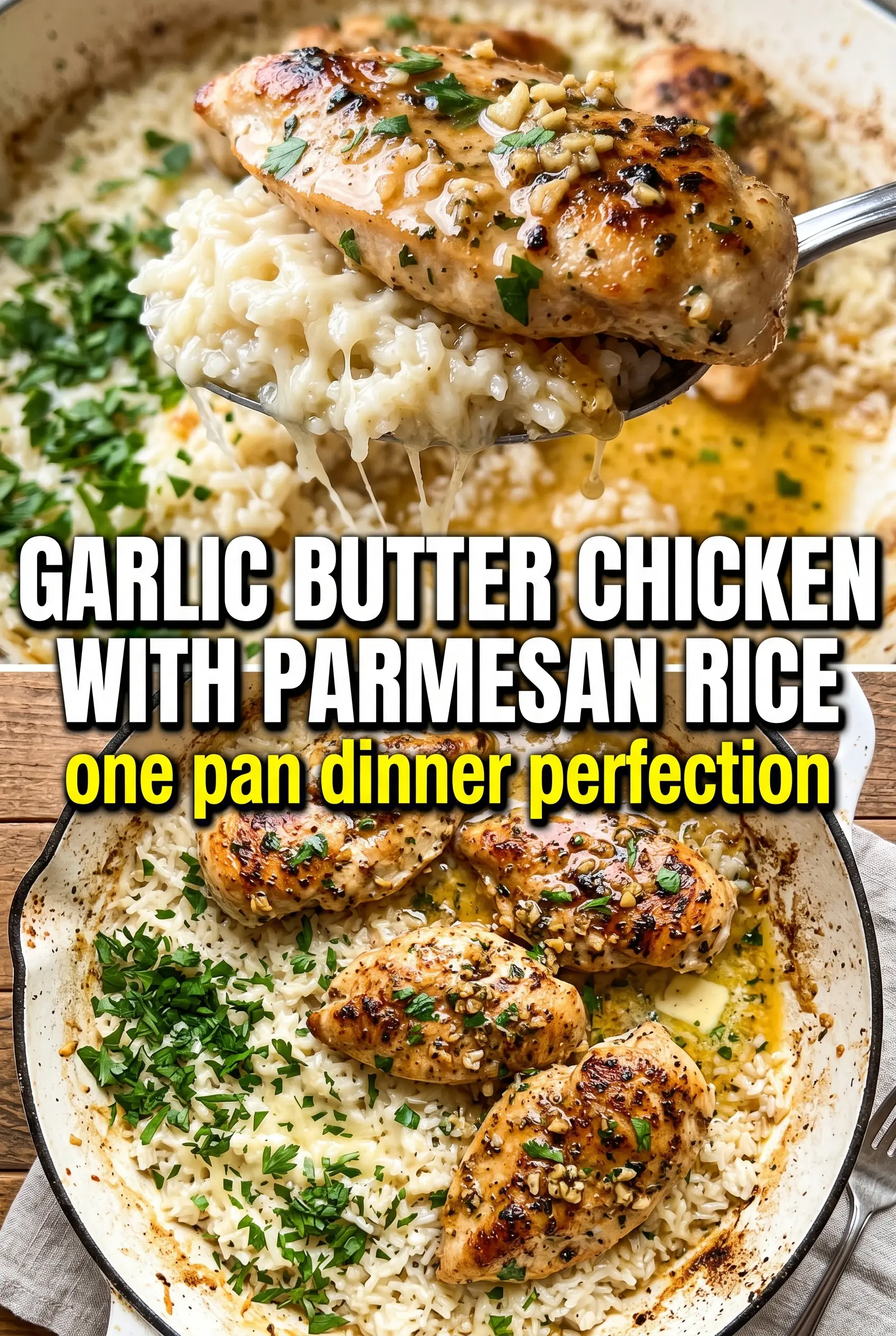
Garlic Butter Chicken with Parmesan Rice
Ingredients
Equipment
Method
- Season the chicken thighs with salt, pepper, garlic powder, and smoked paprika to taste. Heat olive oil in a large skillet over medium-high heat and sear the thighs for 5-6 minutes per side until golden and cooked through to 165°F, then remove to a plate.
- In the same skillet, melt butter over medium heat. Cook the minced garlic for 1 minute, then add the long-grain white rice and toast for 2 minutes, stirring, until fragrant.
- Pour in the chicken broth and bring it to a boil. Cover and simmer over low heat for 18 minutes until the rice is tender.
- Stir in the Parmesan cheese, heavy cream, and dried thyme until the rice turns creamy and saucy. Return the chicken thighs to the pan, nestling them into the Parmesan rice so the pan juices coat the meat.
- Garnish with fresh parsley and serve immediately.