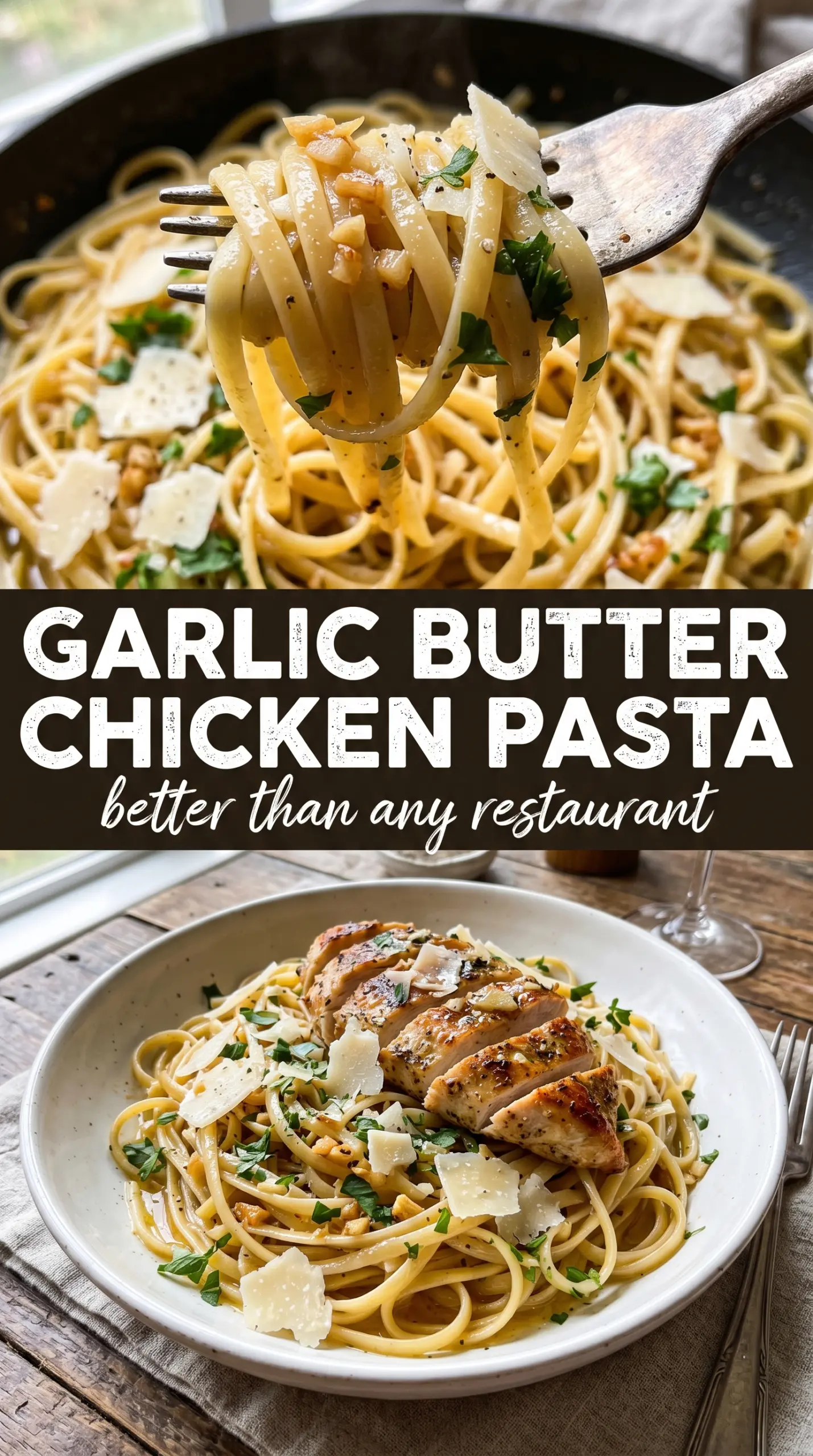
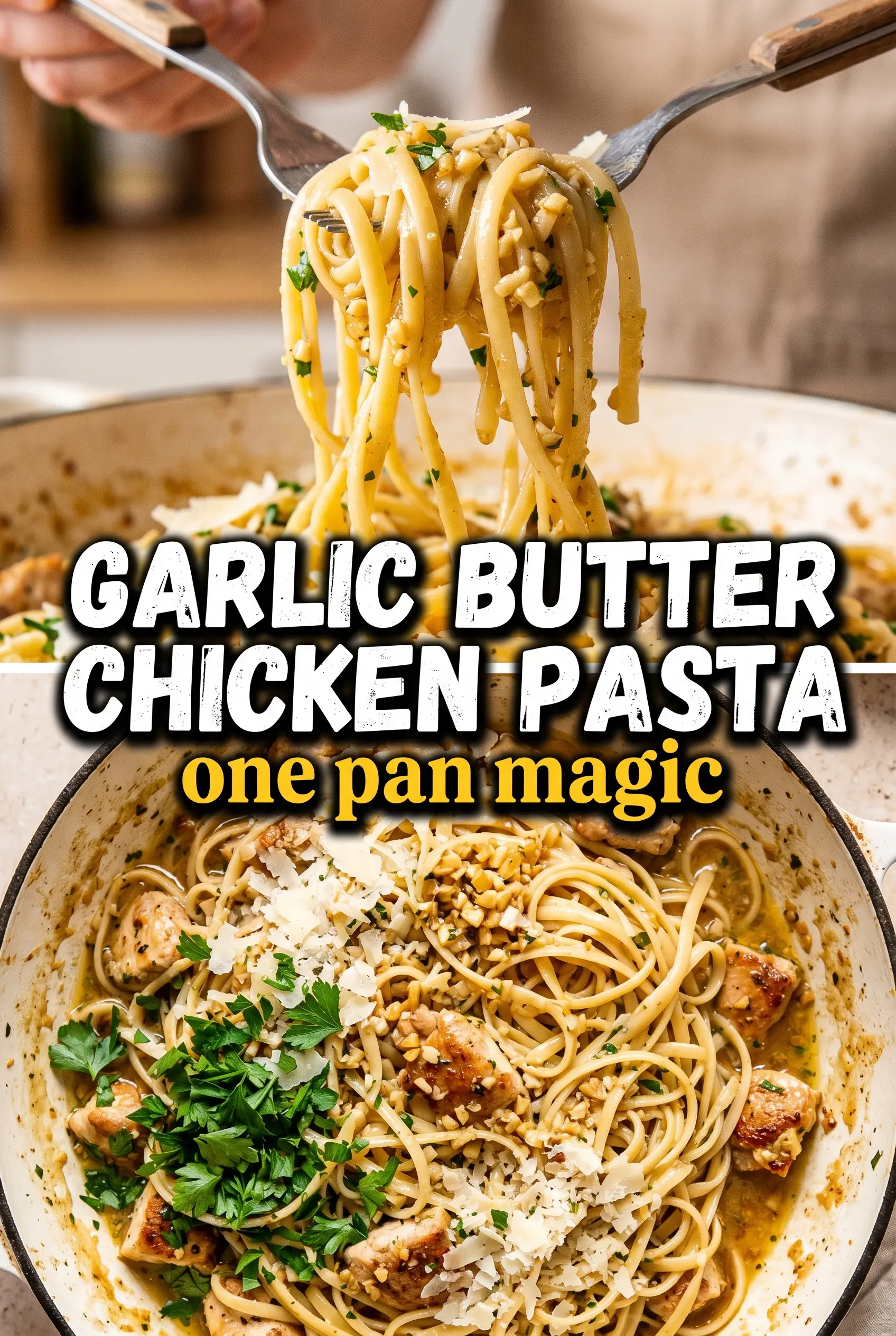
Garlic butter chicken pasta lands on the table with glossy strands of spaghetti, golden chicken, and a sauce that clings instead of pooling at the bottom of the bowl. The butter gives it that rich, silky finish, but the real payoff is the balance: plenty of garlic, a little lemon to keep it from feeling heavy, and enough Parmesan to turn the sauce into something you actually want to chase around the plate.
What makes this version work is the order. The chicken gets a hard sear first, then the same skillet becomes the sauce pan, which means every browned bit left behind ends up flavoring the pasta. The pasta water matters here too. It loosens the butter just enough to coat the spaghetti and helps the cheese melt into the sauce instead of sitting in clumps.
Below, I’ll show you the timing that keeps the garlic from burning, the one pasta-water move that gives you the best texture, and a few smart swaps for when you need to stretch what’s in the pantry.
The sauce coated every strand of spaghetti and didn’t break when I added the pasta water. The garlic stayed mellow and fragrant, and the chicken was still juicy after searing.
Save this garlic butter chicken pasta for nights when you want glossy spaghetti, golden chicken, and a lemon-garlic sauce that comes together in one skillet.
The Trick to Keeping the Garlic Butter Sauce Glossy, Not Greasy
Garlic butter sounds simple, but it can go off the rails fast if the pan is too hot or if the sauce gets overloaded before the pasta has a chance to absorb it. The goal here is not a puddle of melted butter underneath the noodles. You want an emulsion that clings to the spaghetti and carries the garlic all the way through the dish.
The seared chicken helps more than people expect. Those browned bits in the pan give the sauce depth, but only if you melt the butter over medium heat and add the garlic after the skillet has calmed down a little. If the garlic goes in while the pan is screaming hot, it turns bitter before the butter has a chance to do its job. A small splash of pasta water fixes the texture by helping the fat and starch come together.
What Each Ingredient Is Actually Doing in This Pasta
- Chicken breasts — Slicing them into strips gives you more browned surface area and faster, more even cooking. Chicken thighs work too if you want a little more richness, but they’ll need an extra minute or two in the pan and can release more fat.
- Butter — This is the backbone of the sauce, so use real butter here. Salted or unsalted both work, but if you use salted butter, go lighter on the seasoning at the start and taste before adding more salt at the end.
- Garlic — Fresh minced garlic makes a big difference. Jarred garlic can work in a pinch, but it tends to taste flatter and cook up softer, which matters in a sauce this simple.
- Pasta water — This is the ingredient that turns butter and garlic into a sauce instead of just a coating. Reserve it before draining the pasta, and add it a splash at a time until the spaghetti looks glossy and loose, not soupy.
- Parmesan — Freshly grated Parmesan melts cleaner and gives the sauce a tighter, silkier finish. Pre-shredded cheese often has anti-caking agents that can make the sauce grainy.
- Lemon juice — It wakes up the butter and keeps the whole dish from tasting flat. The acidity doesn’t make it lemony; it just sharpens the garlic and Parmesan enough to keep each bite lively.
Building the Sauce in the Right Order
Searing the Chicken First
Season the chicken strips well and cook them in hot olive oil until they’re deeply golden on the outside and just cooked through. You want some browning, but not a crust so dark that the pan starts smoking hard. Pull the chicken out as soon as it’s done. If you leave it in while the sauce comes together, it can dry out before the pasta is ready.
Letting the Garlic Bloom in Butter
Melt the butter in the same skillet and add the garlic with the red pepper flakes once the heat drops to medium. Stir until the garlic smells fragrant and the edges just start to turn pale gold. That small window matters. If the garlic browns too far, the sauce picks up a bitter edge that no amount of Parmesan can hide.
Coating the Pasta Without Breaking the Sauce
Add the lemon juice, then toss in the hot spaghetti. Start with a small splash of pasta water and toss constantly so the starch can thicken the butter into a glossy coating. The pasta should look slick and evenly dressed, not wet or greasy. If the sauce looks tight, add another splash. If it looks thin, keep tossing for a minute and it will come together.
Bringing It All Together
Slide the chicken back into the skillet, then finish with the Parmesan and parsley. Add the cheese off the highest heat so it melts into the sauce instead of seizing into little clumps. The final dish should smell like garlic butter first, with lemon and Parmesan right behind it.
How to Adapt This for Different Nights at the Table
Gluten-Free Pasta
Use your favorite gluten-free spaghetti and cook it just until tender. Gluten-free pasta can break down fast, so pull it as soon as it’s done and toss it gently with the sauce. It still needs the pasta water for body, but don’t overdo it or the noodles can turn soft.
Dairy-Free Version
Swap the butter for a good plant-based butter and skip the Parmesan, or finish with a dairy-free hard cheese if you like. The sauce will be a little lighter and less rich, but the garlic, lemon, and pasta water still give you plenty of flavor and gloss.
Chicken Thigh Swap
Boneless skinless thighs bring a juicier, more savory bite and stand up well to the buttery sauce. They need a little extra time in the skillet, and they’ll give you more drippings, which makes the final sauce even richer.
Make It a Little Spicier
Increase the red pepper flakes or finish with a pinch of black pepper over the top. Keep the heat in the background, not the foreground. Too much spice will crowd out the garlic and lemon, which are doing the main work here.
Storage and Reheating
- Refrigerator: Store leftovers in an airtight container for up to 3 days. The pasta will absorb some of the sauce, so it won’t be quite as glossy the next day.
- Freezer: I don’t recommend freezing this one. Butter sauces and pasta both change texture after thawing, and the chicken can turn a little dry.
- Reheating: Warm it gently in a skillet over low heat with a splash of water or broth. High heat can make the garlic taste harsh and can split the sauce, so go slow and stir until the pasta loosens again.
Answers to the Questions Worth Asking
Garlic Butter Chicken Pasta
Ingredients
Equipment
Method
- Season chicken strips with salt, pepper, garlic powder, and Italian seasoning. Heat olive oil in a large skillet over medium-high heat and cook chicken for 4-5 minutes per side until golden and cooked through, then remove and set aside.
- Melt the butter in the same skillet over medium heat. Add minced garlic and red pepper flakes and cook 1-2 minutes until fragrant and golden at the edges.
- Stir in lemon juice and toss cooked spaghetti in the garlic butter sauce. Add reserved pasta water a splash at a time, tossing until every strand is glossy and coated.
- Add the seared chicken strips back to the skillet and toss lightly to warm them through.
- Sprinkle Parmesan cheese and fresh parsley generously over the top. Serve immediately.