Golden, juicy chicken breasts with a garlic herb butter glaze are the kind of dinner that disappears fast and still feels simple enough for a Tuesday night. The butter browns lightly in the oven, the garlic mellows as it bakes, and the pan juices turn into a built-in sauce that keeps every bite moist instead of chalky or dry.
This version works because the chicken gets seasoned before the butter goes on, which gives the surface more than just butter flavor. The lemon juice keeps the sauce bright, while the parsley, thyme, and rosemary make the pan smell like something you spent a lot longer on than you did. Baking at a fairly high temperature also helps the breasts cook through before they have time to toughen up.
Below, I’ve included the small details that matter most: how to keep chicken breasts from drying out, which herbs give the best flavor, and what to do if your pieces are thick on one end and thin on the other.
The butter sauce pooled in the dish and kept the chicken unbelievably juicy. I basted halfway through like the recipe said, and the top came out golden without drying out the thicker pieces.
Save this garlic butter baked chicken breast for nights when you want juicy chicken with a pan sauce that tastes like it came from a much longer dinner.
The Part Most Chicken Breasts Get Wrong in the Oven
The biggest mistake with baked chicken breasts is treating the butter as the thing that protects them. Butter helps with flavor and browning, but it won’t save overcooked chicken. The real key is even thickness, a hot oven, and pulling the pan the moment the thickest part hits 165°F.
If one end of the breast is much thinner than the other, that skinny edge will dry out before the center is done. Pound the thicker end slightly or choose breasts that are closer in size so they finish at the same time. Basting once halfway through adds gloss and keeps the top from drying out, but it doesn’t replace a thermometer.
- Evenly sized chicken breasts — This matters more than almost anything else here. If one breast is huge and the others are small, the small ones will be overdone before the large one is safe.
- 425°F oven — That higher heat helps the surface color quickly and shortens the cooking time, which is what keeps the meat tender.
- Pan juices — Don’t throw them away. The garlic, herbs, and chicken drippings turn into the sauce you spoon over the top at the end.
What the Butter, Garlic, and Herbs Are Each Doing Here
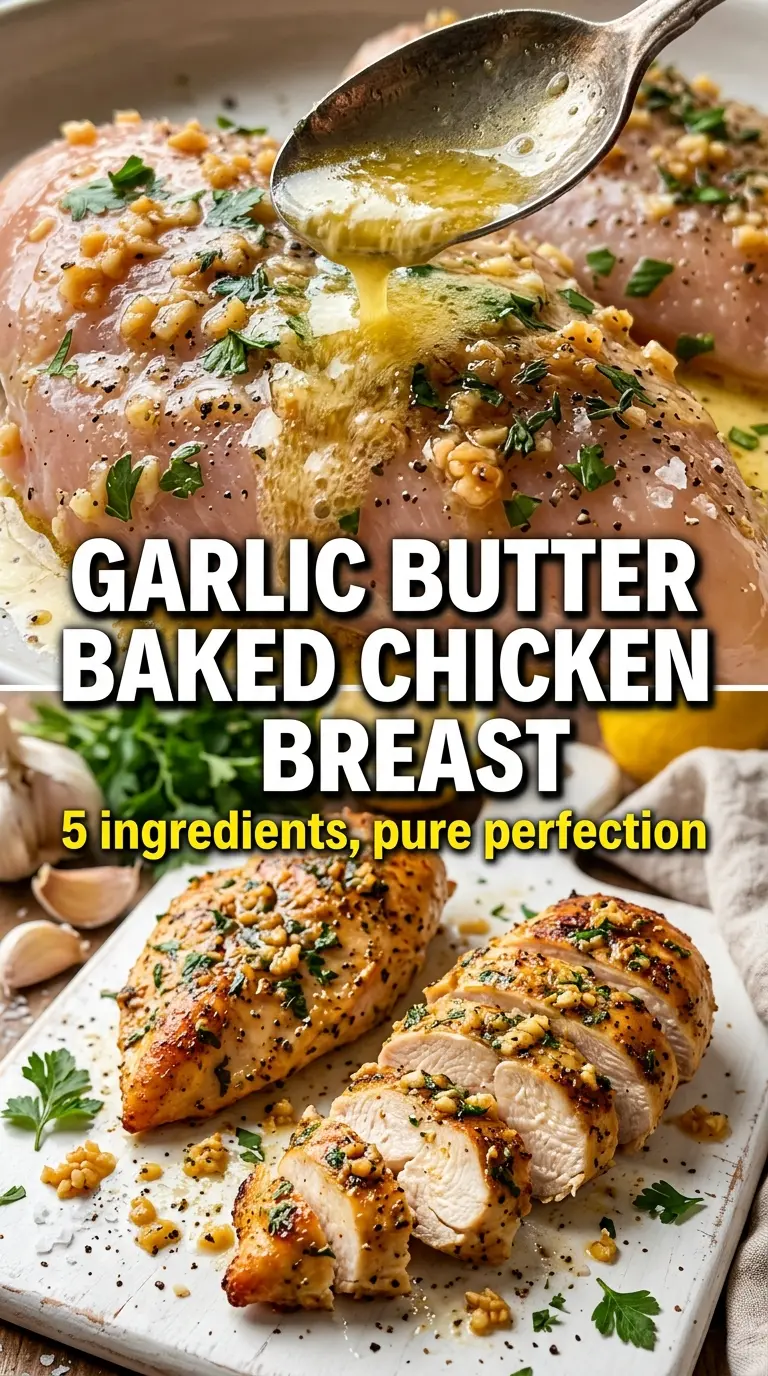
- Butter — This carries the garlic and herbs and helps the chicken brown. Salted or unsalted both work; if you use salted butter, just go a little easier on the seasoning.
- Garlic — Fresh minced garlic gives the pan sauce its main character. Garlic powder alone won’t give the same aroma or little browned bits in the sauce, so keep the fresh cloves if you can.
- Parsley, thyme, and rosemary — Parsley keeps the sauce fresh, thyme adds depth, and rosemary gives it that savory roasted note. If you only have one herb missing, thyme is the easiest to skip; rosemary is the one I’d keep because it stands up to the butter.
- Lemon juice — A small amount keeps the sauce from tasting heavy. Don’t add more than the recipe calls for or the butter sauce can start to taste sharp instead of balanced.
- Smoked paprika — This gives the chicken a deeper color and a faint smoky edge. It’s optional in the sense that the chicken will still cook, but it does a lot of quiet work for such a small amount.
Building the Butter Sauce So It Bakes, Browns, and Stays Juicy
Season the Chicken Before the Butter Goes On
Season both sides of the chicken first so the meat itself is flavored, not just the coating. The salt starts working right away, and the paprika and garlic powder help build a savory surface that browns better in the oven. If you pour the butter on first and season after, the seasoning tends to slide around in the pan instead of sticking to the chicken.
Coat Every Breast Thoroughly
Pour the garlic herb butter over the chicken and use a spoon to move the herbs and garlic around so each breast gets coated. The goal is an even layer, not a puddle sitting off to one side. If the butter looks separated, give it a quick stir again before pouring because the herbs settle fast.
Baste Once, Not Constantly
Halfway through baking, spoon the pan juices over the tops of the chicken breasts. That adds shine and flavor without opening the oven so often that the temperature drops. If you baste too much, you can wash off the seasoning and slow the browning you’re trying to get.
Rest Before Serving
Take the dish out when the thickest part reaches 165°F, then let the chicken sit for 5 minutes. That short rest lets the juices settle back into the meat instead of running onto the cutting board. If you slice too soon, even perfectly cooked chicken can look dry because the moisture hasn’t had time to redistribute.
How to Adapt This Garlic Butter Chicken Without Losing What Makes It Good
Make it dairy-free
Use a good plant-based butter that melts smoothly and has enough fat to carry the garlic and herbs. The flavor will be slightly less rich, but the chicken still gets that glossy, saucy finish as long as you baste it once during baking.
Use chicken thighs instead
Boneless skinless thighs work well here and stay even juicier, but they’ll need a little longer in the oven. Bake until they hit 165°F in the thickest part, and expect a richer, darker pan sauce because thighs release more fat.
Make it gluten-free
This recipe is naturally gluten-free as written, so there’s nothing to change. Just check that your paprika and butter are from brands that don’t include any unexpected additives if you’re cooking for someone with a strict allergy.
Turn it into a bigger pan dinner
Add halved baby potatoes or thick asparagus spears around the chicken during the last part of baking. The vegetables pick up the garlic butter in the pan, but they need enough space to roast instead of steam, so don’t crowd the dish.
Storage and Reheating
- Refrigerator: Store leftovers in an airtight container for up to 4 days. The butter sauce may firm up in the fridge, but it loosens again when reheated.
- Freezer: You can freeze it, but the texture of the chicken is best when eaten fresh. If you freeze it, wrap individual portions tightly and thaw in the refrigerator before reheating.
- Reheating: Warm it covered in a 325°F oven with a spoonful of pan juices or a splash of water until heated through. High heat dries out chicken fast, so skip the microwave blast unless you’re in a hurry and don’t mind a little loss in texture.
Questions I Get Asked About This Recipe
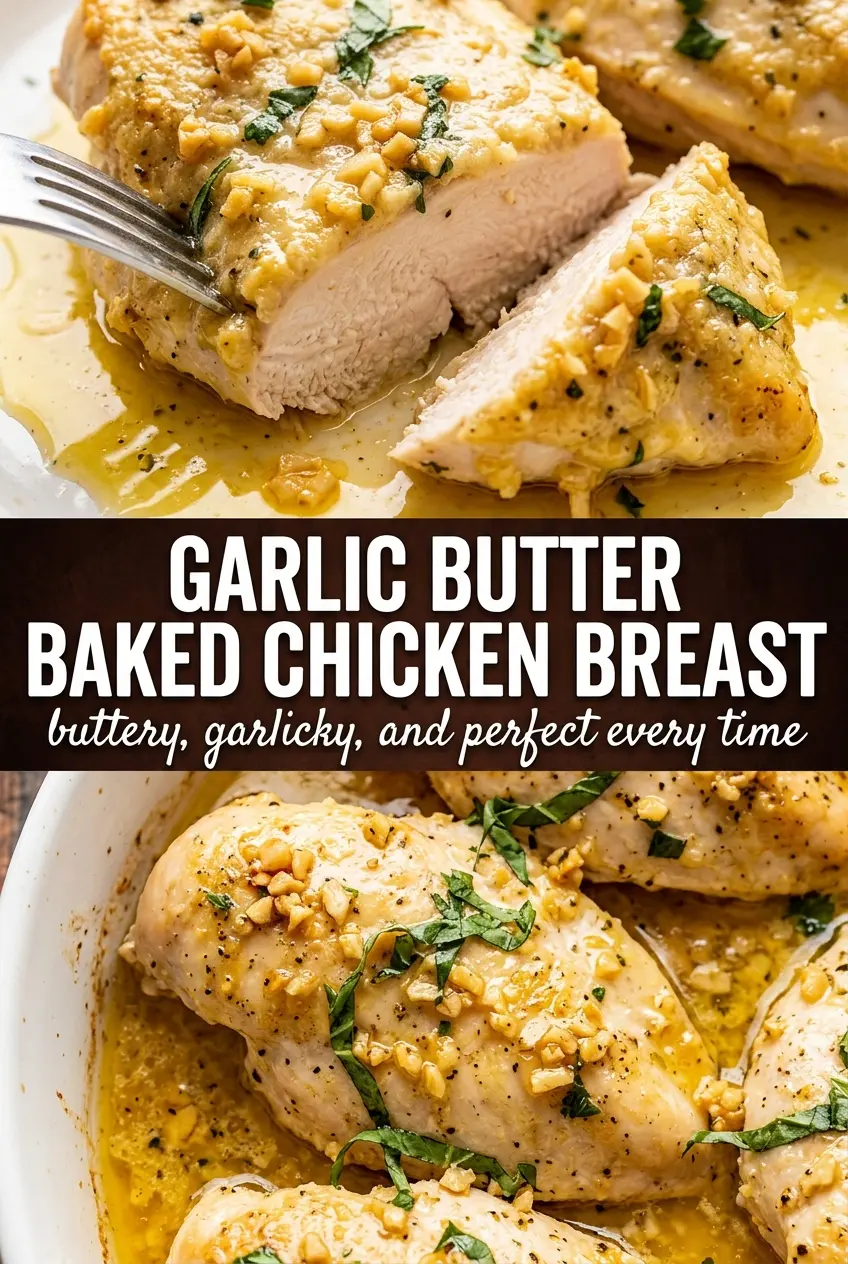
Garlic Butter Baked Chicken Breast
Ingredients
Equipment
Method
- Preheat oven to 425°F and lightly grease a baking dish with a thin coating so the chicken releases easily.
- Season chicken breasts on both sides with salt, pepper, garlic powder, and smoked paprika, rubbing in to coat evenly.
- Melt butter and stir in garlic, parsley, thyme, rosemary, and lemon juice until combined, fragrant, and glossy.
- Place chicken in the prepared dish and pour garlic herb butter over each breast, coating thoroughly so butter pools around the base.
- Bake for 20-25 minutes, basting with the pan juices once at the halfway point so the surface stays golden and moist.
- Continue baking until internal temperature reaches 165°F, with a golden surface glistening from the caramelized butter.
- Rest 5 minutes so the juices redistribute and the chicken stays tender.
- Serve with the pan juices spooned over and lemon wedges alongside for brightness.