Fresh broccoli pasta salad hits that sweet spot between crisp and creamy, with enough crunch to stay interesting and enough dressing to coat every piece without turning heavy. The broccoli stays bright, the pasta gives it some body, and the bacon and cheddar pull the whole bowl into side-dish territory that disappears fast at cookouts.
The part that makes this version work is treating the broccoli like a vegetable first, not a garnish. A quick blanch keeps the florets tender-crisp and vivid green, but the ice bath matters just as much because it stops the cooking before the broccoli goes soft. Rinsing the pasta cold does the same thing on the other side of the bowl: it keeps the salad from steaming itself into a gummy mess and helps the dressing cling instead of sliding off.
Below, I’ve included the small details that keep this salad from getting watery, plus a few easy swaps if you want to adjust the mix-ins without losing that classic broccoli-salad character.
The broccoli stayed crisp after chilling and the dressing coated everything without pooling at the bottom. I also liked that the bacon stayed crunchy enough to stand up to the pasta.
Save this creamy broccoli pasta salad for potlucks, BBQs, and make-ahead sides with crisp broccoli, bacon, and cheddar.
The Trick to Keeping the Broccoli Crisp After Chilling
The biggest failure in broccoli pasta salad is moisture. If the broccoli is only barely drained after blanching, or if the pasta goes into the bowl still warm, the dressing thins out and the whole salad turns dull and soggy by the time it hits the table. Cold pasta and completely dry broccoli fix that problem before it starts.
The other place people lose the texture is in the chill time. This salad needs time for the dressing to settle into the pasta, but it should still taste fresh, not soft. One hour is enough for the flavors to come together without giving the broccoli so much time in the dressing that it loses its snap.
- Broccoli florets — Cut them small enough to fit on a fork with the pasta. Tiny florets blanch fast, chill quickly, and stay crisp without feeling bulky.
- Rotini or penne — Rotini traps dressing in its grooves, while penne gives a cleaner bite. Either works, but don’t use a delicate pasta that falls apart once tossed with the mix-ins.
- Bacon — Cook it until crisp, then crumble it after it cools so it stays snappy in the salad. Soft bacon gets lost once the dressing goes in.
- Sharp cheddar — Sharp cheddar holds its own against the sweet-tangy dressing. Mild cheddar fades into the background and makes the salad taste flatter.
- Sunflower seeds or raisins — Seeds bring crunch and a nutty note; raisins shift the salad toward the classic sweet broccoli-salad style. Either one works, but they change the whole personality of the bowl.
What Each Ingredient Is Actually Doing in This Pasta Salad
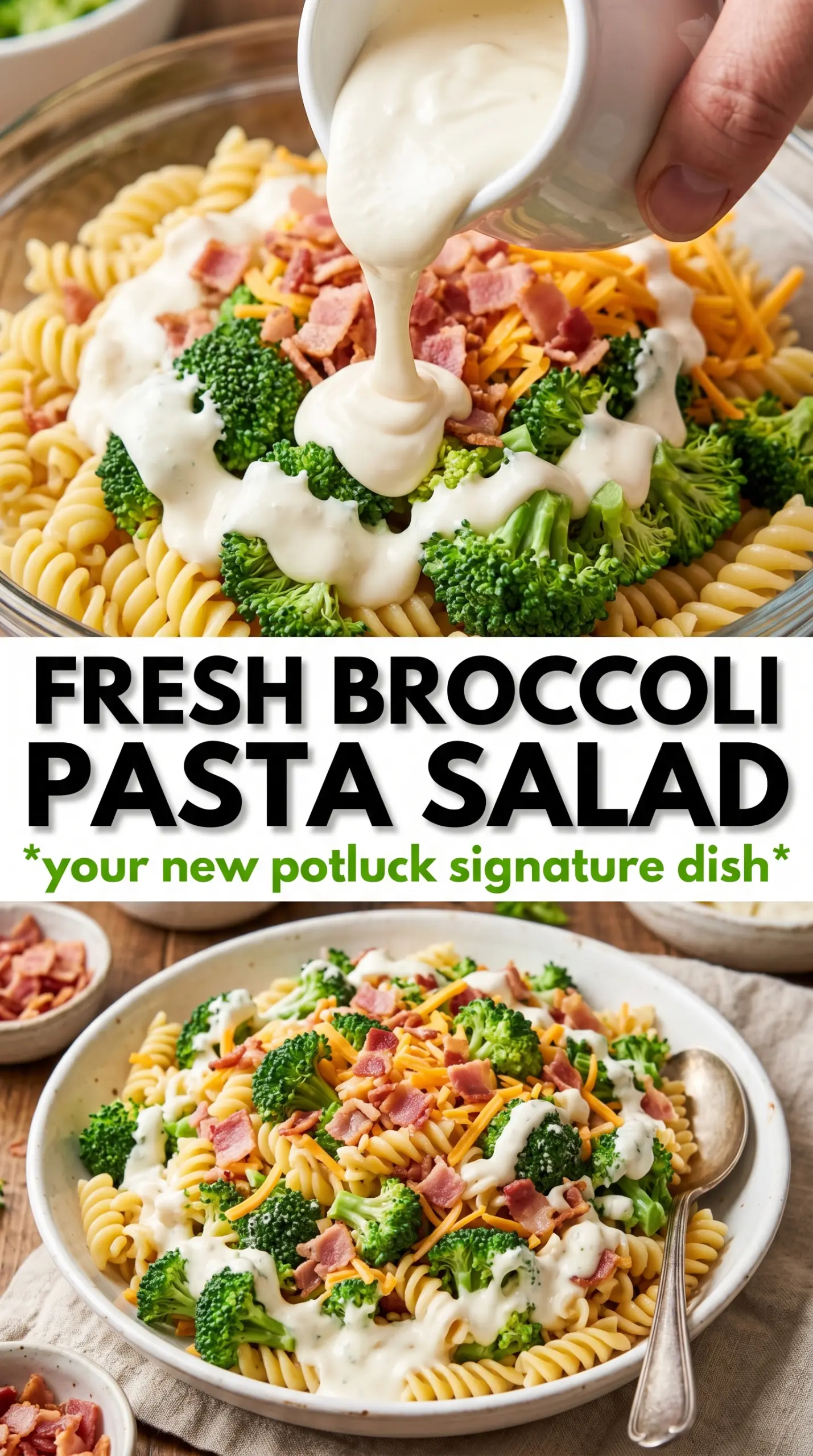
- Cooked pasta (the foundation) — Short shapes like penne or rotini hold dressing better than long noodles. Cook to al dente and cool completely before dressing.
- Olive oil or vinaigrette (the binding medium) — This carries all the flavors throughout and keeps the pasta from clumping. Don’t skip the emulsifier (mustard or vinegar) or the oil separates.
- Vinegar or lemon juice (the brightness) — Acid prevents the salad from tasting heavy and keeps it tasting fresh even after chilling. Fresh is better than bottled.
- Fresh vegetables (the texture and nutrition) — Cut to similar sizes so they cook evenly if blanched. Raw vegetables add crunch; cooked ones soften and absorb flavor.
- Cheese (the creaminess and salt) — Whether feta, parmesan, or mozzarella, cheese adds richness and prevents the salad from tasting one-dimensional.
- Olives, capers, or sun-dried tomatoes (the briny contrast) — These bring sharp flavor that balances sweet vegetables and creamy dressing. They keep the salad interesting.
- Fresh herbs (the finish) — Basil, parsley, or dill added at the end stay bright and fragrant. Cooked herbs lose their personality.
- Proper chilling time (the flavor settling) — 30 minutes lets flavors meld without the pasta getting soggy. The cold temperature also mutes seasoning, so season boldly.
Building the Dressing So It Stays Creamy, Not Thin
Whisk the dressing until the sugar dissolves before it touches the pasta. If the sugar stays gritty, it collects at the bottom of the bowl and the dressing won’t coat evenly. Mayo is the base here, but the vinegar and sugar are what give the salad that familiar sweet-tangy balance, so don’t rush that part.
The onion should be diced fine enough to blend into the salad instead of shouting from one bite. This isn’t a raw onion salad; it’s a pasta salad with enough sharpness to keep the richness in check. Once everything is combined, toss gently but thoroughly so the dressing gets into the pasta shape and around the broccoli without breaking the florets.
Blanching the Broccoli
Drop the broccoli into boiling water for just 1 to 2 minutes until it turns bright green and the stems are still firm. Overcooking here gives you dull, mushy broccoli that can’t recover. The ice bath stops the cooking fast, which is the difference between crisp florets and sad, limp ones.
Cooling the Pasta the Right Way
Cook the pasta to al dente, then drain it and rinse under cold water until it’s fully cool. That rinse does more than lower the temperature; it washes off excess starch that can make the salad sticky. If the pasta is even a little warm when you add the dressing, the mayo loosens and the whole bowl gets greasy.
Tossing and Chilling
Combine the cooled pasta with the broccoli, bacon, cheddar, onion, and seeds, then pour the dressing over the top and toss until every nook is coated. Refrigerate for at least 1 hour before serving so the flavors settle and the dressing thickens slightly. If it looks a little loose right after mixing, that’s normal — the pasta absorbs some of the dressing as it chills.
How to Adapt This for Bacon, Cheese, or a Lighter Bowl
Make it vegetarian
Skip the bacon and add extra sunflower seeds for crunch, or use roasted chickpeas if you want more substance. You’ll lose some smoky depth, so add a pinch of smoked paprika to the dressing if you want that back.
Use raisins instead of seeds
Raisins make the salad taste more like the classic broccoli salad many people grew up with. They soften in the dressing and add little bursts of sweetness, which works especially well if you like a sweeter side dish.
Lighten the dressing
You can swap half the mayonnaise for plain Greek yogurt, but the dressing will taste tangier and a little less rich. That’s fine if you want a brighter salad, though it won’t have the same velvety coating as the full mayo version.
Storage and Reheating
- Refrigerator: Keeps well for 3 days. The broccoli stays crisp-tender, though the pasta softens a little as it sits.
- Freezer: Don’t freeze this salad. Mayo separates and the broccoli turns watery after thawing.
- Reheating: This salad is meant to be served cold. If it’s been in the fridge for a while, let it sit out for 10 to 15 minutes so the dressing loosens and the flavors wake up.
Answers to the Questions Worth Asking
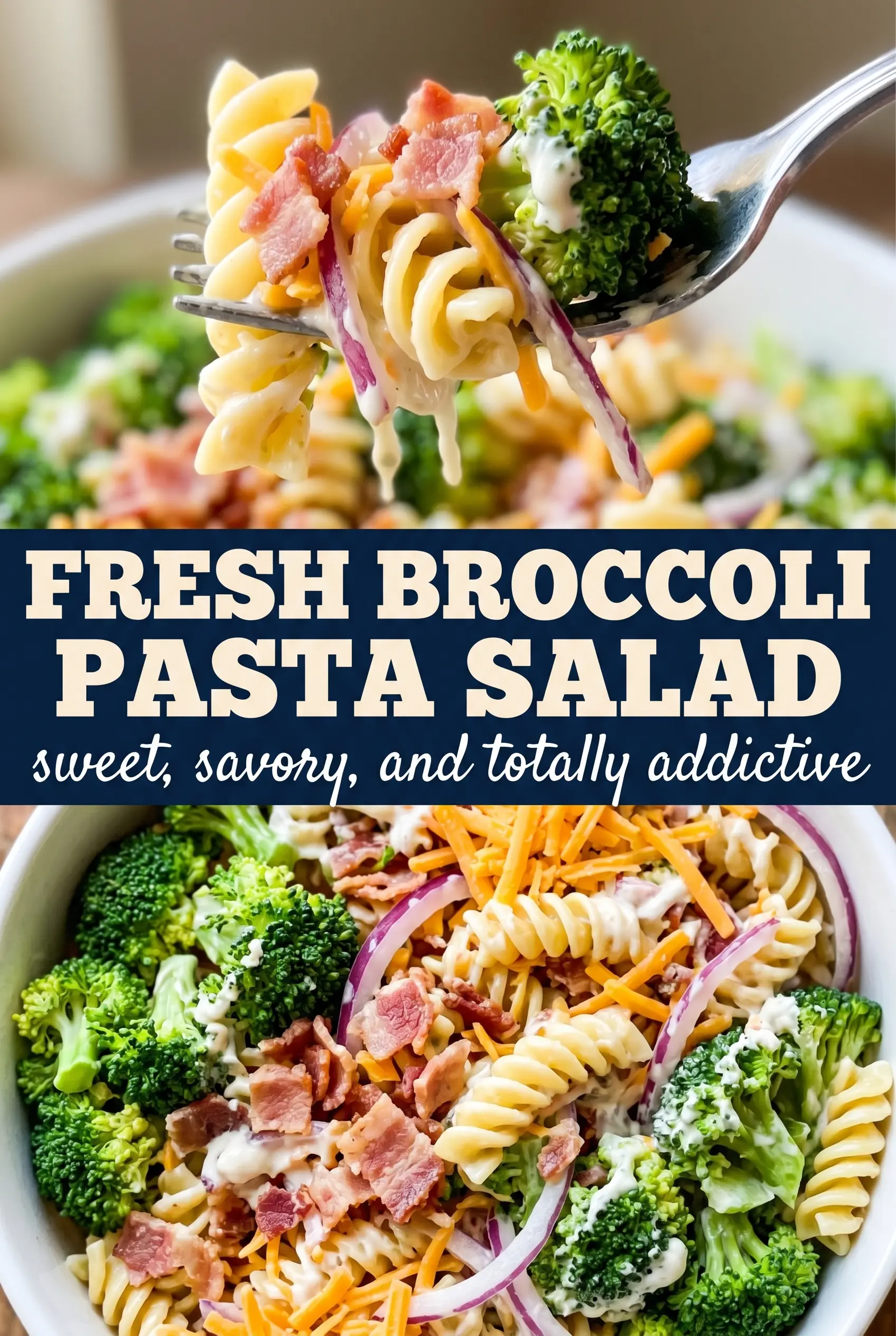
Fresh Broccoli Pasta Salad
Ingredients
Method
- Cook the rotini or penne pasta in boiling water until al dente, then drain, rinse cold, and cool to stop further cooking. Keep it moving while rinsing so the pasta doesn’t clump.
- Blanch the fresh broccoli florets in boiling water for 1-2 minutes until bright green but still crisp, then shock in ice water. Dry completely so the salad stays creamy instead of watery.
- Whisk mayonnaise, apple cider vinegar, sugar, salt, and black pepper until the sugar dissolves. Scrape the bowl so no dry sugar remains.
- Combine the cooled pasta with broccoli, bacon, sharp cheddar, red onion, and sunflower seeds or raisins in a large bowl. Toss lightly to distribute everything evenly.
- Pour the dressing over the pasta mixture and toss to coat thoroughly. Continue tossing until the pasta and broccoli look glossy and evenly covered.
- Cover and refrigerate at least 1 hour before serving so flavors meld and the pasta absorbs the dressing. Keep it chilled until ready to bring to the table.