Italian antipasto pasta salad hits that sweet spot between hearty and fresh: chewy pasta, salty cured meats, briny olives, sharp cheese, and just enough herb vinaigrette to tie it all together without turning heavy. It tastes like an antipasto platter that got invited to the pasta bowl, and that’s exactly why it disappears fast at potlucks and cookouts.
What makes this version work is the order. The pasta gets cooked to true al dente, then cooled before the dressing goes in, which keeps it from going soft and muddy. The vinaigrette is built with olive oil, red wine vinegar, and lemon juice for brightness, then the prosciutto goes in last so it keeps its delicate texture instead of getting buried and soggy.
Below, I’ve included the small details that matter most, from keeping the pasta salad from drying out in the fridge to the best swaps if you want to make it a little lighter or pack it for a make-ahead lunch.
The pasta stayed firm after chilling and the vinaigrette soaked into everything without making it greasy. I made it the night before, and the prosciutto still tasted fresh the next day.
Save this antipasto pasta salad for the potlucks and picnic nights when you want bold deli flavors in one chilled bowl.
The Trick to Keeping Antipasto Pasta Salad Bold Instead of Blunt
The common mistake with antipasto pasta salad is treating it like a dump-and-stir side dish. If the pasta is still warm, it drinks in too much dressing and goes soft; if the prosciutto goes in too early, it loses that silky, ribbon-like texture that makes it special. The fix is simple: cool the pasta completely, toss the sturdier ingredients with the dressing first, then fold in the prosciutto at the end.
That order keeps each ingredient doing its own job. The artichokes and roasted peppers bring moisture, the olives and pepperoncini bring salt and acid, and the cheese gives the salad enough body to feel substantial without needing a heavy mayo base. Chill time matters here, too. Thirty minutes is enough for the flavors to settle in without dulling the fresh edges of the vinaigrette.
What Each Antipasto Ingredient Is Actually Doing
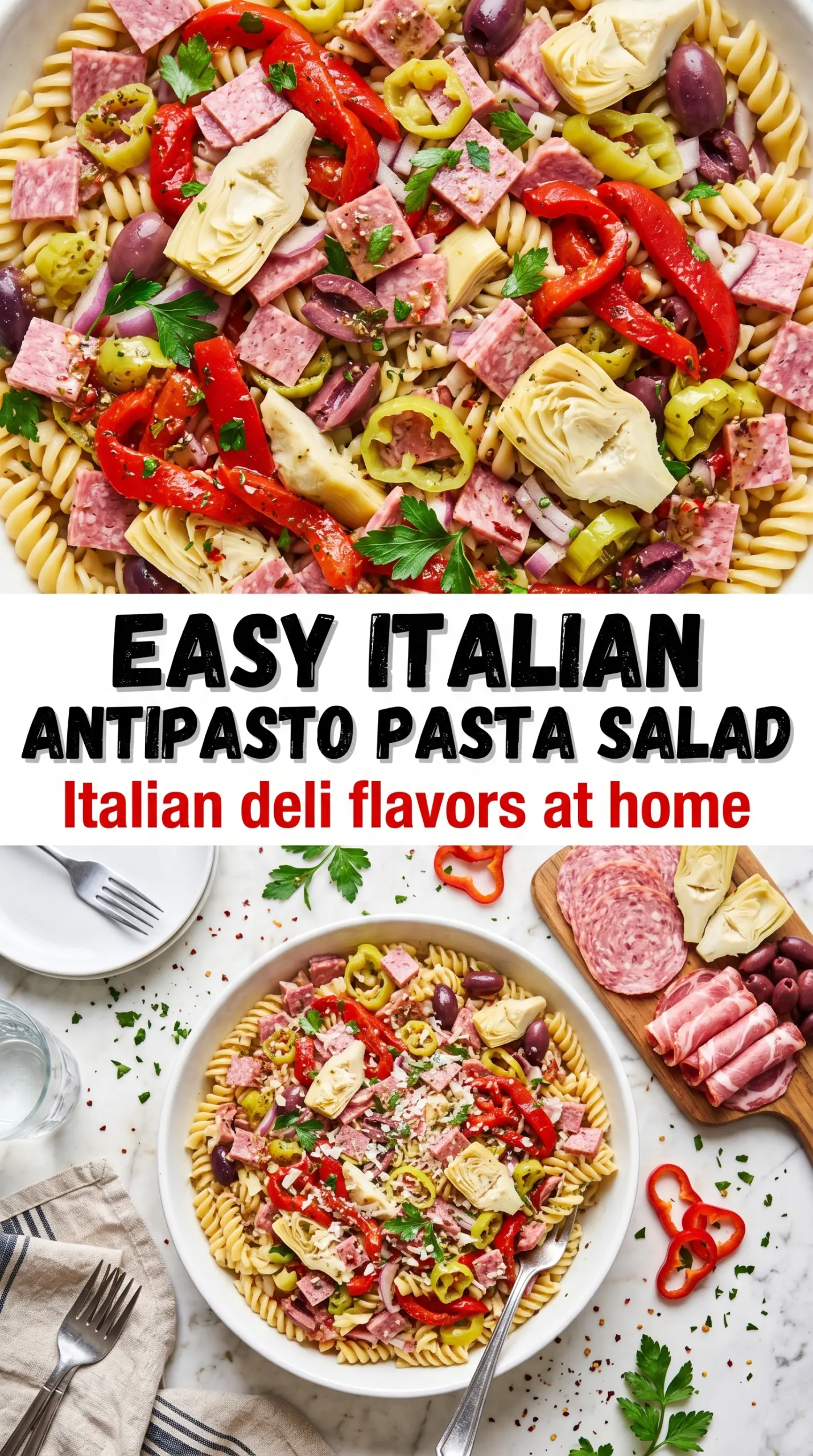
- Penne or rotini — Both hold onto the vinaigrette well, but rotini catches more of the chopped bits in its twists. Penne is a little cleaner to eat if you’re serving this at a buffet. Cook either one to al dente and rinse it cold so the salad stays springy after chilling.
- Prosciutto — This is the ingredient that gives the salad its deli-style finish. Tear it instead of cutting it into perfect squares; the uneven pieces feel more natural and stay tender in the mix. Add it last so it doesn’t get too damp.
- Genoa salami — Salami adds the chew and deeper savory note that keeps the salad from tasting one-dimensional. Pre-sliced salami works fine here, but cut it into strips so it blends with the pasta instead of sitting in heavy chunks.
- Artichoke hearts and roasted red peppers — These bring the briny, sweet-acid balance that makes antipasto taste like antipasto. Jarred or canned versions both work; just drain them well and pat them dry so the dressing doesn’t get watered down.
- Provolone, olives, and pepperoncini — Provolone adds richness, olives add salt, and pepperoncini wake everything up. If you need a swap, use mozzarella pearls for a milder result, but you’ll lose some of that sharp deli counter character.
- Herb vinaigrette — Olive oil gives the salad body, red wine vinegar sharpens it, and lemon juice keeps the finish bright. The garlic powder spreads more evenly than fresh garlic in a cold pasta salad and won’t punch through the other ingredients.
Building the Salad So It Stays Fresh After Chilling
Cooking the Pasta to Hold Its Shape
Cook the pasta just until al dente, then drain it and rinse it under cold water right away. That stops the cooking and washes off the surface starch that can make the salad gluey. If the pasta goes even a minute too long, it softens again once the dressing sits on it, and the whole bowl loses structure.
Whisking the Dressing Until It Tastes Balanced
The vinaigrette should look glossy and slightly thickened, not separated into oil and vinegar pools. Whisk the vinegar, lemon juice, seasoning, garlic powder, salt, and pepper before streaming in the oil so the flavor distributes evenly. If it tastes sharp on its own, that’s fine; pasta and cheese will round it out once everything is tossed together.
Layering in the Ingredients in the Right Order
Toss the cooled pasta with the artichokes, roasted peppers, olives, provolone, salami, and pepperoncini first so those ingredients get coated well. Then fold in the dressing and finish with the prosciutto. That keeps the prosciutto from soaking up too much liquid, and it keeps the salad looking a little more composed instead of chopped and compressed.
Letting It Rest Before Serving
Thirty minutes in the fridge gives the flavors time to settle into the pasta. Give it one more toss before serving, because the dressing will settle at the bottom as it chills. If the salad looks a little dry after resting, add a small splash of olive oil and a few drops of vinegar rather than drowning it in more dressing.
Three Ways to Make This Antipasto Pasta Salad Fit the Table
Gluten-Free Version
Use a sturdy gluten-free pasta shape with good texture, not a delicate rice blend that turns mushy after chilling. Cook it just shy of the package time, then rinse and cool it quickly. Gluten-free pasta can tighten up as it sits, so a small extra drizzle of olive oil before serving helps loosen the salad without changing the flavor.
Vegetarian Antipasto Pasta Salad
Skip the prosciutto and salami and add more provolone, artichokes, roasted peppers, and olives to keep the salad full and satisfying. A handful of marinated mozzarella or chopped pepperoncini can replace some of the salt and tang you lose from the cured meats. The result is lighter but still has that antipasto character.
Make It Ahead for Lunches
This salad holds up well for a day or two if you keep it covered and chilled. For the best texture, hold back a few spoonfuls of dressing and toss them in right before serving. That refreshes the pasta and keeps the herbs from tasting flat.
Lighter, Brighter Version
Use half pasta and half chopped romaine or baby arugula if you want a fresher, less dense bowl. Keep the dressing amount modest so the greens don’t wilt before serving. This version tastes sharper and more salad-like, but it won’t hold as long as the original.
Storage and Reheating
- Refrigerator: Store covered for up to 3 days. The pasta will absorb some dressing, so the salad gets a little thicker by day two.
- Freezer: Don’t freeze this salad. The pasta turns soft and the vegetables lose their texture once thawed.
- Reheating: Serve it cold or at cool room temperature. If it’s been in the fridge, let it sit out for 15 to 20 minutes and toss with a small splash of olive oil to wake it back up.
Answers to the Questions Worth Asking
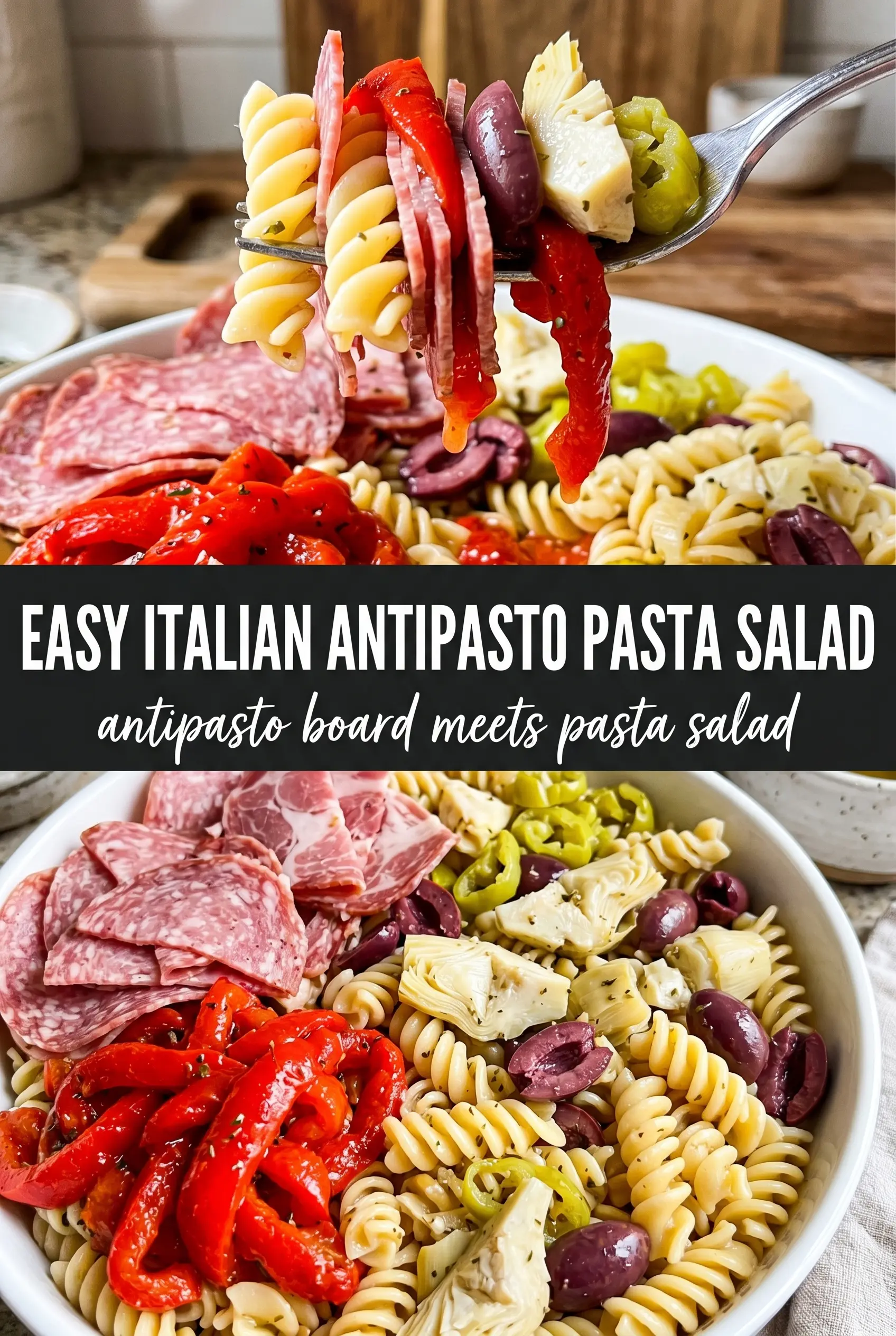
Easy Italian Antipasto Pasta Salad
Ingredients
Equipment
Method
- Bring a Dutch oven of water to a boil and cook the penne or rotini until al dente, about 10 minutes. Drain and rinse the pasta cold, then spread it on a sheet pan to cool completely.
- Whisk together olive oil, red wine vinegar, lemon juice, Italian seasoning, garlic powder, salt and pepper in a bowl until combined. Keep it ready to dress the pasta.
- Combine the cooled penne or rotini with artichoke hearts, roasted red peppers, kalamata olives, provolone, Genoa salami, and pepperoncini in a large bowl. Toss so the add-ins are evenly distributed.
- Pour the herb vinaigrette over the pasta and toss until everything is coated. Let the salad sit briefly so the dressing clings.
- Gently fold in prosciutto, keeping the pieces from breaking apart. Refrigerate the salad for 30 minutes to chill.
- Give the Italian antipasto pasta salad one final toss right before serving. Serve cold for the best texture contrast.