Pasta salad lives or dies on balance, and this one gets it right: tender noodles, juicy tomatoes, cool mozzarella, and basil that stays bright instead of turning muddy. The balsamic glaze pulls everything together without drowning the bowl, so each bite still tastes clean and fresh. It’s the kind of side dish people keep hovering near long after dinner starts.
The trick is tossing the pasta while it’s still a little warm. That lets the dressing cling instead of sliding off, and it helps the tomatoes release just enough juice to season the salad without making it watery. I also like using a mix of balsamic glaze and a splash of balsamic vinegar, because the glaze gives body while the vinegar keeps the sweetness in check.
Below you’ll find the small details that keep the basil from bruising, the mozzarella from disappearing into the pasta, and the whole bowl from tasting flat after it sits for ten minutes.
I tossed the pasta while it was still a little warm like you said, and the dressing soaked in instead of pooling at the bottom. The basil stayed fresh and the balsamic glaze made it taste like something from a nice café.
Like this caprese pasta salad? Save it for the nights when you want a cold pasta side with bright tomatoes, fresh basil, and a balsamic finish.
The Trick That Keeps Caprese Pasta Salad from Going Watery
Most pasta salads get dull because the dressing slides to the bottom and the tomatoes dump all their juice at once. This version avoids that by using a light hand with the dressing and adding it while the pasta is still a little warm. Warm pasta drinks in the balsamic mixture just enough to coat the noodles without turning them soft or sticky.
The other thing that matters is texture contrast. Fresh mozzarella should stay in distinct pieces, not melt into the bowl, and basil needs to be folded in at the end so it keeps its clean, peppery edge. If you toss everything together while the pasta is steaming hot, the basil bruises and the cheese softens too much. Let the pasta cool just enough that it feels warm, not hot, and the salad holds up much better.
What Each Ingredient Is Actually Doing in the Bowl
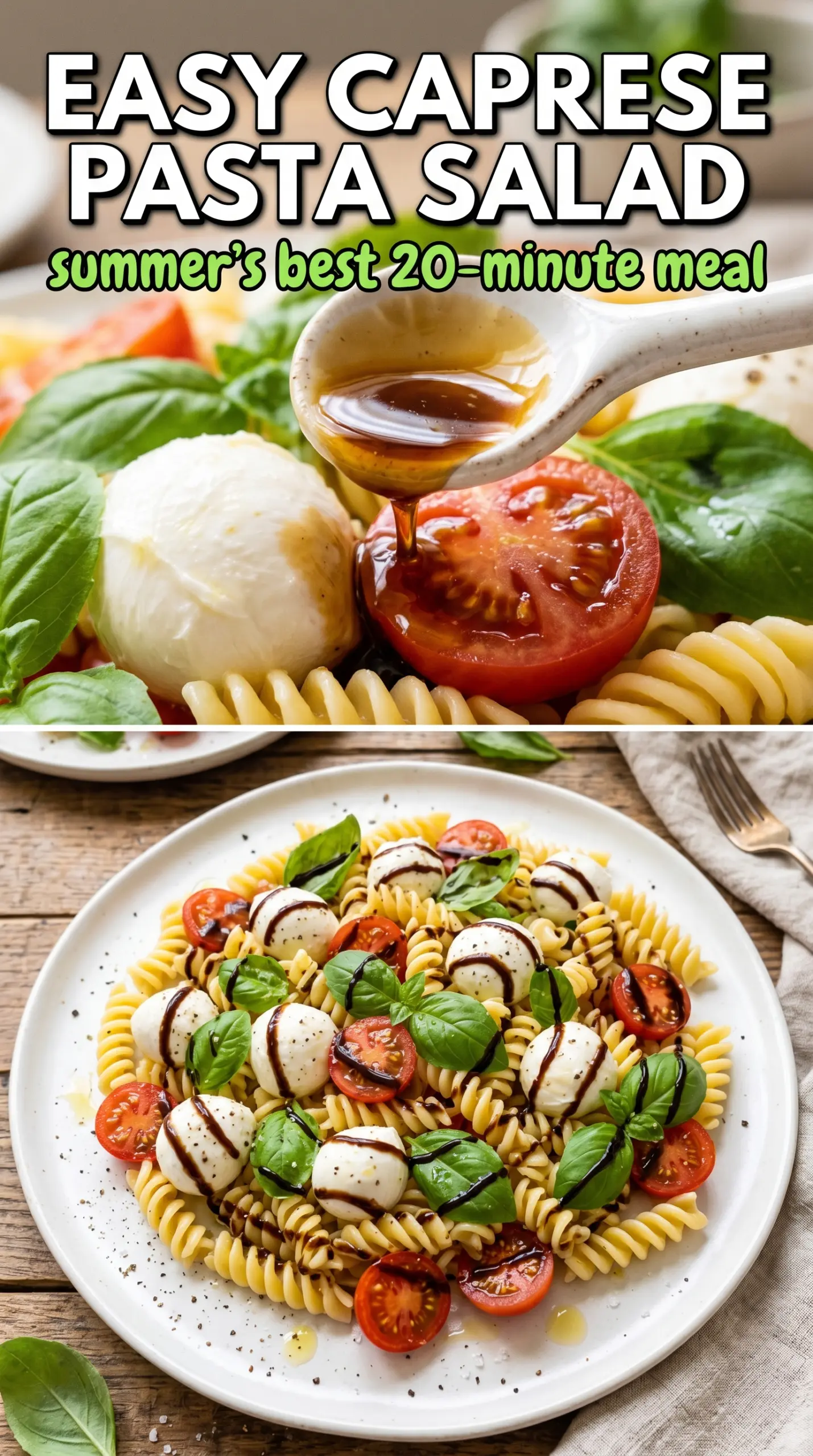
- Pasta — Penne or bow ties both hold the dressing well, and their shapes catch bits of tomato and basil. Cook it to al dente, because overcooked pasta turns mushy once it sits with the dressing.
- Cherry tomatoes — Halved cherry tomatoes bring the juicy, sweet part of the caprese equation. Larger tomatoes work in a pinch, but they tend to be wetter, so drain off extra juices if you use them.
- Fresh mozzarella — Bocconcini gives you soft little milky bites that hold their shape better than shredded mozzarella. Block mozzarella is fine if that’s what you have, but cut it into small cubes and pat it dry so the salad doesn’t get slick.
- Fresh basil — Basil is not garnish here; it’s half the point. Tear it instead of chopping it so it bruises less and keeps its fragrance.
- Balsamic glaze and balsamic vinegar — The glaze gives body and sweetness, while the vinegar sharpens the dressing so it doesn’t taste flat. If all you have is vinegar, reduce the olive oil a little and expect a thinner dressing.
- Olive oil — This carries the dressing across the pasta and helps everything look glossy instead of dry. Use a decent one since there’s nowhere for a harsh, peppery oil to hide.
How to Build the Salad So the Basil Stays Bright
Cooking the Pasta to the Right Bite
Boil the pasta in salted water until it’s just al dente, then drain it well. A slightly firm noodle is important here because the pasta will soften a touch as it sits with the dressing. Tossing it with a spoonful of olive oil keeps the pieces from clumping while they cool. If the pasta is left wet in the colander, the dressing gets diluted and the whole salad tastes less focused.
Mixing the Dressing Before It Hits the Bowl
Whisk the olive oil, balsamic glaze, balsamic vinegar, garlic, salt, and pepper together before you add anything else. The garlic needs that oil to soften its bite, and the glaze has to be loosened so it can coat the pasta evenly. If the mixture looks streaky, keep whisking; separated dressing lands unevenly and leaves some bites too sweet and others too sharp.
Finishing Without Bruising the Fresh Ingredients
Add the tomatoes first so they can mingle with the warm pasta and release a little juice into the dressing. Then fold in the mozzarella and basil gently, using a wide spoon or spatula rather than stirring hard. Hard stirring tears the basil and breaks the cheese, which is how a fresh salad turns heavy fast. A final drizzle of balsamic glaze on top gives it the glossy look that makes the bowl feel finished.
Three Ways to Make This Salad Fit the Meal You’re Serving
Make it gluten-free
Use a gluten-free pasta that holds its shape well, such as a brown rice or corn blend. Cook it just until tender, then rinse briefly if the brand tends to stick together. Gluten-free pasta can go soft faster than wheat pasta, so serve this one soon after mixing.
Make it dairy-free
Swap the mozzarella for cubed avocado or marinated artichoke hearts if you want the same creamy contrast without dairy. You’ll lose the milky caprese feel, but the salad still works because the tomatoes, basil, and balsamic do most of the flavor work.
Add protein for a main-dish version
Toss in diced grilled chicken or chickpeas if you want this to stand in as lunch or a light dinner. Chickpeas make it vegetarian and soak up the balsamic nicely, while chicken gives it a more filling, picnic-ready feel.
Storage and Reheating
- Refrigerator: Store for up to 3 days. The basil will darken a bit and the pasta will absorb some dressing, so the salad tastes best on day one.
- Freezer: Don’t freeze it. Fresh tomatoes, mozzarella, and basil all break down after thawing and the texture turns watery.
- Reheating: This salad is meant to be served room temperature or chilled, not heated. If it has been refrigerated, let it sit out for 15 to 20 minutes and add a small drizzle of olive oil or balsamic glaze to wake it back up.
Questions I Get Asked About This Recipe
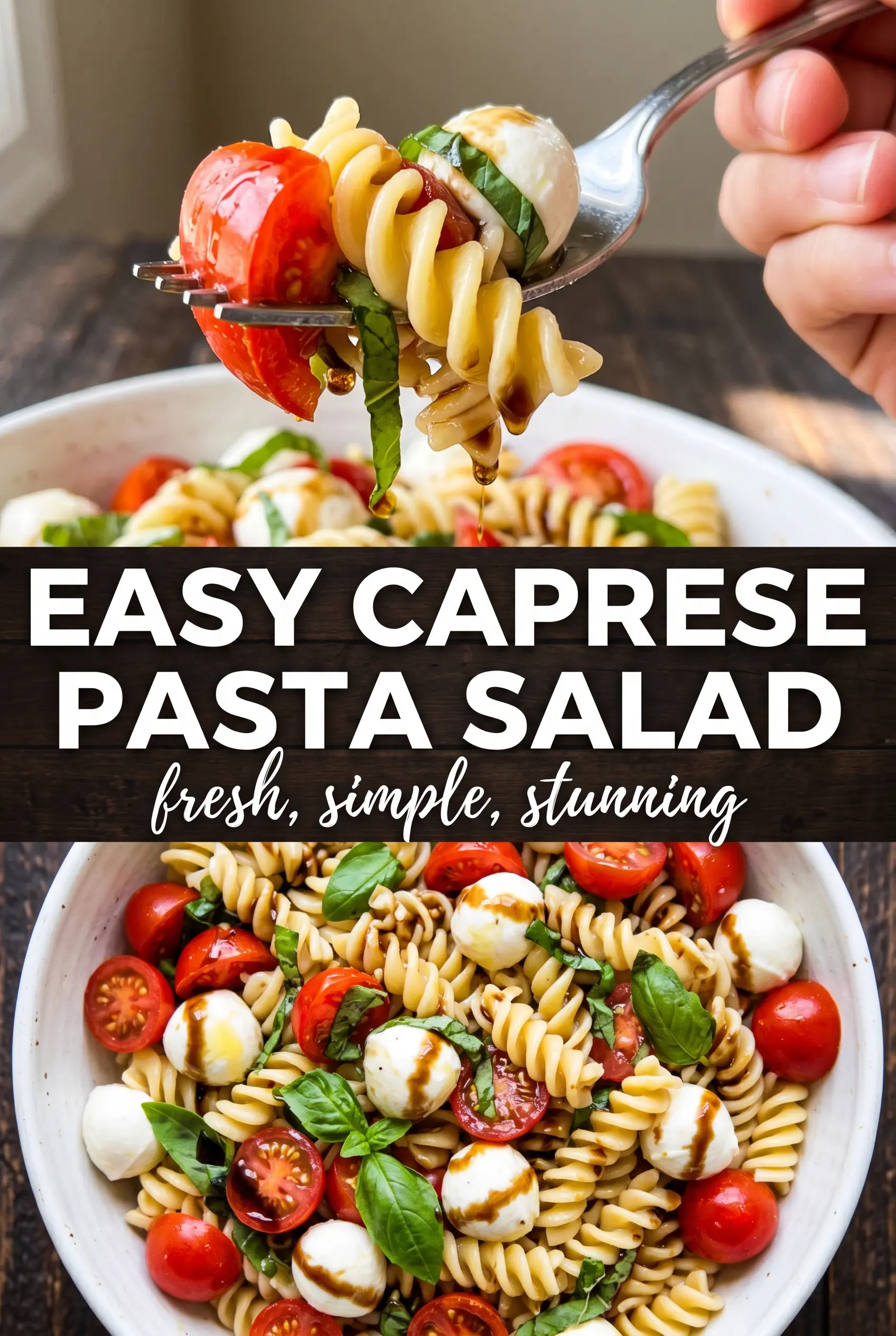
Easy Caprese Pasta Salad
Ingredients
Method
- Bring a pot of salted water to a boil and cook the penne or bow tie pasta until al dente (about 8–10 minutes), then drain.
- Toss the drained pasta with 1 tablespoon olive oil and cool slightly so it’s warm but not steaming.
- In a bowl, whisk together the remaining olive oil, balsamic glaze, balsamic vinegar, minced garlic, salt, and black pepper until smooth.
- While the pasta is still slightly warm, toss it with the cherry tomatoes and the balsamic dressing so everything is evenly coated.
- Gently fold in the fresh mozzarella and torn basil just until combined to keep the basil bright and tender.
- Drizzle extra balsamic glaze over the top for a decorative sheen.
- Serve at room temperature, or refrigerate for 30 minutes before serving for a firmer, more set texture.