Candied pecans earn their place fast when the coating turns glossy in the oven, the cinnamon-sugar crust dries into a crisp shell, and each bite snaps before giving way to a toasted nutty center. The magic is in the low-and-slow bake: enough heat to set the sugar without scorching it, enough time to dry the egg white coating into something crunchy instead of sticky.
The other detail that matters is how the pecans are coated before they hit the pan. A frothy egg white with a little water gives the sugar something to cling to, and tossing the nuts in the cinnamon mixture after that keeps the coating even. Skip the urge to crank the oven higher. Candied nuts need patience more than heat, and that’s what keeps them from burning on the outside while staying tacky underneath.
Below, I’ve included the small timing cue that tells you when they’re done, plus a couple of ways to change the seasoning without messing up the texture.
The coating dried into that perfect crackly shell, and stirring every 15 minutes kept them from clumping into one big sticky mess. I’ve made these twice already for snack jars.
Keep these cinnamon-glossed candied pecans handy for snack jars, salads, and holiday trays.
The Part That Keeps Candied Pecans Crunchy Instead of Sticky
The difference between crisp candied pecans and a chewy, tacky batch comes down to moisture control. The egg white needs to be whisked until foamy, not whipped into stiff peaks, because that light froth coats the pecans without turning them bouncy or marshmallow-like. Once the sugar mixture is on, the nuts should look sandy and heavily coated before they go into the oven.
The other mistake is baking too hot. At 250F, the sugar has time to dry and the pecans toast gently. If the oven runs hot, the outside caramelizes before the inside has lost enough moisture, and the coating stays soft even after cooling.
- Parchment paper keeps the sugar from welding itself to the pan. Skip wax paper; it can’t handle the oven heat as cleanly.
- Stirring every 15 minutes breaks up clumps and exposes new surfaces so the coating dries evenly.
- Cooling fully on the pan matters as much as baking. They won’t crisp while warm, even if they look done.
What Each Ingredient Is Actually Doing Here
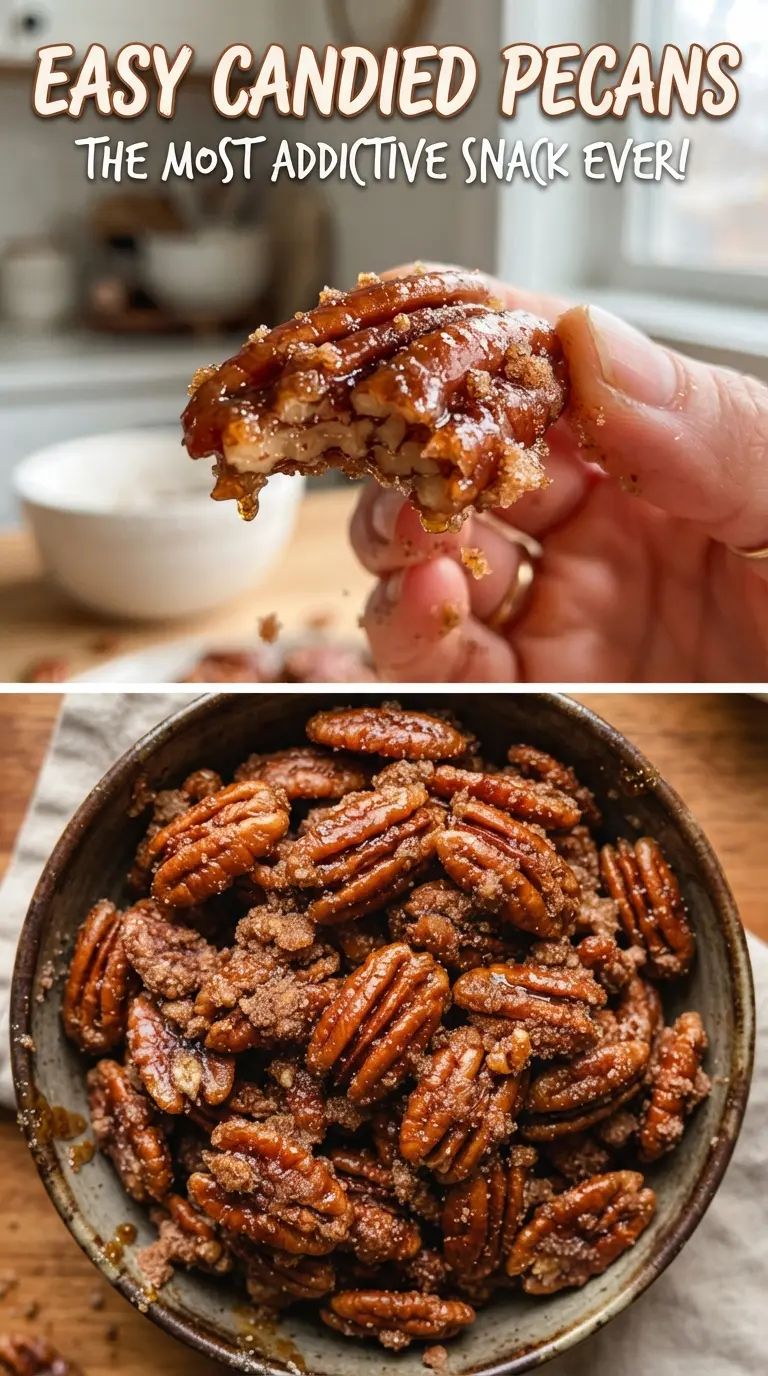
- Pecan halves give you the best surface area for coating and the most even crunch. Whole pecans work, but the coating ends up less uniform and the bake can feel a little uneven.
- Egg white is the binder that lets the sugar cling in a thin, crackly layer. If you skip it, the sugar tends to fall off or pool in the pan.
- Vanilla adds warmth in the background. Use the real extract here; imitation vanilla tastes flat once baked.
- Sugar forms the hard shell as it dries in the oven. Granulated sugar is the right choice; finer sugars can melt faster and make the coating denser.
- Cinnamon and salt sharpen the sweetness. The salt matters more than people expect because it keeps the coating from tasting one-note.
Getting the Coating Set Without Burning the Nuts
Foaming the Egg White
Whisk the egg white, water, and vanilla until the mixture looks frothy and loose, with bubbles across the top. You don’t want stiff foam; you want enough air to help the coating spread thinly over the pecans. If the egg white is under-whisked, the sugar mixture clumps in patches and you end up with bare spots. The goal is a thin, even sheen on every nut.
Dragging the Pecans Through the Sugar
Add the sugar, cinnamon, and salt after the pecans are coated in the egg white, then toss until every piece looks dusty and heavily covered. Use a wide bowl so you can turn the nuts without crushing them. If the coating looks wet or slick instead of sandy, add a little more tossing time before the pan. That dry, grainy look is what turns into crunch in the oven.
Low Heat and Steady Stirring
Spread the nuts in a single layer and bake at 250F, stirring every 15 minutes. The first stir loosens the clusters before they harden, and later stirs keep the sugar from scorching at the edges. By the end, the nuts should look dry and slightly darker, with no wet patches left on the pan. If they smell aggressively caramelized before the hour is up, your oven is running hot.
Cooling to the Final Crunch
Pull the pan from the oven and leave the pecans right where they are until they’re completely cool. They’ll soften a little at first, then harden as the sugar finishes setting. Don’t transfer them warm unless you want sticky pieces stuck together in a pile. Once cooled, break apart any clusters and store them airtight.
How to Change These Candied Pecans Without Losing the Crunch
Maple-cinnamon pecans
Replace 2 tablespoons of the sugar with maple sugar, or add a light drizzle of maple extract to the egg white if you want a deeper flavor. Don’t pour in maple syrup here; extra liquid makes the coating slower to dry and can leave the nuts tacky.
Spiced pecans for salads or cheese boards
Add a pinch of cayenne or black pepper with the cinnamon if you want a sharper finish. The heat cuts the sweetness and makes these work better with salty cheese, apples, or bitter greens.
Dairy-free, gluten-free snack jars
This recipe already fits both dairy-free and gluten-free diets as written, which is part of why it’s such a useful snack to keep around. Just check that your vanilla extract and spices are pure and not blended with additives if you’re cooking for someone with a sensitivity.
Storage and Reheating
- Refrigerator: Store in an airtight container at room temperature for up to 2 weeks. Refrigeration can introduce condensation and soften the coating.
- Freezer: They freeze well for up to 2 months in a sealed freezer bag. Thaw at room temperature while still sealed so moisture doesn’t hit the surface all at once.
- Reheating: These don’t need reheating. If they soften, spread them on a parchment-lined sheet pan and warm at 250F for 5 to 8 minutes, then cool completely again before storing.
Questions I Get Asked About This Recipe
Easy Candied Pecans
Ingredients
Equipment
Method
- Preheat oven to 250F and line a sheet pan with parchment for easy release and clean-up.
- Whisk large egg white, water, and vanilla extract until frothy.
- Toss pecan halves in the frothy egg mixture until evenly coated.
- In a bowl, mix sugar, ground cinnamon, and salt.
- Toss the coated pecans with the cinnamon sugar mixture until well covered.
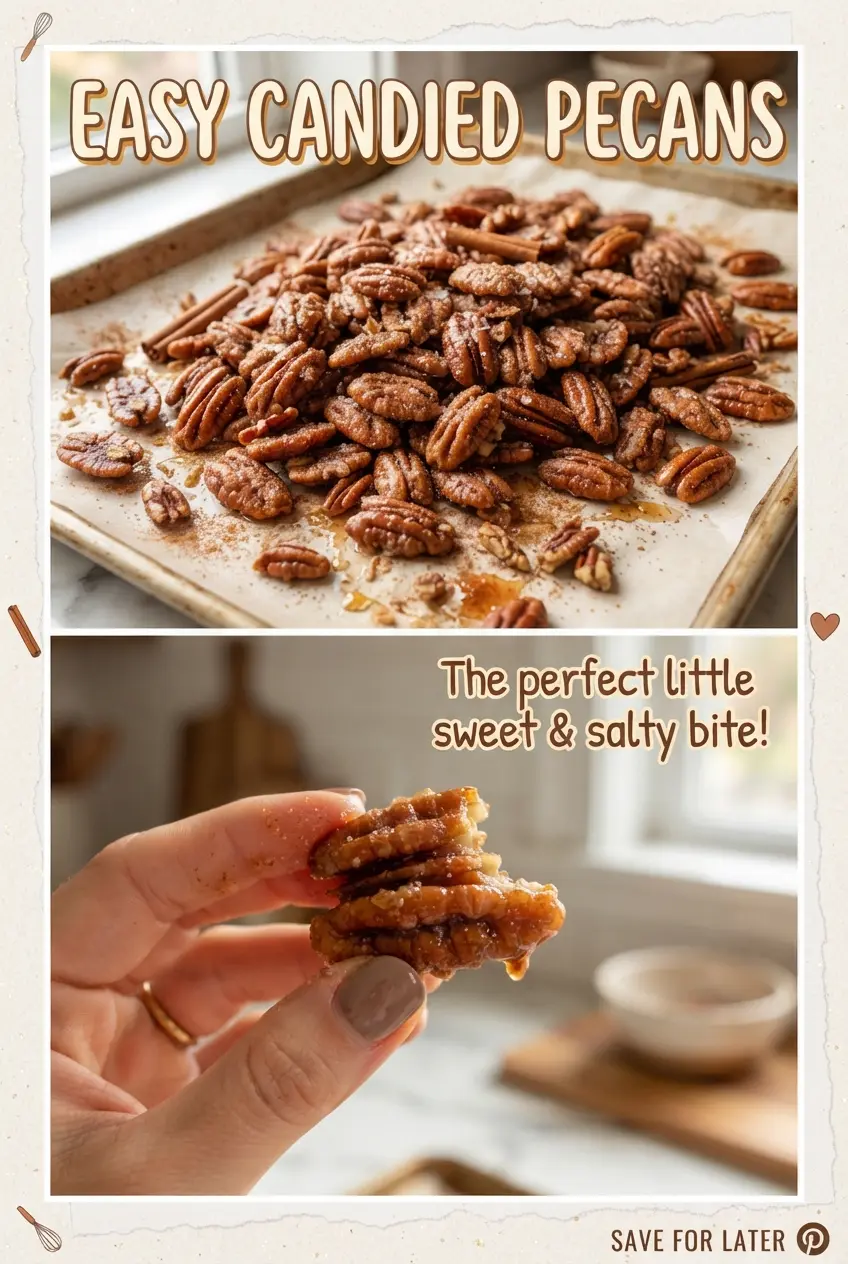
- Spread pecans in a single layer on the prepared sheet pan so they bake evenly.
- Bake for 1 hour at 250F, stirring every 15 minutes for a glossy, crackly coating.
- Cool completely on the pan until crunchy, then break apart and store airtight.