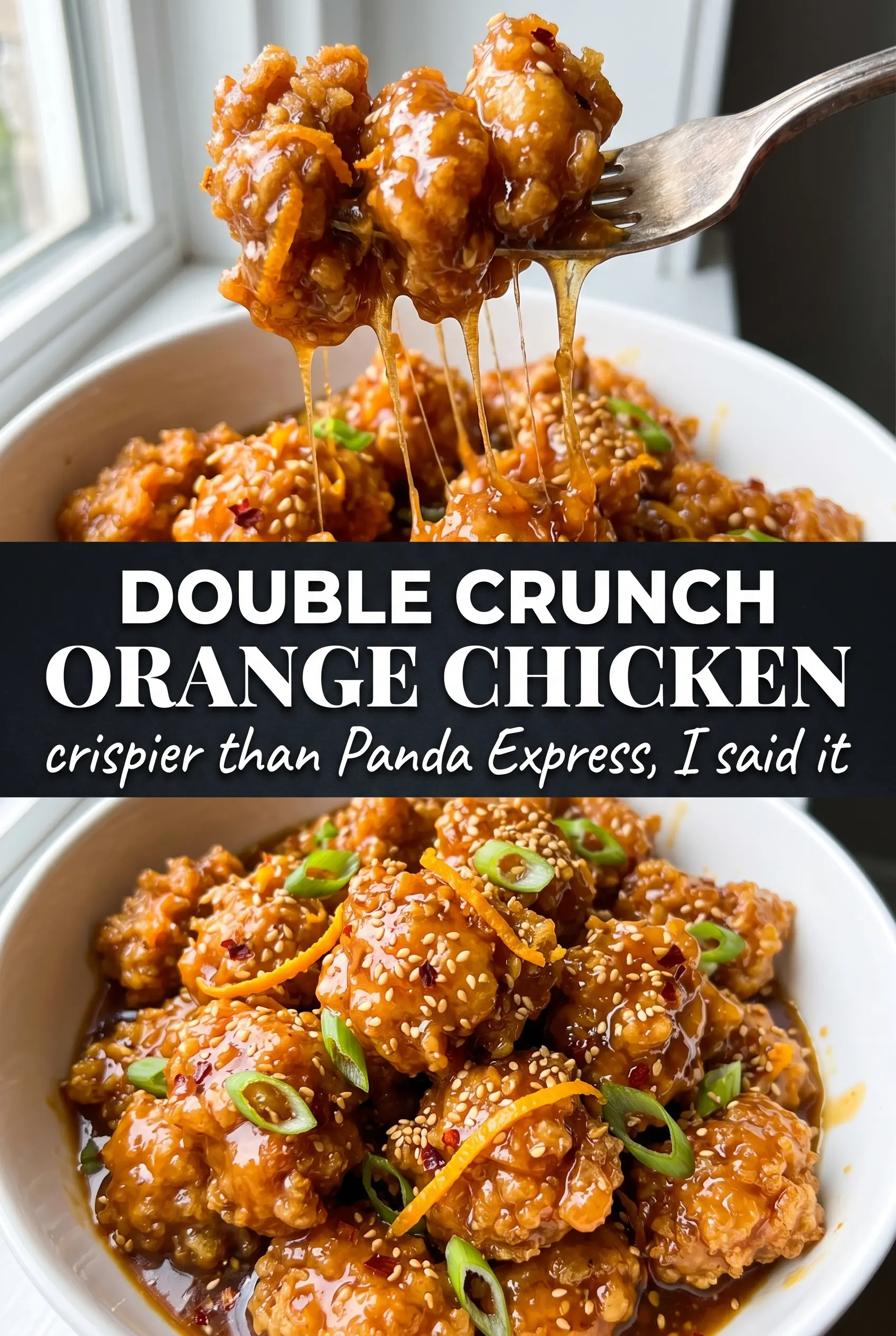
Extra-crispy orange chicken earns its place in the dinner rotation because the coating stays shatteringly crisp long enough to coat every piece in glossy citrus sauce. The chicken is fried twice in a seasoned flour-cornstarch mixture, which gives it that craggy, restaurant-style shell instead of a soft breading that turns soggy the second the sauce hits it.
The sauce matters just as much as the crust. Fresh orange juice and zest bring brightness, while soy sauce, brown sugar, and a little hoisin build the deep, sticky edge you want in a good Chinese-American orange chicken. The cornstarch slurry goes in at the end, after the sauce has boiled, so it thickens cleanly instead of turning pasty or dull.
Below, I’ll walk through the frying setup that keeps the chicken crisp, the sauce texture you’re aiming for, and the swaps that still give you a proper takeout-style finish.
The chicken stayed crunchy even after I tossed it in the sauce, and the orange glaze thickened up fast without tasting syrupy. My husband kept sneaking pieces from the pan.
Double Crunch Orange Chicken stays crisp under a glossy citrus sauce, and that crunchy coating is the whole point.
The Trick to Keeping the Coating Crisp After Frying
The biggest mistake with orange chicken is rushing the sauce while the chicken is still settling from the fryer. If the pieces go straight from oil to sauce, the coating steams and softens before it has a chance to hold its shape. Let the chicken drain on a rack or paper towels for a minute or two, then toss it with the sauce at the very end, just long enough to coat.
The second thing that keeps this version on track is the double dip. A single dredge gives you a thin shell; the second pass builds the rough, craggy bits that fry into a much better crunch. That texture is what lets the sauce cling without turning the coating to mush.
- Cornstarch — This is what gives the crust its brittle, takeout-style snap. It lightens the flour and helps create those crispy edges that stay crunchy longer.
- Chicken thighs — Thighs stay juicier than breast meat during frying, so they’re the safer choice here. If you use breast, cut it smaller and pull it as soon as it’s cooked through.
- Fresh orange zest — Don’t skip it. Juice gives the sauce tang, but zest carries the loud orange aroma that makes the dish taste vivid instead of flat.
- Soy sauce and hoisin — Soy brings salt and depth; hoisin adds a mellow, savory sweetness that keeps the sauce from tasting like straight orange syrup. Low-sodium soy works fine if that’s what you keep around.
- Rice vinegar — This sharpens the sauce so the sweetness doesn’t take over. If you need a swap, use apple cider vinegar in a slightly smaller amount.
What Each Ingredient Is Actually Doing in This Chicken Recipe
- Chicken (the foundation) — Quality chicken starts with good sourcing. Even simple seasoning tastes better on good meat.
- Olive oil or butter (the cooking medium) — Fat carries flavors and keeps chicken from drying. It’s also what makes food taste delicious.
- Salt and pepper (proper seasoning) — Season generously; underseasoned chicken tastes bland. Apply inside and outside so the seasoning penetrates.
- Garlic and onion (the aromatic base) — These add depth and complexity. They sweeten slightly when cooked, becoming mellow and round.
- Acid (lemon, vinegar, wine, or tomato) — This brightens the dish and prevents it from tasting heavy. It also helps balance rich sauces.
- Fresh herbs or spices (the character) — These define the personality of the dish. Choose ones that complement your other flavors.
- Cream or sauce base (optional richness) — A sauce keeps the chicken moist and flavorful. Make sure it’s balanced with acid and herbs.
- Proper cooking technique (the final step) — Whether baking, pan-searing, or simmering, the right method ensures juicy, tender results without drying out the meat.
Frying First, Sauce Second, Toss Fast
Build the Dredge
Mix the cornstarch, flour, garlic powder, salt, and pepper until the seasoning is evenly distributed. The flour alone would fry up heavier; the cornstarch gives you that lighter, rougher coating that crisps fast. Dip each piece in egg first, then the flour mixture, then repeat the egg and flour for the second coat. If the coating looks patchy, press it on gently with your hands instead of shaking it off.
Fry to a Deep Golden Color
Heat the oil to 375°F and fry in batches so the temperature doesn’t crash. The chicken should hiss right away and turn deeply golden in about 5 to 6 minutes. If the oil is too cool, the crust soaks up grease; if it’s too hot, the outside browns before the inside cooks. Pull the pieces when they’re crisp and cooked through, then drain them so the surface steam can escape.
Cook the Orange Sauce Until It Clings
Whisk the orange juice, zest, soy sauce, brown sugar, rice vinegar, hoisin, garlic, ginger, and sesame oil in a saucepan and bring it to a boil. Once it’s bubbling, stir in the cornstarch slurry and keep cooking for 2 to 3 minutes until the sauce turns glossy and thick enough to coat a spoon. If it still looks thin, give it another minute; cornstarch needs a brief boil to lose its raw edge and thicken properly. Don’t add the slurry before the sauce boils or it can turn cloudy and loose.
Toss and Serve Right Away
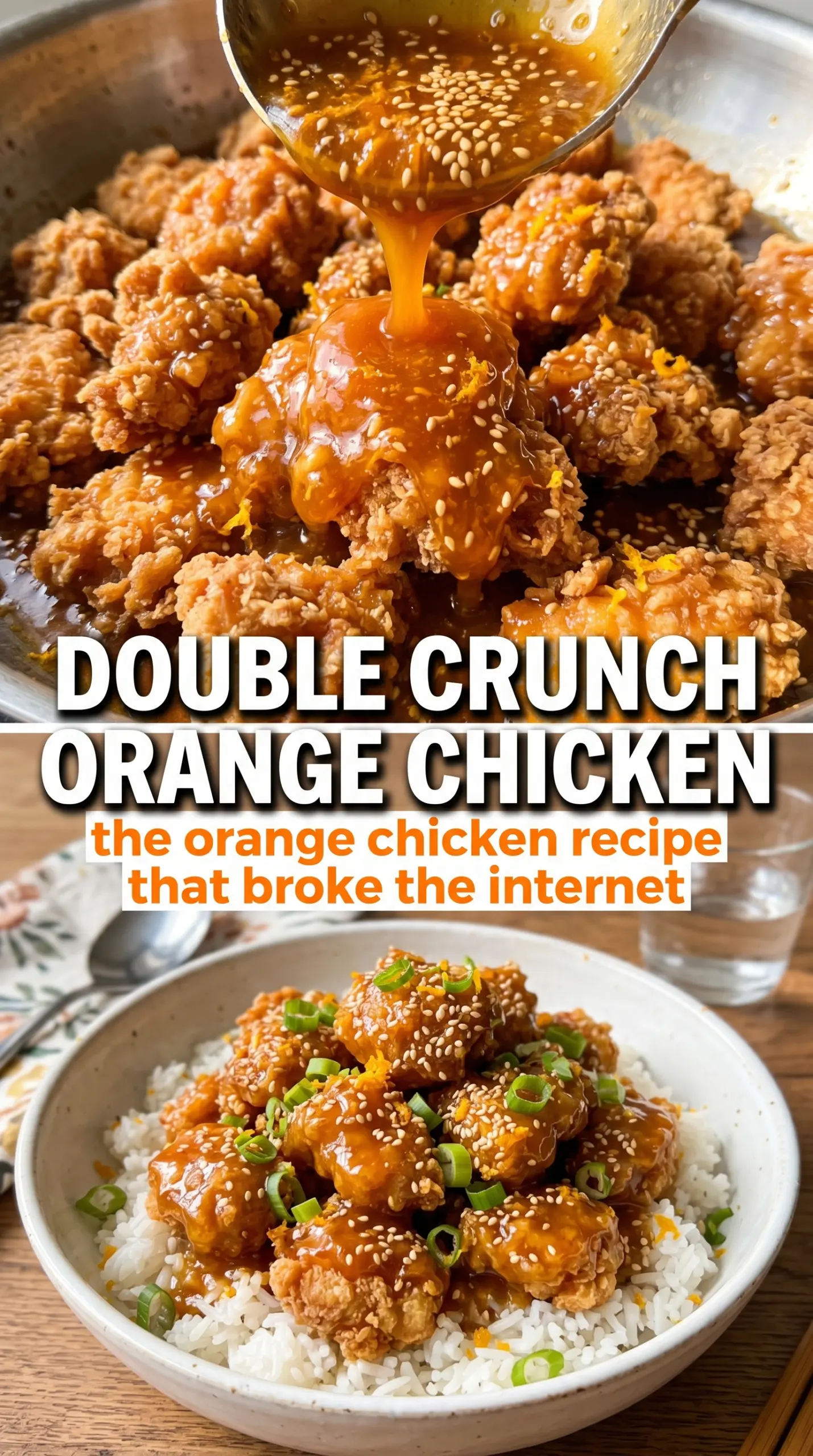
Add the fried chicken to the sauce and toss just until every piece is coated. The goal is a lacquered finish, not a long simmer. Serve it over steamed rice with sesame seeds and sliced green onions while the coating still has some crunch left in it. The longer it sits in the sauce, the softer the crust will get.
What to Change Without Losing the Crunch
Make it gluten-free
Swap the all-purpose flour for a cup-for-cup gluten-free flour blend and use tamari instead of soy sauce. You’ll still get a crisp coating, though it may fry up a little more delicate, so handle the pieces gently when you toss them with the sauce.
Use chicken breast instead of thighs
Chicken breast works if that’s what you have, but it cooks faster and dries out sooner. Cut it into slightly larger bite-sized pieces and watch the frying time closely so it stays tender inside the crisp shell.
Make it dairy-free and egg-free
This recipe is already dairy-free, and if you need to skip the eggs, use a thin cornstarch slurry with water to help the coating stick before dredging. The crust won’t be quite as craggy as the double-dipped version, but it will still fry up crisp if the oil is hot enough.
Keep the sauce lighter
Use a little less brown sugar and add an extra splash of rice vinegar if you want a sharper, less sweet glaze. The sauce will still thicken the same way, but the orange flavor will come through cleaner.
Storage and Reheating
- Refrigerator: Store leftovers in an airtight container for up to 3 days. The crust softens as it sits, but the flavor holds up well.
- Freezer: The sauced chicken doesn’t freeze well because the coating turns soggy after thawing. If you want to freeze ahead, freeze the fried chicken pieces without sauce, then make the sauce fresh.
- Reheating: Reheat uncovered in a 375°F oven or air fryer until hot and crisp again. Avoid the microwave if you want any crunch left; it steams the coating and makes the sauce loose.