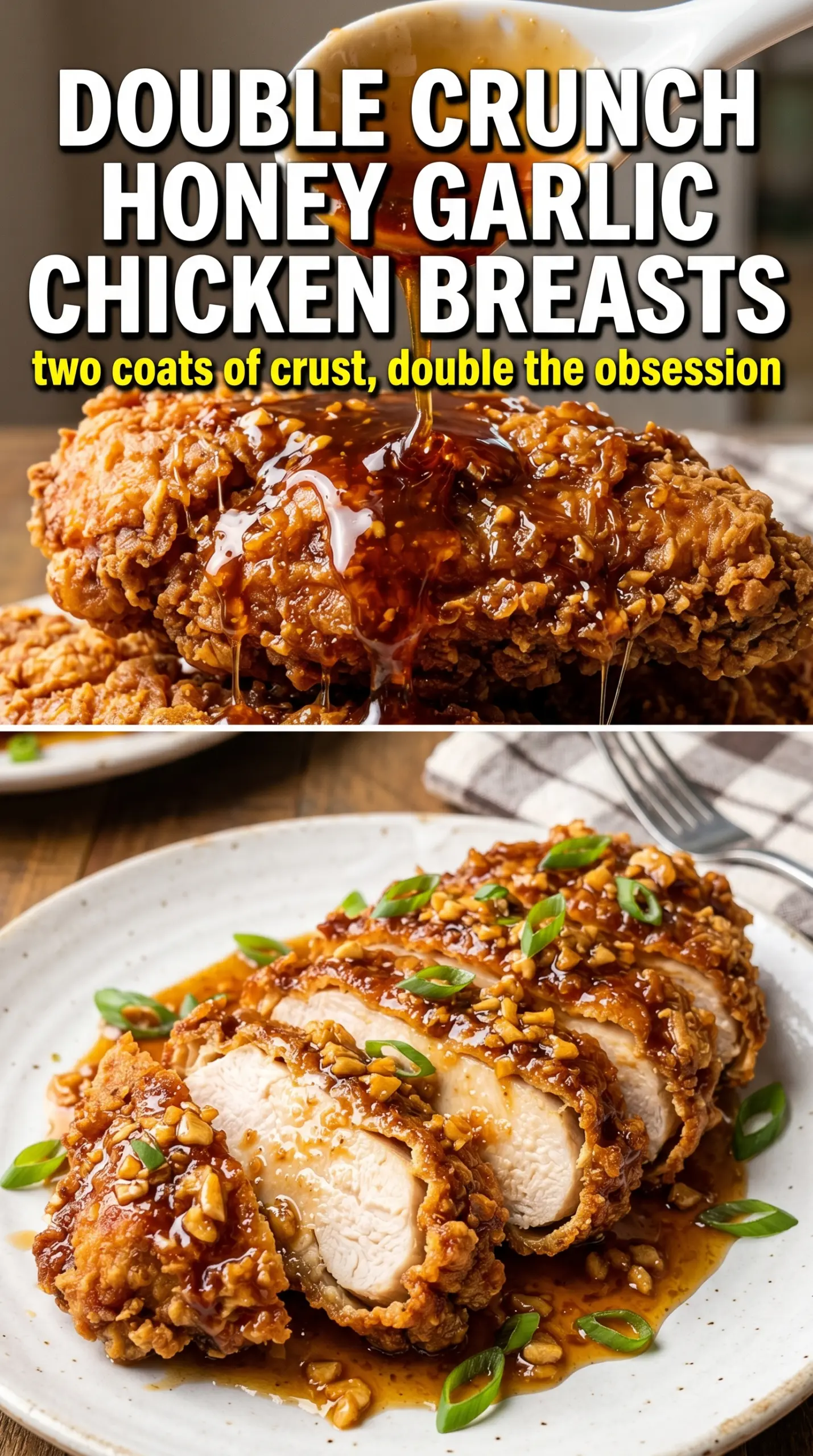
Double Crunch Honey Garlic Chicken Breasts hit that sweet spot where the coating stays shatter-crisp under the sauce instead of turning limp on contact. The chicken is thick enough to stay juicy, but the double dredge gives it a rough, craggy crust that catches every bit of sticky honey garlic glaze. It’s the kind of dinner that disappears fast because every bite has crunch, salt, sweetness, and just enough garlic to keep you going back for one more piece.
The double coating matters here. The first flour layer grabs onto the egg, and the second flour layer builds those dry, flaky bits that fry into a heavier crust instead of a thin breading. I also like a little smoked paprika in the flour because it gives the crust a deeper color and a subtle savoriness that stands up to the sauce. The sauce itself is kept short and simple so it thickens just enough to cling without turning candy-sweet.
Below, I’ve included the small details that keep the crust crisp and the sauce balanced, plus a few variations if you need to work with what’s in your kitchen.
The second flour dredge made the crust extra crunchy, and the sauce thickened just enough to coat the chicken without soaking it. My husband kept reaching for another piece before I even got the rice on the table.
Love the ultra-crispy double coat and sticky honey garlic glaze? Save this chicken breasts recipe for the night you want takeout-style crunch at home.
The Reason the Coating Stays Crunchy Instead of Going Soft
The biggest mistake with honey garlic chicken is saucing it too early or letting the oil run too cool. If the chicken doesn’t fry hot enough, the flour absorbs oil instead of crisping, and if the sauce sits on the chicken too long before serving, the crust starts losing its edge. This version works because the chicken is fried until deeply golden first, then glazed right before it hits the table.
The double dredge also gives you a rougher surface, and that rough surface is what holds the crunch. A smooth coating looks neat but fries thinner. Those extra flour layers create little ridges and flakes that turn into a sturdier crust in the skillet.
- Use evenly pounded chicken breasts — thick spots cook slower and thin spots dry out. Even thickness gives you a better fry and keeps the center juicy by the time the crust is done.
- Keep the oil at a steady 350°F — that temperature crisps the flour fast enough to set the coating before the chicken overcooks. If the oil drops too low, the breading turns greasy instead of crunchy.
- Sauce only after frying — the glaze belongs on hot chicken at the very end. Any earlier and the sugar in the honey softens the crust before you get to eat it.
What the Flour Mix and Sauce Each Bring to the Table
- All-purpose flour — this is the backbone of the crust. A gluten-free blend can work, but it won’t give the same rough, craggy finish unless it’s a cup-for-cup blend designed for frying.
- Eggs — the egg layer is what makes the second flour dredge stick. Don’t thin them with water; you want a slick, clingy coating that grabs the dry mixture.
- Smoked paprika — this doesn’t make the dish smoky in an obvious way, but it deepens the color and keeps the crust from tasting flat. Regular paprika works, though the flavor is a little lighter.
- Honey and soy sauce — this is the sweet-salty balance that makes the dish taste finished. Honey gives the glaze its stickiness, while soy sauce keeps it from reading like candy.
- Apple cider vinegar — the small splash of acid keeps the sauce from turning cloying. If you skip it, the glaze tastes heavier and less sharp.
- Butter — it rounds out the sauce and helps it cling. You can use a plant-based butter here if needed; the sauce will still thicken, though it will taste a little cleaner and less rich.
Frying, Glazing, and Serving Before the Crunch Fades
Building the Double Coat
Mix the flour with the garlic powder, onion powder, smoked paprika, salt, and pepper first so every layer of coating tastes seasoned, not just the outside. Dredge the chicken in flour, then egg, then flour again, pressing lightly so the final layer looks shaggy and uneven. That rough texture is what fries up into those crunchy ridges people fight over. If the flour looks damp and paste-like before it hits the oil, the chicken will fry up heavy instead of crisp.
Frying to a Deep Golden Crust
Heat the oil to 350°F and keep the skillet from crowding. The chicken should sizzle steadily the moment it hits the pan; if there’s only a weak hiss, the oil is too cool. Fry until the crust is deep golden and the center reaches 165°F, about 5 to 6 minutes per side depending on thickness. Let the cooked chicken drain on a rack or paper towels so steam doesn’t trap itself under the crust.
Cooking the Honey Garlic Glaze
Stir the honey, garlic, soy sauce, butter, and vinegar together in a small saucepan and keep the heat at medium, not high. The garlic needs time to soften and the sauce needs just a few minutes to thicken slightly; boiling hard can make the honey taste harsh and reduce the sauce too far. You’re looking for a glossy glaze that coats the back of a spoon, not a syrup that has turned sticky and heavy.
Finishing at the Table
Pour the sauce over the chicken right before serving, then finish with sesame seeds and sliced green onions. Once the glaze goes on, the crust starts its countdown, so get the rice on the table and eat while the coating still cracks under the fork. If you want the crunchiest possible result, spoon a little sauce over each piece instead of drowning the chicken all at once.
How to Adapt This for Different Kitchens and Different Cravings
Gluten-Free Version
Use a gluten-free all-purpose flour blend that includes xanthan gum or another binder. The crust will still crisp, but it may be a little more delicate, so handle the chicken gently when turning it in the skillet.
Baked Instead of Fried
Arrange the coated chicken on a wire rack set over a sheet pan, spray the tops lightly with oil, and bake at 425°F until cooked through. You won’t get the same shattering crust as pan-frying, but you’ll still get good color and a lighter finish.
Less Sweet, More Savory
Reduce the honey slightly and add an extra teaspoon of soy sauce plus a small splash of vinegar. That keeps the glaze sticky and balanced, but it lands closer to savory garlic chicken than candy-sweet takeout sauce.
Storage and Reheating
- Refrigerator: Store leftovers for up to 3 days. The crust softens after saucing, but the flavor stays strong.
- Freezer: The fried chicken freezes better before adding the sauce. Cool it completely, freeze on a tray, then store in a freezer bag for up to 2 months.
- Reheating: Reheat in a 375°F oven or air fryer until hot and crisp again. Skip the microwave if you want any crunch left; it turns the coating soft fast.
Questions I Get Asked About This Recipe
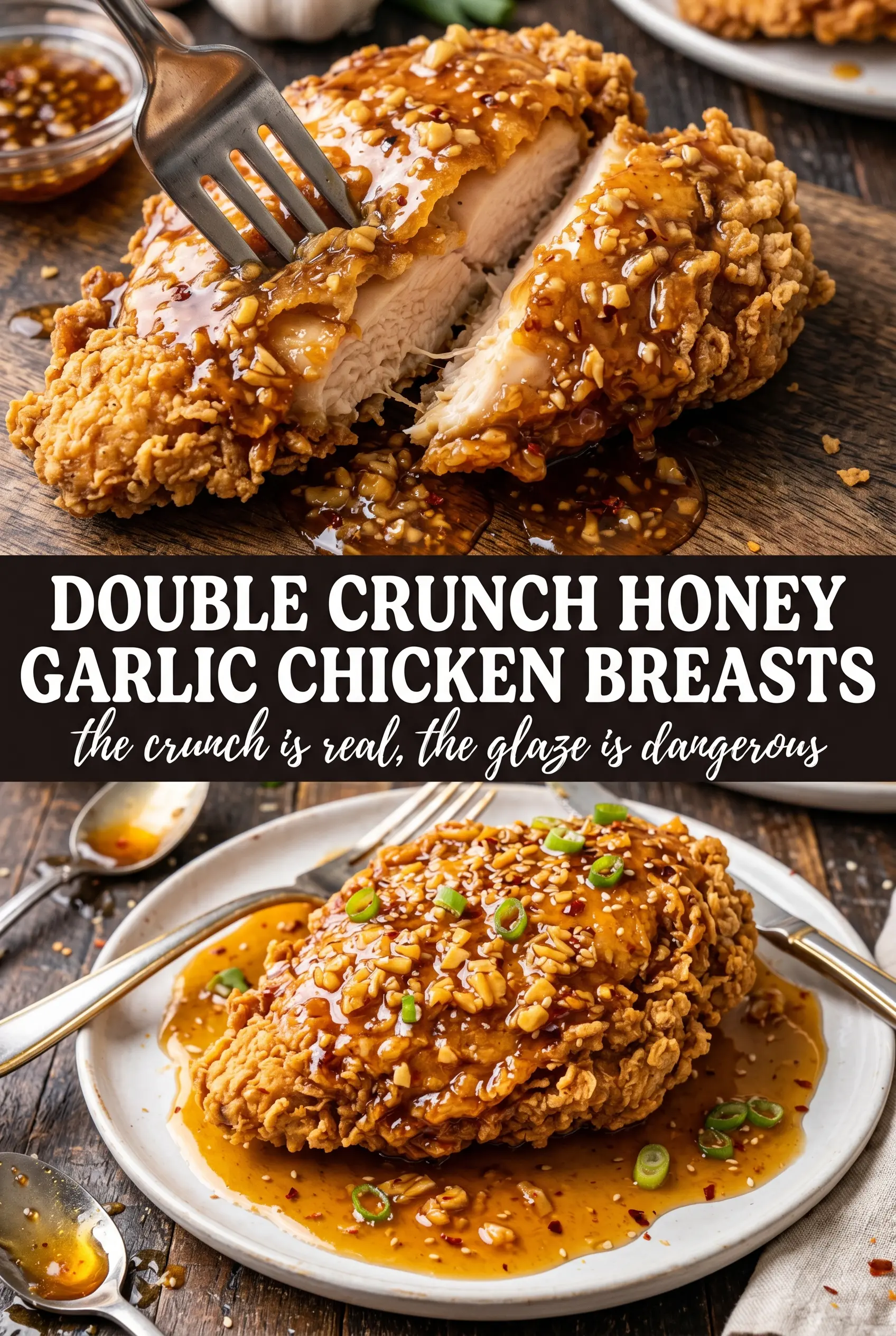
Double Crunch Honey Garlic Chicken Breasts
Ingredients
Equipment
Method
- Mix all-purpose flour with garlic powder, onion powder, smoked paprika, salt, and pepper, then set up a dredging station. Make sure the spices are evenly distributed through the flour for consistent color and crunch.
- Dredge pounded chicken breasts in the spiced flour, pressing lightly so the coating adheres. Let excess flour fall back into the bowl.
- Dip the floured chicken into the beaten eggs, coating all sides. Hold briefly to drain so the eggs don’t make the coating gummy.
- Return the chicken to the spiced flour and dredge again for the double crunch coat. Pat gently to help the second layer stick evenly.
- Heat 1/2 inch of vegetable oil in a large cast iron skillet over medium-high heat until it reaches 350°F. Use a thermometer if you have one, and keep the oil at a steady temperature.
- Pan-fry chicken for 5-6 minutes per side until golden and crunchy. Flip once and cook until the internal temperature reaches 165°F.
- Drain the chicken on a rack or paper-lined surface briefly to remove excess oil. Keep it hot so the coating stays crisp.
- Simmer honey, minced garlic, soy sauce, butter, and apple cider vinegar in a saucepan over medium heat for 3-4 minutes until slightly thickened. Stir to dissolve the garlic and create a glossy sauce.
- Pour the honey garlic sauce over the hot crispy chicken right before serving. The sauce should glisten and soak while the coating stays crisp at the first bite.
- Garnish with sesame seeds and sliced green onions. Serve immediately over rice.