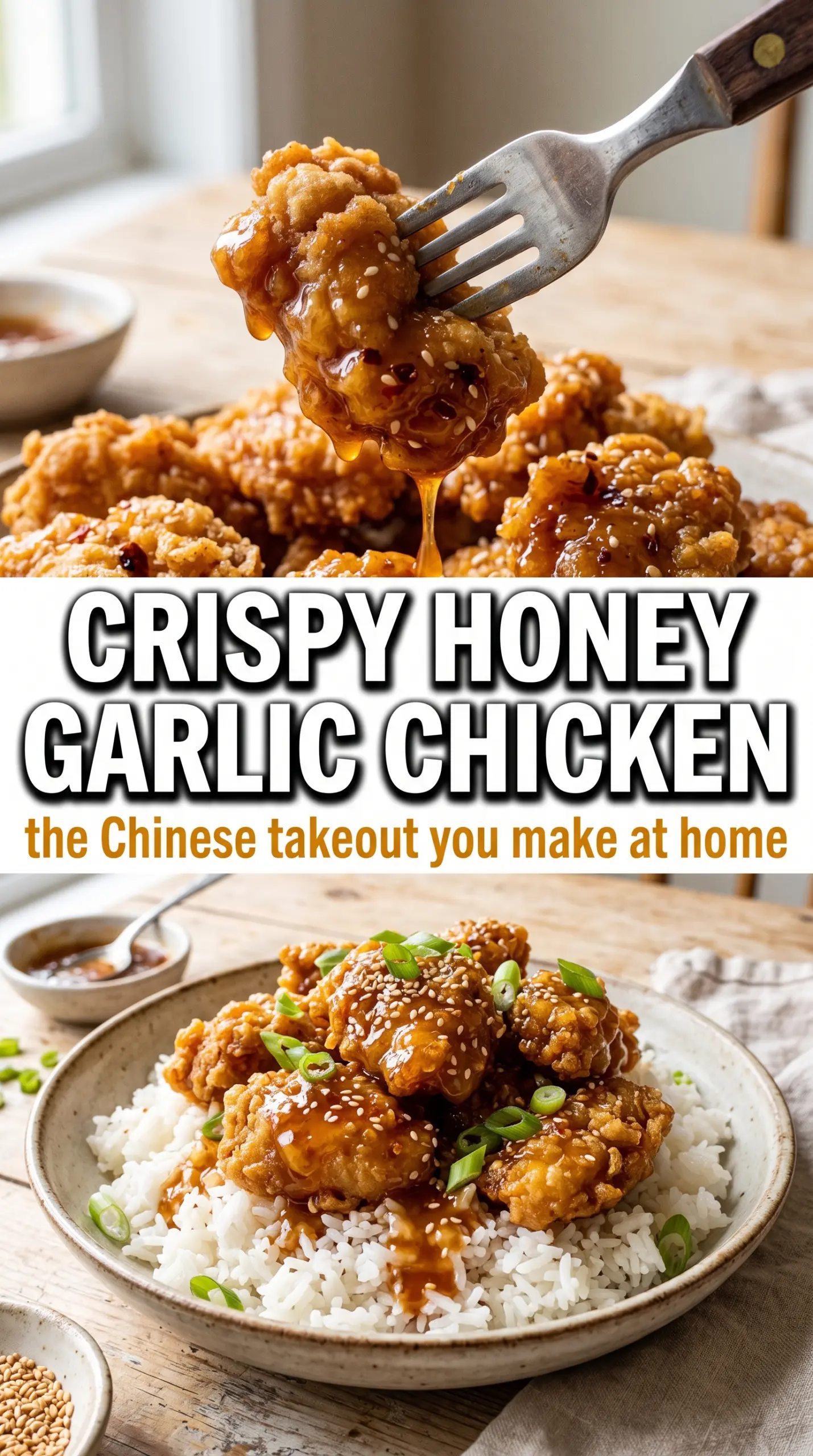
Crispy Chinese honey garlic chicken earns its place in the rotation the first time you bite through that shatteringly crisp coating and hit the sticky, glossy sauce underneath. The chicken stays crunchy long enough to get to the table, and the sauce clings in a lacquered layer instead of pooling in the bowl. That contrast is the whole point here: salty, sweet, garlicky, and just sharp enough from the vinegar to keep each bite moving.
The texture comes from a simple double-dry coating of cornstarch and flour, plus a hot enough fry to set the crust before the chicken has time to shed moisture into the oil. The sauce uses enough honey to glaze, but the soy sauce and rice vinegar keep it from tasting one-note. A little cornstarch slurry gives it that takeout-style sheen and helps it cling to every ridge of the chicken instead of sliding off.
Below, I’ll walk through the part that matters most if you want the chicken to stay crispy after saucing, plus a few swaps that help if you need to work around what’s in the pantry.
The chicken stayed crisp even after I tossed it in the sauce, and the garlic flavor came through without tasting burnt. I used the rice vinegar exactly as written and it kept the honey from getting too heavy.
Save this crispy Chinese honey garlic chicken for the night you want crackly fried chicken and glossy takeout-style sauce in one pan.
The Reason the Coating Stays Crisp After the Sauce Goes On
The biggest mistake with honey garlic chicken is rushing the sauce and the frying at the same time. If the oil isn’t hot enough, the coating absorbs grease instead of crisping. If the sauce is too thin, it turns the crust soggy before it has a chance to grab the chicken. Here, the cornstarch-flour mix gives you a light but sturdy shell, and the chicken gets sauced only after the glaze has thickened enough to coat a spoon.
The other thing that matters is batch size. Crowding the pan drops the oil temperature fast, which gives you pale chicken and a heavier crust. Fry in smaller batches and let the pieces drain on a rack or paper towels before tossing them with the sauce. That short rest is what keeps the coating from collapsing the minute the glaze hits.
What Each Ingredient Is Actually Doing in This Dish
- Chicken thighs — Thighs stay juicier than breasts and handle frying better, which matters because the coating is done before the meat dries out. If you use chicken breast, cut it a little larger and fry just until cooked through so it doesn’t turn stringy.
- Cornstarch and flour — This combination is what gives the chicken that crisp, craggy shell. Cornstarch brings the crunch, while flour helps the coating hold together instead of falling off in sandy bits.
- White pepper and garlic powder — These season the coating from the inside, so every bite tastes finished even before the sauce goes on. White pepper has that clean, slightly earthy warmth you expect in Chinese-American fried chicken.
- Honey, soy sauce, and rice vinegar — Honey gives the gloss, soy sauce gives salt and depth, and rice vinegar keeps the sauce from tasting sticky-sweet. If you swap in another vinegar, use less at first because sharper vinegars can take over fast.
- Cornstarch slurry — This is what turns the sauce from thin and shiny into a proper clingy glaze. Stir it in after the sauce simmers, then give it a minute or two to go from cloudy to clear and thick.
- Sesame oil — Add it off the heat. If it cooks too long, the aroma fades, and that nutty finish is one of the best parts of the dish.
Frying the Chicken Before the Glaze Can Break It Down
Mix the coating and build the crust
Whisk the cornstarch, flour, garlic powder, salt, and white pepper together until the seasoning is evenly distributed. Dip each piece of chicken in the beaten egg, then dredge it in the flour mixture and press lightly so the coating sticks in a rough, uneven layer. That roughness is what fries into crisp edges. If the coating looks wet or gummy before it hits the oil, dust off the excess and keep moving; a heavy paste turns into a thick, dull crust instead of a light crunch.
Fry in hot oil, not lukewarm oil
Heat about 2 inches of oil to 375°F and fry the chicken in batches for 5 to 6 minutes, until the pieces are deep golden and cooked through. The chicken should sound lively when it goes in, not sink and hiss lazily. If the oil drops too much between batches, wait a minute for it to recover before adding more chicken. Pull the pieces when they’re just done; overfrying dries out the thighs and makes the sauce taste heavier than it should.
Cook the sauce until it coats, not until it turns candy-like
Combine the honey, soy sauce, garlic, and rice vinegar in a saucepan and bring it to a simmer. Stir in the cornstarch slurry and cook for 2 to 3 minutes, stirring, until the sauce looks glossy and thick enough to coat the back of a spoon. If it stays thin, it will soak into the coating instead of sitting on top of it. Pull the pan off the heat before stirring in the sesame oil so the garlic stays fragrant and the sauce keeps its clean finish.
Toss fast and serve right away
Add the fried chicken to the sauce and toss until every piece is coated. Don’t let it sit in the pan any longer than needed, because even a good glaze will soften crisp chicken if it waits around. Finish with sesame seeds and green onions, then serve it over steamed rice while the edges are still crunchy and the sauce is still glossy.
How to Adapt It When You Need a Different Finish
Make it gluten-free
Use a gluten-free flour blend in place of the all-purpose flour and swap in tamari for the soy sauce. The coating will still fry up crisp because the cornstarch is doing the crunch work, and tamari keeps the sauce savory without the wheat.
Use chicken breast instead of thighs
Chicken breast works, but cut it into slightly larger pieces so it doesn’t dry out in the fryer. Pull it the second it turns golden and reaches temperature, because breast meat loses its tenderness fast if it goes a minute too far.
Bake or air-fry for a lighter version
You’ll lose some of the shatteringly crisp texture, but you can still get a good result by coating the chicken well and cooking until deeply browned. Spray the pieces with oil before baking or air-frying so the starches can actually crisp instead of drying out chalky.
Make the sauce a little sharper
Add an extra teaspoon of rice vinegar if you like the sauce less sweet and a little brighter. Don’t add much more than that at first, because too much acid can push the glaze away from sticky and into thin and aggressive.
Storage and Reheating
- Refrigerator: Store leftovers for up to 3 days. The coating will soften as it sits, but the flavor holds up well.
- Freezer: The sauced chicken doesn’t freeze well because the crust loses its texture after thawing. If you want to freeze ahead, freeze the fried chicken pieces and sauce them after reheating.
- Reheating: Reheat on a rack in a 375°F oven or air fryer until hot and re-crisped. The common mistake is microwaving it, which turns the coating steamy and tacky before the sauce has a chance to loosen back up.
Answers to the Questions Worth Asking
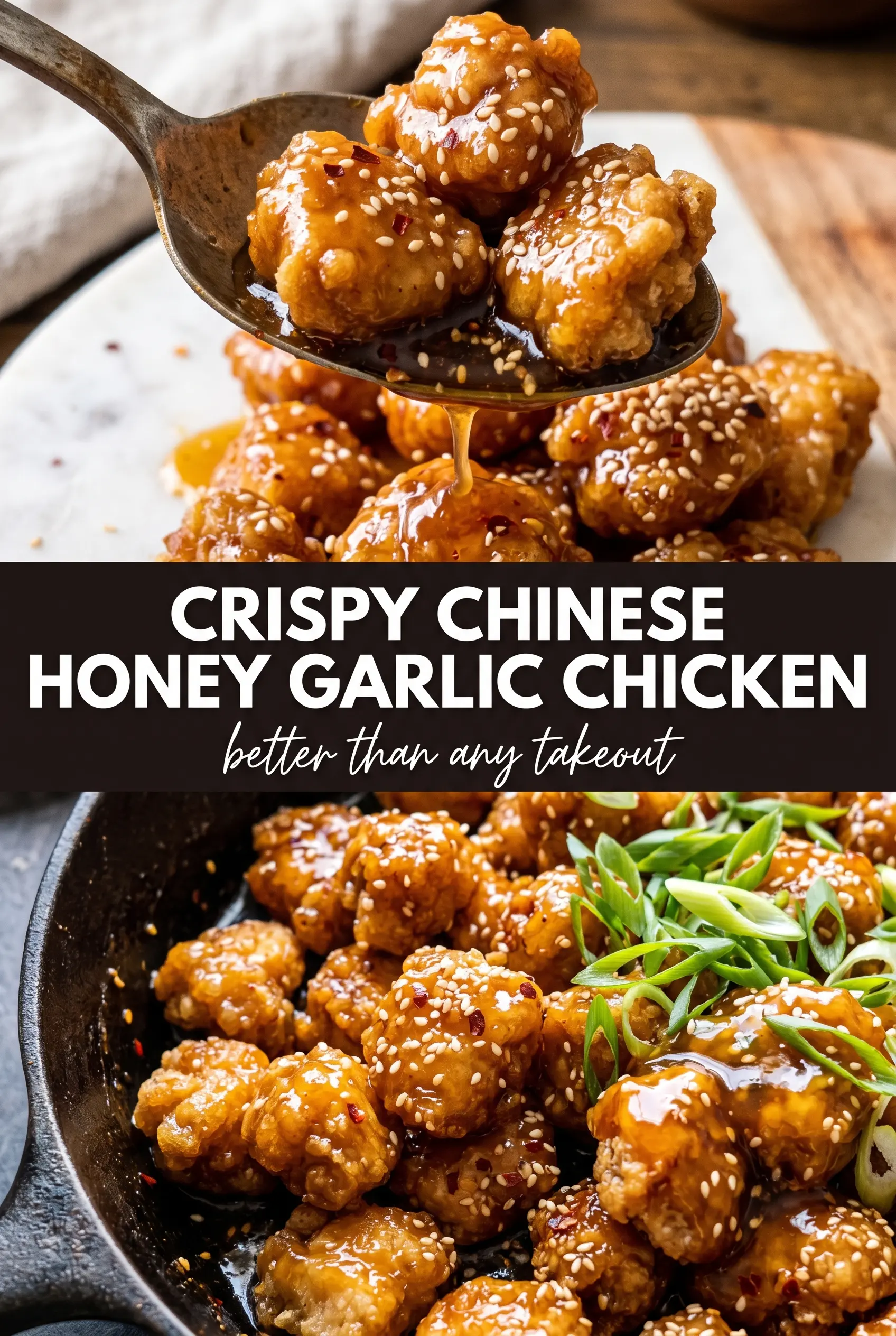
Crispy Chinese Honey Garlic Chicken
Ingredients
Equipment
Method
- Whisk together cornstarch, flour, garlic powder, salt, and white pepper in a bowl until evenly combined, then set aside for dredging.
- Dip the beaten egg-coated chicken pieces into the flour mixture, pressing lightly so each bite is well coated and clings.
- Heat 2 inches of vegetable oil in a heavy skillet to 375°F, maintaining that temperature before you add the chicken.
- Fry chicken in batches for 5-6 minutes, turning once, until deep golden and cooked through, then drain on a sheet pan.
- Combine honey, soy sauce, minced garlic, and rice vinegar in a saucepan and bring to a simmer over medium heat.
- Stir in the cornstarch slurry and cook for 2-3 minutes, stirring, until the sauce thickens into a glossy consistency.
- Remove the saucepan from the heat, then stir in sesame oil until fully incorporated.
- Toss the crispy chicken in the honey garlic sauce until every piece is fully coated and the coating turns tacky and shiny.
- Serve immediately over steamed rice and top with sesame seeds and green onions.