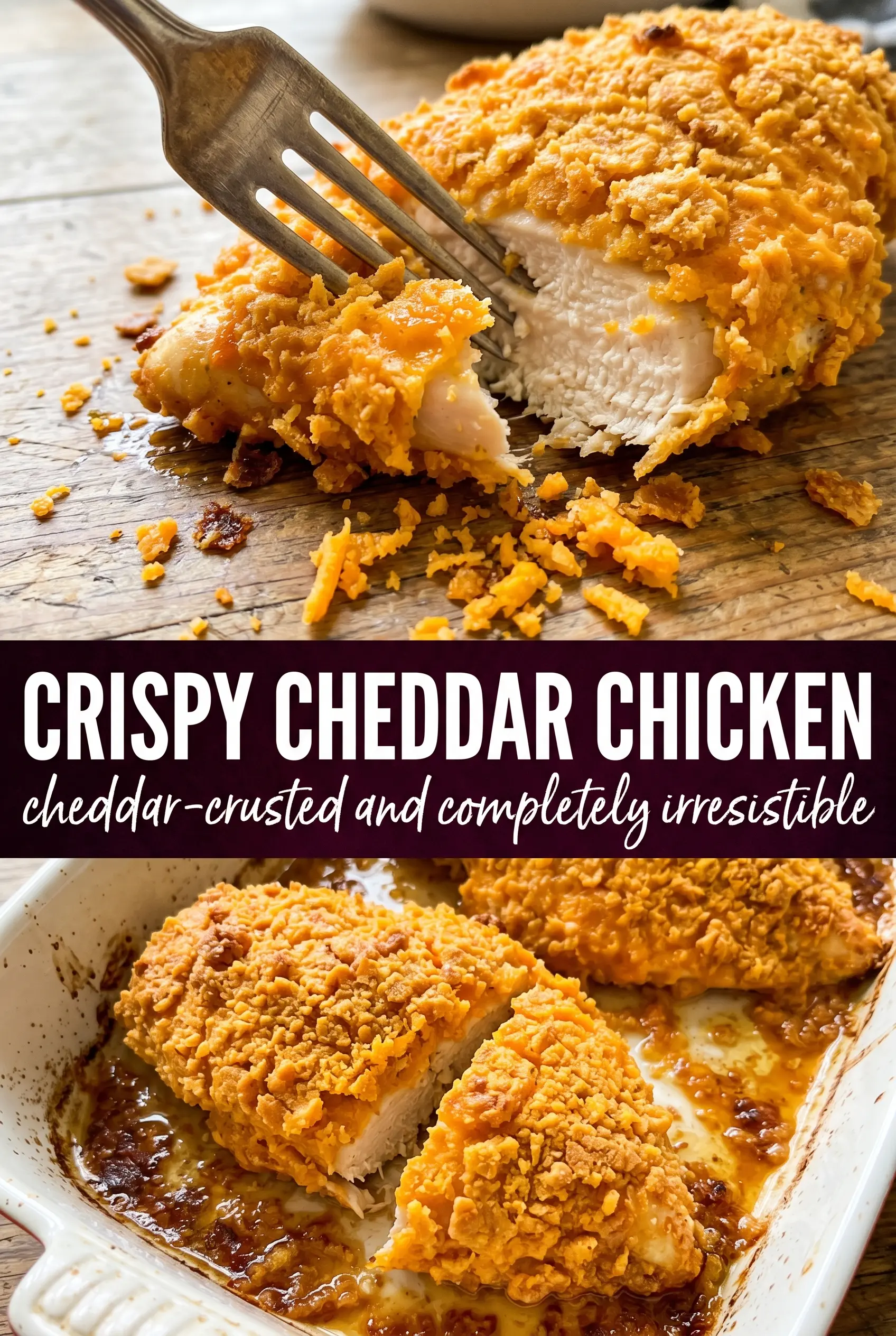
Sharp cheddar and buttery cracker crumbs make this chicken crust crackle when you cut into it, and that browned cheese edge is what keeps people coming back for another piece. The sour cream coating underneath does two jobs at once: it helps the crust cling, and it keeps the chicken underneath from drying out in the oven.
The trick is pressing the cheddar-cracker mixture on firmly enough that it bonds before baking, then letting the oven do the work without moving the chicken around. Finely shredded cheddar melts into the crumbs and forms those little golden shards; coarser shreds won’t give you the same even, shattery crust.
Below you’ll find the timing that keeps the coating crisp, the ingredient swaps that still hold up, and the one reheating method that won’t turn the crust soft.
The crust turned out golden and crunchy all over, and the sour cream layer kept the chicken so juicy that even the thickest breast was done perfectly at 30 minutes.
Like this crispy cheddar chicken? Save it for the nights when you want a crunchy baked chicken dinner with a browned cheese crust and creamy sauce.
The Crust Problem: Why This Chicken Stays Crisp Instead of Going Soggy
The biggest failure with baked breaded chicken is moisture escaping too early and turning the coating soft before it has a chance to brown. This version avoids that by using a sour cream layer as the glue between the chicken and the crust. The chicken gets a direct coating, then the cheddar and cracker mixture clings in a thick layer instead of sliding off into the pan.
Another thing that matters here is heat. You want the oven hot enough to caramelize the cheese and dry out the cracker crumbs just enough to crisp them, but not so hot that the crust burns before the chicken finishes. If the coating looks pale at the end, it usually means it was packed on too loosely or the cheese wasn’t finely shredded enough to melt and brown together.
- Sour cream — This is the base that holds the crust in place and keeps the chicken tender. Greek yogurt works in a pinch, but it has a little more tang and a slightly firmer set, so the coating can bake up a touch drier.
- Sharp cheddar — Use a good sharp cheddar here. Milder cheese won’t brown with the same depth, and pre-shredded cheese doesn’t melt as cleanly because of the anti-caking coating. Finely shredding it yourself gives you the best crust.
- Ritz crackers — They add buttery richness and help the crust shatter instead of turning dense. Saltines can stand in, but the crust will taste leaner and a little less plush.
- Cream of chicken soup — This is for the sauce, and it gives you that familiar creamy finish without having to build a separate pan gravy. If you swap in cream of mushroom, the sauce gets earthier and a little heavier.
What Each Ingredient Is Actually Doing in This Chicken Recipe
- Chicken (the foundation) — Quality chicken starts with good sourcing. Even simple seasoning tastes better on good meat.
- Olive oil or butter (the cooking medium) — Fat carries flavors and keeps chicken from drying. It’s also what makes food taste delicious.
- Salt and pepper (proper seasoning) — Season generously; underseasoned chicken tastes bland. Apply inside and outside so the seasoning penetrates.
- Garlic and onion (the aromatic base) — These add depth and complexity. They sweeten slightly when cooked, becoming mellow and round.
- Acid (lemon, vinegar, wine, or tomato) — This brightens the dish and prevents it from tasting heavy. It also helps balance rich sauces.
- Fresh herbs or spices (the character) — These define the personality of the dish. Choose ones that complement your other flavors.
- Cream or sauce base (optional richness) — A sauce keeps the chicken moist and flavorful. Make sure it’s balanced with acid and herbs.
- Proper cooking technique (the final step) — Whether baking, pan-searing, or simmering, the right method ensures juicy, tender results without drying out the meat.
Pressing the Coating On So It Bakes as One Piece
Coating the Chicken First
Stir the sour cream with the garlic powder, onion powder, salt, and pepper until it looks smooth and seasoned all the way through, then coat every side of each breast. The chicken should look thickly smeared, not lightly dabbed. If there are bare patches, the crust won’t grip there and you’ll get bald spots after baking.
Building the Cheddar-Cracker Crust
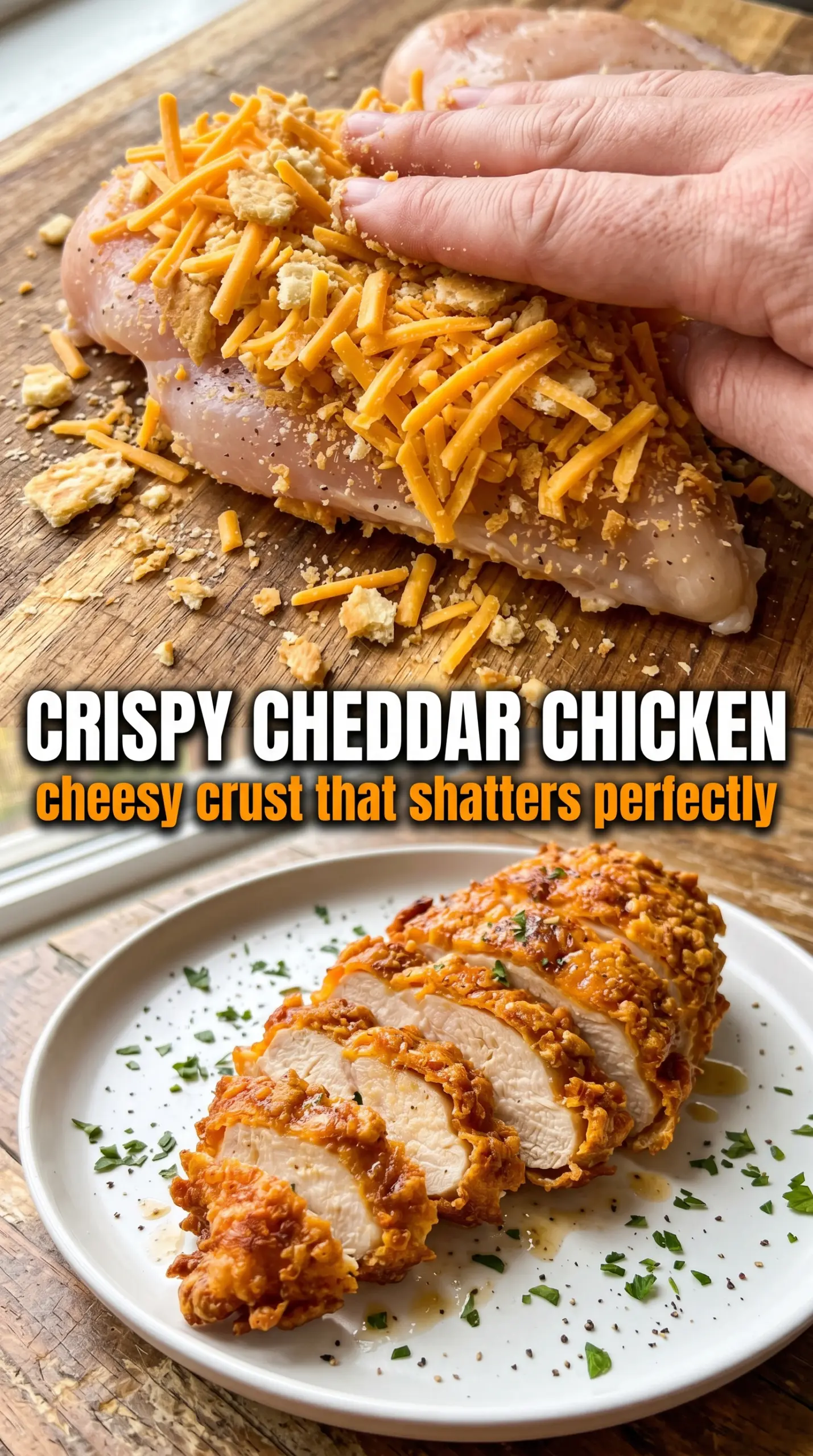
Mix the shredded cheddar, crushed Ritz crackers, and smoked paprika until the cheese is evenly distributed through the crumbs. Then press the mixture onto the chicken with your hands and use firm pressure, especially on the sides and thicker ends. The crust should look packed, almost like you are setting it into the coating instead of sprinkling it over the top.
Baking Until the Cheese Turns Deep Gold
Set the coated chicken in the greased baking dish and bake until the crust is deeply browned and the thickest part of the breast reaches 165°F. The top should look set and crisp, with some darker caramelized spots from the cheese. If the top is browning too fast before the chicken is cooked through, lay a loose piece of foil over the dish for the last few minutes.
Finishing With the Cream Sauce
Warm the cream of chicken soup with the sour cream in a small saucepan until smooth and steamy, then drizzle it around the chicken, not over the crust. That keeps the bottom of the chicken saucy without softening the crust you just worked for. Parsley goes on at the end for color and a fresh note that cuts through the richness.
Make It Gluten-Free With the Right Cracker Swap
Use a gluten-free buttery cracker or crushed gluten-free corn flakes in place of the Ritz crackers. You still get a crisp shell, but the flavor will be a little less rich and the crust may set more sharply instead of melting into shattery shards.
Swap in Greek Yogurt for a Lighter Coating
Plain Greek yogurt can replace the sour cream in the coating. It gives the chicken the same cling, but the tang is a little sharper and the crust may bake up just slightly less plush. Use full-fat yogurt if you want the closest result.
Change the Cheese for a Different Kind of Crunch
A mix of sharp cheddar and a little parmesan makes the crust even browner and saltier. Parmesan adds a drier, more brittle edge, while cheddar gives you the melt and the deeper cheese pull. If you go all parmesan, the crust gets thinner and more brittle, not as bulky or dramatic.
Storage and Reheating
- Refrigerator: Store leftovers in an airtight container for up to 3 days. The crust softens a bit in the fridge, but the flavor stays solid.
- Freezer: It freezes, but the crust won’t stay as crisp once thawed. Freeze individual portions wrapped tightly, then reheat from thawed for the best texture.
- Reheating: Use a 350°F oven or air fryer until the chicken is hot and the crust re-crisps. The mistake most people make is microwaving it, which steams the coating and turns the cheddar crust chewy.
Answers to the Questions Worth Asking
Crispy Cheddar Chicken
Ingredients
Equipment
Method
- Preheat the oven to 375°F and grease a 9x13 baking dish with light coating to prevent sticking.
- Whisk sour cream, garlic powder, onion powder, salt, and pepper until smooth, then coat each chicken breast completely.
- Combine shredded cheddar, crushed Ritz crackers, and smoked paprika, then press the mixture firmly over the sour cream-coated chicken on all sides.
- Place the chicken in the prepared dish and bake for 28-32 minutes until the crust is golden and crisp, with an internal temperature of 165°F.
- Whisk cream of chicken soup with sour cream, warm it in a small saucepan until loosened and pourable, then drizzle around the chicken.
- Garnish with fresh parsley right before serving so it looks bright against the golden crust.