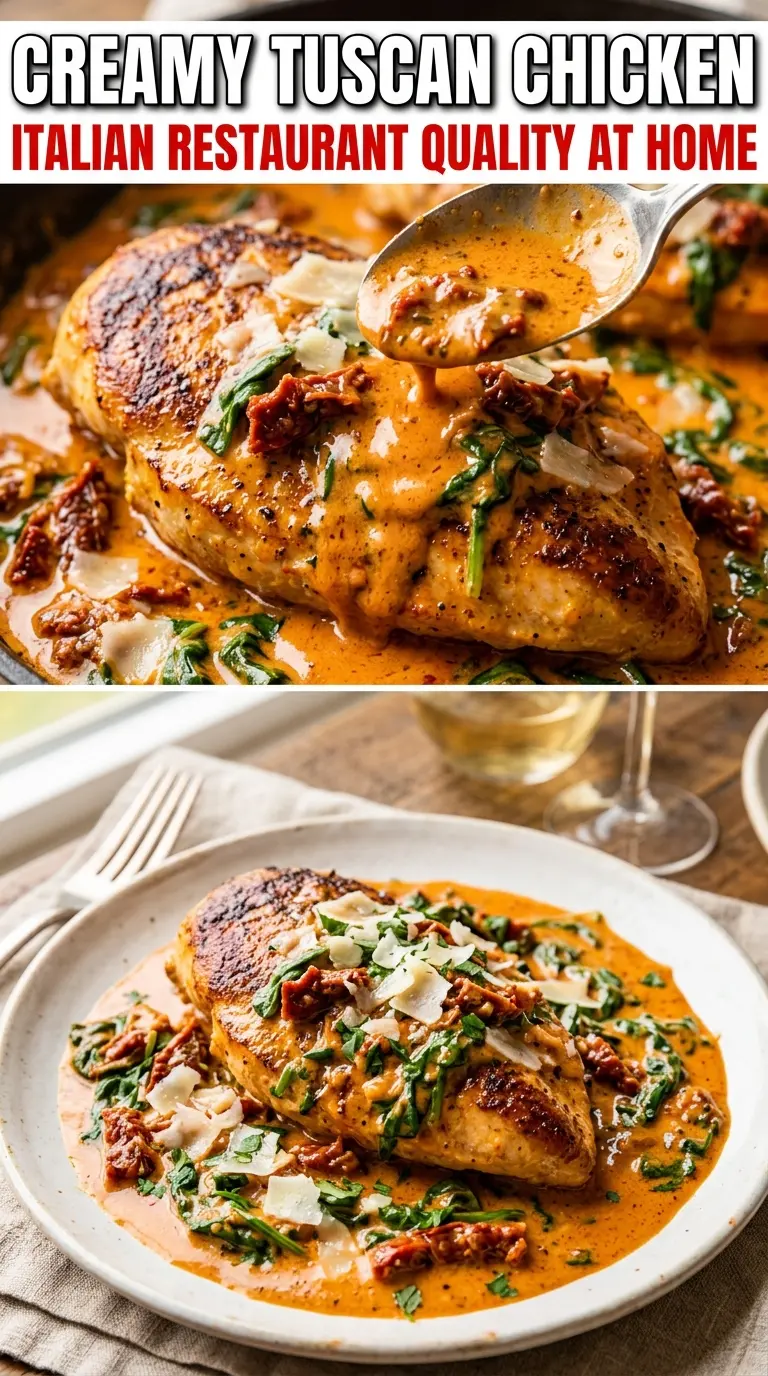
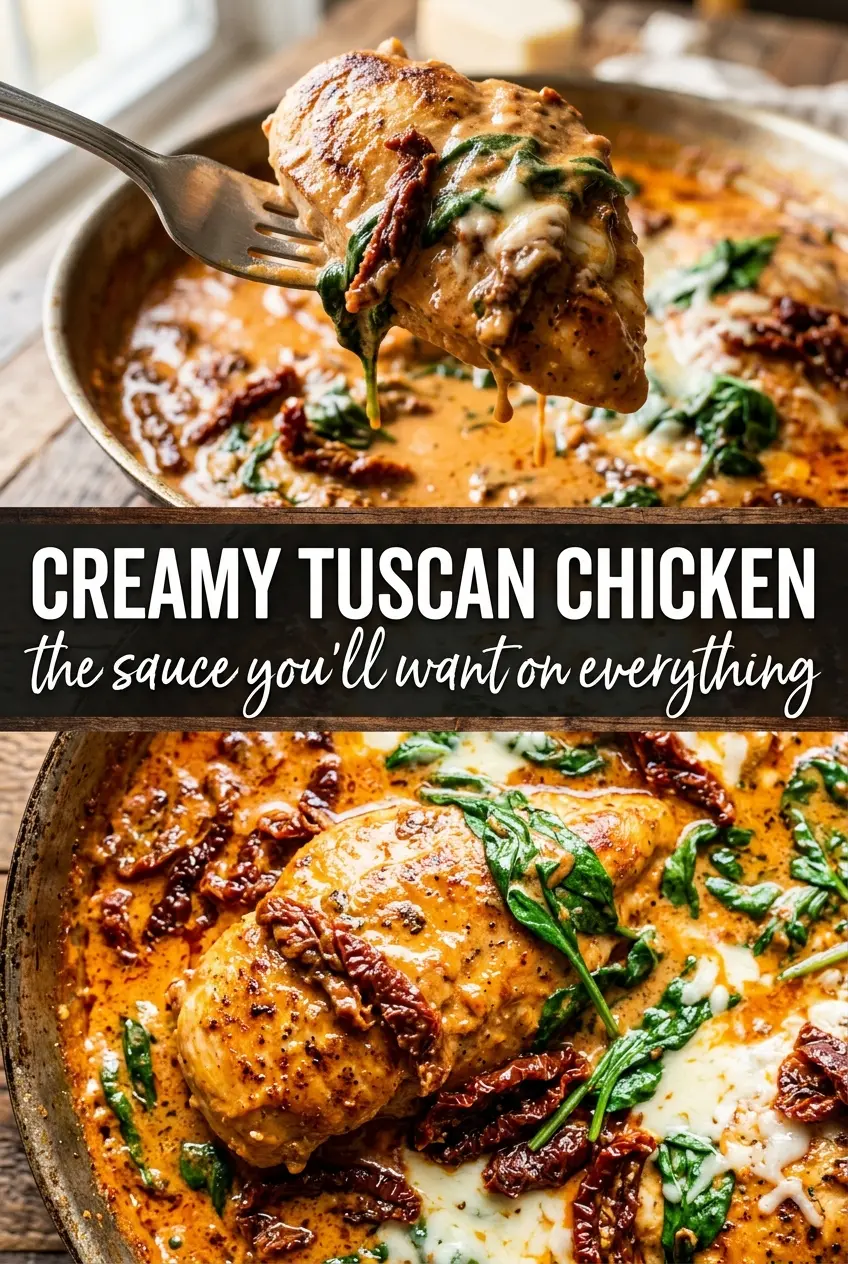
Golden seared chicken breasts tucked into a silky sun-dried tomato and spinach cream sauce earn their place on the repeat list fast. The chicken stays juicy because it gets a hard, fast sear first, and the sauce turns glossy and spoon-coating instead of thin and milky. Every bite has that balance of salty Parmesan, sweet-tart tomatoes, and fresh basil that keeps the whole skillet from feeling heavy.
The small decisions matter here. Searing the chicken before anything else builds flavor in the pan, and using the same skillet for the sauce means every browned bit gets worked back into the cream. The Parmesan goes in after the broth and cream have had a chance to warm together, which helps it melt smoothly instead of clumping. Spinach is last so it keeps its color and just wilts into the sauce without disappearing.
Below you’ll find the timing that keeps the chicken tender, the ingredient swaps that still give you a rich sauce, and the one reheating trick that keeps leftovers from turning grainy.
The sauce thickened up beautifully and stayed silky when I added the Parmesan off the heat. My husband said the sun-dried tomatoes made it taste like a restaurant meal.
Like this creamy Tuscan chicken? Save it for the nights when you want a silky skillet sauce with seared chicken and almost no cleanup.
The Detail That Keeps the Sauce Silky Instead of Grainy
The sauce only stays smooth when the heat drops before the cheese goes in. Parmesan wants gentle warmth, not a rolling simmer, and if you add it to a bubbling pan it can turn sandy or separate. Pulling the skillet back for a moment gives the cream and broth time to settle into a stable base.
Sun-dried tomatoes are the other piece people underestimate. They bring concentrated tomato flavor without watering the sauce down, and the oil-packed kind add a little richness if you let a spoonful cling to the tomatoes when you slice them. If your sauce ever tastes flat, it’s usually because the pan needed more seasoning after the broth went in, not more cream.
- Chicken breasts — Pound thicker ends slightly so they cook at the same pace as the thinner parts. That keeps you from overcooking one end while waiting on the other.
- Sun-dried tomatoes in oil — These are worth using. Dry-packed tomatoes can work if you soak them in hot water first, but the oil-packed version gives you deeper flavor and a better texture in the sauce.
- Parmesan — Grate it yourself if you can. Pre-shredded cheese often has anti-caking starches that make the sauce less smooth.
- Heavy cream — This is what gives the sauce its body. Half-and-half can work in a pinch, but it won’t thicken as fully and it is easier to curdle if the heat runs too high.
- Fresh spinach — Baby spinach wilts fast and disappears into the sauce without turning stringy. Frozen spinach brings too much water unless it’s squeezed very dry.
What Each Ingredient Is Actually Doing in This Baked Chicken
- Chicken breasts (the lean protein) — Cut evenly so pieces cook at the same rate. Let them sit at room temperature for 15 minutes before baking so they cook evenly.
- Olive oil or butter (the cooking medium and richness) — Good fat keeps the chicken from drying out in the oven. It also carries herb and spice flavors throughout the meat.
- Garlic (the aromatic foundation) — Fresh minced or thin slices mellow and become sweet when baked, adding depth without overpowering the chicken.
- Cream or broth (the sauce base) — This creates the glossy sauce that keeps baked chicken from tasting dry. It also helps flavors develop and carry.
- Lemon juice or vinegar (the brightness) — Acid prevents the cream sauce from tasting too heavy and keeps the dish from being one-dimensional.
- Fresh herbs or spices (the personality) — Basil, thyme, oregano, paprika, or Italian seasoning all work. Choose ones that complement your other flavors.
- Cheese (optional richness) — Parmesan or feta adds creaminess and salt that enhances all other flavors. Don’t overdo it or the dish becomes heavy.
- Proper oven temperature (the key to juicy chicken) — 375-400°F bakes chicken through without drying the edges. Check with a thermometer for 165°F internal temp.
How to Build the Sauce Without Losing the Chicken’s Juices
Getting the Sear First
Season the chicken generously so the outside has enough salt and spice to stand up to the cream sauce. Heat the olive oil until it shimmers, then lay the chicken in without crowding the pan; if the pieces touch too much, they steam instead of browning. Let them go untouched until they release cleanly and the first side has a deep golden crust. Pull them when they hit 165°F, then let them rest on a plate while you build the sauce.
Pulling Flavor from the Same Pan
Garlic goes in after the chicken comes out, and it only needs about 30 seconds. Any longer and it can taste bitter under the cream. Stir in the sun-dried tomatoes next so they can pick up the garlic aroma and warm through. When you pour in the broth, scrape the bottom of the skillet well; those browned bits are the backbone of the sauce.
Finishing the Cream Sauce
Add the cream, Parmesan, Italian seasoning, and red pepper flakes, then let the sauce simmer gently until it coats a spoon. The sauce should thicken enough that a spatula drag leaves a trail for a second or two before filling back in. If it starts boiling hard, lower the heat immediately. That’s how cream sauces split or turn greasy. Stir in the spinach at the end and return the chicken to the pan just long enough to warm through and soak up the sauce.
How to Adapt This for Different Plates and Different Diets
Make It Dairy-Free Without Losing the Creamy Texture
Use full-fat coconut cream or an unsweetened dairy-free cooking cream in place of the heavy cream, then finish with a dairy-free Parmesan-style substitute if you have one that melts well. The sauce will taste a little different and less sharp, but it still turns rich and spoonable. Keep the heat low, because many dairy-free creams separate faster than heavy cream.
Make It Lower-Carb and Keep the Same Skillet Feel
This recipe is already naturally low in carbs, so the main change is what you serve under it. Spoon it over cauliflower mash, zucchini noodles, or roasted broccoli instead of pasta or bread. The sauce is the star either way, and the vegetables hold up well under the cream without turning soggy.
Use Chicken Thighs for Even More Forgiveness
Boneless skinless thighs work well if you want a little more wiggle room on cook time. They stay juicier and bring a deeper chicken flavor, though they won’t give you the same clean sliced look as breasts. Sear them until the outside is deeply browned, then finish them in the sauce just as you would the breasts.
Storage and Reheating
- Refrigerator: Store in an airtight container for up to 3 days. The sauce will thicken as it chills.
- Freezer: It can be frozen, but cream sauces sometimes separate after thawing. Freeze in a shallow container for up to 2 months if needed, and expect the texture to be a little less silky.
- Reheating: Warm gently on the stove over low heat with a splash of broth or cream. High heat is the fastest way to make the sauce break, so keep the simmer very gentle and stir often.
Questions I Get Asked About This Recipe
Creamy Tuscan Chicken
Ingredients
Equipment
Method
- Season the chicken breasts generously with salt, pepper, garlic powder, Italian seasoning, and smoked paprika to taste, ensuring an even coating.
- Heat the olive oil in a large cast iron skillet over medium-high heat and sear the chicken until golden, about 5-6 minutes per side, until the internal temperature reaches 165°F; remove to a plate.
- In the same pan, cook the minced garlic over medium-high heat for 30 seconds, until fragrant.
- Add the sun-dried tomatoes in oil and cook for 1 minute, stirring to coat in the pan drippings.
- Pour in the chicken broth and deglaze, scraping up browned bits from the bottom of the skillet.
- Stir in the heavy cream, Parmesan cheese, Italian seasoning, and red pepper flakes, then simmer for 4-5 minutes until the sauce thickens and turns glossy.
- Stir in the fresh baby spinach and cook until wilted, about 30-60 seconds, with the sauce visibly thick and green-tinted.
- Return the chicken breasts to the pan and spoon the sauce over each breast so the tops are coated.
- Garnish with fresh basil and serve hot.