Golden seared chicken breasts tucked into a silky Parmesan cream sauce always earn a permanent spot in the weeknight rotation. The chicken stays juicy, the sauce turns glossy without feeling heavy, and the lemon keeps every bite bright enough to cut through the richness. It’s the kind of skillet dinner that looks like you spent much longer on it than you did.
What makes this version work is the balance in the pan. The chicken gets a deep sear first, which builds flavor before anything else goes in, and the sauce is finished gently so the cream and Parmesan stay smooth instead of turning grainy. Fresh lemon juice goes in at the end, after the sauce has had time to thicken, so the brightness tastes clean instead of sharp.
Below, I’ve laid out the small details that matter most: how to keep the sauce from splitting, why freshly grated Parmesan is worth it here, and a few simple ways to adapt the dish if you need a lighter or dairy-free path.
The sauce thickened up beautifully and stayed smooth when I lowered the heat before adding the Parmesan. My husband asked if I could put this in the regular dinner rotation right away.
Save this creamy Parmesan lemon chicken for the nights when you want a glossy skillet sauce and tender chicken with almost no cleanup.
The Sear Is Doing More Work Than the Sauce
The biggest mistake with a dish like this is rushing past the browning. Pale chicken can still taste fine, but it won’t give the sauce the same depth, and that’s where this recipe earns its payoff. Once the chicken hits a hot skillet, leave it alone long enough to build a real golden crust before flipping it.
That crust does two jobs. It locks in better texture on the chicken itself, and it leaves browned bits in the pan that dissolve into the wine or broth. If the skillet looks dry or the chicken is sticking hard, the heat probably needs another minute. A properly seared breast will release more easily once it’s ready to turn.
What the Parmesan, Lemon, and Cream Each Bring to the Pan
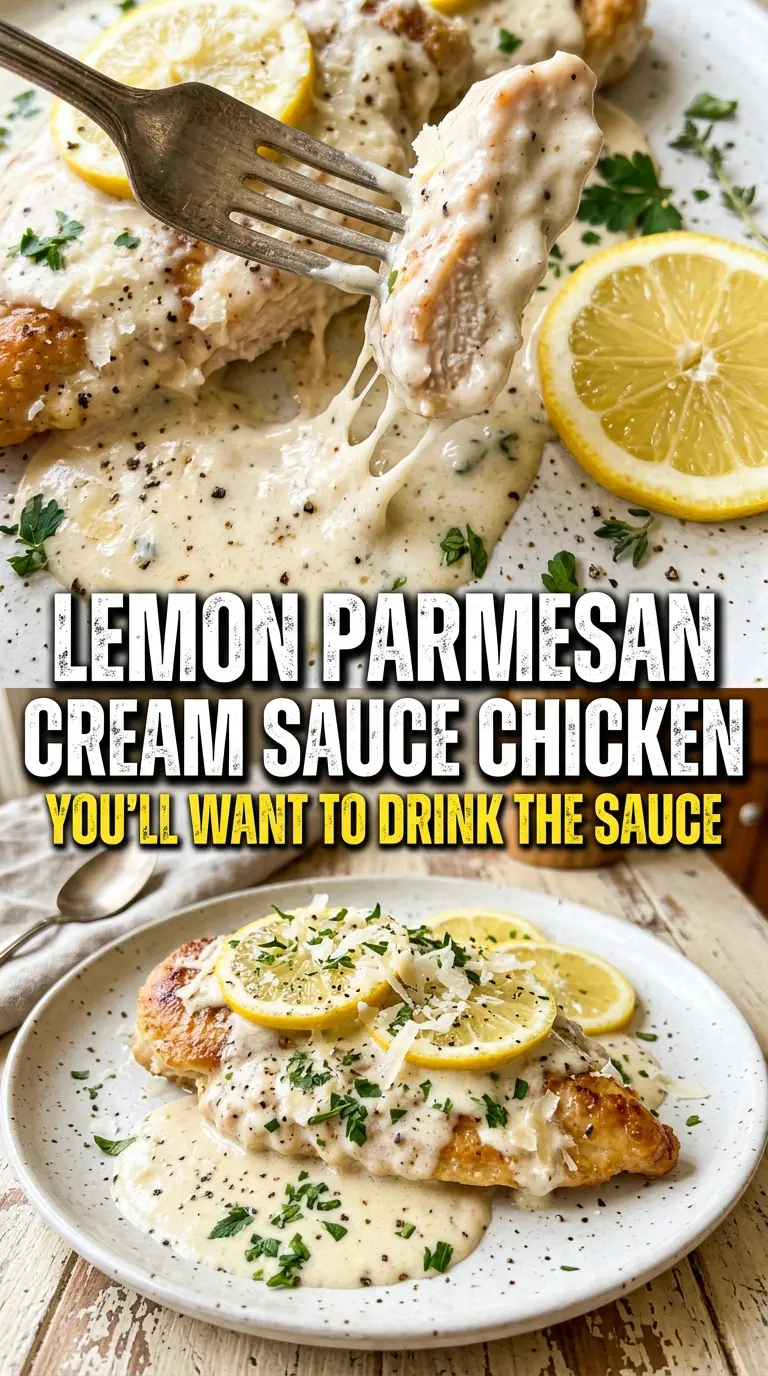
- Chicken breasts — Boneless skinless breasts keep this fast, but they need even thickness to cook at the same rate. If one side is much thicker, pound it lightly so the thinner edge doesn’t dry out while the center finishes.
- Freshly grated Parmesan — This is not the place for the shelf-stable canister. Fresh Parmesan melts into a smooth sauce; pre-grated cheese often contains anti-caking agents that can leave the sauce sandy or clumpy.
- Heavy cream — Cream gives the sauce body without needing flour. Lower heat is the key here, because cream thickens with time and reduction, not aggression. If you swap in half-and-half, expect a thinner sauce that needs a little longer to reduce.
- Lemon juice and zest — The zest brings the lemon perfume, while the juice gives the sauce its brightness. Add both after the cream has started to thicken so the acid doesn’t fight the dairy too early.
- Dry white wine or chicken broth — Wine gives the pan sauce a little more lift and complexity, but broth works well if that’s what you have. Either one should be reduced after deglazing so the finished sauce doesn’t taste flat or watery.
- Butter — Swirled in at the end, it gives the sauce shine and a rounder finish. Don’t boil it hard after adding the butter, or the sauce can lose that glossy texture.
Building the Sauce So It Stays Smooth and Glossy
Searing the Chicken First
Season the chicken generously on both sides, then heat the oil until it shimmers before the chicken goes in. You want a steady sizzle right away. If the pan is too cool, the chicken steams and gives off liquid instead of browning. Cook until the first side is deeply golden and the chicken releases with only a little nudge, then flip and finish the second side.
Deglazing the Pan
Once the chicken comes out, add the garlic and cook it just until fragrant, about 30 seconds. Then pour in the wine or broth and scrape up every browned bit from the bottom. Those bits dissolve into the sauce and give you the savory base that makes the cream taste richer. Let the liquid simmer until it’s reduced a little; if you stop too soon, the sauce can taste thin.
Finishing the Cream Sauce
Lower the heat before the cream and Parmesan go in. That matters. High heat is the fastest way to get a grainy sauce, especially once the cheese hits the pan. Stir gently until the sauce starts to thicken, then add the lemon juice and zest. Finish with butter for a smooth, glossy look, then return the chicken and spoon the sauce over the top so it stays warm without overcooking.
How to Adapt This Creamy Parmesan Lemon Chicken Without Losing the Good Part
Make it dairy-free with a different finish
Use full-fat coconut cream and a dairy-free Parmesan-style alternative, but keep the heat low and expect a slightly different flavor. The sauce will still coat the chicken, though it won’t have the same sharp, savory edge as the original.
Use chicken thighs for a richer result
Boneless skinless thighs bring more fat and stay juicy even if you cook them a minute longer. They take a touch more time to sear through, but they hold up beautifully in the sauce and are a smart swap if you like a deeper chicken flavor.
Make it gluten-free without changing the method
This recipe is naturally gluten-free as written, as long as your broth is gluten-free. The sauce gets its body from reduction, cream, and cheese, so there’s no flour to replace.
Lighten it slightly with a smaller portion of cream
You can cut the cream a little and replace the missing volume with extra broth, but the sauce will be less rich and a bit thinner. Let it reduce patiently so it still clings to the chicken instead of pooling too much in the skillet.
Storage and Reheating
- Refrigerator: Store leftovers in an airtight container for up to 3 days. The sauce will thicken as it chills.
- Freezer: I don’t recommend freezing this one. Cream sauces can separate after thawing, and the texture isn’t the same.
- Reheating: Warm gently in a skillet over low heat with a splash of broth or water. High heat can make the sauce break, so go slow and stir often until it loosens again.
Answers to the Questions Worth Asking
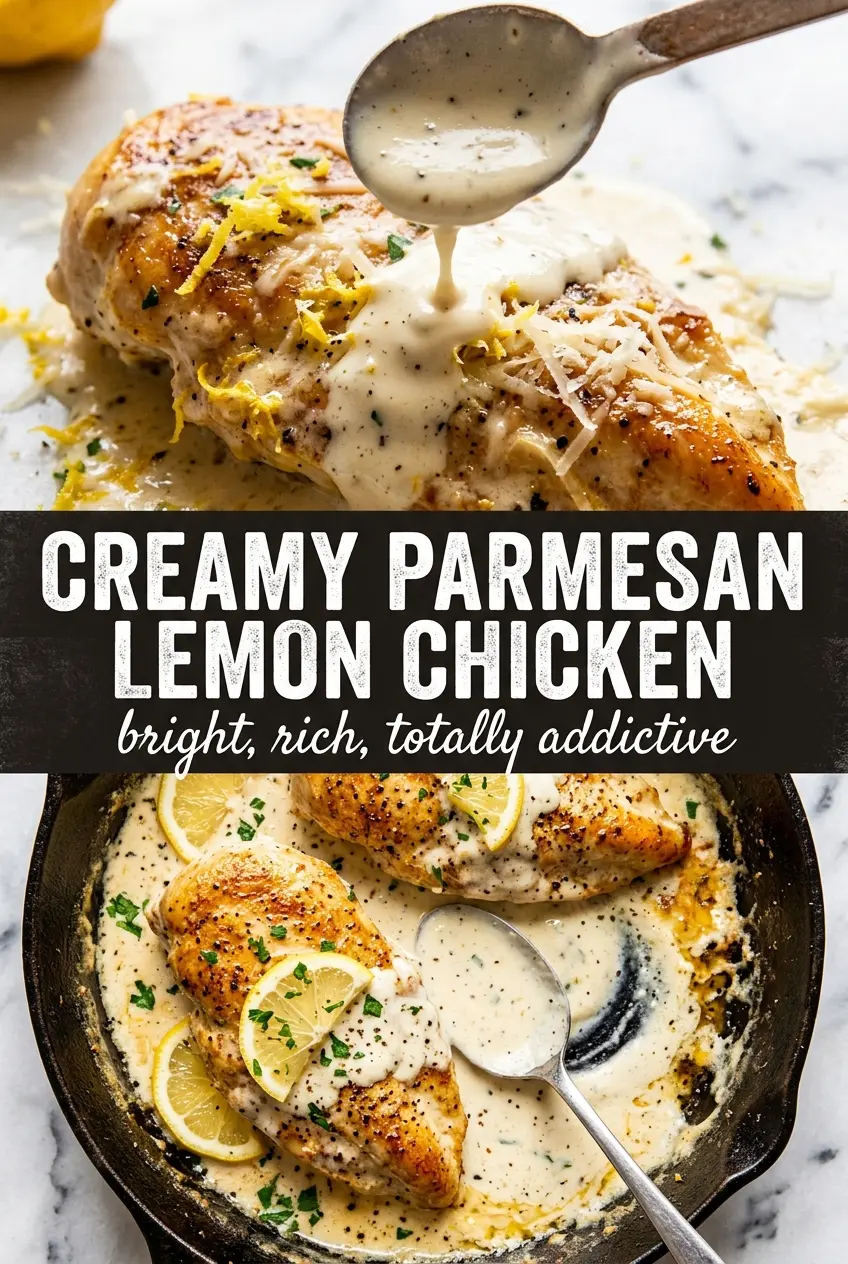
Creamy Parmesan Lemon Chicken
Ingredients
Equipment
Method
- Season chicken breasts generously on both sides with salt, black pepper, garlic powder, and Italian seasoning.
- Heat olive oil in a large skillet over medium-high heat until shimmering, then sear chicken for 5-6 minutes per side until golden and the internal temperature reaches 165°F; remove to a plate.
- Add minced garlic to the skillet and cook for 30 seconds, stirring until fragrant.
- Pour in the white wine (or chicken broth) to deglaze, scraping up browned bits, then simmer for 2 minutes.
- Stir in heavy cream, Parmesan cheese, lemon juice, and lemon zest, then simmer for 4-5 minutes until the sauce thickens and looks glossy.
- Swirl in butter until fully melted for a smooth, shiny finish.
- Return the chicken breasts to the skillet, spoon the sauce over each breast so they’re coated, and garnish with fresh parsley and lemon slices.