Golden chicken thighs over silky Parmesan orzo is the kind of dinner that disappears fast because every bite hits the same sweet spot: crisp-edged chicken, a creamy sauce that clings to the pasta, and little pops of sun-dried tomato through the spinach. Orzo is small enough to cook evenly in a skillet, but it still gives you that comforting pasta texture that makes the whole pan feel hearty without being heavy.
What makes this version work is the order. The chicken gets a real sear first, then the garlic goes into the same pan for just a moment before the orzo toasts lightly and picks up the flavor left behind. The broth and cream cook together uncovered, which lets the starch from the orzo thicken the sauce naturally instead of turning it into something thin or separate. Parmesan goes in at the end, off the worst of the heat, so it melts smoothly instead of turning grainy.
Below, you’ll find the timing cues that matter most, the ingredient swaps that still keep the dish balanced, and a few fixes for the problems that usually trip people up with creamy skillet pasta.
The orzo turned out creamy without getting mushy, and the chicken stayed juicy even after I put it back in the pan. My husband said the sun-dried tomatoes made it taste like something from a restaurant.
Creamy Parmesan Chicken and Orzo is the kind of skillet dinner that turns out rich, glossy, and weeknight-easy every time.
The Reason the Orzo Gets Creamy Instead of Gloppy
Orzo can go from perfectly tender to paste-like if it’s treated like regular pasta. The fix here is simple: it cooks right in the pan with the broth and cream, which lets the starch release gradually and thicken the sauce in a controlled way. Stirring often matters because orzo settles fast, and if it sits untouched on the bottom, it can scorch before the liquid reduces enough.
The other thing that keeps this from turning heavy is the uncovered simmer. That extra evaporation is what gives the sauce body. If the pan looks thin at the 8-minute mark, keep cooking; if it looks dry before the orzo is tender, add a splash of broth. The goal is creamy and loose enough to coat a spoon, not a sauce that stands in the pan like mashed potatoes.
What Each Ingredient Is Actually Doing in the Pan
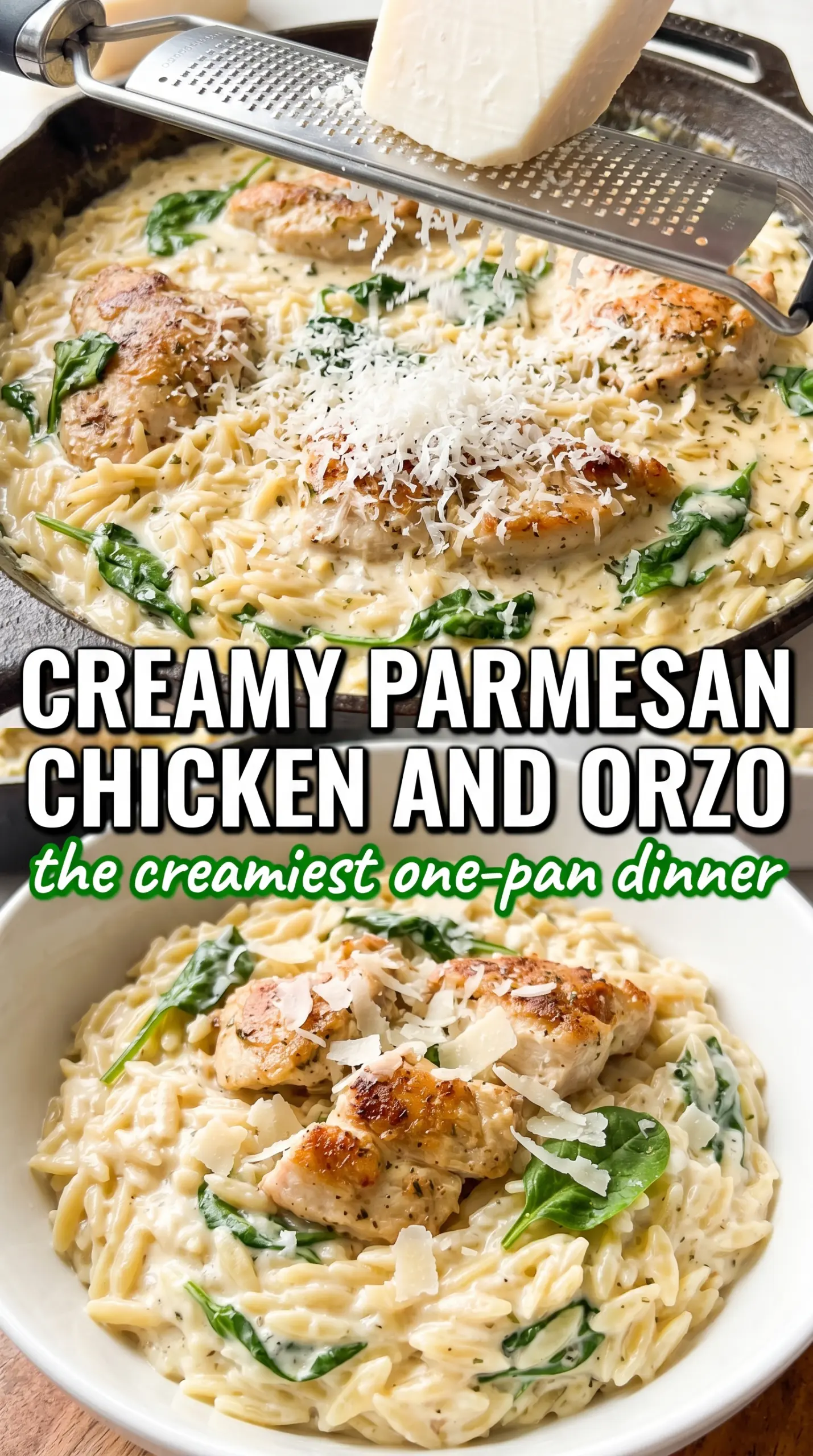
- Boneless skinless chicken thighs — These stay juicier than breasts and stand up better to the extra simmer at the end. If you use chicken breasts, cut them a little thicker and pull them as soon as they reach temperature so they don’t dry out.
- Orzo — This pasta is small enough to cook evenly in a skillet and releases starch that naturally thickens the sauce. Regular rice won’t behave the same way, and larger pasta shapes won’t give you the same creamy result.
- Heavy cream — It gives the sauce its plush texture and keeps the Parmesan from tightening up too much. Half-and-half can work in a pinch, but the sauce will be lighter and needs a gentler simmer to avoid curdling.
- Parmesan cheese — Grate it fresh if you can. Pre-shredded Parmesan often contains anti-caking agents that make it melt less smoothly, which is how you end up with a grainy sauce.
- Sun-dried tomatoes and spinach — The tomatoes bring concentrated tang and salt, while the spinach softens into the sauce without stealing attention. Add them at the end so the tomatoes stay chewy and the spinach keeps its color.
- Garlic and Italian seasoning — These build the backbone of the dish, but the garlic only needs 30 seconds in the pan. Any longer and it can turn bitter once the liquid goes in.
Building the Skillet in the Right Order
Getting a Real Sear on the Chicken
Season the chicken well before it touches the pan, then cook it in olive oil over medium-high heat until the surface is deep golden and the chicken releases easily. If it sticks, it needs another minute; forcing it off too soon tears the crust and leaves flavor behind. Pull it out when it’s cooked through and set it aside while you start the base, because the chicken finishes gently at the end and stays much juicier that way.
Waking Up the Garlic and Toasting the Orzo
The garlic goes into the same pan after the chicken comes out, and 30 seconds is enough. You want it fragrant, not browned. Stir in the orzo and let it toast for a minute so it picks up the savory bits from the pan and gets a slightly nutty edge. If the pan is too dry at this point, add a small splash of oil; dry orzo can catch fast and taste raw instead of toasted.
Simmering the Sauce Until It Clings
Pour in the broth and cream, then bring the mixture to a steady simmer, not a hard boil. Stir often, scraping the bottom as the orzo softens and the liquid reduces. If the sauce looks too loose near the end, keep it uncovered for a couple more minutes; if it thickens before the orzo is tender, add a little broth. The finished texture should be creamy and spoonable, with the pasta suspended in the sauce instead of swimming in it.
Finishing With Cheese, Greens, and Tomatoes
Take the pan down a bit when you add the Parmesan so it melts smoothly. Then stir in the spinach and sun-dried tomatoes and cook just until the greens wilt and the tomatoes warm through. Nestle the chicken back into the orzo for a final couple of minutes so everything comes back to serving temperature without overcooking the meat.
How to Adapt This for Different Tables
Chicken breast instead of thighs
Chicken breasts work if that’s what you have, but they dry out faster and need a little more attention in the skillet. Sear them until golden, then remove them as soon as they hit 165°F so they don’t overcook when they go back into the pan.
Dairy-free version
Use an unsweetened, plain dairy-free cream alternative and swap in a dairy-free Parmesan-style cheese that melts well. The sauce won’t have the same rich finish as the original, but keeping the simmer gentle helps it stay smooth instead of splitting.
Gluten-free swap
Use a gluten-free orzo-style pasta and watch the liquid closely, since some brands soften faster than wheat orzo. You may need a small extra splash of broth near the end if the pasta is done before the sauce reaches that creamy consistency.
Making it ahead for lunch
This reheats well, but the orzo absorbs sauce as it sits. Save a splash of broth for warming it back up, and stir it in over low heat until the sauce loosens again and the chicken comes back to a silky texture.
Storage and Reheating
- Refrigerator: Store in an airtight container for up to 3 days. The orzo will thicken as it chills.
- Freezer: It can be frozen, but the cream sauce and pasta texture soften after thawing. Freeze in portions for best results, then thaw overnight in the fridge.
- Reheating: Warm gently on the stove over low heat with a splash of broth or cream, stirring often. High heat is what makes the sauce separate and the chicken toughen up.
Questions I Get Asked About This Recipe

Creamy Parmesan Chicken and Orzo
Ingredients
Equipment
Method
- Season the boneless skinless chicken thighs with salt, pepper, garlic powder, Italian seasoning, and smoked paprika. Heat 2 tbsp olive oil in a large skillet over medium-high heat and sear the chicken for 4-5 minutes per side until golden and cooked through, then remove.
- In the same pan, cook the minced garlic for 30 seconds. Add the uncooked orzo pasta and toast for 1 minute.
- Pour in the chicken broth and heavy cream, bringing the mixture to a simmer. Cook uncovered for 10-12 minutes, stirring often, until the orzo is tender and the sauce is creamy.
- Stir in the grated Parmesan cheese, baby spinach, and sliced sun-dried tomatoes. Cook just until the spinach wilts.
- Nestle the seared chicken thighs back into the creamy orzo and heat through for 2 minutes. Garnish with fresh basil and serve.