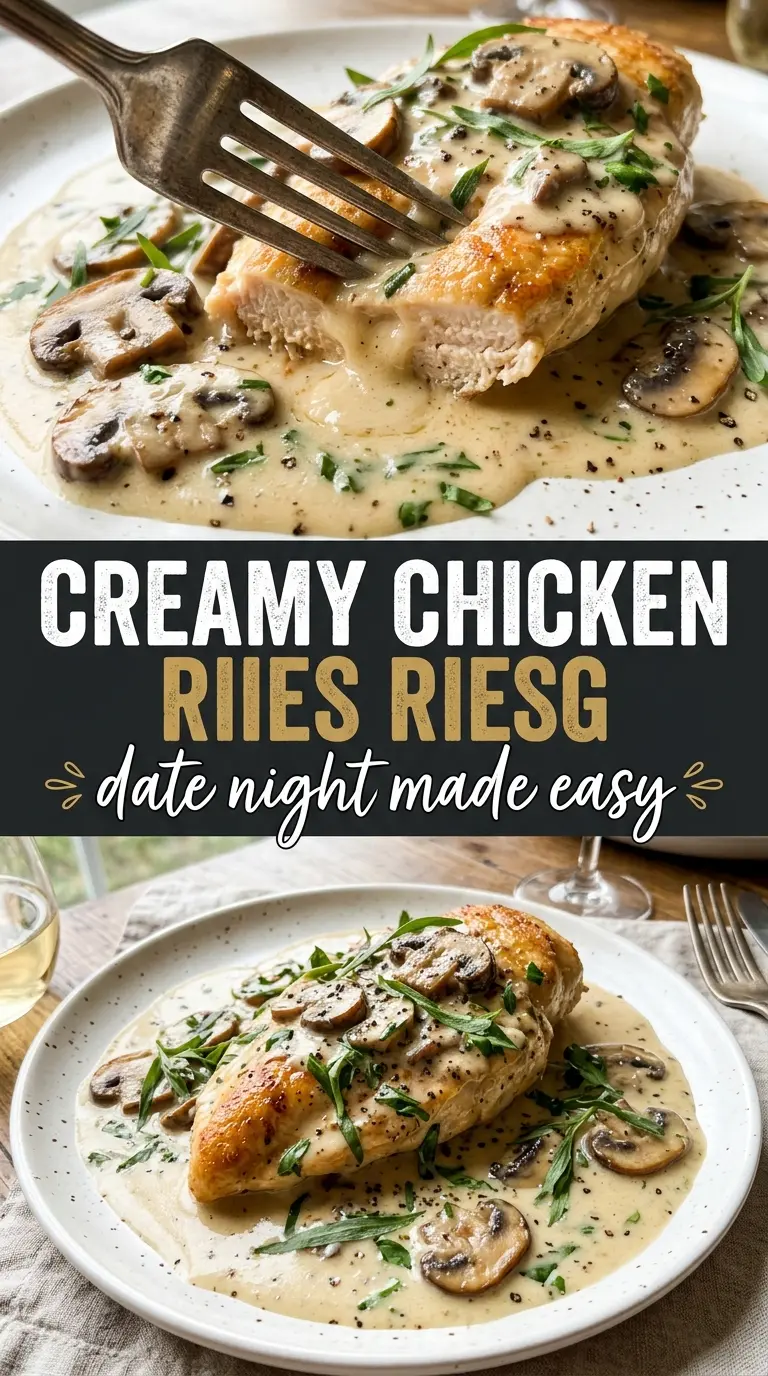
Golden chicken thighs in a Riesling cream sauce hit that rare sweet spot between weeknight practical and dinner-party polished. The skin stays crisp enough to give the dish real structure, while the sauce turns pale gold, silky, and fragrant with wine, shallots, mushrooms, and tarragon. It tastes like something that took far more effort than it actually did.
The key is giving the chicken a deep sear before the sauce goes in. That browning gives you the savory base this dish needs, and it keeps the thighs from tasting flat once the cream and wine are added. Riesling brings a gentle fruitiness and enough acidity to keep the sauce from feeling heavy, while Dijon and tarragon sharpen the finish just enough to keep each bite interesting.
Below, I’ll walk you through the part that matters most: how to build the sauce without dulling the chicken skin, plus the little timing details that keep the cream smooth and the mushrooms nicely browned.
The sauce reduced beautifully and stayed silky after I added the butter. My chicken thighs stayed juicy, and the Riesling with the mushrooms tasted restaurant-level without being fussy.
Save this Creamy Chicken Riesling for the night you want a wine-kissed skillet dinner with a silky mushroom sauce.
Why the Chicken Has to Brown Before the Sauce Goes In
Most creamy chicken skillet recipes go wrong because the chicken gets steamed in the sauce instead of seared first. You want actual browning on the skin here, not just cooked-through meat, because those caramelized bits are what give the sauce its depth once the wine hits the pan. If the chicken goes in too early or the heat is too low, the skin softens and the whole dish tastes flatter.
Use medium-high heat and leave the thighs alone long enough to release from the pan naturally. If they stick, they aren’t ready yet. Once the skin turns deeply golden and the fat has rendered, the pan has the right flavor base for the mushrooms, shallots, and Riesling to work with instead of starting from scratch.
What Each Ingredient Is Actually Doing in This Dish
- Chicken thighs — Bone-in, skin-on thighs stay juicy during the simmer and give you the best chance at a flavorful pan sauce. Breasts can work, but they dry out faster and won’t give you the same richness.
- Riesling — This is the backbone of the sauce. A dry or off-dry Riesling gives you brightness and a little fruit without turning the dish sweet; avoid anything overly sugary.
- Heavy cream — This is what turns the wine reduction into a velvet sauce. Half-and-half can split more easily and won’t cling to the chicken the same way.
- Cremini mushrooms and shallots — These build the savory middle of the dish. Let them actually brown; if they just soften, the sauce tastes thin.
- Dijon mustard — It sharpens the cream and helps the sauce taste finished. Don’t skip it unless you need to; even a small amount makes the whole pan taste more balanced.
- Tarragon — Fresh tarragon gives the dish that classic French-style aroma that pairs naturally with wine and cream. Dried tarragon works in a pinch, but use less because it reads stronger and a little woodier.
Building the Sauce Without Losing the Sear
Getting the Chicken Golden
Season the thighs well before they hit the pan, then place them skin-side down in hot oil and let them cook undisturbed for 7 to 8 minutes. You’re looking for a deep golden crust and rendered fat in the pan, not pale skin that only looks cooked. If the heat is too high, the skin burns before the fat melts; too low, and it turns rubbery instead of crisp.
Cooking the Mushrooms Until They Mean It
After the chicken comes out, the shallots and mushrooms go into the same skillet to pick up the browned flavor left behind. Cook them long enough for the mushrooms to lose their moisture and start coloring at the edges. If you rush this part, all that liquid ends up diluting the sauce instead of concentrating it.
Reducing the Riesling
Pour in the wine and let it bubble for a few minutes before the cream goes in. That brief simmer takes the sharp alcohol edge off and leaves the wine’s fruit and acidity behind. If you add the cream too soon, the sauce can taste harsh and thin instead of rounded and fragrant.
Finishing the Sauce Gently
Once the cream, broth, mustard, and tarragon are in, return the chicken skin-side up and let everything simmer until the thighs reach 165°F. Keep the heat low enough that the sauce barely bubbles; a hard boil can make the cream look broken and can soften the skin you worked to brown. When the chicken comes out, swirl in the butter off the heat for a glossy finish that clings to the spoon.
How to Adapt This for Different Tables and Different Pan Sets
Make it dairy-free without losing the creamy texture
Use full-fat coconut cream in place of the heavy cream and skip the final butter swirl. The sauce will taste a little less classic and a little more rounded, but it still coats the chicken well. Keep the heat low, since coconut-based sauces can separate if they boil hard.
Use chicken breasts when that’s what you have
Boneless breasts work, but they need less simmer time. Sear them well, then simmer only until they reach 165°F so they stay tender. You’ll lose some richness compared with thighs, but the sauce still carries the dish.
Make it gluten-free without changing the method
This recipe is naturally gluten-free as long as your chicken broth and Dijon mustard are certified gluten-free. The texture doesn’t need a flour slurry because the cream reduction gives the sauce its body on its own.
Swap the mushrooms if you want a lighter pan
Thin-sliced leeks or a handful of baby spinach can stand in for some or all of the mushrooms. You’ll get a softer, brighter sauce with less earthiness, but the method stays the same. Add delicate greens at the very end so they don’t collapse into the sauce.
Storage and Reheating
- Refrigerator: Store leftovers in an airtight container for up to 3 days. The sauce thickens as it chills, and the chicken skin softens.
- Freezer: Freezing isn’t ideal because cream sauces can turn grainy when thawed. If you do freeze it, cool it completely first and reheat gently.
- Reheating: Warm it slowly in a covered skillet over low heat with a splash of broth or cream. The common mistake is boiling it to speed things up, which can split the sauce and dry out the chicken.
Answers to the Questions Worth Asking

Creamy Chicken Riesling
Ingredients
Equipment
Method
- Pat the chicken thighs dry and season all sides with salt, pepper, and garlic powder to taste. This helps the skin crisp and brown evenly.
- Heat olive oil in a large skillet over medium-high heat until shimmering. Place chicken skin-side down in the hot oil and sear for 7-8 minutes until deeply golden, with the skin developing a caramel color.
- Flip the chicken and sear for 4 minutes on the second side until browned. The chicken should look set and richly colored.
- Transfer the chicken to a plate and keep it nearby while you cook the vegetables. Leave the browned fond in the skillet for flavor.
- Add minced shallots and sliced mushrooms to the skillet and cook for 5-6 minutes until golden. Stir until the mushrooms release moisture and then begin to brown.
- Add minced garlic and cook for 1 minute. The garlic should become fragrant without turning dark.
- Pour in Riesling wine and let it simmer for 3 minutes to cook off the alcohol. You should see the sauce reduce slightly and smell less sharp.
- Add heavy cream, chicken broth, fresh tarragon, and Dijon mustard. Stir until the sauce is smooth and evenly tinted pale golden.
- Return the chicken to the skillet skin-side up and spoon some sauce over the top if needed. Cover with a lid.
- Simmer covered for 15-18 minutes until the chicken reaches an internal temperature of 165°F. The sauce should bubble gently and the chicken should be tender under the skin.
- Remove the chicken from the skillet and swirl in the butter until the sauce looks glossy. The sauce should thicken slightly and coat the back of a spoon.
- Return the chicken to the skillet and garnish with fresh tarragon before serving. The bright green sprigs should sit on top for a fragrant finish.