Golden chicken thighs tucked into a pale Riesling cream sauce are the kind of skillet dinner that feels a little special without turning into a project. The chicken stays juicy under its crisped skin, the mushrooms soak up the wine reduction, and the finished sauce lands somewhere between silky and light, with enough richness to coat a spoon without feeling heavy.
The key here is building the flavor in layers. First comes a deep sear on the chicken, then the shallots and mushrooms cook long enough to pick up color before the Riesling goes in. That wine reduction matters; if you rush it, the sauce tastes flat and the cream never quite has the same depth. Dijon sharpens everything just enough, and tarragon gives the dish that unmistakable French-meets-German finish that makes Riesling such a smart choice here.
Below, I’ve included the little decisions that change this from “good” to “worth making again,” including what to watch for when the sauce thickens and how to adjust it if you want a slightly lighter version.
The sauce reduced down beautifully and stayed silky after I added the cream. I usually struggle with chicken thighs going dry, but these stayed juicy and the mushrooms picked up so much flavor from the wine.
Save this Creamy Chicken Riesling for a skillet dinner with golden chicken, mushrooms, and a silky wine cream sauce.
The Part That Keeps the Sauce from Tasting Flat
Riesling is doing more here than adding liquid. It brings brightness, fruit, and enough acidity to cut through the cream, but only if it gets a minute or two in the pan before the broth and cream go in. That brief reduction cooks off the sharp alcohol edge and leaves behind the part you actually want: the wine’s clean, aromatic flavor.
The other thing that matters is keeping the sauce at a gentle simmer once the cream is in. Hard boiling is what breaks a cream sauce or makes it taste blunt. The chicken finishes in the sauce itself, which keeps the meat juicy and lets the sauce pick up the last bit of savory flavor from the browned bits in the pan.
- Chicken thighs — Bone-in, skin-on thighs stay tender through the simmer and give you the best texture here. Breasts can work, but they dry out faster and don’t give the sauce as much richness.
- Riesling — Use a dry or off-dry bottle you’d actually drink. Very sweet Riesling will make the sauce taste cloying instead of balanced.
- Heavy cream — This is what gives the sauce body and protects it from splitting during the final simmer. Half-and-half can work in a pinch, but the sauce will be thinner and less stable.
- Dijon mustard — It doesn’t make the sauce taste mustardy; it sharpens the wine and keeps the cream from tasting one-note. Whole-grain mustard is fine if that’s what you have, though the sauce will look a little flecked.
- Tarragon — Fresh tarragon is worth seeking out if you can. Dried tarragon works, but use less and expect a flatter, slightly more herbal finish.
- Mushrooms and shallots — Let them brown before adding the garlic. If they stay pale, the whole sauce tastes thin.
What Each Ingredient Is Actually Doing in This Baked Chicken
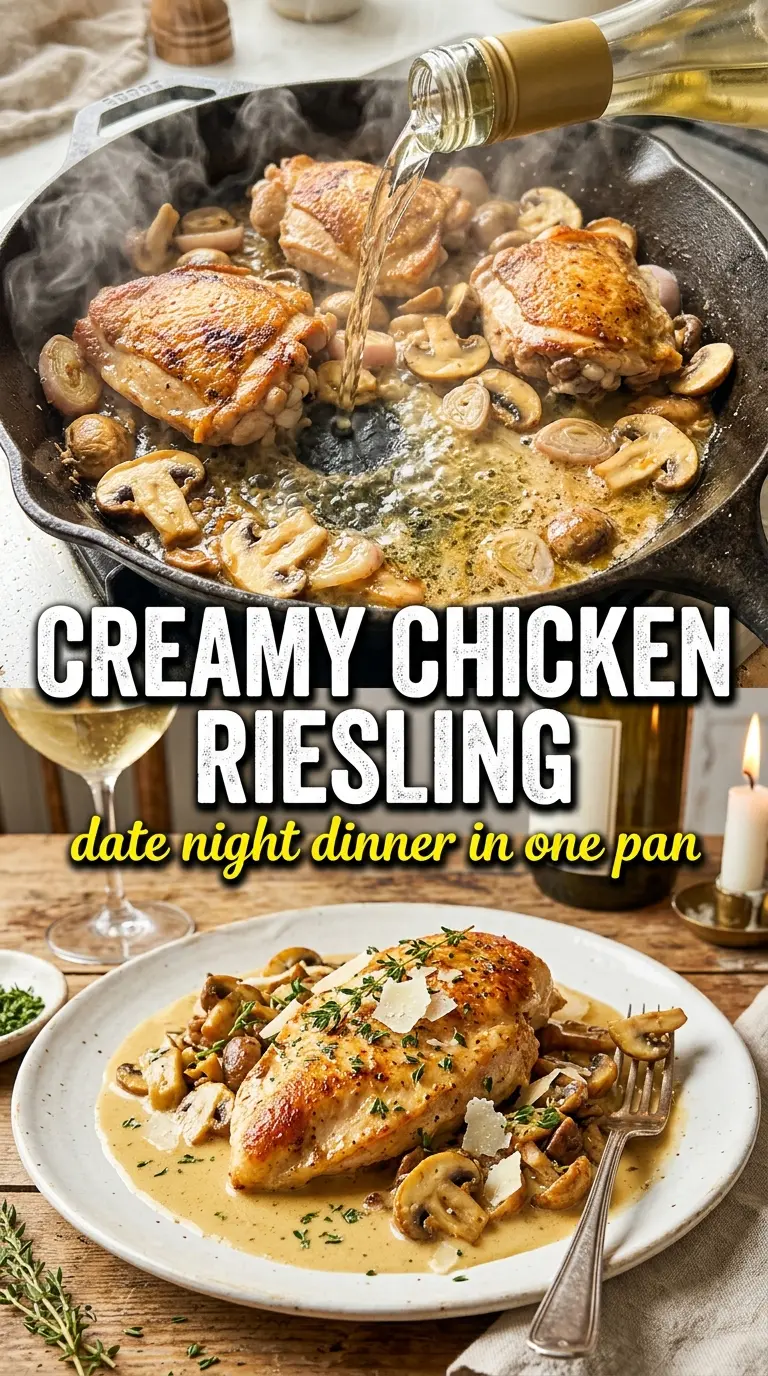
- Chicken breasts (the lean protein) — Cut evenly so pieces cook at the same rate. Let them sit at room temperature for 15 minutes before baking so they cook evenly.
- Olive oil or butter (the cooking medium and richness) — Good fat keeps the chicken from drying out in the oven. It also carries herb and spice flavors throughout the meat.
- Garlic (the aromatic foundation) — Fresh minced or thin slices mellow and become sweet when baked, adding depth without overpowering the chicken.
- Cream or broth (the sauce base) — This creates the glossy sauce that keeps baked chicken from tasting dry. It also helps flavors develop and carry.
- Lemon juice or vinegar (the brightness) — Acid prevents the cream sauce from tasting too heavy and keeps the dish from being one-dimensional.
- Fresh herbs or spices (the personality) — Basil, thyme, oregano, paprika, or Italian seasoning all work. Choose ones that complement your other flavors.
- Cheese (optional richness) — Parmesan or feta adds creaminess and salt that enhances all other flavors. Don’t overdo it or the dish becomes heavy.
- Proper oven temperature (the key to juicy chicken) — 375-400°F bakes chicken through without drying the edges. Check with a thermometer for 165°F internal temp.
Building the Skillet in the Right Order
Searing the Chicken Skin
Start the chicken skin-side down in a hot skillet and leave it alone long enough to turn deeply golden. If you move it too early, the skin sticks and tears instead of crisping. The goal isn’t to cook the chicken through at this stage; it’s to build flavor and render some fat so the pan has a head start. When the skin releases easily and looks lacquered, flip it and give the second side a short sear before removing it.
Cooking the Mushrooms Until They Brown
Once the chicken comes out, the shallots and mushrooms go into that same pan. They need time to sweat off their moisture and then take on color, because that browned surface is what gives the sauce its depth. If the mushrooms just steam, the sauce ends up watery and a little dull. Add the garlic at the end of this stage so it softens without burning.
Reducing the Riesling Before the Cream
Pour in the wine and let it bubble until the sharp smell softens and the liquid loses some volume. This is where the sauce starts tasting like itself. Add the cream, broth, Dijon, and tarragon after the wine has cooked down, not before. If you skip that reduction, the final sauce can taste thin and overly boozy instead of round and fragrant.
Finishing the Sauce and Chicken Together
Return the chicken skin-side up so the crisped top stays above the sauce as it simmers. Cover the skillet and keep the heat low enough that the sauce barely moves. You’re looking for chicken that reaches 165°F and a sauce that coats the back of a spoon without turning paste-thick. Swirling in the butter at the end gives it a glossy finish and rounds off the acidity from the wine.
How to Adapt This Without Losing the Character of the Dish
Make It Lighter
Use half-and-half instead of heavy cream and keep the sauce at the gentlest simmer. It won’t be quite as rich or as stable, but it still turns out smooth if you avoid high heat after the dairy goes in.
Swap the Herbs
If you don’t have tarragon, use a small amount of thyme plus a little parsley. The sauce will lose that faint anise note tarragon brings, but it still reads as elegant and savory.
Use Chicken Breasts Instead
Boneless breasts work, but they need a shorter simmer and a little more attention so they don’t overcook. Sear them, then finish gently in the sauce until just cooked through; the tradeoff is a leaner dish with less flavor in the pan.
What to Do for a Gluten-Free Version
This recipe is naturally gluten-free as written if your broth and Dijon are certified gluten-free. That matters more than people think, since those two ingredients are the places gluten can sneak in.
Storage and Reheating
- Refrigerator: Store leftovers in an airtight container for up to 3 days. The sauce thickens as it chills, which is normal.
- Freezer: It freezes, but cream sauces can turn a little grainy after thawing. If you want to freeze it, cool it completely first and reheat gently with a splash of broth or cream to bring it back together.
- Reheating: Rewarm slowly in a covered skillet over low heat. High heat is the fastest way to split the sauce and dry out the chicken.
Answers to the Questions Worth Asking
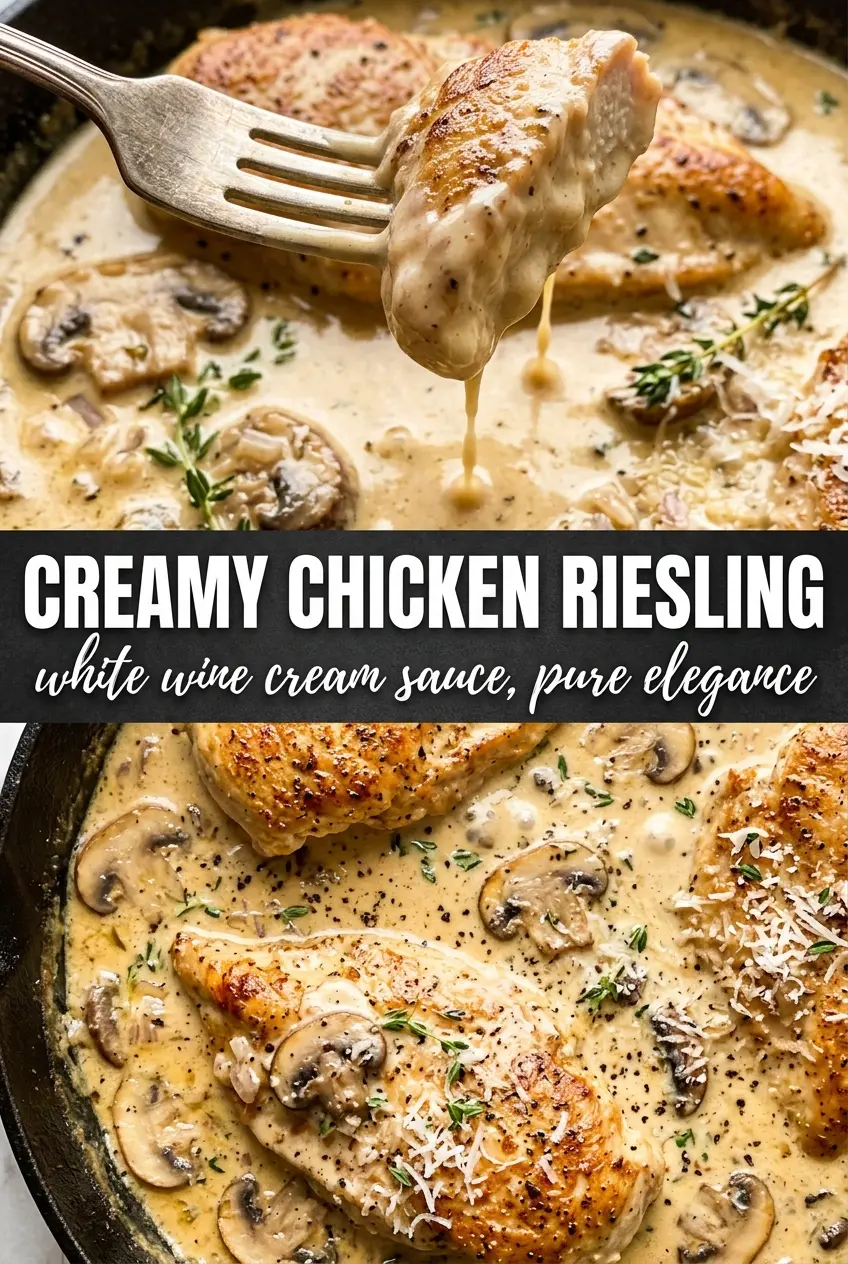
Creamy Chicken Riesling
Ingredients
Equipment
Method
- Season the chicken thighs all over with salt, black pepper, and garlic powder to taste. Heat olive oil in a large skillet over medium-high heat, then lay chicken skin-side down and sear for 7-8 minutes until deeply golden with crisped edges.
- Flip the chicken and sear for 4 minutes more, until the second side is browned. Transfer the chicken to a plate.
- In the same skillet, cook minced shallots and sliced mushrooms over medium-high heat for 5-6 minutes until golden and moisture cooks off. Add minced garlic and cook for 1 minute, stirring to prevent browning.
- Pour in Riesling wine and let it bubble for 3 minutes so the alcohol cooks off. Stir in heavy cream, chicken broth, fresh tarragon, and Dijon mustard until smooth and lightly thickened.
- Return chicken to the skillet skin-side up, then cover and simmer for 15-18 minutes until the chicken reaches an internal temperature of 165°F and the sauce coats the chicken. Remove chicken to a plate.
- Swirl butter into the sauce until glossy and slightly thickened. Return chicken to the skillet, garnish with fresh tarragon, and serve with the creamy Riesling sauce.