Penne coated in a thick ranch cream cheese sauce is the kind of dinner that disappears fast because every bite hits the same way: creamy, salty, smoky, and just sharp enough from the cheddar to keep you going back in for another forkful. The sauce clings to the pasta instead of pooling at the bottom of the bowl, and the bacon stays present in the final dish instead of getting lost in the mix.
What makes this version work is the order. The cream cheese melts into broth first, which keeps the sauce from turning grainy, and the heavy cream goes in only after that base is smooth. Ranch seasoning brings the built-in tang and herbs, so you don’t need to overwork the sauce with extra spices. Once the pasta and chicken go in, the whole skillet turns into a full meal instead of just pasta with something on top.
Below you’ll find the small details that keep the sauce silky, plus a few smart swaps if you need to stretch it, lighten it up, or make it with what you already have.
The sauce coated every piece of penne and never got greasy, even after sitting on the table for a few minutes. My kids picked out the bacon first and then went back for the chicken and noodles.
Save this Crack Chicken Penne for the creamy ranch sauce and bacon-packed skillet you’ll want on repeat.
The Reason the Sauce Stays Creamy Instead of Turning Grainy
Most cream cheese pasta recipes break for one simple reason: the cream cheese hits the pan before there’s enough liquid to help it dissolve. You end up chasing lumps around the skillet while the heat keeps tightening the dairy. This version starts with broth and cream cheese together, and that gives the sauce a thin enough base to melt smoothly before the ranch seasoning and cream go in.
The other thing that matters is heat. Medium-low is your friend here. If the pan is hot enough to bubble aggressively, the dairy can separate and the cheddar won’t melt into the sauce later with the same satin finish. You want a gentle simmer, not a boil, and the sauce should coat a spoon before the chicken and penne go in.
What Each Ingredient Is Actually Doing in This Skillet
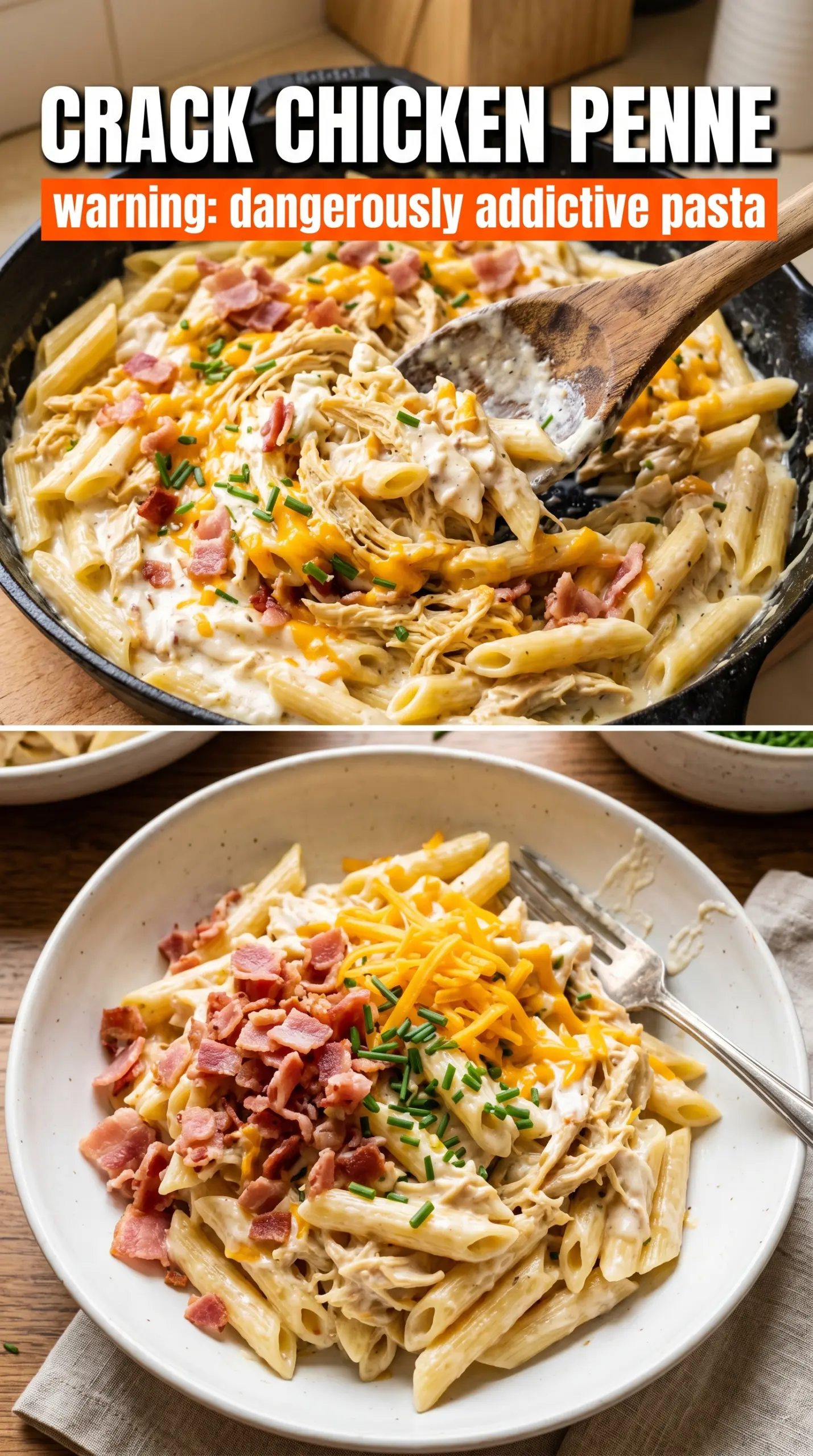
- Cream cheese — This is the body of the sauce. It gives the dish that thick, clingy texture you can’t get from broth and cream alone. Soften it first and cube it before it hits the pan; smaller pieces melt faster and keep you from overcooking the sauce while you wait on a stubborn block.
- Chicken broth — The broth loosens the cream cheese and keeps the sauce from feeling heavy. A regular boxed broth works fine here because the ranch seasoning and cheddar are doing a lot of the flavor work. If your broth is very salty, hold back a little on the ranch packet until you taste the finished sauce.
- Heavy cream — This smooths out the sharp edges after the cream cheese melts and helps the sauce stay glossy. Half-and-half will work in a pinch, but the sauce will be a little thinner and won’t cling to the penne as well.
- Ranch seasoning mix — This is where the dish gets its signature punch. It brings garlic, herbs, onion, and salt in one shot, which is why the sauce tastes complete without a long spice list. Use the packet rather than trying to wing it with dried herbs unless you already know exactly how to balance the salt.
- Cheddar cheese — Sharp cheddar gives the dish its finish and keeps it from tasting flat. Shred it yourself if you can; pre-shredded cheese is coated to prevent clumping, and that coating can make the sauce a little less smooth.
- Cooked chicken and bacon — Both are already cooked because this recipe is about bringing everything together quickly, not building flavor from raw meat in the pan. The bacon should be crisp so it keeps some texture after it gets tossed in. Soft bacon disappears into the sauce.
How to Build the Skillet Without Losing the Texture
Warming the Garlic Without Browning It
Start the garlic in olive oil and keep it moving for about a minute. You want it fragrant, not browned, because browned garlic turns bitter and that bitterness shows up fast in a creamy sauce. If the pan is too hot and the garlic starts to darken, pull it off the heat before you add the broth.
Melting the Cream Cheese the Right Way
Add the chicken broth first, then the cream cheese cubes, and stir over medium-low until the mixture turns smooth. The broth gives the cream cheese room to melt instead of seizing into little soft clumps. If the sauce looks lumpy, keep stirring gently and give it another minute rather than cranking up the heat; high heat makes the dairy split before it smooths out.
Finishing the Sauce Before the Pasta Goes In
Stir in the ranch seasoning and heavy cream after the cream cheese has fully melted. Let the sauce simmer for 3 to 4 minutes until it thickens enough to coat the back of a spoon. That small simmer matters because it gives the ranch time to bloom in the sauce and keeps the final dish from tasting thin or raw.
Bringing Everything Together
Add the cooked chicken, most of the bacon, and the penne while the sauce is still loose enough to toss. The pasta will absorb some of the sauce as it sits, so don’t wait until the skillet looks thick as paste before you combine everything. Once the cheddar goes on top and the pan is covered, two to three minutes is enough to melt it into a glossy layer.
How to Adapt This for Different Nights
Make It a Little Lighter
Use half-and-half instead of heavy cream and reduce the cheddar slightly. The sauce will still taste rich, but it won’t finish quite as thick. This works best if you serve it right away before the pasta has time to drink up too much of the sauce.
Gluten-Free Crack Chicken Penne
Swap in a good gluten-free penne and cook it just to al dente so it doesn’t fall apart when tossed in the sauce. The rest of the recipe is naturally gluten-free as long as your ranch seasoning and broth are certified gluten-free.
Use Rotisserie Chicken for a Faster Shortcut
This is the easiest way to shave time off the recipe, and it works because the sauce does the heavy lifting. Pull the chicken into smaller shreds so it catches more sauce instead of sitting in big chunks. The flavor stays the same, but the dish feels even faster to get on the table.
What to Do If You Want It Extra Smoky
Use smoked cheddar or add a pinch of smoked paprika with the ranch seasoning. That pushes the bacon flavor forward without making the sauce taste like barbecue. Keep the paprika light; too much will fight the ranch instead of backing it up.
Storage and Reheating
- Refrigerator: Store in an airtight container for up to 4 days. The sauce will thicken as it chills, and the pasta will soften a bit, which is normal for a cream-based dish.
- Freezer: It freezes, but the sauce can separate slightly when thawed. If you do freeze it, cool it completely first and thaw overnight in the fridge for the best chance of a smooth reheat.
- Reheating: Warm it gently on the stove or in the microwave with a splash of broth or milk. The biggest mistake is blasting it on high heat, which can make the cheese sauce greasy or grainy before the center is hot.
Answers to the Questions Worth Asking
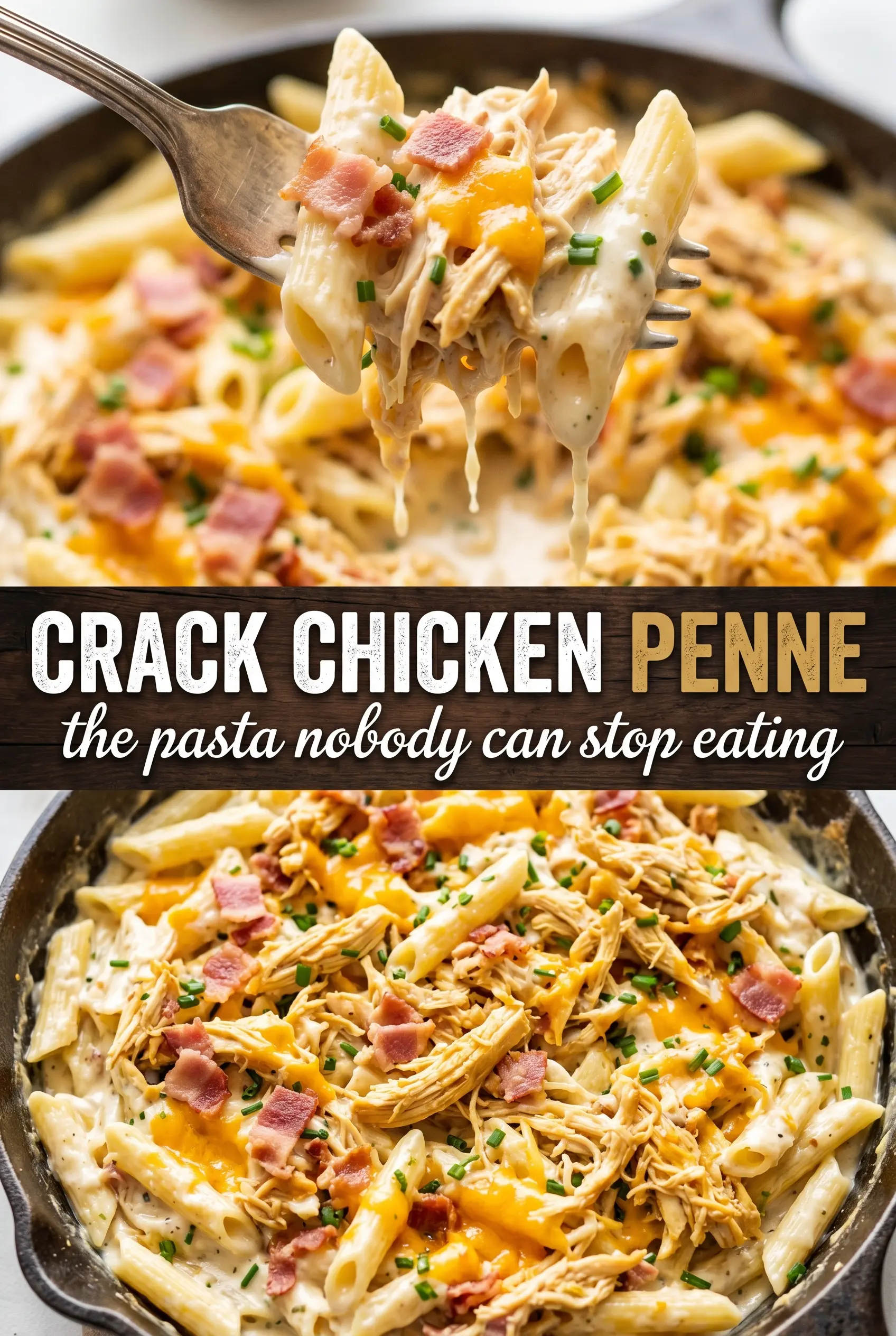
Crack Chicken Penne
Ingredients
Equipment
Method
- Heat olive oil in a large skillet over medium heat and cook minced garlic for 1 minute, stirring until fragrant and lightly sizzling.
- Add chicken broth and cream cheese cubes and stir over medium-low heat until the cream cheese melts completely and the mixture looks smooth.
- Stir in ranch seasoning and heavy cream, then simmer for 3-4 minutes until the sauce is slightly thickened and cohesive.
- Add shredded chicken, most of the crumbled bacon, and cooked penne, then toss until everything is evenly coated in the thick ranch sauce.
- Top with shredded cheddar, cover the skillet, and cook for 2-3 minutes until the cheddar is fully melted and glossy.
- Garnish with the remaining bacon and fresh chives, then serve immediately while hot and creamy.