Linguine coated in cowboy butter earns a permanent spot in the dinner rotation because it hits the table with a glossy sauce, seared chicken, and just enough heat to keep every bite interesting. The butter clings to the pasta instead of pooling at the bottom of the bowl, and the lemon keeps the richness from turning heavy.
What makes this version work is the order of the pan work. The chicken gets cooked hard first so it picks up color, then the same skillet turns into the sauce base without losing those browned bits. Dijon helps the butter emulsify, and a splash of pasta water gives the linguine enough body to carry the sauce instead of drying out while it sits.
Below, you’ll find the small details that matter most: how to keep the butter sauce smooth, when to loosen it with pasta water, and the easiest way to adjust the heat without dulling the flavor.
The sauce clung to the linguine perfectly and the lemon kept the butter from feeling heavy. I added a little extra pasta water at the end and it turned silky instead of oily.
Save this cowboy butter chicken linguine for the night you want a bold pasta with seared chicken and a silky lemon-garlic butter sauce.
The Part That Keeps Cowboy Butter from Turning Greasy
Cowboy butter can split if the heat is too high or if the lemon goes in before the butter has a chance to melt into the spices. The fix is simple: build the sauce over medium heat, not high, and use the residual heat from the pan to finish the herbs and citrus. You want a glossy sauce that looks slightly loose in the skillet because it will tighten once it coats the linguine.
The other thing that matters here is the pasta water. That starchy liquid helps the butter cling to the noodles instead of sliding off in an oily sheen. If the sauce ever looks broken, a splash of hot pasta water and a quick toss usually brings it back together.
What Each Ingredient Is Actually Doing in This Pasta
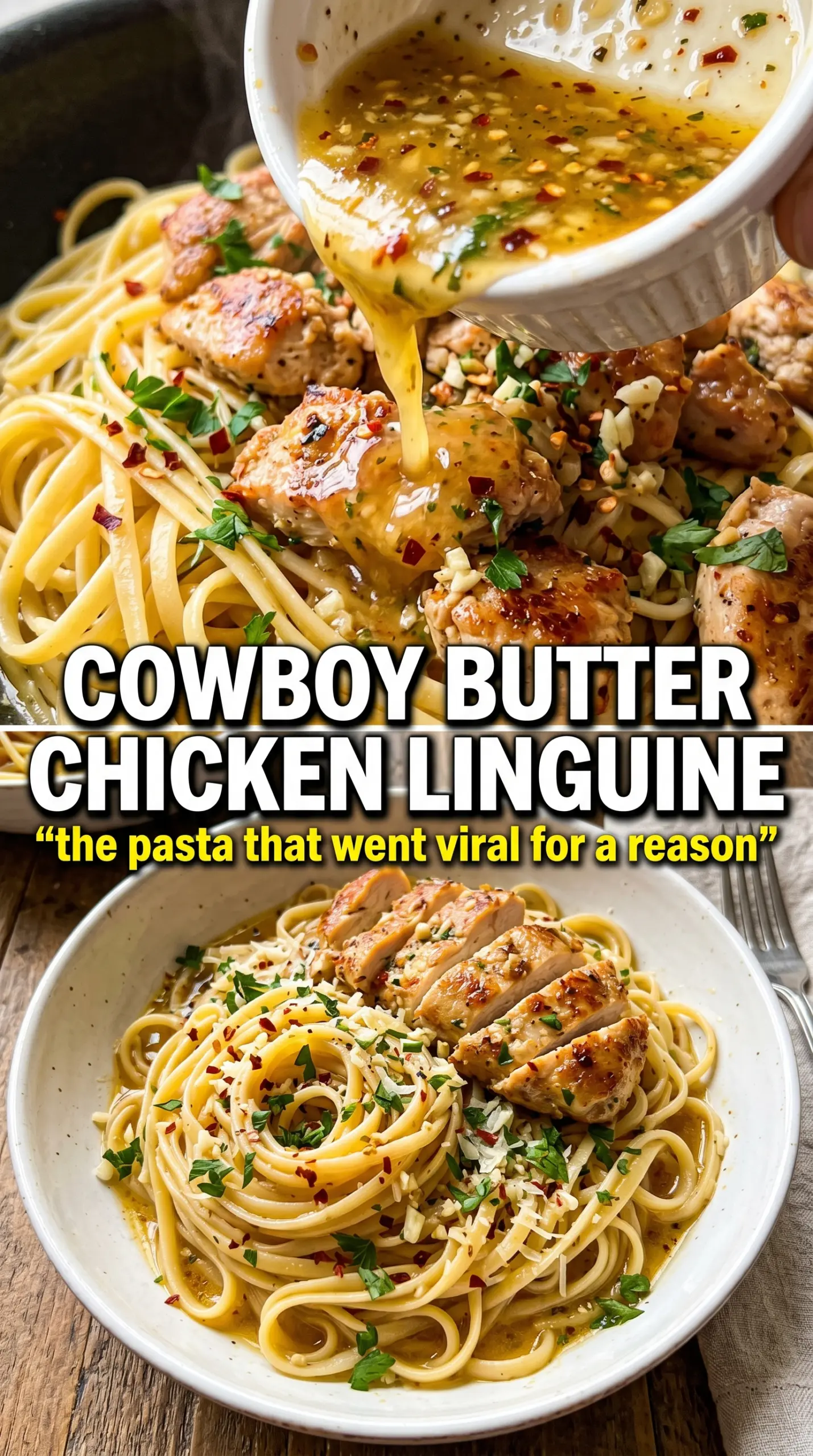
- Chicken breasts — Cutting them into strips gives you faster cooking and more browned surface area. Thighs also work if you want a richer result, but breasts keep the dish lighter and are easiest to slice cleanly over the pasta.
- Butter — This is the base of the sauce, so use the best butter you’ve got. It doesn’t need to be fancy, but it should taste clean; a watery or bland butter makes the whole dish flatter.
- Dijon mustard — Just a tablespoon helps the sauce emulsify and gives it a little backbone. You won’t taste mustard on its own, but you will notice if it’s missing.
- Smoked paprika, red pepper flakes, and cayenne — These build the cowboy butter heat in layers instead of one flat burst. If you want less heat, cut the cayenne first; the smoked paprika is worth keeping because it adds depth, not just color.
- Lemon juice and zest — Lemon is what keeps all that butter from feeling heavy. Fresh juice matters here because bottled lemon tends to taste dull and can make the sauce taste sharp instead of bright.
- Parsley and chives — Add them at the end so they stay fresh and green. Dried herbs won’t give you the same finish; this dish needs that fresh, grassy note to balance the spice.
- Linguine — The flat shape holds the butter sauce better than thinner noodles. If you swap pasta shapes, pick one with enough surface area to catch the sauce instead of letting it puddle.
Building the Sauce and Tossing the Pasta at the Right Moment
Getting Color on the Chicken
Heat the skillet until the oil shimmers, then add the seasoned chicken in a single layer. You want a hard sizzle and a deep golden edge before you turn it, because that browning is what gives the finished dish its savory base. If the pan looks crowded, the chicken will steam and turn pale instead of searing, so cook in batches if you need to. Pull it once it’s cooked through and set it aside while the pan is still hot.
Turning the Pan Drippings into Cowboy Butter
Drop the butter into the same skillet and let it melt into the browned bits left behind. Stir in the garlic and keep it moving for about a minute, just until it smells sweet and sharp, not toasted. Add the Dijon, paprika, red pepper flakes, and cayenne, then give them 30 seconds in the butter so the spices bloom instead of tasting raw. If the garlic starts browning too fast, lower the heat immediately; burnt garlic will take over the whole dish.
Finishing the Linguine
Add the lemon juice, parsley, and chives, then toss in the cooked linguine. Start with a small splash of pasta water and add more only if the sauce looks tight or dry. The noodles should look glossy and coated, not swimming. Return the chicken to the skillet at the end and toss just long enough to warm it through so it stays juicy.
How to Adjust Cowboy Butter Chicken Linguine Without Losing the Point
Make it dairy-free
Use a good plant-based butter that melts cleanly and has a neutral taste. The sauce will still coat the pasta, but it may need a little extra pasta water to mimic the silkiness that real butter gives you.
Use shrimp instead of chicken
Shrimp works well if you want something faster and lighter. Sear them just until pink and curled, then remove them before making the sauce so they don’t turn rubbery while the butter comes together.
Turn down the heat for a milder pasta
Cut the cayenne in half and use just a pinch of red pepper flakes. The lemon, garlic, and smoked paprika still give the sauce plenty of personality, but the burn settles down enough for a broader crowd.
Storage and Reheating
- Refrigerator: Store leftovers in an airtight container for up to 3 days. The sauce will thicken as it chills, and the pasta will absorb some of the butter.
- Freezer: I don’t recommend freezing this one. Butter sauces and cooked pasta both lose their texture after thawing, and the chicken can turn dry.
- Reheating: Rewarm gently in a skillet over low heat with a splash of water, broth, or milk. The common mistake is blasting it in the microwave until the butter separates and the chicken gets tough.
Questions I Get Asked About This Recipe
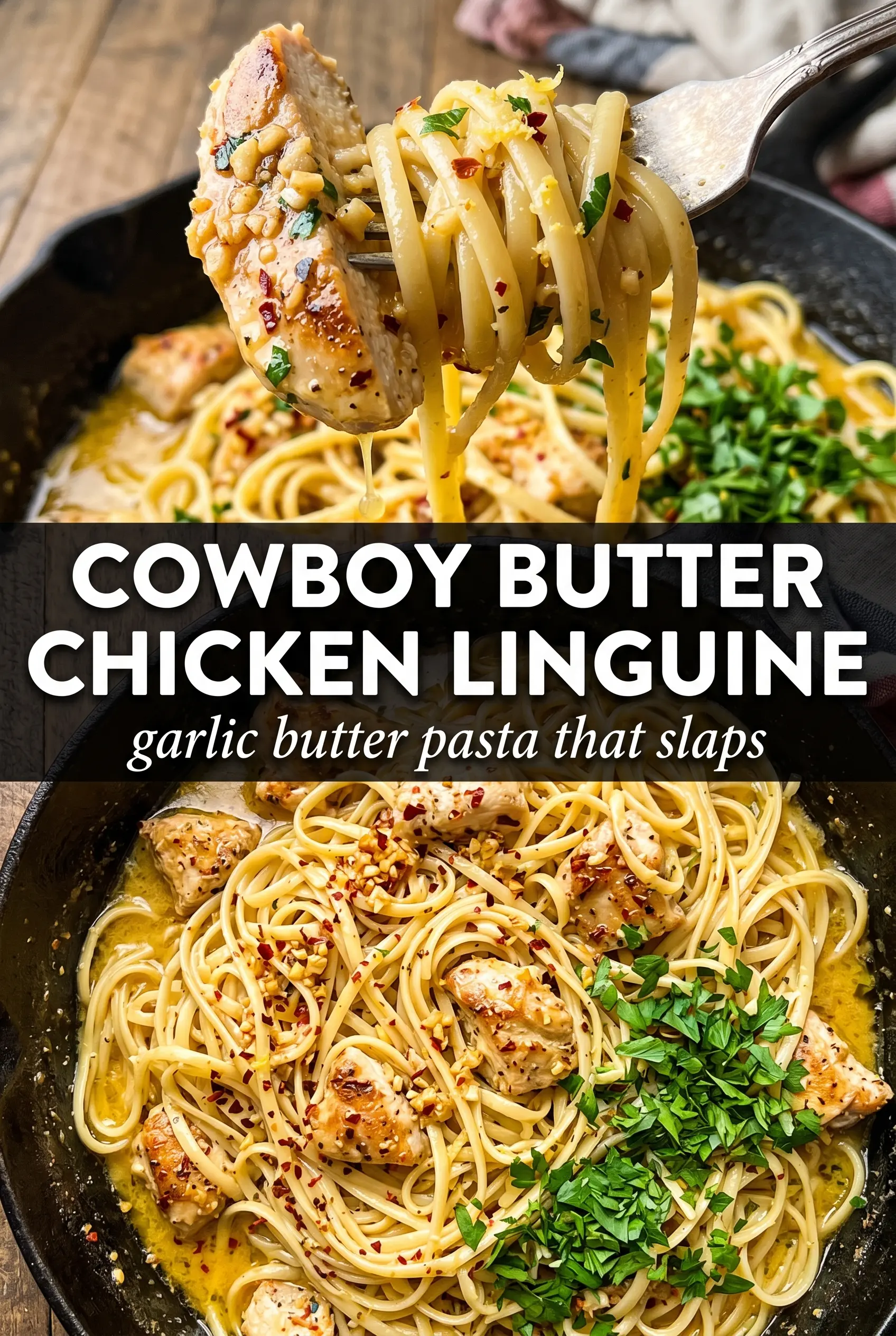
Cowboy Butter Chicken Linguine
Ingredients
Equipment
Method
- Season chicken strips with salt, pepper, and Cajun seasoning. Heat olive oil in a large cast iron skillet over high heat, add chicken, and cook 4-5 minutes until charred and cooked through, then remove.
- Melt butter in the same skillet over medium heat. Add garlic and cook 1 minute, stirring until fragrant.
- Stir in Dijon mustard, smoked paprika, red pepper flakes, and cayenne, then cook 30 seconds to bloom the spices.
- Add lemon juice, parsley, and chives, then toss the cooked linguine with the cowboy butter sauce. Add reserved pasta water as needed until the sauce is glossy and evenly coats the noodles.
- Top the pasta with the seared chicken strips so they fan over the linguine. Serve immediately.