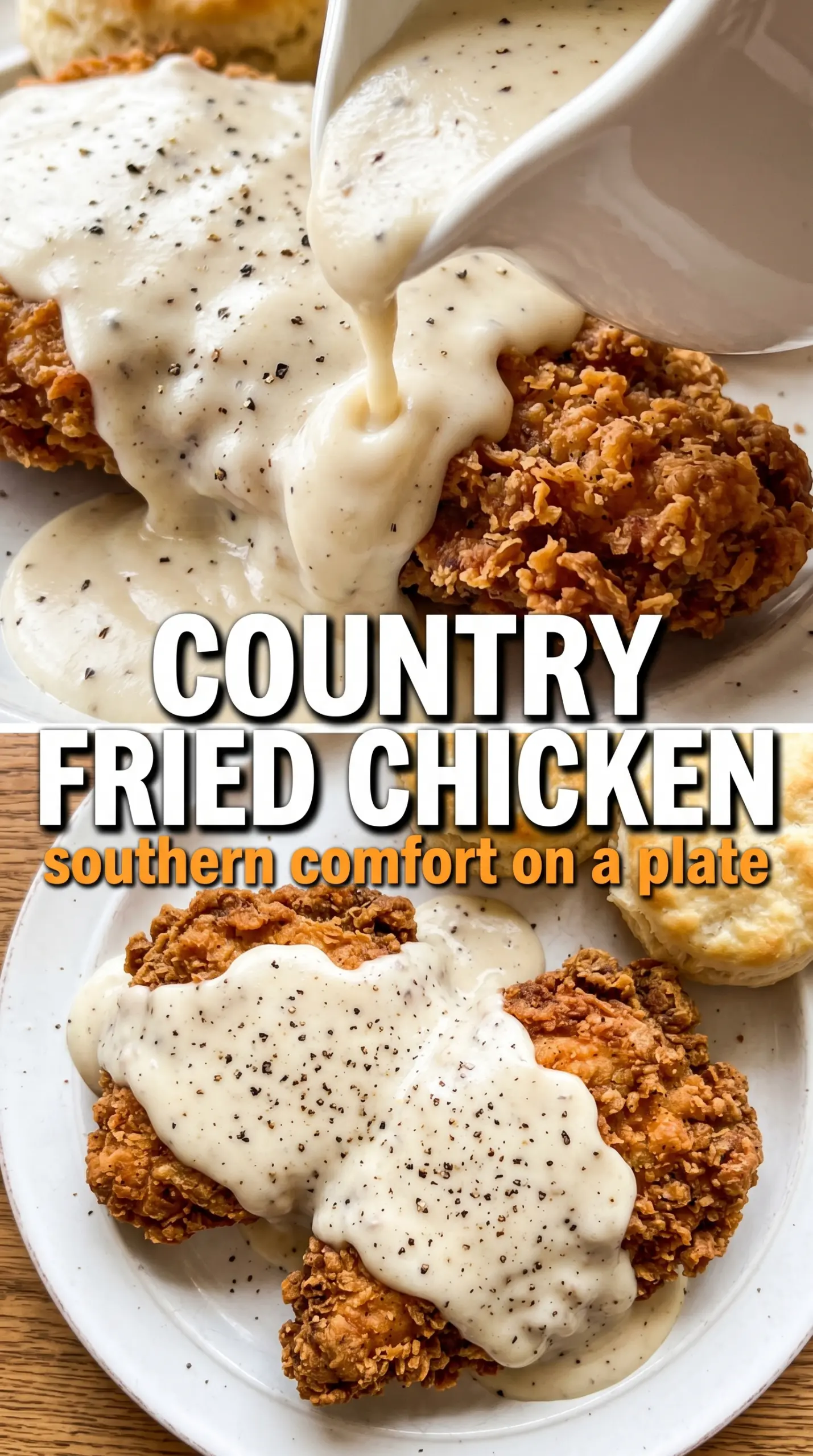
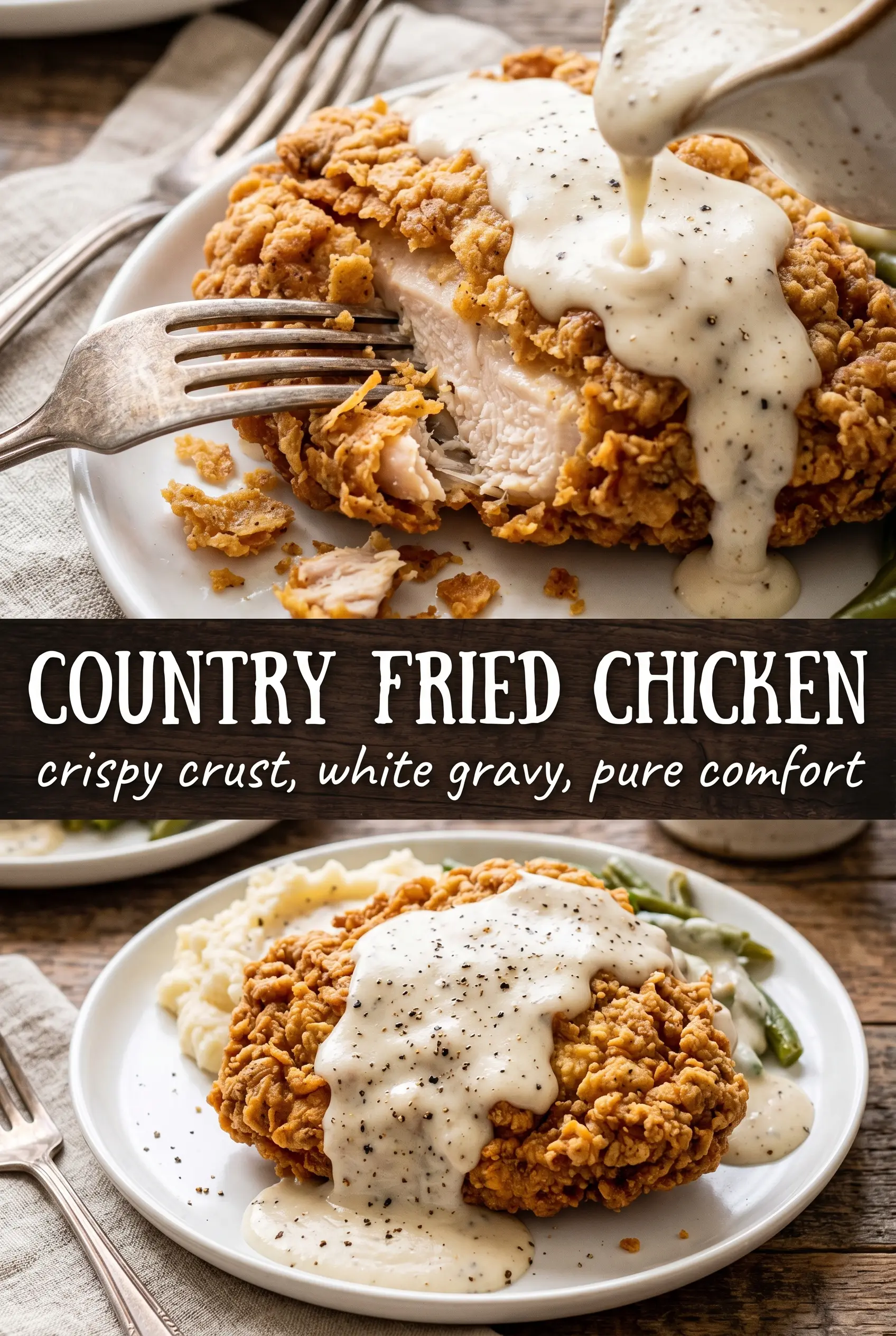
Shatteringly crisp on the outside and juicy in the middle, country fried chicken earns its place on the table fast. The coating fries up thick and craggy, with enough seasoning to stand on its own, and the white gravy gives each bite that classic Southern finish without turning the crust soggy if you pour it on just before serving.
The part that makes this version work is the double dredge and the buttermilk soak. The buttermilk helps season the chicken all the way through and gives the flour something clingy to grip onto, while the second pass in the seasoned coating builds those rough, crunchy ridges that turn deeply golden in the oil. Cast iron helps hold the heat steady, which matters more than most people think when you’re frying bone-in pieces.
Below you’ll find the little details that keep the crust crisp, the gravy smooth, and the chicken cooked through without drying out. If you’ve ever ended up with greasy breading or a gravy that turned gluey, the fixes are in here.
The crust stayed thick and crunchy even after I spooned on the gravy, and the chicken cooked through perfectly in the time listed. I used thighs and they came out juicy with a deep golden coating.
Like this country fried chicken? Save it to Pinterest for the nights when you want a shatteringly crisp crust, juicy meat, and real white gravy over the top.
The Crust Only Stays Crisp When the Oil Stays Hot
Most greasy fried chicken starts with oil that drops too far the second the chicken goes in. Once the temperature falls, the flour soaks up oil instead of sealing into a crust, and you end up with heavy breading instead of that brittle, crackly shell you’re after. A cast iron skillet helps because it holds heat better than a thin pan, but the real key is not crowding it.
Work in batches if you need to. The chicken should sizzle steadily the moment it hits the oil, then keep frying in a lively bubble without scorching. If the crust is browning too fast before the meat is done, the oil is too hot. If it barely crackles, it isn’t hot enough. That middle ground is where the coating turns deep gold and the chicken finishes juicy.
What the Buttermilk, Spices, and Flour Are Doing Here
- Buttermilk — This is doing more than tenderizing. Its tang helps season the meat and gives the flour a sticky surface to cling to. If you don’t have buttermilk, use whole milk mixed with a little lemon juice or vinegar, but expect a slightly thinner coating and a milder flavor.
- Hot sauce — You won’t taste heat in a loud way, but the vinegar and pepper wake up the chicken. It works in the background. Skip it only if you need a completely mild batch.
- All-purpose flour — This is the structure of the crust. A plain, medium-protein flour gives you a coating that fries up crisp without turning hard or bready. Self-rising flour isn’t the best swap here because it can make the crust puff unevenly.
- Garlic powder, onion powder, smoked paprika, cayenne, black pepper — These season the crust itself, not just the meat. That’s why every bite tastes finished even before the gravy goes on. Keep the cayenne if you want that classic gentle heat; reduce it, but don’t omit it unless you want a softer Southern-style profile.
- Pan drippings — These carry the chicken flavor straight into the gravy. If you don’t have enough drippings, top off with a spoonful of the frying oil, but use only what you need so the gravy doesn’t taste greasy.
- Whole milk — Milk gives the gravy its body and that familiar white, silky finish. Lower-fat milk works, but the sauce won’t be as rich or as smooth.
How to Fry the Chicken and Build the Gravy in the Same Breath
The Buttermilk Soak
Let the chicken sit in the buttermilk and hot sauce for at least 30 minutes, or overnight if you’re planning ahead. That soak seasons the meat and helps it stay juicy through the high heat of frying. Pull the chicken out and let the excess drip off, but don’t shake it dry; you want enough moisture for the flour to grab onto.
The Double Dredge
Press the chicken firmly into the seasoned flour, then dip it back into the buttermilk and flour again for that heavier, rougher crust. The flour should look shaggy and clumpy on the surface, not smooth. If you pack the coating too tightly, it can turn dense instead of craggy, so press it on, then leave it alone.
The Fry
Heat 2 to 3 inches of oil to 350°F in a cast iron skillet. Fry the chicken without crowding, turning it once so both sides cook evenly and the color deepens to a rich golden brown. Bone-in pieces need the full 10 to 12 minutes per side, but always check the thickest part with a thermometer. Pull it at 165°F, then drain it on paper towels while you move on to the gravy.
The White Gravy Finish
Use the pan drippings in the same skillet and whisk in the flour for a minute to cook off the raw taste. Then add the milk gradually while whisking; that slow stream keeps the gravy smooth instead of lumpy. If it tightens too fast, thin it with a splash more milk. Season at the end so you can taste the salt level after the drippings have done their work.
Three Ways to Bend This Recipe Without Breaking It
Use thighs for the juiciest result
Thighs stay a little more forgiving than breasts because they have more fat and don’t dry out as quickly. They also handle the longer fry time well, which gives you a thicker crust and a more robust bite.
Make it gluten-free with a 1:1 baking blend
A good cup-for-cup gluten-free flour blend can stand in for the all-purpose flour, though the crust may be a little more delicate. Press it on gently and avoid moving the chicken too soon so the coating can set before you turn it.
Turn it into a lighter skillet dinner
If you want the flavor without the full gravy pour, serve the chicken with just a spoonful on the side instead of covering the whole plate. The crust stays crisp longer, and you still get that classic country fried chicken finish.
Storage and Reheating
- Refrigerator: Store the fried chicken and gravy separately for up to 3 days. The crust will soften in the fridge, but it can come back with the right reheat.
- Freezer: The chicken freezes well, though the coating won’t be as crisp after thawing. Freeze pieces on a tray first, then wrap tightly. Freeze the gravy separately only if you don’t mind whisking it back together after reheating.
- Reheating: Warm the chicken on a rack in a 375°F oven until hot and crisp, not in the microwave, which turns the crust soggy. Reheat the gravy slowly on the stove with a splash of milk and whisk until smooth.
Answers to the Questions Worth Asking
Country Fried Chicken
Ingredients
Equipment
Method
- Soak the chicken pieces in buttermilk and hot sauce for at least 30 minutes or overnight.
- Whisk together all seasoned flour coating ingredients in a shallow dish.
- Remove chicken from buttermilk, letting excess drip off, and dredge firmly in the seasoned flour; repeat the dip-and-dredge for extra crunch.
- Heat 2-3 inches of oil to 350°F in a large cast iron skillet.
- Fry chicken for 10-12 minutes per side until deeply golden and internal temperature reaches 165°F, then drain on paper towels.
- Whisk pan drippings and flour in a skillet over medium heat for 1 minute.
- Gradually whisk in milk and cook until thickened, then season with salt and pepper.
- Serve chicken immediately with white gravy poured over the top.