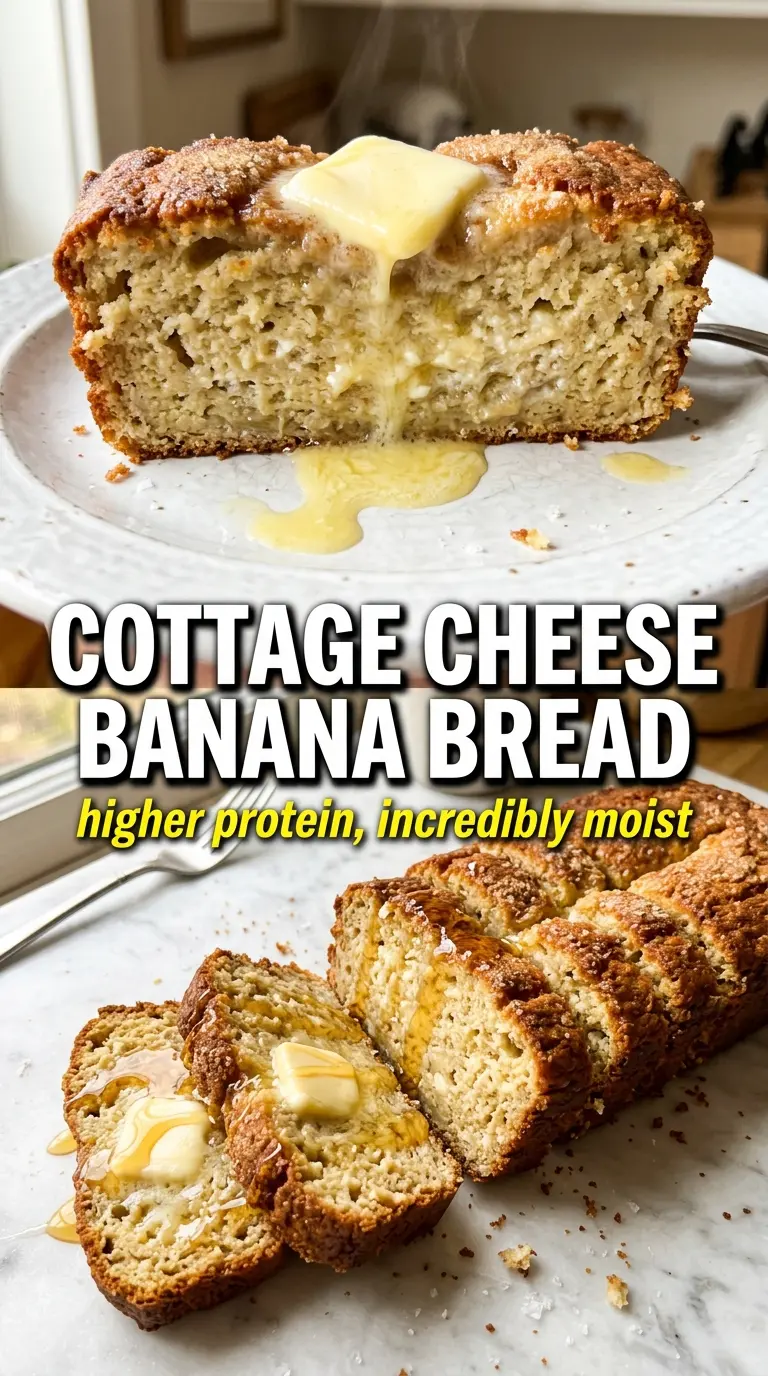
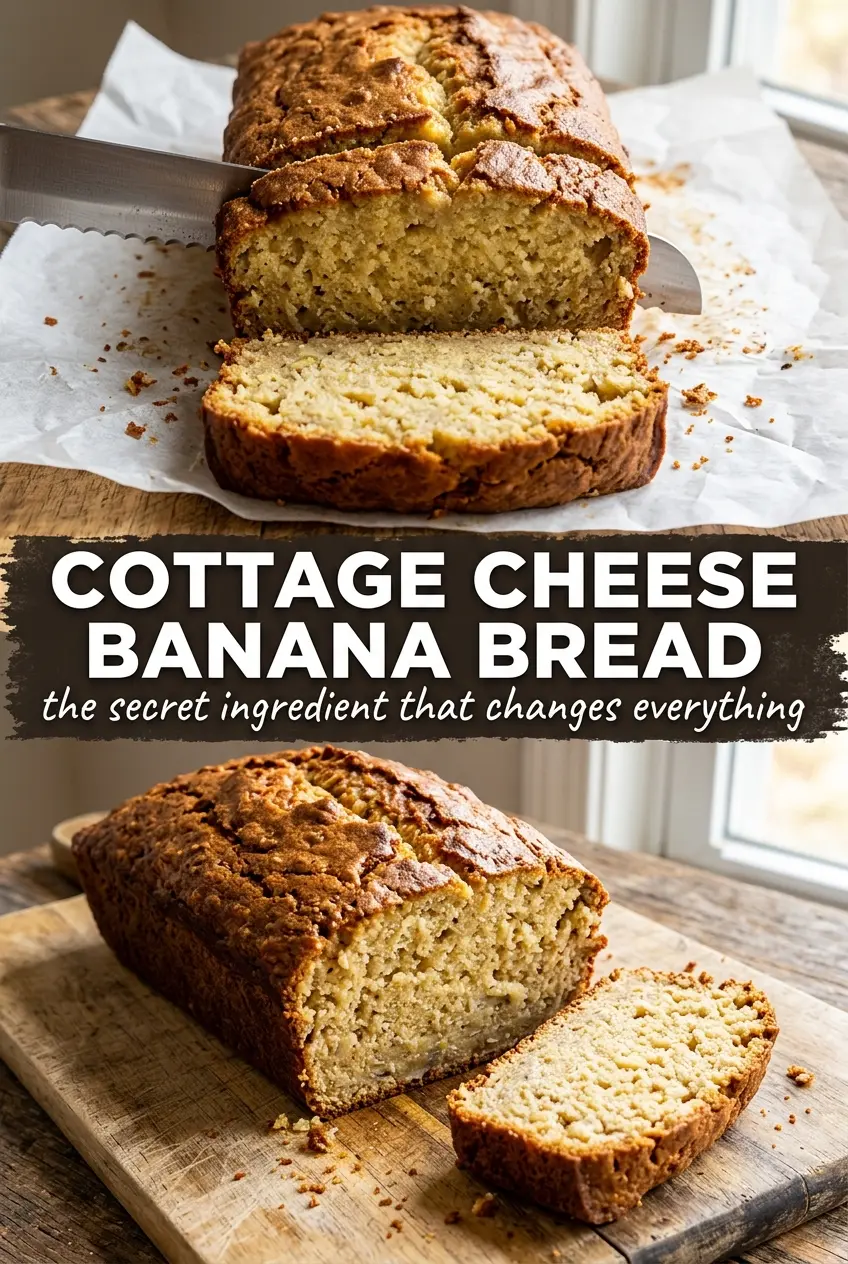
Golden banana bread with a tender, moist crumb has a way of disappearing before it’s even fully cool. This version keeps all the comfort of classic banana bread, but the cottage cheese gives it a softer, richer texture and a little extra staying power. It slices cleanly once cooled, yet the middle stays plush instead of dry or crumbly.
The trick is blending the cottage cheese until smooth before it goes into the batter. That step matters because it keeps the loaf from baking up lumpy and helps the dairy disappear into the crumb. Ripe bananas bring sweetness and moisture, while just enough flour holds everything together without making the bread heavy. It’s a small change, but it makes the whole loaf feel more substantial and a little more balanced.
Below, you’ll find the timing cues that keep the loaf from turning gummy in the center, plus a few smart swaps if you need to work with what’s already in your kitchen.
The loaf came out so moist and the cottage cheese blended in completely. I cooled it for the full hour and the slices held together beautifully with no soggy middle.
Love how the cottage cheese keeps this banana bread extra moist and tender? Save it to Pinterest for an easy high-protein loaf that bakes up with a soft, golden crumb.
The Cottage Cheese Needs to Disappear Into the Batter
Banana bread gets dense for two reasons: overmixing the flour, or a wet ingredient that never fully blends in. Cottage cheese is the second problem if you leave it chunky. Those curds can bake into little pockets that throw off the crumb, and the loaf can feel uneven instead of plush.
Blending the cottage cheese first solves that immediately. Once it’s smooth, it behaves more like part of the wet base than a separate ingredient. The batter will still look thicker than a classic banana bread batter, and that’s what you want. The loaf needs enough structure to hold the extra moisture without collapsing in the center.
- Full-fat cottage cheese — This gives the best texture and the richest loaf. Low-fat cottage cheese works, but the bread will bake up a little less tender.
- Ripe bananas — The browner the peel, the better. You want bananas that mash easily and smell sweet, since they provide most of the bread’s flavor and moisture.
- Honey or maple syrup — Either one works here. Honey brings a rounder sweetness, while maple adds a softer, warmer note.
- All-purpose flour — This is the right choice for a loaf that stays soft but still slices cleanly. Whole wheat flour can work for up to half the amount, but the bread will be a touch heavier.
What Each Ingredient Is Actually Doing in This Recipe
- Primary ingredient (the star) — Quality matters most. Choose the best you can find.
- Cooking medium (oil, butter, or broth) — This carries flavors and prevents dryness.
- Seasonings (salt, pepper, spices, herbs) — Layer flavors so nothing overpowers. Build depth gradually.
- Aromatics (garlic, onion, herbs) — Cook with fat to bloom flavors. Become the foundation.
- Supporting ingredients — Complement the main ingredient without overpowering it.
- Sauce or liquid (if applicable) — Brings flavors together. Balance richness with acid.
- Acid (lemon, vinegar, wine, or other) — Brightens and prevents flat-tasting results.
- Final finish (garnish, glaze, or sauce) — Prevents one-dimensional taste and adds visual appeal.
Building the Loaf Without Making It Gummy
Start With the Smooth Wet Base
Blend the cottage cheese until there are no visible curds, then whisk it with the mashed bananas, eggs, honey, melted butter, and vanilla. The mixture should look thick, creamy, and slightly speckled from the bananas. If the butter is too hot, it can start cooking the eggs or make the batter look greasy, so let it cool for a minute after melting. A smooth wet base gives you an even crumb later.
Fold the Dry Ingredients Just Until Combined
Add the flour, baking soda, baking powder, cinnamon, and salt, then fold only until the streaks of flour disappear. Stop there. Overmixing develops gluten and turns a tender loaf chewy and tight. The batter will look thick, and that’s correct — banana bread batter should pour slowly, not run like cake batter.
Watch the Center, Not Just the Clock
Spread the batter into a greased 9×5 loaf pan and bake at 350°F for 60 to 70 minutes. The top should be deeply golden, the crack down the center should look set, and a toothpick in the middle should come out clean or with just a few moist crumbs. If the top browns before the center is done, tent it loosely with foil for the last 10 to 15 minutes. Pulling it too early is the fastest way to end up with a gummy middle.
Let It Cool Before You Slice It
Leave the loaf in the pan for 15 minutes, then turn it out and let it cool completely. This part matters more than people want it to. Fresh banana bread is fragile, and cutting into it too soon traps steam and makes the inside look underbaked even when it’s not. Once fully cooled, the crumb sets and the slices come out neat and soft.
Ways to Adjust the Loaf Without Losing the Texture
Make it gluten-free with a 1:1 baking blend
A good 1:1 gluten-free flour blend can replace the all-purpose flour without changing the method. The loaf may need a few extra minutes in the oven, and the crumb will be a little more delicate, but it still holds together well as long as you let it cool fully before slicing.
Skip the butter for a lighter dairy profile
You can replace the melted butter with an equal amount of neutral oil if you want a softer, slightly more moist loaf. The flavor will be less rich, but the texture stays tender and the bread still slices cleanly. Use avocado oil or light olive oil if that’s what you keep on hand.
Turn it into banana nut bread
Fold in 1/2 cup chopped walnuts or pecans after the flour goes in. They add crunch and help balance the soft, creamy crumb, which is a nice contrast in this loaf. Toast the nuts first if you want a deeper, more pronounced flavor.
Use a lower-sugar version
You can reduce the honey or maple syrup to 2 tablespoons if your bananas are very ripe. The bread will still be moist, but the top may brown a little less and the flavor will lean more banana-forward than sweet. Don’t cut the sweetener out completely, or the loaf can taste flat.
Storage and Reheating
- Refrigerator: Store in an airtight container for up to 5 days. The loaf stays moist, but the crumb firms up a little when chilled.
- Freezer: Freeze slices or the whole loaf tightly wrapped for up to 3 months. Slice first if you want grab-and-go portions.
- Reheating: Warm slices in the microwave for 10 to 15 seconds or in a toaster oven until just heated through. Don’t overheat it or the bread can turn dry around the edges while the center stays soft.
Answers to the Questions Worth Asking
Cottage Cheese Banana Bread
Ingredients
Equipment
Method
- Preheat oven to 350°F, then grease a 9x5 loaf pan to prevent sticking.
- Set the pan aside while you prepare the batter.
- Blend cottage cheese until smooth, then whisk with mashed bananas until evenly combined.
- Whisk in eggs, honey or maple syrup, melted butter, and vanilla until the batter looks glossy and uniform.
- Fold in all-purpose flour, baking soda, baking powder, cinnamon, and salt just until no dry streaks remain.
- Pour batter into the prepared pan and smooth the top so it bakes evenly.
- Bake for 60–70 minutes at 350°F until deeply golden and a toothpick inserted in the center comes out clean (no wet batter).
- Cool the loaf in the pan for 15 minutes before turning it out.
- Allow to cool fully before slicing so the crumb sets and holds together.