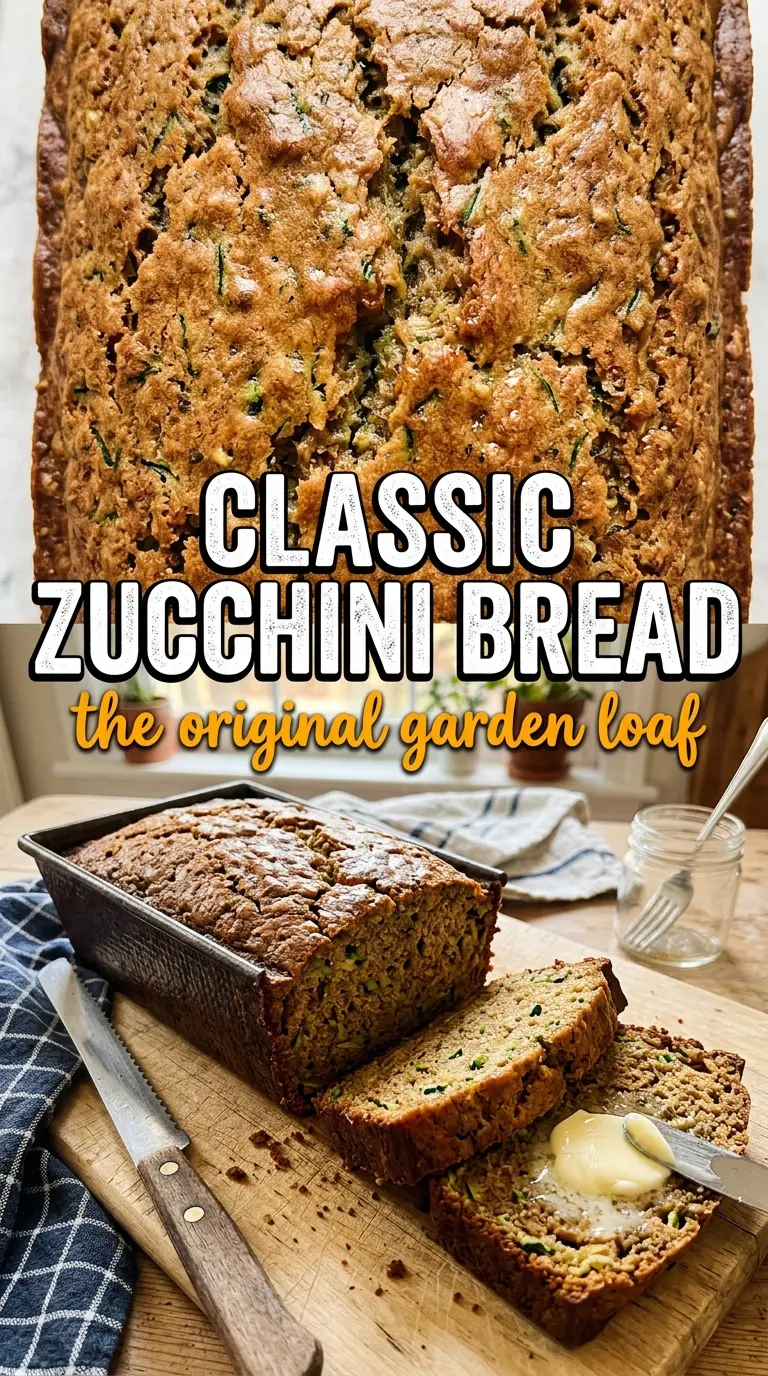
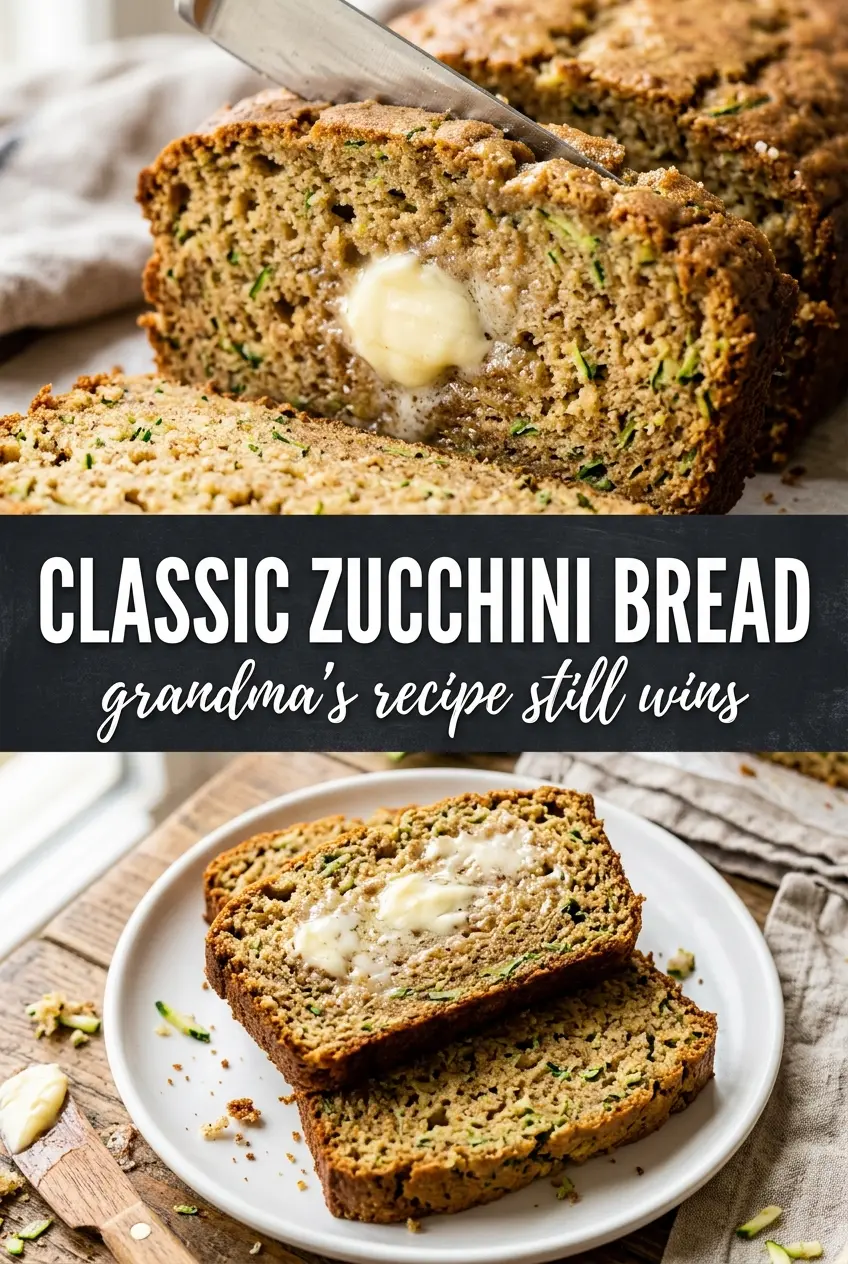
Classic zucchini bread earns its place because it stays tender for days, slices cleanly, and has that deep cinnamon scent that makes the whole kitchen smell like you’ve been baking all morning. The top bakes up crackly and golden while the crumb stays soft and moist, with little flecks of zucchini throughout that disappear into the batter without turning the loaf heavy. It’s the kind of quick bread that works for breakfast, an afternoon snack, or a late-night slice warm from the pan.
What makes this version work is the balance of moisture and structure. Zucchini adds a lot of water, but this recipe doesn’t ask you to squeeze it out, because that moisture is part of what keeps the loaf tender. The oil also helps the crumb stay soft after cooling, while the cinnamon and nutmeg give the bread enough warmth to taste like more than just a sweet vegetable loaf.
Below, I’ll show you why the batter should stay just barely mixed, how to avoid a gummy center, and what to change if you want to add nuts or make a loaf that leans a little more dessert-like.
The loaf came out with a crackly top and stayed moist for three days. I was nervous about not squeezing the zucchini, but it baked up perfectly and didn’t turn soggy at all.
Save this classic zucchini bread for the days when you want a moist, cinnamon-spiced loaf with a golden crackly top.
The Trick Behind a Moist Loaf That Still Slices Cleanly
The mistake that ruins a lot of zucchini bread is overworking the batter after the flour goes in. Once the wet and dry ingredients meet, the flour starts building structure immediately, and too much stirring turns the loaf tight and a little gummy. Fold just until the last streaks of flour disappear, then stop.
The other thing that matters here is balance. Zucchini brings moisture, sugar helps hold it, and oil keeps the crumb soft after the loaf cools. If you try to cut the sugar too much, the bread loses more than sweetness — it also loses tenderness and that shiny, crackled top that makes it look like real bakery zucchini bread.
What Each Ingredient Is Doing in This Loaf
- All-purpose flour — This gives the loaf enough body to hold the extra moisture from the zucchini. Bread flour makes it a little too chewy, and cake flour can make it collapse in the center.
- Vegetable oil — Oil keeps quick bread softer than butter does, especially on day two. Melted coconut oil works if you want a subtle coconut note, but it will firm up a little more once cooled.
- Eggs — The eggs bind the batter and help the loaf rise without getting dense. Room-temperature eggs mix in more evenly, but cold eggs will still work if that’s what you have.
- Grated zucchini — Use it as grated, not chopped, so it melts into the crumb instead of showing up as hard pieces. Don’t squeeze it dry; the natural moisture is part of what keeps the bread tender.
- Cinnamon and nutmeg — These are what make the loaf taste warm and rounded instead of flatly sweet. The nutmeg is subtle, but it gives the bread that old-fashioned quick bread aroma people expect.
- Walnuts or pecans — Optional, but they add crunch and a little bitterness that keeps each slice from tasting one-note. Toast them first if you want a deeper nutty flavor.
Building the Batter Without Beating the Air Out of It
Mix the dry ingredients first
Whisk the flour, baking soda, baking powder, salt, cinnamon, and nutmeg together until everything looks evenly colored. That step matters more than people think, because it keeps the leavening from clumping in one spot and gives you a more even rise. If your bread ever bakes with a bitter pocket or a pale streak, the dry ingredients weren’t mixed well enough.
Bring the wet ingredients together
Beat the sugar, oil, eggs, and vanilla just until the mixture looks smooth and glossy. You’re not trying to whip in a lot of air here; zucchini bread isn’t a sponge cake, and too much aeration can make the middle rise fast and fall later. Once the zucchini goes in, the batter should look loose and slightly shaggy.
Fold, don’t stir hard
Add the wet mixture to the dry ingredients and fold gently with a spatula until the flour disappears. Stop while you can still see a few faint streaks; they’ll finish blending as the batter rests for a minute or two before baking. If you beat it smooth, the loaf gets tougher and may tunnel down the center.
Bake until the center sets
Divide the batter between the pans and bake at 350°F until the tops are deeply golden and a toothpick comes out clean or with a few moist crumbs. If the top browns too quickly before the center is done, tent loosely with foil for the last 10 to 15 minutes. Letting the loaf cool in the pan for 20 minutes helps it set enough to turn out without breaking apart.
How to Adjust the Loaf for Different Kitchens and Eaters
Make It Nut-Free
Leave out the walnuts or pecans and the loaf still bakes up with the same tender crumb. If you want a little extra texture, sprinkle a few oats or coarse sugar over the top before baking, but don’t add more dry ingredients to replace the nuts.
Gluten-Free Version
Use a cup-for-cup gluten-free flour blend in place of the all-purpose flour. The texture will be a little more delicate, so let the loaf cool completely before slicing or it can crumble at the first cut.
Add Chocolate Chips Instead of Nuts
Swap the nuts for an equal amount of chocolate chips if you want a sweeter, more dessert-like loaf. Mini chips distribute best and won’t sink as much as larger chunks.
Storage and Reheating
- Refrigerator: Store tightly wrapped for up to 5 days. The crumb stays moist, though the loaf will firm up a little in the fridge.
- Freezer: Freezes well. Wrap individual slices or whole cooled loaves tightly and freeze for up to 3 months, then thaw at room temperature.
- Reheating: Warm slices in the toaster oven or microwave just until heated through. Overheating dries out the edges fast, so use short bursts if you’re reheating a single slice.
Questions I Get Asked About This Recipe
Classic Zucchini Bread
Ingredients
Equipment
Method
- Preheat the oven to 350°F, then grease two 9x5 loaf pans (or one large loaf pan). The pans should look lightly coated so the loaf releases cleanly.
- Whisk all-purpose flour, baking soda, baking powder, salt, cinnamon, and nutmeg in a large bowl until evenly combined. Stop when no streaks of spice remain.
- Beat granulated sugar, vegetable oil, eggs, and vanilla extract in a separate bowl until well combined. Mix until the batter looks glossy and uniform.
- Stir grated zucchini into the wet mixture. Keep the zucchini fluffy and evenly distributed with no clumps.
- Add the wet ingredients to the dry ingredients and fold until just combined, then fold in chopped walnuts or pecans if using. Stop as soon as you don’t see dry flour to keep the crumb tender.
- Divide the batter between the loaf pans and bake for 55–65 minutes at 350°F, until a toothpick comes out clean and the top is deeply golden. Look for a cracked, set crust and a loaf that springs back lightly.
- Cool the loaves in the pan for 20 minutes before transferring to a wire rack. The surface should be firm enough to lift without cracking further.