Classic pasta salad earns its place at the table because it stays crisp, bold, and dependable from the first scoop to the last. The rotini catches the dressing, the peppers keep their bite, and the olives and cheese bring enough salt and richness that every forkful tastes complete. It’s the kind of side dish people return to without needing a second glance at the rest of the spread.
The trick is cooling the pasta properly and dressing it while it still has some grip. Rinsing the noodles stops the cooking and keeps them from turning gummy, but they still need time in the fridge to absorb the Italian dressing and settle into the right texture. If you rush that part, the salad tastes thin and the pasta feels separate from everything else.
Below, I’ll show you the small choices that keep this pasta salad from going watery or bland, plus the simple adjustments I use when I need to stretch it for a bigger crowd or make it a little lighter.
The dressing soaked in after an hour in the fridge and the rotini stayed perfectly firm. I brought it to a cookout, and the bowl was scraped clean before the burgers were even done.
Save this classic pasta salad for potlucks, picnics, and any night you need a cold side with crisp vegetables and a big Italian dressing finish.
The Real Reason Pasta Salad Gets Watery Before the Party Starts
The difference between a pasta salad that tastes bright and one that turns soggy is timing. Hot pasta keeps absorbing dressing in a sloppy way, and warm vegetables release moisture into the bowl. Once that happens, the Italian dressing slides to the bottom and the whole thing loses its snap.
Cooking the rotini to al dente matters even more here than in a warm pasta dish because the noodles keep firming up as they chill. Rinsing under cold water stops the cooking, but the pasta still needs enough surface starch left behind to hold the dressing. If you rinse until the noodles feel slick and clean, the dressing won’t cling as well.
- Al dente rotini — This shape gives you ridges and curls that trap dressing, diced vegetables, and little bits of cheese. Overcooked pasta turns soft in the fridge and starts to break apart when you toss it again before serving.
- Italian dressing — Bottled dressing keeps this salad consistent and easy, and the acidity helps the flavors settle together after chilling. A thicker, oil-heavy dressing clings better than a thin vinaigrette, which can pool at the bottom.
- Bell peppers and red onion — These need to be diced small enough to spread through the bowl instead of sitting in big crunchy chunks. If your onion tastes sharp, soak it in cold water for 10 minutes and drain well before adding it.
- Mozzarella and salami — These are the parts that make the salad feel substantial instead of just cold pasta and vegetables. Cubed mozzarella holds up better than shredded cheese, and halved salami gives you little salty bites without overwhelming the bowl.
What Each Ingredient Is Actually Doing in This Pasta Salad
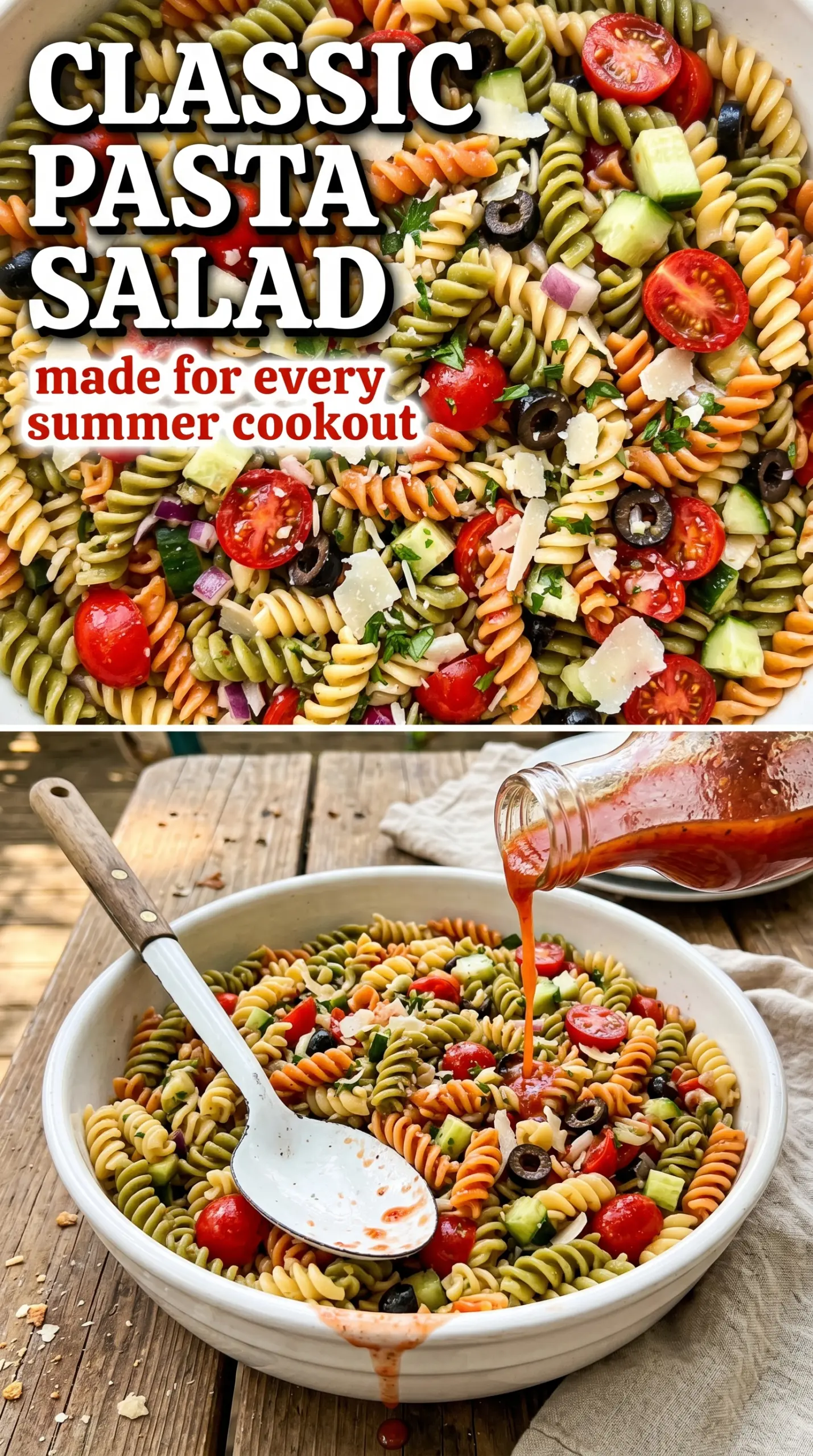
- Cooked pasta (the foundation) — Short shapes like penne or rotini hold dressing better than long noodles. Cook to al dente and cool completely before dressing.
- Olive oil or vinaigrette (the binding medium) — This carries all the flavors throughout and keeps the pasta from clumping. Don’t skip the emulsifier (mustard or vinegar) or the oil separates.
- Vinegar or lemon juice (the brightness) — Acid prevents the salad from tasting heavy and keeps it tasting fresh even after chilling. Fresh is better than bottled.
- Fresh vegetables (the texture and nutrition) — Cut to similar sizes so they cook evenly if blanched. Raw vegetables add crunch; cooked ones soften and absorb flavor.
- Cheese (the creaminess and salt) — Whether feta, parmesan, or mozzarella, cheese adds richness and prevents the salad from tasting one-dimensional.
- Olives, capers, or sun-dried tomatoes (the briny contrast) — These bring sharp flavor that balances sweet vegetables and creamy dressing. They keep the salad interesting.
- Fresh herbs (the finish) — Basil, parsley, or dill added at the end stay bright and fragrant. Cooked herbs lose their personality.
- Proper chilling time (the flavor settling) — 30 minutes lets flavors meld without the pasta getting soggy. The cold temperature also mutes seasoning, so season boldly.
Building the Bowl So Every Bite Tastes the Same
Cooking the Pasta to the Right Texture
Cook the rotini just until it’s al dente, then drain it and rinse with cold water until it stops steaming. The noodles should feel firm, not chalky, because they’ll soften a little more as they sit in the dressing. If the pasta is left warm, it drinks up too much dressing and can go heavy instead of coated.
Mixing the Add-Ins Before the Dressing Goes In
Combine the cooled pasta with the peppers, onion, olives, salami, mozzarella, and tomatoes before you add the dressing. That gives you a chance to see whether the bowl needs a little more salt or a little more color before everything gets glossy. If you pour in the dressing too early, the lighter ingredients tend to clump and the heavier pieces sink.
Chilling for Flavor, Not Just Temperature
Let the salad rest in the fridge for at least an hour. That pause gives the pasta time to absorb the dressing and lets the onion and peppers mellow out just enough. Right before serving, toss it again and add a splash more dressing if the bowl looks dry; pasta salad almost always needs that final refresh after chilling.
Make It Meatless Without Losing the Salt and Bite
Skip the salami and add extra olives, a handful of diced pepperoncini, or a few chopped artichoke hearts. You’ll lose some richness, but the salad keeps its punch if you replace that savory note with something briny.
Gluten-Free Pasta Salad That Still Holds Up
Use a gluten-free rotini made from rice, corn, or a blend that holds its shape after chilling. Cook it just to the shortest time on the package, because gluten-free pasta can turn mushy fast once the dressing hits it.
A Creamier Version for Potlucks
Stir in a spoonful or two of mayonnaise with part of the Italian dressing if you want a softer, richer finish. It won’t taste like a creamy macaroni salad, but it does round off the acidity and helps the dressing cling a little longer.
Storage and Reheating
- Refrigerator: Store covered for up to 4 days. The pasta will absorb more dressing as it sits, so expect the bowl to look a little drier on day two.
- Freezer: Don’t freeze this salad. The vegetables and cheese lose their texture once thawed, and the dressing separates.
- Reheating: This salad is served cold. If it has been chilled overnight, let it sit at room temperature for 10 to 15 minutes and toss in a little extra dressing before serving.
Questions I Get Asked About This Recipe
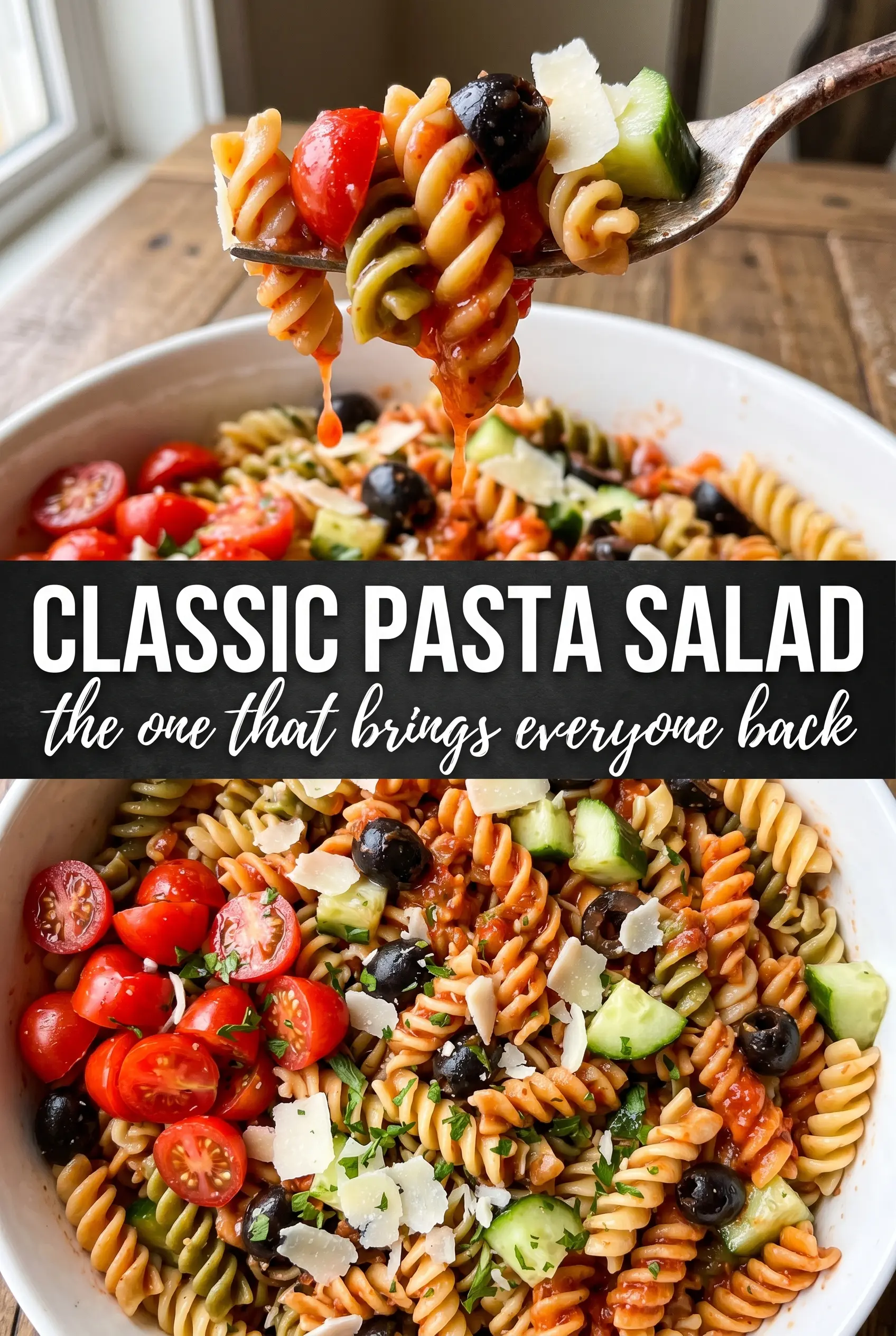
Classic Pasta Salad
Ingredients
Method
- Cook the rotini until al dente, then drain it.
- Rinse the drained pasta cold under running water to stop cooking, then cool until no longer steaming.
- Add the cooled rotini to a large mixing bowl.
- Toss in the diced green bell pepper, diced red bell pepper, and diced red onion.
- Add the sliced black olives, halved salami or pepperoni, cubed mozzarella, and halved cherry tomatoes.
- Pour the Italian dressing over the pasta mixture.
- Sprinkle in Italian seasoning and toss to coat every bite.
- Season with salt and pepper, then toss again until evenly combined.
- Refrigerate the pasta salad at least 1 hour.
- Right before serving, toss the salad and add more dressing if needed to loosen and shine.
- Garnish with fresh parsley.