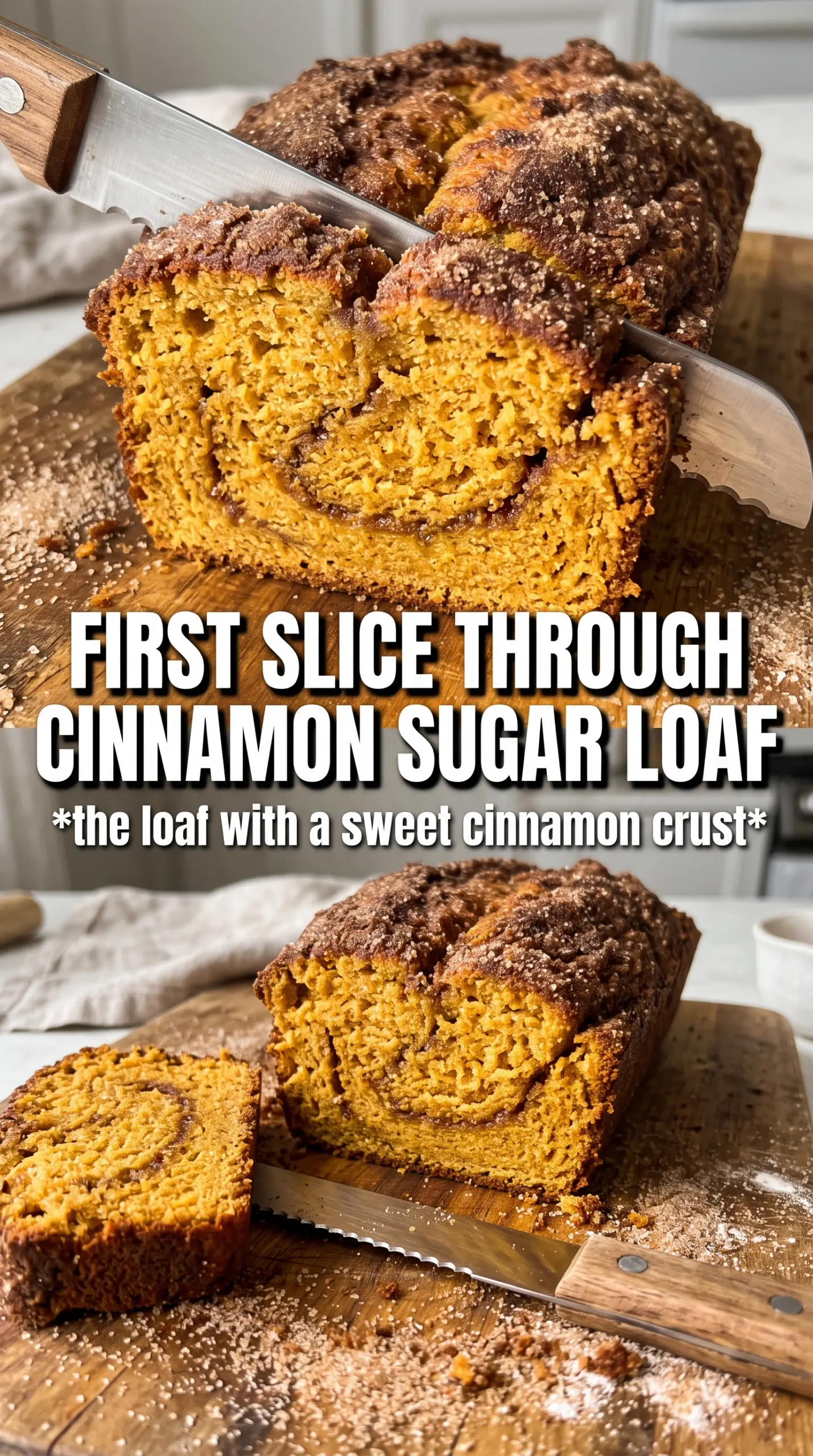
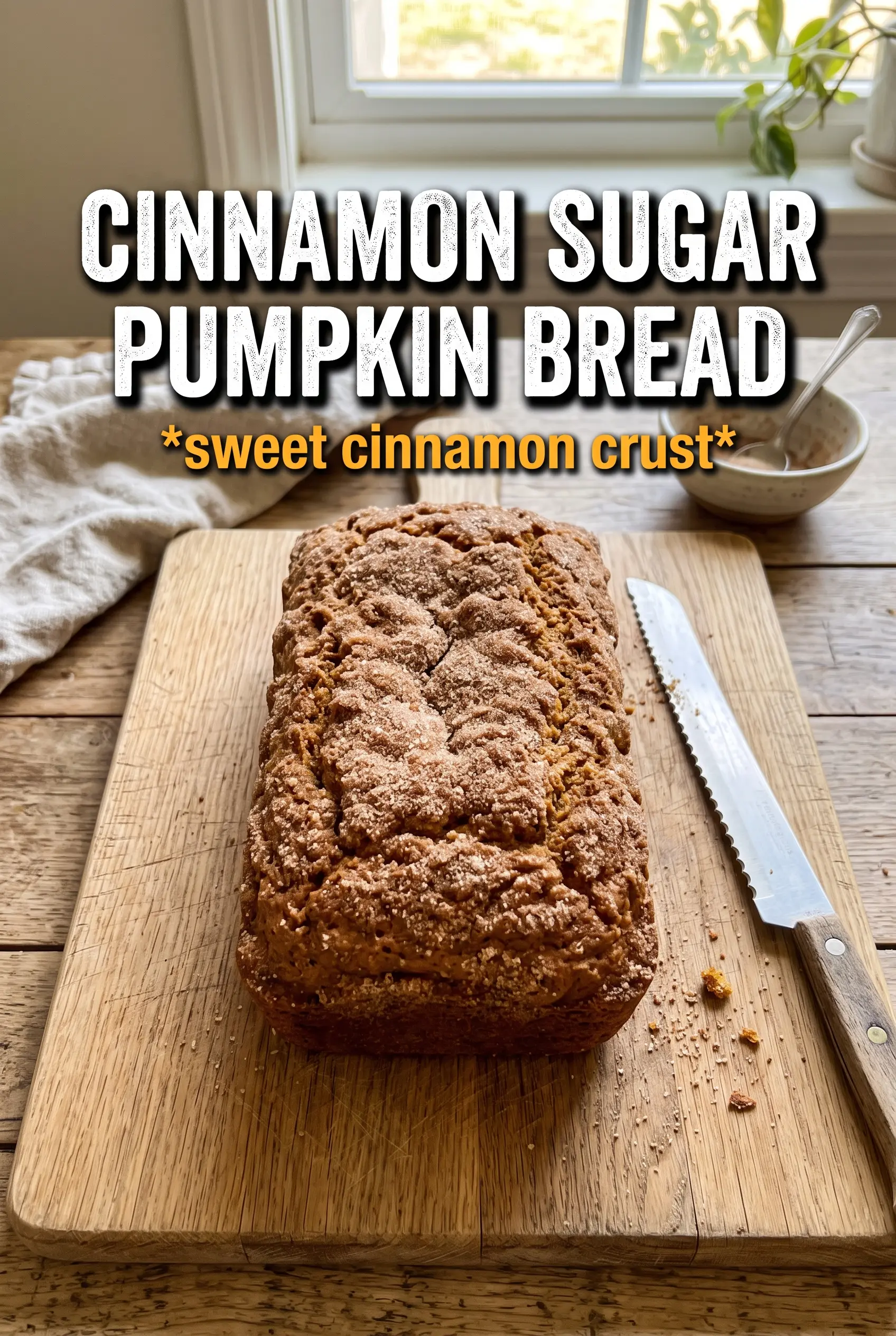
Cinnamon sugar pumpkin bread bakes up with a crackly, caramelized top, a soft and moist crumb, and a ribbon of warm spice running through every slice. The crust turns deeply golden in the oven, almost like a thin layer of candied cinnamon toast, while the center stays tender enough to pull apart cleanly without crumbling.
What makes this version work is the balance of fat, pumpkin, and buttermilk. Pumpkin brings moisture and body, oil keeps the loaf soft for days, and the buttermilk gives the batter just enough acidity to lift the crumb without making it airy or dry. The cinnamon sugar isn’t just sprinkled on top at the end; it’s built into the pan, layered through the middle, and finished over the surface so you get that caramelized shell on every side that touches heat.
Below, I’ll walk through the part that matters most: how to keep the swirl distinct without overmixing the batter, and why the loaf should come out of the pan while it’s still a little warm. That timing makes a bigger difference than people expect with this kind of sugar-heavy bread.
The cinnamon sugar crust baked up thick and crunchy, and the middle stayed unbelievably moist. I followed the warm pan tip and the loaf came out clean on the first try.
Pin this cinnamon sugar pumpkin bread for the thick crunchy crust and tender pumpkin swirl you’ll want on repeat.
The Reason the Cinnamon Sugar Crust Stays Crisp Instead of Melting In
The crust on this loaf works because the sugar starts in direct contact with the buttered pan and gets a second hit on top before baking. That gives you two things at once: a protective layer that helps the loaf release, and a caramelized shell that doesn’t disappear into the batter. If the pan isn’t coated generously, the sugar can glue itself to the pan instead of forming that crisp edge, especially along the bottom corners.
The other thing worth knowing is that this batter is meant to be folded, not beaten. Once the flour goes in, overmixing tightens the crumb and smears the cinnamon swirl into the loaf instead of leaving it streaked through the middle. A few streaks of flour are better than a tough bread.
What Each Ingredient Is Actually Doing in This Loaf
- Pumpkin puree — This is the moisture engine of the loaf. Use plain pumpkin puree, not pumpkin pie filling, or you’ll throw off both the sweetness and spice. The canned version works beautifully here and gives a consistent texture every time.
- Oil — Oil keeps the bread tender longer than butter would. Butter adds flavor, but in this loaf the pumpkin and cinnamon sugar are already doing the heavy lifting, so oil is the better choice for a soft crumb that stays plush for days.
- Buttermilk — This adds gentle acidity, which helps the baking soda lift the loaf and keeps the crumb from tasting flat. If you don’t have it, use plain milk mixed with 1 teaspoon lemon juice or vinegar and let it sit for 5 minutes before adding it in.
- Brown sugar — This deepens the sweetness and brings a little molasses note that plays well with cinnamon. It also helps the center stay moist without turning gummy.
- Cinnamon sugar — Dividing it into the pan, the middle layer, and the top is what creates the signature crust and swirl. If you only use it on top, you lose the caramelized sides and the ribbon through the crumb.
Building the Swirl Without Overworking the Batter
Coating the Pan First
Brush the loaf pan with melted butter while the oven heats, then coat it generously with cinnamon sugar. You want the sides covered, not dusted; any bare patch is where the loaf can stick once the sugar melts and sets. This layer also bakes into the edge of the bread, which is why the slices pull away cleanly instead of tearing.
Mixing the Batter Just Until It Comes Together
Whisk the dry ingredients in one bowl and the wet ingredients in another until the pumpkin mixture looks smooth and uniform. When you combine them, fold with a spatula and stop as soon as the flour disappears. If you keep stirring after that, the loaf turns tight and the swirl loses definition.
Layering the Cinnamon Sugar in the Middle
Spread half the batter into the pan, sprinkle on a layer of cinnamon sugar, then add the rest of the batter and swirl once or twice with a knife. Don’t chase the swirl through the whole loaf. A few lazy passes are enough; too much swirling drags the sugar down and blends it into the batter instead of leaving a ribbon.
Finishing With a Heavy Top Layer
Top the loaf generously with the remaining cinnamon sugar before it goes into the oven. That upper layer melts, bubbles, and sets into a deep caramelized crust. If you skimp here, the top turns soft instead of crisp, and that’s the part people usually remember first.
How to Adjust This Loaf for Different Kitchens and Diets
Dairy-Free Version
Swap the buttermilk for unsweetened non-dairy milk mixed with 1 teaspoon lemon juice or vinegar. Use the same amount and let it sit for a few minutes before adding it. The loaf will still rise well and stay soft, though the flavor will be a touch less tangy.
Gluten-Free Version
Use a 1:1 gluten-free flour blend that includes xanthan gum. The texture will be a little more delicate and slightly less springy, but the pumpkin keeps it from drying out. Let the loaf cool in the pan for a short rest before turning it out so it has time to set.
Extra-Spiced Loaf
Add another 1/4 teaspoon cinnamon or a pinch of cloves if you want the spice to lean warmer and more pronounced. Don’t add much more than that unless you want the pumpkin flavor to step back. The cinnamon sugar topping already brings a lot of spice to the surface.
Storage and Reheating
- Refrigerator: Keep the loaf wrapped or in an airtight container for up to 5 days. The crust softens a little in the fridge, but the crumb stays moist.
- Freezer: This freezes well. Wrap slices or the whole loaf tightly in plastic wrap and then foil, and freeze for up to 3 months.
- Reheating: Warm slices in a toaster oven or low oven so the sugar topping re-crisps a bit. The common mistake is microwaving too long, which makes the crust sticky and the crumb rubbery.
Questions I Get Asked About This Recipe
Cinnamon Sugar Pumpkin Bread
Ingredients
Equipment
Method
- Preheat the oven to 350F and brush a 9x5 loaf pan with melted butter, then coat with a generous layer of cinnamon sugar.
- Place the filled loaf pan on a sheet pan to catch any drips and keep baking stable.
- Whisk together the flour, baking soda, pumpkin pie spice, cinnamon, and salt until evenly combined, with no visible spice streaks.
- Whisk together the pumpkin, sugar, brown sugar, oil, eggs, vanilla, and buttermilk until smooth.
- Fold the wet ingredients into the dry ingredients until just combined, keeping the batter thick and lump-free.
- Pour half the batter into the prepared pan, sprinkle a layer of cinnamon sugar, then add the remaining batter.
- Swirl gently with a knife to create cinnamon-sugar streaks through the batter.
- Top generously with the remaining cinnamon sugar so it forms a crust while baking.
- Bake for 60-65 minutes at 350F until the cinnamon sugar forms a caramelized crust and a toothpick near the center comes out mostly clean.
- Remove the loaf from the pan while still slightly warm to prevent sticking, then slice after it cools slightly for clean pieces.