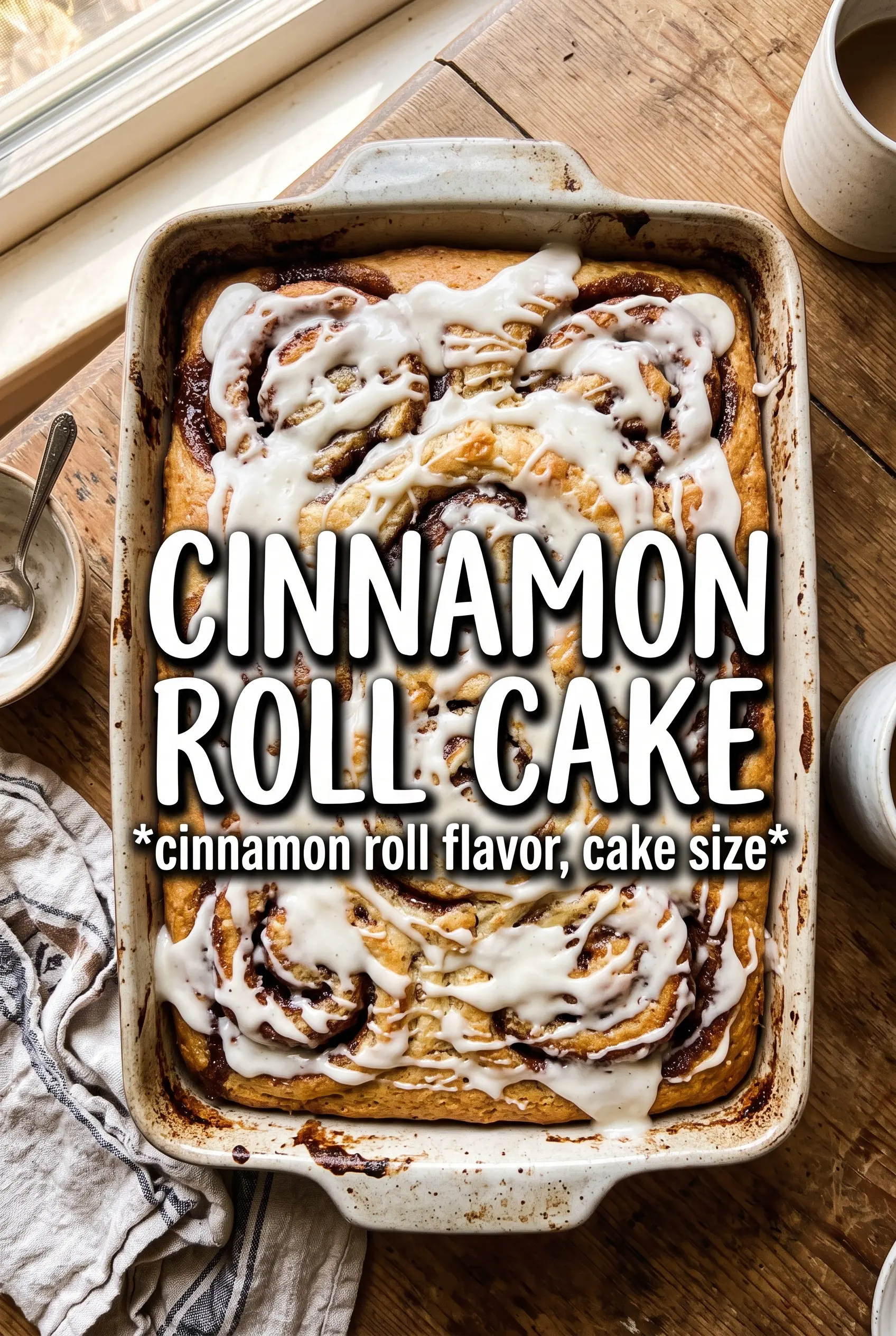
Cinnamon roll cake hits the same soft, swirled, buttery notes as the bakery pastry, but it bakes in one pan without yeast, kneading, or waiting on a rise. The cake stays tender under a thick layer of cinnamon-brown sugar ribbons, and the cream cheese glaze melts just enough over the warm top to sink into every crack and swirl. It’s the kind of dessert that disappears fast because every square gets a little bit of caramelized edge, a soft center, and that familiar cinnamon roll finish.
The trick is keeping the batter loose enough to spread easily, then dropping the cinnamon filling in spoonfuls instead of spreading it like frosting. That gives you distinct swirls instead of one muddy layer. The glaze also matters: pour it on while the cake is still warm so it settles into the surface instead of sitting on top like an afterthought.
Below you’ll find the swirl pattern that gives the prettiest slices, plus a few smart swaps if you need a dairy-free version or want to bake it ahead for brunch.
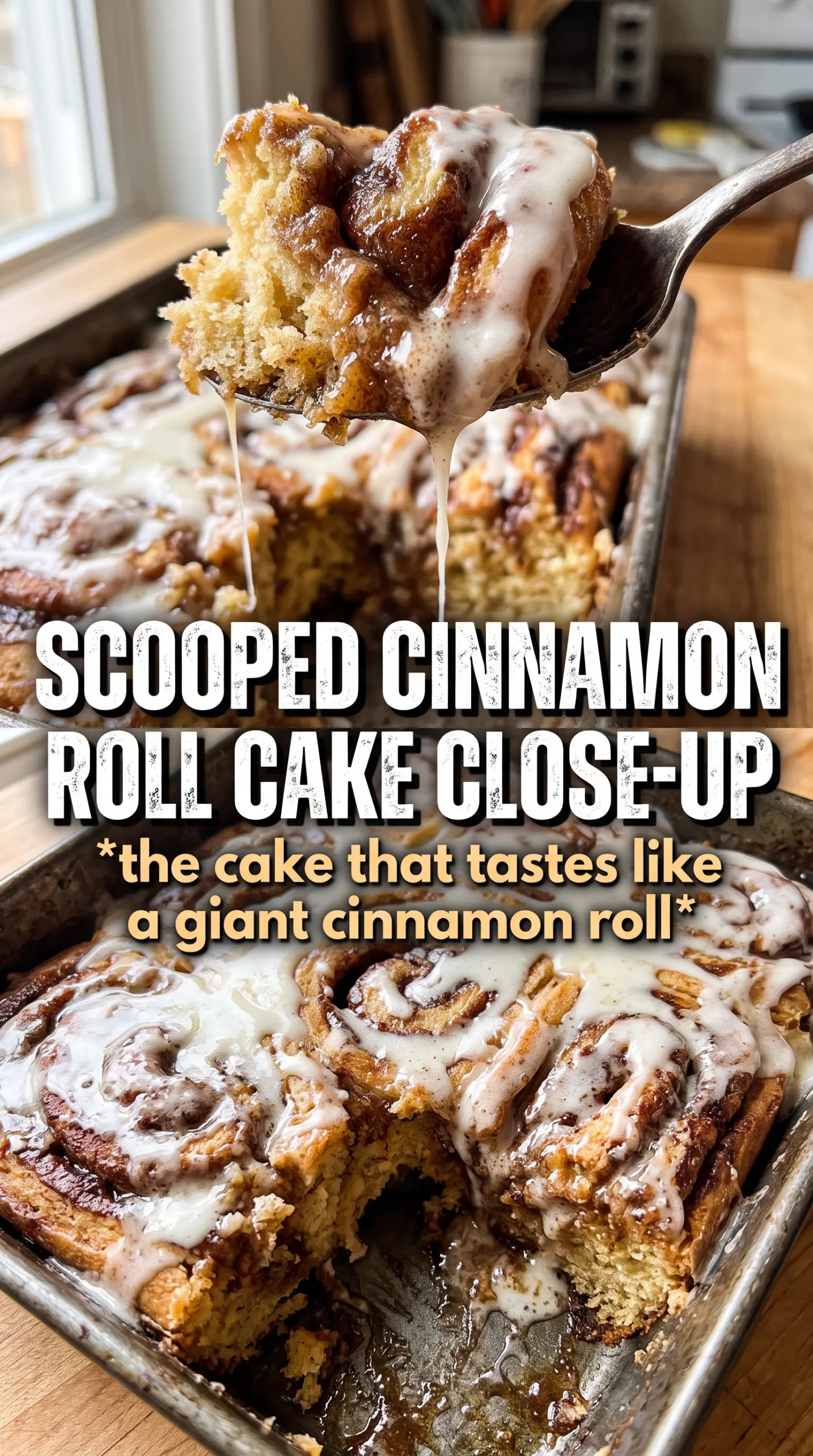
The swirl stayed distinct all the way through and the cream cheese glaze soaked into the warm cake just enough without making it soggy. Mine baked up in 33 minutes and sliced cleanly once it cooled for a bit.
Like this cinnamon roll cake? Save it to Pinterest for the mornings when you want bakery-style swirls without making yeast dough.
The Swirl Has to Sit on Top Before It Bakes In
The biggest mistake with cinnamon roll cake is stirring the filling into the batter too much. If that happens, you lose the bold ribboning and end up with a uniformly spiced cake that tastes fine but looks flat. The filling should sit in thick spoonfuls on top of the batter, then get dragged through in loose figure-eights so it sinks in unevenly and bakes into defined swirls.
The other thing that matters is thickness. If the filling is too loose, it disappears into the cake before it has a chance to create those rich pockets. Softened butter, brown sugar, flour, and cinnamon turn into a spreadable paste that holds its shape long enough to marble cleanly through the batter.
What Each Ingredient Is Actually Doing in This Cake
- All-purpose flour — This gives the cake enough structure to support the cinnamon ribboning without turning gummy. Don’t swap in cake flour here unless you want a softer, more fragile crumb that can’t hold the filling as well.
- Whole milk — The fat in whole milk keeps the batter plush and helps the cake bake up tender. Lower-fat milk will work, but the texture is a little less rich and the crumb can feel drier the next day.
- Melted butter in the batter — This gives the cake a buttery flavor without the extra step of creaming. Use it melted but not scorching hot; if it’s too hot, it can start cooking the eggs on contact and leave little streaks of cooked egg in the batter.
- Brown sugar and cinnamon in the filling — Brown sugar brings the molasses note that makes this taste like a cinnamon roll instead of just cinnamon cake. The flour in the filling helps it thicken and stay in swirls instead of dissolving into the batter.
- Cream cheese for the glaze — This is what gives the topping that tangy bakery finish. If you skip it and use only powdered sugar and milk, the glaze will taste sweeter and thinner, but it won’t have the same balanced bite.
How to Build the Swirl Without Overmixing the Cake
Mix the batter just until it smooths out
Whisk the dry ingredients first, then add the milk, eggs, vanilla, and melted butter and stir only until the batter looks smooth and streak-free. A few small lumps are fine; overmixing starts building too much gluten and gives you a tighter cake. The batter should pour easily into the greased 9×13 dish without needing to be spread aggressively.
Drop the filling in thick spoonfuls
Beat the cinnamon filling until smooth, then scatter it over the batter in dollops instead of trying to layer it evenly. That uneven distribution is what creates the bakery-style swirl. If the filling seems too soft to hold shape, chill it for a few minutes before spooning it on.
Swirl once, then stop
Run a knife through the batter in wide loops, but don’t keep going back over the same spots. Two or three passes are enough. If you over-swirl, the filling blends into the cake and you lose the pretty marbling that makes each piece look like a cinnamon roll.
Bake until the center is set, not dry
Bake at 350°F for 30 to 35 minutes until a toothpick comes out clean from the center or with just a few moist crumbs. The top should look set and lightly golden, and the middle should spring back when gently touched. If the cake bakes too long, the edges dry out before the center finishes, so start checking early if your oven runs hot.
Glaze while the cake is still warm
Beat the cream cheese glaze until smooth, then drizzle it over the warm cake in stripes. Warm cake helps the glaze melt slightly and settle into the swirls, which gives you that classic gooey top. If you wait until the cake is fully cool, the glaze sits more like frosting and won’t seep in as nicely.
How to Adapt This Cinnamon Roll Cake for Different Kitchens
Dairy-Free Version
Use plant-based butter, an unsweetened non-dairy milk, and a dairy-free cream cheese for the glaze. The cake still bakes up tender, but the glaze will be a little less tangy and a little softer once it sits.
Gluten-Free Swap
A good 1:1 gluten-free baking blend can work here, but use one that already includes xanthan gum. The cake will be a little more delicate and may need a few extra minutes in the oven, so rely on the center set and clean-toothpick test rather than the clock alone.
Make-Ahead Brunch Cake
Bake the cake a day ahead and glaze it just before serving, or warm it slightly before drizzling if you want the icing to melt into the top. The flavor holds up well overnight, and the swirl slices cleaner after it has had time to cool completely.
Storage and Reheating
- Refrigerator: Store covered for up to 4 days. The glaze will firm up a bit, but the cake stays moist.
- Freezer: Freeze unglazed slices tightly wrapped for up to 2 months. Thaw in the refrigerator and glaze after warming if you want the best texture.
- Reheating: Warm slices in the microwave for 10 to 15 seconds at a time. Too much heat makes the glaze run and dries the crumb, so stop as soon as the cake feels soft again.