Tender chicken, crisp vegetables, and a glossy soy-ginger sauce make this Chinese chicken stir fry the kind of dinner that disappears fast. The chicken gets a light cornstarch coating before it hits the pan, which gives it a little protection from the heat and helps the sauce cling instead of sliding off the bowl. The vegetables stay bright and just tender-crisp, so every bite has a clean snap before the sauce settles in.
What makes this version work is the order. The chicken cooks first, then comes out while the vegetables get their quick turn in the wok, and the sauce goes in only after the garlic and ginger have had a few seconds to bloom. That keeps the aromatics from burning and gives the cornstarch in the sauce time to thicken right in the pan. If you’ve ever had stir fry turn watery or dull, this method fixes both problems without adding extra steps.
Below, I’ll show you the small details that matter most, from getting the wok hot enough to knowing exactly when the sauce is ready to coat everything. There’s also a helpful note on substitutions, because this is one of those recipes that should still work when you’re using what’s in the fridge.
The sauce thickened up right in the wok and coated every piece of chicken instead of pooling at the bottom. I used broccoli and peppers, and everything stayed crisp even after tossing it together.
Save this Chinese chicken stir fry for a fast wok dinner with glossy sauce, crisp vegetables, and chicken that stays tender.
The Secret to Keeping the Chicken Tender While the Vegetables Stay Crisp
Stir fry fails when the pan isn’t hot enough or when everything gets crowded at once. The chicken starts steaming instead of searing, the vegetables slump, and the sauce turns thin before it can coat anything. This recipe avoids that by cooking the chicken in one layer, pulling it out, and letting the vegetables move fast through the pan on their own.
The other detail that matters is the cornstarch. A light toss on the chicken gives the surface a thin coating that helps it brown and later helps the sauce grab on. It doesn’t make the chicken taste “battered” or heavy; it just gives you that restaurant-style texture that stays juicy even after the sauce goes in.
- High heat is what gives the dish its stir-fry character. If the pan is only warm, the vegetables release water before they color.
- Cornstarch on the chicken protects the meat and thickens the sauce in the final toss.
- Removing the chicken before the vegetables keeps it from overcooking while you build the rest of the dish.
- Adding garlic and ginger last keeps them fragrant instead of bitter.
What Each Sauce Ingredient Is Doing in the Pan
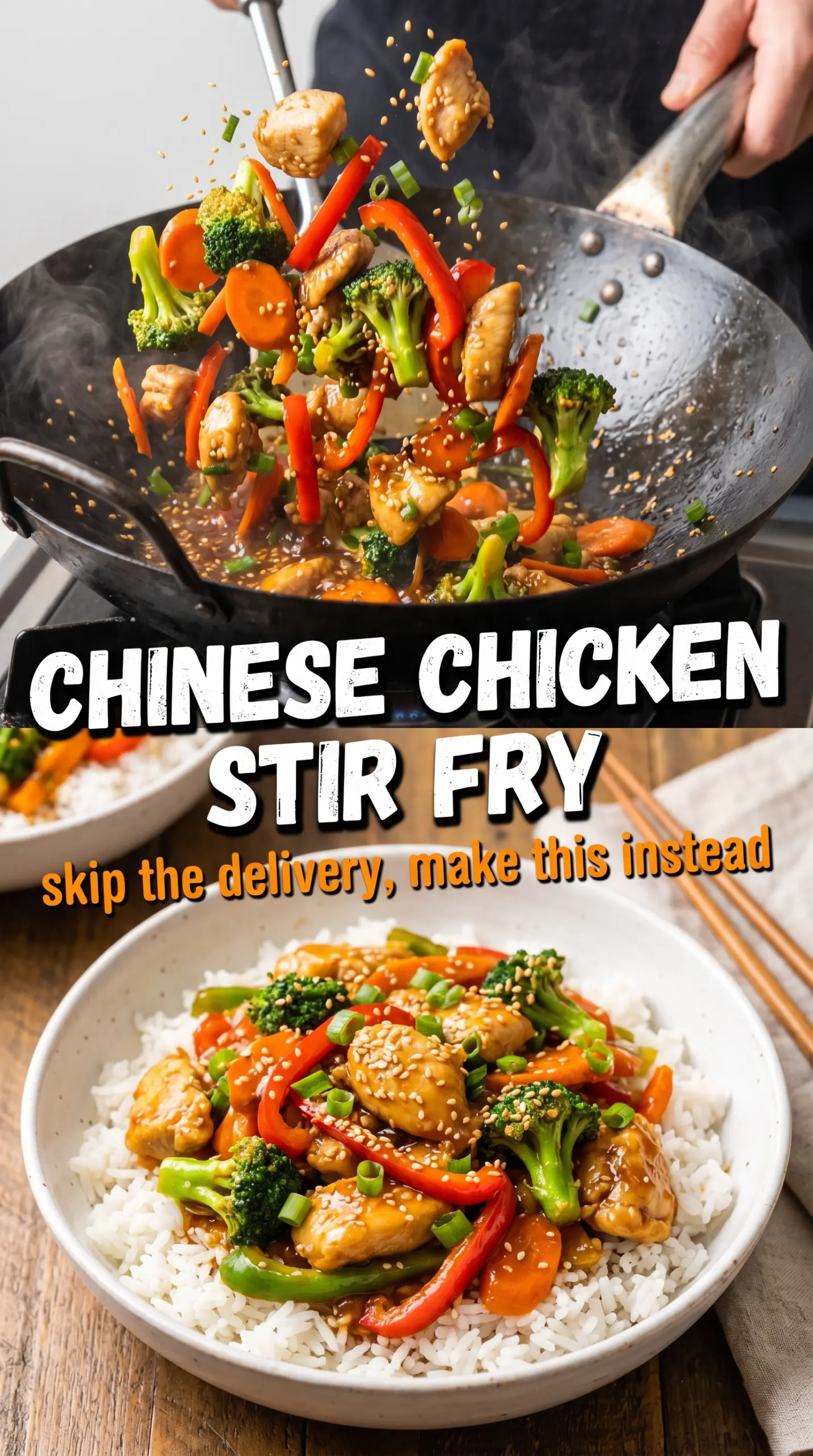
The sauce here is built from ingredients that each do a different job. Soy sauce brings salt and depth. Oyster sauce adds body and that savory, round finish that makes the stir fry taste cooked all the way through. Hoisin gives a little sweetness and complexity, while brown sugar helps the sauce glaze instead of staying thin and sharp.
- Soy sauce is the backbone. Use a regular all-purpose soy sauce, not low-sodium unless you want a lighter finish, because the rest of the sauce depends on that salt level.
- Oyster sauce gives the sauce its restaurant-style richness. There isn’t a perfect substitute, but if you need one, use an extra teaspoon of hoisin plus a splash more soy sauce.
- Hoisin sauce adds sweetness and a little spice. It’s what keeps the sauce from tasting one-note.
- Chicken broth loosens the mixture so it can simmer and thicken in the wok instead of turning pasty the second it hits the heat.
- Cornstarch in the sauce is the thickener. Whisk it in fully before the pan heats up so you don’t end up with little starchy lumps.
How to Build the Stir Fry Without Losing the Heat
Coating the Chicken
Toss the sliced chicken with cornstarch, salt, and white pepper until the pieces look lightly dusted, not clumped. That thin coating is enough. If it looks pasty, you’ve used too much and the texture can turn gummy. Slice the chicken thinly against the grain so it cooks fast and stays easy to chew.
Searing the Chicken
Heat the oil until it shimmers and just starts to smoke before the chicken goes in. That’s the point where the surface of the meat sears instead of soaking up oil. Let the chicken sit long enough to pick up color before stirring, then cook until the strips are opaque and just cooked through. If the pan seems crowded, cook in two batches rather than lowering the heat.
Cooking the Vegetables
The peppers, broccoli, and carrot need only a few minutes. You want bright color and a little bite left in the center. Once the garlic and ginger go in, stir fast because they can burn in under a minute over high heat. If your broccoli is especially thick, splash in a tablespoon of water and cover the pan for 30 seconds to help it along without softening everything else.
Thickening and Finishing
Give the sauce a quick stir before it goes in, then pour it around the edges of the pan so it hits the hottest surface. It should bubble and thicken in a minute or two. When it turns glossy and lightly coats the back of a spoon, add the chicken back in and toss until every piece is lacquered. If it looks too thick, add a splash of broth; if it looks thin, let it simmer another 30 seconds.
Make It Gluten-Free
Swap in gluten-free tamari for the soy sauce and check that your oyster sauce and hoisin are labeled gluten-free. The texture stays the same, and the sauce still thickens because the cornstarch is doing that work.
Make It Without Oyster Sauce
Use an extra tablespoon of hoisin sauce plus a teaspoon of soy sauce and a splash of broth. You’ll lose some of the deep savory edge, but the stir fry will still taste balanced and glossy.
Swap the Vegetables for What You Have
Snow peas, sliced zucchini, mushrooms, or baby corn all work well here. Keep the total amount about the same and use firmer vegetables first so everything finishes at the same time.
Make It a Little Spicier
Add a pinch of red pepper flakes with the garlic and ginger, or stir in a teaspoon of chili garlic sauce with the stir fry sauce. That gives the dish a clean heat without changing the texture of the glaze.
Storage and Reheating
- Refrigerator: Store leftovers in an airtight container for up to 4 days. The vegetables soften a little, but the flavor holds up well.
- Freezer: It freezes, though the vegetables will lose some crunch. Freeze in portions for up to 2 months, then thaw overnight in the fridge.
- Reheating: Reheat in a skillet over medium heat with a splash of broth or water. The common mistake is using high heat and drying out the chicken while the sauce tightens too much.
Questions I Get Asked About This Recipe
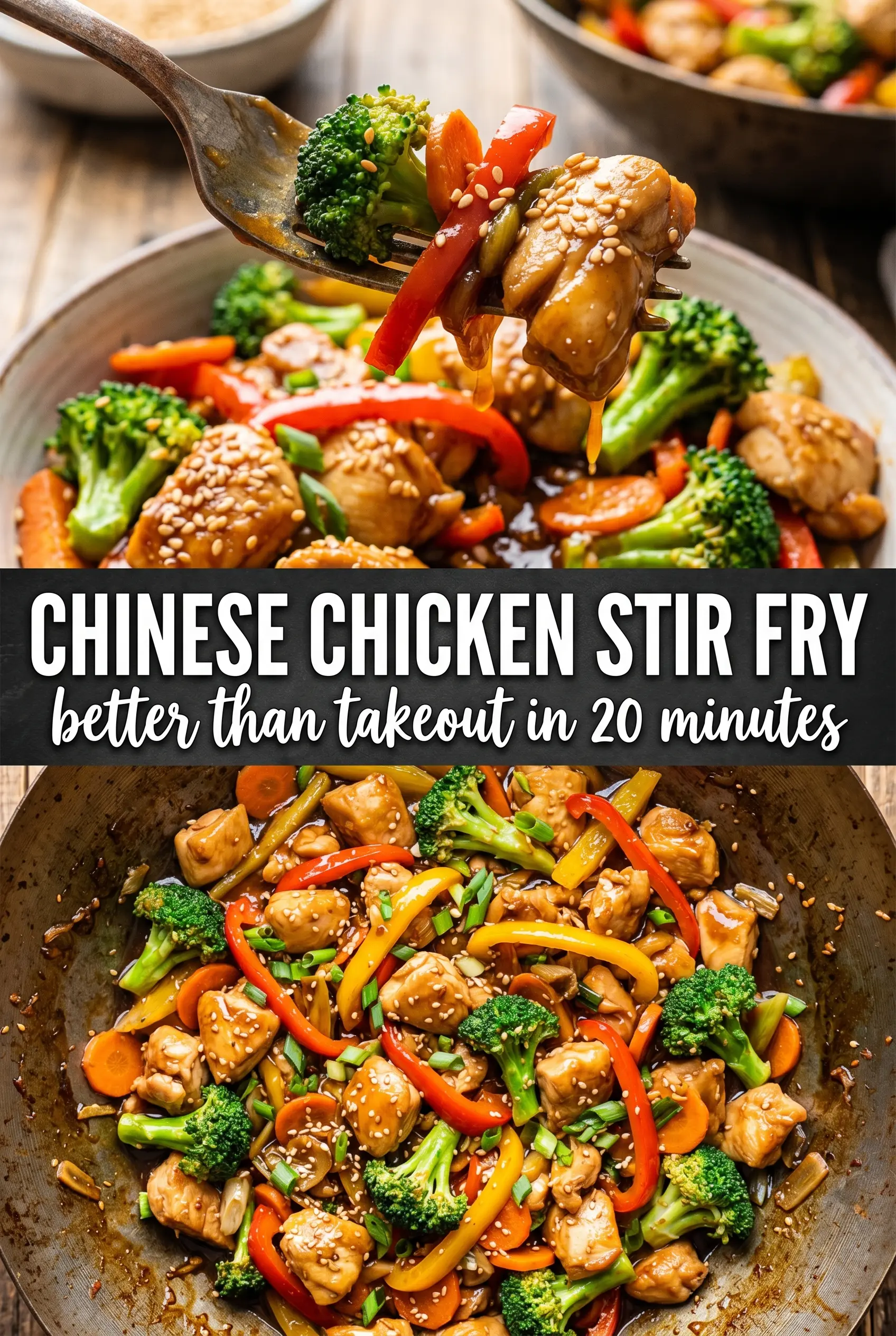
Chinese Chicken Stir Fry
Ingredients
Equipment
Method
- Toss the thinly sliced boneless skinless chicken breasts with cornstarch, salt, and white pepper until evenly coated, then set aside.
- Whisk together soy sauce, oyster sauce, hoisin sauce, brown sugar, sesame oil, cornstarch, and chicken broth until smooth.
- Heat vegetable oil in a wok or large skillet over high heat until it reaches a smoking point.
- Cook the coated chicken for 4-5 minutes, stirring occasionally, until golden and cooked through, then remove to a plate.
- Stir-fry the red bell pepper, green bell pepper, broccoli florets, and carrot for 3-4 minutes until bright and just tender-crisp.
- Add garlic and fresh ginger and stir-fry for 30 seconds until fragrant and glossy.
- Pour in the sauce and stir for 1-2 minutes until thickened and shiny.
- Return the chicken to the wok and toss to coat completely, until everything is hot and glistening.
- Serve the garlic ginger chicken stir fry over white rice and top with sesame seeds and green onions.