Silky noodles, golden chicken, and a garlic butter sauce that clings to every strand make this the kind of dinner people keep asking for again. The butter coats the noodles instead of pooling at the bottom of the bowl, and the sliced chicken stays tender enough to balance the richness without turning the dish heavy.
What makes this version work is timing. The chicken gets a proper sear first, then the same skillet picks up the butter, garlic, and a little red pepper flake, so the noodles inherit all of that flavor from the pan. A splash of pasta water loosens the sauce just enough to turn glossy, which is the difference between buttered noodles that taste flat and buttered noodles that taste finished.
Below, you’ll find the small details that matter most here: how to keep the garlic from burning, when to add the pasta water, and how to vary the dish if you want it a little richer, lighter, or easier to adapt for what’s already in your kitchen.
The noodles turned out glossy instead of greasy, and the garlic butter coated everything without separating. I used the pasta water like you said and the sauce clung to the noodles all the way to the last bite.
Love the glossy garlic butter noodles and golden chicken? Save this Chicken with Buttered Noodles for the nights when you want comfort food without a fussy sauce.
The Trick to Keeping the Garlic Butter from Turning Greasy
The biggest mistake with chicken and buttered noodles is treating the butter like it can carry the whole dish on its own. It can’t. Butter needs the starchy pasta water to become a real sauce, or it slides around the noodles and leaves the bottom of the bowl oily instead of glossy.
The other thing that matters here is heat control. Garlic only needs a minute or two in melted butter before it turns fragrant; leave it too long and it goes bitter fast, which throws off the whole dish. That’s why the chicken is seared first and the pan gets deglazed by the noodles, not by extra liquid or cream.
- Chicken breasts — Slice them evenly so they cook at the same rate. If one end is much thicker, lightly pound it before seasoning so the sear finishes at the same time all the way across.
- Egg noodles — Their soft texture is part of what makes this dish feel comforting, and their surface grabs the butter better than most long pastas. If you swap in another shape, choose one with ridges or curves so the sauce has something to hold onto.
- Pasta water — This is the ingredient that turns melted butter into something spoonable. Plain water won’t give you the same cling because it doesn’t carry the starch that helps the sauce emulsify.
- Parmesan — Use the real grated cheese if you can. The pre-shredded kind often melts less smoothly and can make the sauce a little dusty instead of silky.
What Each Ingredient Is Actually Doing in This Chicken Recipe
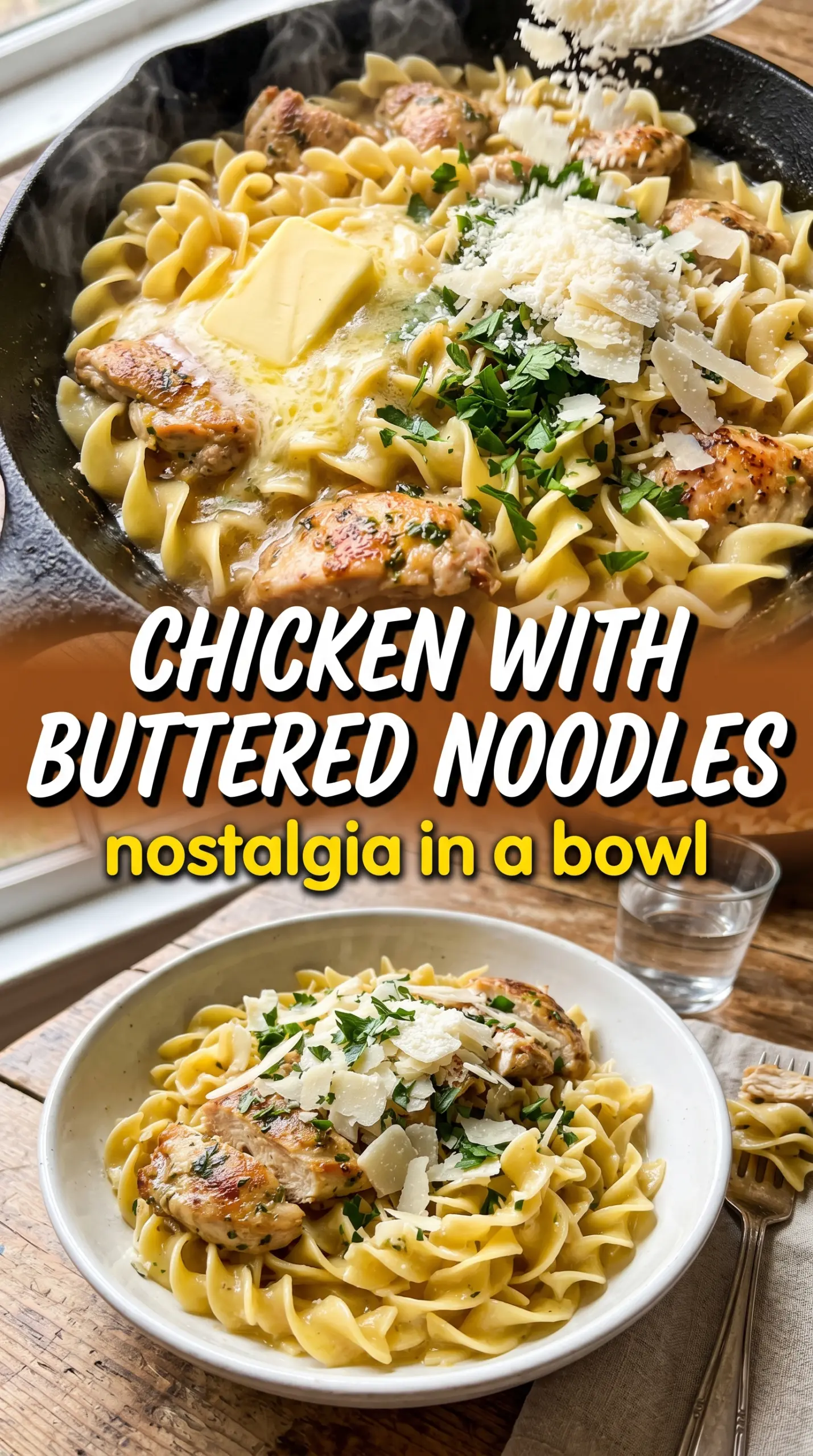
- Chicken (the foundation) — Quality chicken starts with good sourcing. Even simple seasoning tastes better on good meat.
- Olive oil or butter (the cooking medium) — Fat carries flavors and keeps chicken from drying. It’s also what makes food taste delicious.
- Salt and pepper (proper seasoning) — Season generously; underseasoned chicken tastes bland. Apply inside and outside so the seasoning penetrates.
- Garlic and onion (the aromatic base) — These add depth and complexity. They sweeten slightly when cooked, becoming mellow and round.
- Acid (lemon, vinegar, wine, or tomato) — This brightens the dish and prevents it from tasting heavy. It also helps balance rich sauces.
- Fresh herbs or spices (the character) — These define the personality of the dish. Choose ones that complement your other flavors.
- Cream or sauce base (optional richness) — A sauce keeps the chicken moist and flavorful. Make sure it’s balanced with acid and herbs.
- Proper cooking technique (the final step) — Whether baking, pan-searing, or simmering, the right method ensures juicy, tender results without drying out the meat.
Building the Chicken and Noodles in the Right Order
Searing the Chicken First
Season the chicken well before it hits the pan, then let it sit in the hot olive oil until the surface goes deep golden and releases without sticking. If you move it too early, you’ll tear the crust and lose a lot of flavor right in the skillet. Pull it once the thickest part reaches 165°F, then rest it before slicing so the juices stay in the meat instead of running onto the cutting board.
Turning Butter and Garlic into Sauce
Use the same skillet after the chicken comes out. Those browned bits on the bottom are part of the sauce, so don’t wash them away. Melt the butter over medium heat, add the garlic and red pepper flakes, and cook just until the garlic smells sweet and sharp at the same time. If the butter starts foaming hard or the garlic darkens, the heat is too high and the flavor will turn harsh.
Tossing the Noodles Until They Look Glossy
Add the cooked egg noodles and toss immediately so every strand gets coated. The first few turns may look dry, but a splash of pasta water changes that fast; add it a little at a time until the noodles look shiny and the butter clings instead of slipping off. Stir in the parsley at the end so it stays fresh, then finish with Parmesan while the noodles are still hot enough to melt it slightly.
Finishing Without Drying Out the Chicken
Top the noodles with the sliced chicken right before serving. If you add the chicken back to the skillet and keep cooking it, the meat can go from tender to chalky in a hurry. A last scatter of Parmesan over the top gives you that salty finish, and the dish is best served right away while the noodles are still glossy.
How to Adapt Chicken with Buttered Noodles Without Losing the Point
Use chicken thighs for a richer version
Boneless skinless thighs stay juicier than breasts and bring a little more richness to the bowl. They may need a few extra minutes in the pan, but the payoff is chicken that stays tender even if you let the dish sit for a minute before serving.
Make it dairy-free without the same creamy finish
Use a good plant-based butter and skip the Parmesan, or replace it with a dairy-free grated topping that melts well. The sauce will still coat the noodles, but it won’t have the same savory depth, so a little extra salt and a touch more garlic help fill the gap.
Swap the noodles for a gluten-free pasta that holds up
A sturdy gluten-free egg-style pasta or a rice-based noodle works best here. Cook it just shy of fully tender, because softer gluten-free pasta can get fragile once it’s tossed with butter and stirred again in the pan.
Add vegetables without making it feel like a different meal
Steamed peas, sautéed mushrooms, or wilted spinach fold in cleanly because they play nicely with the butter and Parmesan. Add them at the end, after the noodles are glossy, so they keep their texture instead of turning soggy in the pan.
Storage and Reheating
- Refrigerator: Store leftovers in an airtight container for up to 3 days. The noodles will absorb some of the butter as they sit, so expect them to be less glossy the next day.
- Freezer: This dish freezes, but the noodles soften a little after thawing, so I only do it if I need a quick backup meal. Freeze in portions and thaw overnight in the refrigerator before reheating.
- Reheating: Warm gently in a skillet over low heat with a splash of water or chicken broth to loosen the sauce. High heat dries out the chicken and can make the noodles gummy before the butter has a chance to loosen.
Questions I Get Asked About This Recipe
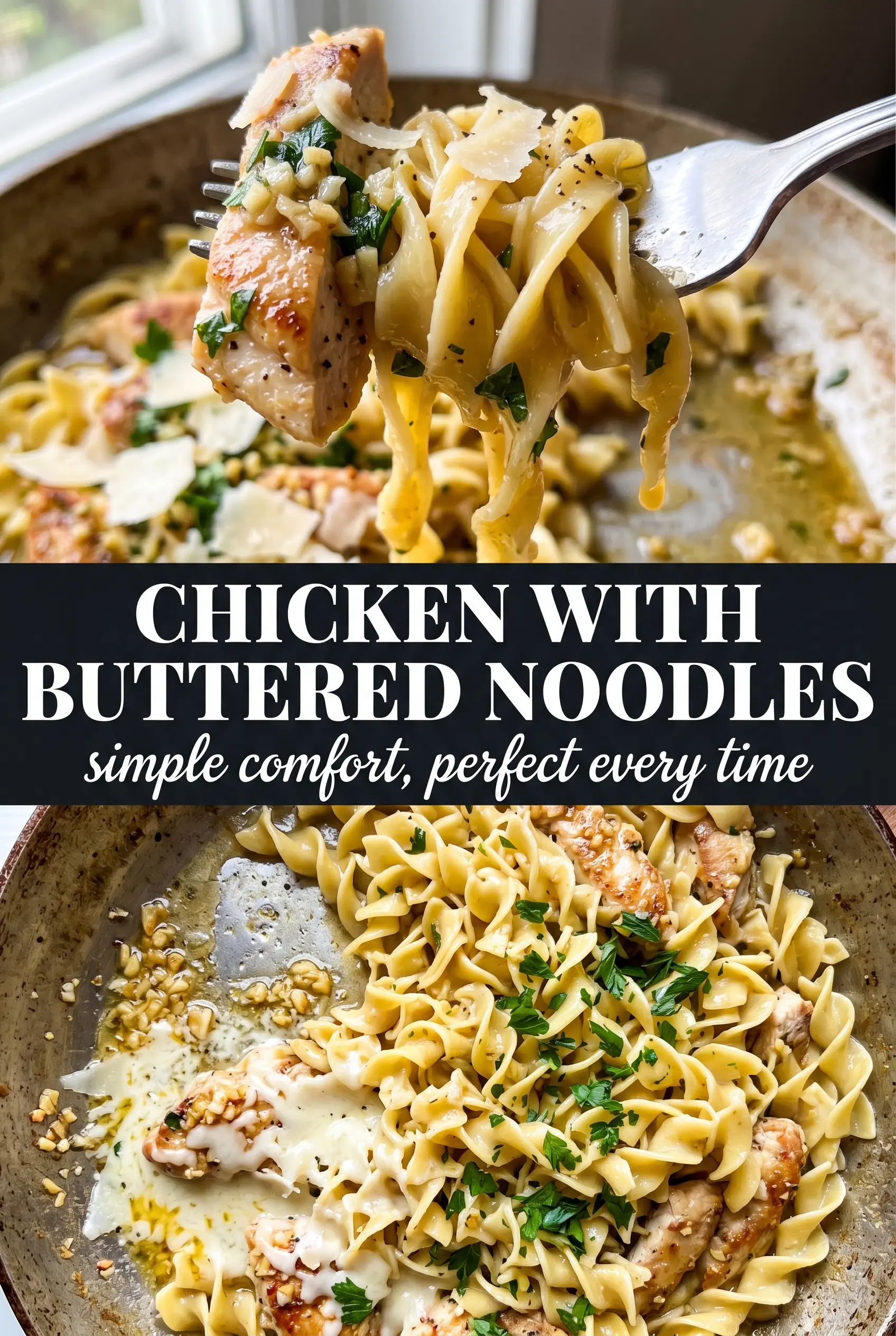
Chicken with Buttered Noodles
Ingredients
Equipment
Method
- Season the chicken breasts with salt, pepper, garlic powder, and Italian seasoning. Heat olive oil in a skillet over medium-high heat and sear until golden, 5-6 minutes per side, until the internal temperature reaches 165°F.
- Remove the chicken to rest briefly, then slice it into pieces.
- Melt the butter in the same skillet over medium heat. Add minced garlic and red pepper flakes and cook 1-2 minutes until fragrant.
- Add the cooked egg noodles and toss to coat, loosening with reserved pasta water as needed for a silky sheen.
- Season with salt and pepper, then stir in the chopped parsley to evenly distribute.
- Divide the noodles among plates and top each with the sliced chicken. Scatter Parmesan generously over the top and serve immediately.