Chicken piccata earns its place in the dinner rotation because the sauce hits that sweet spot between bright and buttery, and the chicken stays crisp at the edges instead of turning soft in a heavy pool of liquid. The first bite gives you golden cutlet, sharp lemon, briny capers, and a glossy pan sauce that clings just enough to feel special without dragging the dish into fussy territory.
The trick is treating each part with a little restraint. Thin cutlets cook fast and brown before they dry out, a light flour dredge gives the sauce something to hold onto, and the finish happens off the heat so the butter stays silky instead of breaking. The white wine matters here too, because it loosens the browned bits in the pan and gives the sauce depth that lemon alone can’t supply.
Below, I’ll show you how to keep the sauce smooth, what to swap if you don’t keep white wine around, and how to reheat leftovers without losing that clean, lemony finish.
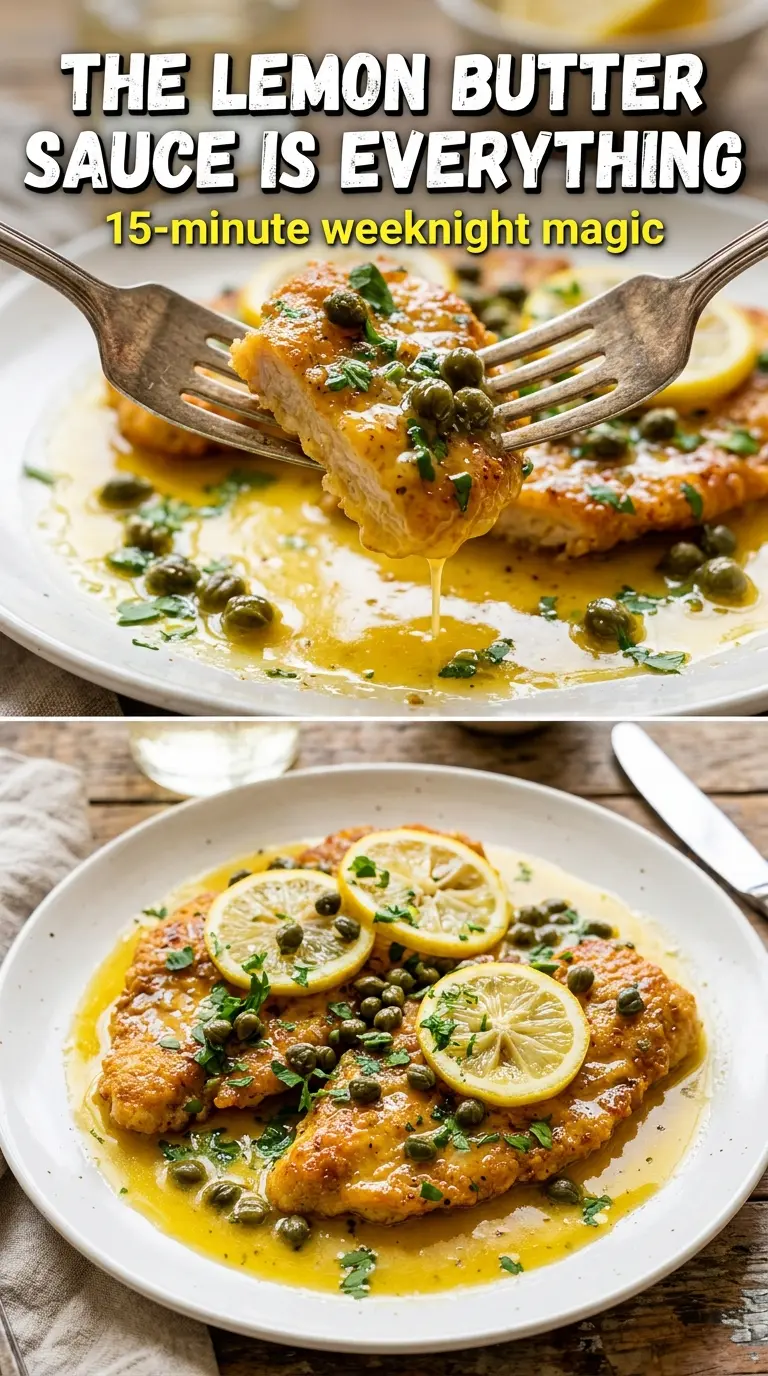
The sauce turned glossy right at the end and stayed silky on the chicken instead of getting greasy. I loved how the lemon slices softened just enough to eat, and the capers kept every bite from tasting flat.
Save this Chicken Piccata for the nights when you want crisp cutlets and a bright lemon-caper sauce with almost no cleanup.
The Thin Cutlets Are What Keep Chicken Piccata From Turning Heavy
Chicken piccata can go wrong when the chicken is too thick. The outside browns before the center cooks, which tempts you to keep it in the pan too long, and then the cutlet dries out while the sauce never gets a chance to stay bright. Halving the breasts into thin cutlets solves that problem before it starts.
The other thing people miss is how much the pan drippings matter. Those browned bits are the backbone of the sauce, so after the chicken comes out, the garlic, wine, broth, and lemon should go into the same skillet. If the pan looks a little messy at that point, that’s a good sign.
- Thin cutlets — They cook quickly and evenly. If your chicken breasts are especially large, pound them lightly after slicing so they’re an even thickness from end to end.
- White wine — It lifts the browned bits and adds a dry, savory edge. If you skip it, use extra broth plus a teaspoon of white wine vinegar or lemon juice, but the sauce will taste a little flatter.
- Cold butter at the end — This is what makes the sauce glossy. Warm butter can separate more easily; cold butter swirled in off the heat gives you a smoother finish.
What Each Ingredient Is Doing in the Pan
- Chicken breasts — Boneless, skinless breasts are the classic choice because they slice cleanly into cutlets and cook fast. Thighs can work in a pinch, but they won’t give you the same light, crisp-edged finish.
- Flour — The light dredge helps the chicken brown and gives the sauce just enough body to cling to the cutlets. Shake off the excess so you don’t end up with a dusty coating.
- Olive oil and butter — Oil keeps the butter from scorching, while butter brings the nutty flavor that belongs in piccata. Use both together in the pan instead of swapping one for the other.
- Lemon juice and capers — Fresh lemon juice is nonnegotiable here. Bottled lemon juice tastes dull and harsh, and the capers bring the briny contrast that keeps the sauce from tasting one-note.
- Lemon slices — They soften as the sauce simmers and add a little extra citrus without making the dish aggressively sour. Slice them thin so they become tender instead of chewy.
Getting the Sauce Glossy Without Breaking It
Brown the Chicken in Batches
Lay the floured cutlets into the hot skillet with a little space between them. If you crowd the pan, the chicken steams and the coating goes pale instead of crisp. Three to four minutes per side is usually enough for thin cutlets, and you’re looking for a deep golden crust with the center cooked through. Pull the chicken out as soon as it’s done; overcooking starts here, not at the end.
Build the Pan Sauce in the Same Skillet
Add the garlic for just a few seconds, long enough for it to smell fragrant but not brown. Pour in the wine and scrape the bottom of the pan hard; those stuck-on bits dissolve into the sauce and give it real depth. Let the wine reduce before adding broth and lemon juice, or the sauce can taste thin and sharp instead of balanced.
Finish Off the Heat
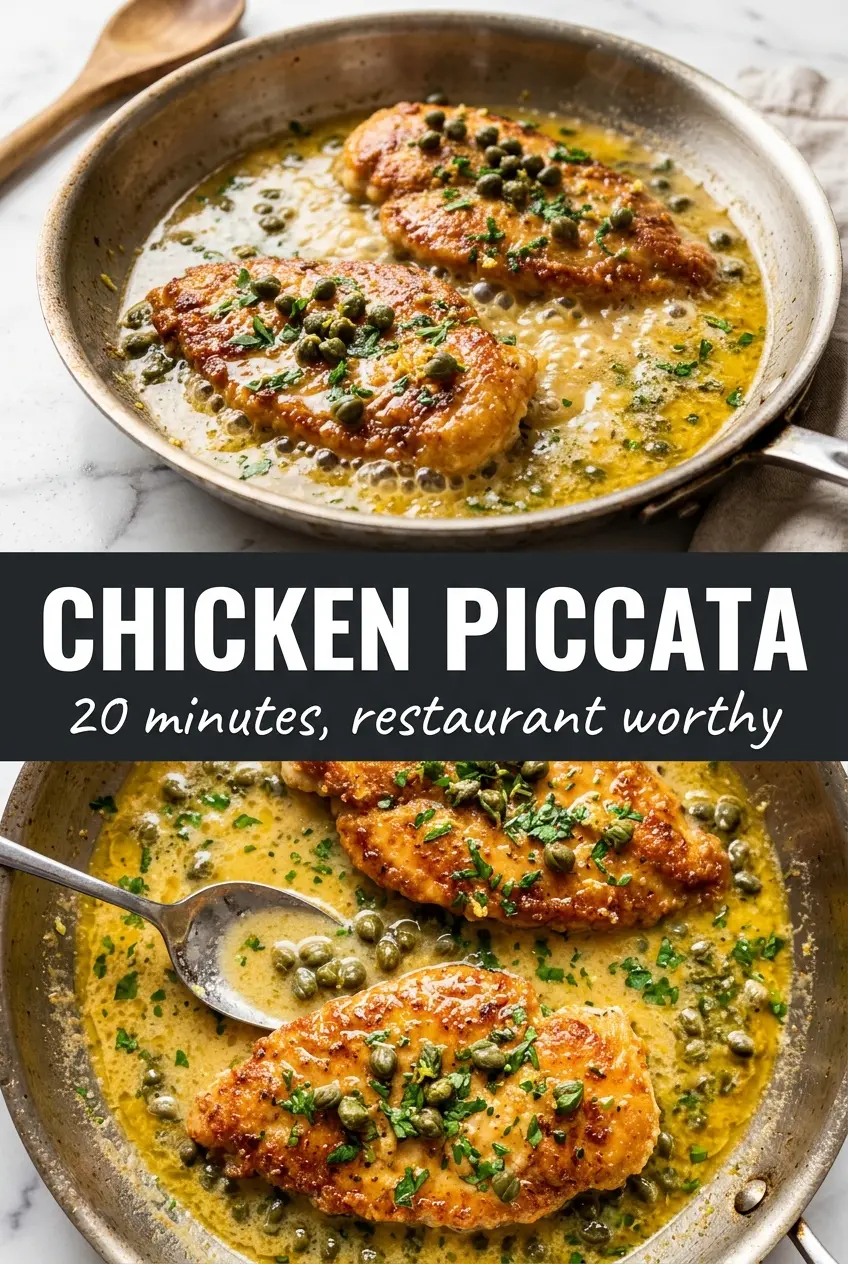
Once the sauce has reduced by about a third, take the pan off the burner before adding the last butter. That’s the moment that keeps it silky. If the heat is too high, the butter can separate and the sauce turns greasy. Return the chicken only after the butter has melted in and the sauce looks glossy, then spoon it over the top so every cutlet catches some of that lemon-caper finish.
How to Adapt Chicken Piccata Without Losing the Point
Gluten-Free Chicken Piccata
Swap the all-purpose flour for a gluten-free flour blend or rice flour. Rice flour gives the chicken a very crisp surface and keeps the sauce light, while a blend behaves more like standard flour. Use the same thin coating and shake off the excess so the sauce still stays smooth.
Dairy-Free Version
Use all olive oil in place of the butter for the sear, then finish the sauce with a dairy-free butter substitute that melts cleanly. The sauce won’t taste quite as round, but the lemon and capers still carry it well if you keep the reduction tight.
No Wine on Hand
Replace the wine with extra chicken broth plus a small splash of white wine vinegar or more lemon juice. It still works, but the sauce loses a little of the savory depth that wine brings, so let the broth reduce a touch more before finishing.
Storage and Reheating
- Refrigerator: Store leftovers in an airtight container for up to 3 days. The crust softens a bit, but the flavor holds up well.
- Freezer: It freezes best without the sauce. If you want to freeze it, cool the chicken completely, wrap it well, and add a fresh sauce after thawing for better texture.
- Reheating: Warm gently in a skillet over low heat with a spoonful of broth or water. High heat makes the sauce separate and toughens the chicken, so keep it slow and covered until just hot.
Questions I Get Asked About This Recipe
Chicken Piccata
Ingredients
Equipment
Method
- Season the chicken cutlets with salt and pepper, then dredge lightly in flour and shake off excess so the cutlets are coated but not pasty.
- Heat olive oil and 2 tablespoons butter in a large skillet over medium-high heat, then cook the chicken in batches for 3-4 minutes per side until golden and cooked through; remove and set aside.
- Add garlic to the skillet and cook for 30 seconds until fragrant, then pour in the white wine and scrape up the browned bits.
- Simmer the wine mixture for 2 minutes, then add chicken broth, lemon juice, capers, and lemon slices and simmer for 4-5 minutes until the sauce reduces by about a third.
- Remove the skillet from the heat and swirl in the remaining 2 tablespoons cold butter until the sauce is glossy.
- Return chicken to the skillet, spoon sauce over each cutlet, and garnish with fresh parsley.