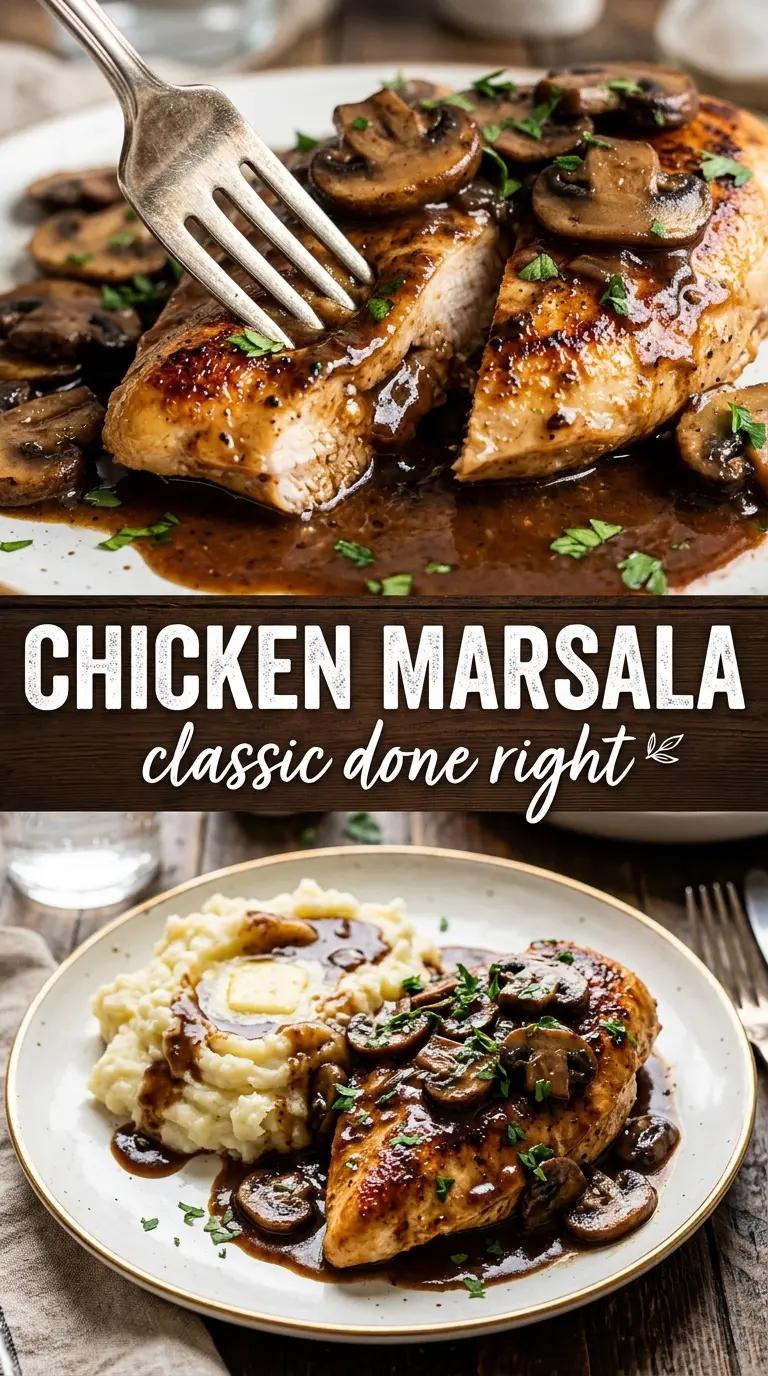
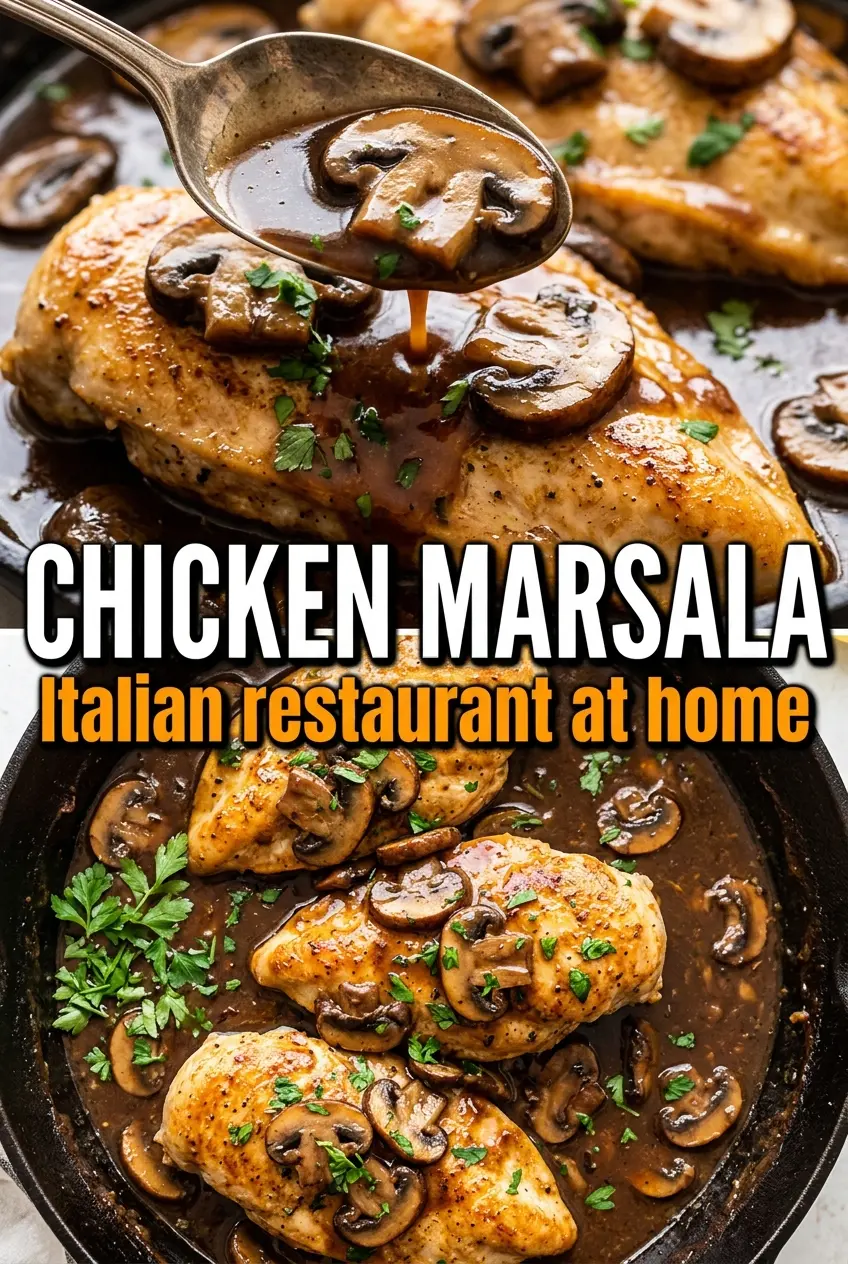
Golden chicken cutlets with a dark Marsala mushroom sauce earn their place on the table because they deliver that restaurant-style finish without any fussy technique. The chicken stays crisp at the edges, the sauce turns silky and deep brown, and the mushrooms pick up all the good flavor left behind in the pan. It’s the kind of dinner that looks polished enough for company but still feels manageable on a weeknight.
What makes this version work is the layering. The flour on the chicken does more than brown the cutlets; it also helps the sauce pick up body later. Marsala needs a minute on the heat to lose its sharp edge and turn round and fragrant, and the cold butter at the end gives the sauce that glossy finish you can’t get from simmering alone.
Below, I’ve included the little details that keep the chicken tender and the sauce smooth, plus the swaps I’d actually use if I needed to work around what’s in the kitchen.
The sauce reduced into this glossy, mushroom-packed gravy and the chicken stayed tender instead of getting tough. I served it over noodles and my husband went back for seconds before I’d even sat down.
Save this Chicken Marsala for a silky mushroom sauce, golden cutlets, and that last swirl of butter that makes the pan sauce shine.
The Cutlets Need to Be Thin Before They Hit the Pan
Chicken Marsala falls apart when the chicken is too thick. Thin cutlets cook fast, brown evenly, and stay juicy while the sauce is building. If one side is still pale while the other is already deep gold, the pan was too crowded or the cutlets were cut unevenly, which makes the finished dish feel heavy instead of elegant.
The flour coating is intentionally light. It gives the chicken a better sear and helps the sauce cling without turning pasty. Shake off the excess; a thick flour layer can slide off in the pan and muddy the sauce. The goal is a thin, even dusting that disappears into the crust.
- Chicken breasts — Halving them horizontally is what gives you that quick-cooking cutlet. If you buy thin-sliced chicken, it works too, but standard breasts should be cut all the way through so they cook at the same pace.
- Marsala wine — This is the backbone of the sauce, so use dry Marsala for the best balance. Sweet Marsala makes the dish heavier and more dessert-like, which can flatten the mushroom flavor.
- Cremini mushrooms — They bring a deeper, earthier flavor than white button mushrooms. If they look crowded in the pan, keep cooking them until their moisture evaporates and the edges start to brown.
- Heavy cream — It softens the wine’s edge and rounds out the sauce. Half-and-half can work in a pinch, but the sauce will be thinner and less stable.
- Cold butter — Swirled in at the end, it gives the sauce sheen and body. Add it off the heat or over very low heat so it emulsifies instead of breaking.
What Each Ingredient Is Actually Doing in This Recipe
- Primary ingredient (the star) — Quality matters most. Choose the best you can find.
- Cooking medium (oil, butter, or broth) — This carries flavors and prevents dryness.
- Seasonings (salt, pepper, spices, herbs) — Layer flavors so nothing overpowers. Build depth gradually.
- Aromatics (garlic, onion, herbs) — Cook with fat to bloom flavors. Become the foundation.
- Supporting ingredients — Complement the main ingredient without overpowering it.
- Sauce or liquid (if applicable) — Brings flavors together. Balance richness with acid.
- Acid (lemon, vinegar, wine, or other) — Brightens and prevents flat-tasting results.
- Final finish (garnish, glaze, or sauce) — Prevents one-dimensional taste and adds visual appeal.
Build the Sauce in the Same Pan That Cooked the Chicken
If you wipe out the skillet after frying the chicken, you throw away the best flavor in the recipe. Those browned bits at the bottom dissolve into the Marsala and broth, giving the sauce its depth. The mushrooms and shallots then pick up that base and turn it into something that tastes layered instead of flat.
Getting the Chicken Golden
Season the cutlets, dredge them lightly in flour, and lay them in the pan without crowding. You want a steady sizzle as they hit the oil and butter. If the pan is too cool, the flour absorbs fat and goes blond instead of crisp; if it’s too hot, the coating can burn before the chicken cooks through. Pull the cutlets once they’re golden on both sides and set them aside while they finish in the sauce later.
Cooking the Mushrooms Until They Brown, Not Steam
Add the mushrooms and shallots to the same pan and let them sit long enough to take on color before stirring too often. At first they’ll release moisture; keep cooking until that liquid evaporates and the edges start to caramelize. Garlic goes in after the mushrooms have browned a bit, because garlic burns fast and turns bitter if it gets the full 5-6 minute mushroom treatment.
Reducing the Marsala
When the wine goes in, the pan should bubble hard enough to lift the browned bits from the bottom. Let it reduce for a couple of minutes so the alcohol cooks off and the flavor turns richer and less sharp. If you add the broth too soon, the sauce can taste thin and boozy instead of deep and balanced.
Finishing With Butter and Returning the Chicken
Stir in the broth and cream, then let the sauce simmer until it lightly coats a spoon. Turn the heat down before you whisk in the remaining cold butter so the sauce turns glossy instead of greasy. Slide the chicken back into the skillet, spoon the sauce over the top, and let it warm through just long enough to finish the cutlets without overcooking them.
How to Adapt Chicken Marsala Without Losing the Point of the Dish
Dairy-Free Version
Use olive oil for all the pan cooking and skip the cream and butter. The sauce will still be savory and mushroom-forward, but it won’t have the same silky finish, so reduce it a little farther to help it coat the chicken. A splash of unsweetened oat cream can bring back some body if you want a richer texture.
Gluten-Free Chicken Marsala
Swap the all-purpose flour for a 1:1 gluten-free flour blend and keep the coating thin. The sauce may not thicken quite as much from the dredge, but the reduction and butter will still carry it. Use a blend that includes rice flour or starch so the cutlets still brown well.
Make It a Little Lighter
Use half the butter and replace the cream with a smaller splash of broth, then reduce the sauce a little longer. You’ll get a cleaner, less rich finish, but the sauce won’t have quite the same velvety texture. This version works well if you’re serving it over pasta or mashed potatoes, where the starch helps carry the sauce.
Storage and Reheating
- Refrigerator: Store leftovers in an airtight container for 3 to 4 days. The chicken will stay tender if you reheat it gently, but the sauce may thicken in the fridge.
- Freezer: It freezes okay, though the cream sauce can separate a little when thawed. Freeze in portions for up to 2 months and stir the sauce well as it reheats.
- Reheating: Warm it slowly in a covered skillet over low heat with a splash of broth or water. High heat is what dries out the chicken and can make the sauce break.
Questions I Get Asked About This Recipe
Chicken Marsala
Ingredients
Equipment
Method
- Season the chicken cutlets with salt and pepper to taste, then dredge them in flour and shake off excess.
- Heat olive oil and 2 tablespoons butter in a cast iron skillet over medium-high heat and pan-fry cutlets for 3-4 minutes per side until golden; remove to a plate.
- In the same skillet, cook cremini mushrooms and minced shallots for 5-6 minutes until golden.
- Add the minced garlic and cook for 1 minute, stirring to prevent browning.
- Pour in the dry Marsala wine and let it bubble for 2-3 minutes to reduce slightly.
- Add chicken broth and heavy cream, then simmer for 5 minutes to build a silky sauce.
- Swirl in the remaining 2 tablespoons cold butter until the sauce is glossy, then stir in fresh thyme leaves.
- Return the cutlets to the pan, spoon the sauce over them, and garnish with fresh parsley.