Golden seared chicken breasts tucked into a silky cream sauce with spinach and Parmesan land on the table looking restaurant-made, but the real appeal is how steady and balanced this dish tastes from the first bite to the last. The chicken stays juicy because it’s seared first and finished gently in the sauce, and the sauce itself gets its body from reduction instead of a heavy handful of flour. That keeps the texture clean, glossy, and rich without turning pasty.
What makes this version worth keeping is the way the wine, lemon, and Parmesan work together. The wine lifts the pan and gives the sauce depth, the lemon keeps the cream from tasting flat, and the spinach wilts in at the end so it stays tender instead of gray and soft. If you’ve ever had chicken Florentine that felt one-note or greasy, this method fixes both problems.
Below, I’ve included the little details that matter most: how to keep the sauce smooth, when to add the cheese, and what to do if you want to make it ahead without losing that fresh, elegant finish.
The sauce thickened into that glossy, spoon-coating texture and the spinach stayed bright instead of turning mushy. I served it over linguine and my husband asked if we could put this on the rotation.
Save this Chicken Florentine for the nights when you want a silky white wine cream sauce with golden chicken and barely-wilted spinach.
The Secret to Chicken Florentine Sauce That Stays Smooth
The sauce in Chicken Florentine can go grainy fast if the heat is too high when the cream and Parmesan go in. Once the wine has reduced and the cream and broth are simmering, keep the heat at a gentle bubble, not a hard boil. That slow simmer gives the sauce time to thicken evenly, and it keeps the dairy from tightening up and separating.
The other mistake is adding the cheese before the sauce has settled. Parmesan melts best into a warm, slightly reduced liquid, not a raging pan. If the sauce ever looks a little thin right after you add the spinach, give it another minute or two before deciding it needs anything else; the sauce thickens as it sits on the heat and then clings to the chicken instead of running off the plate.
What Each Ingredient Is Actually Doing in This Dish
- Chicken breasts — Boneless, skinless breasts give you that classic Florentine look and soak up the sauce well. If one side is much thicker, pound it lightly so the whole piece cooks at the same pace; uneven chicken is the main reason the outside gets too dark before the center is done.
- Dry white wine — This is what keeps the sauce from tasting heavy. A simple Pinot Grigio or Sauvignon Blanc works fine, and the alcohol cooks off while the pan picks up all the browned bits from the chicken.
- Heavy cream — This gives the sauce its silky body and is worth using as written. Half-and-half can work in a pinch, but the sauce will be looser and a little more fragile when it simmers.
- Parmesan — Freshly grated Parmesan melts smoother than the pre-shredded kind, which often contains anti-caking agents. If you want the sauce to stay glossy instead of slightly dusty, grate it yourself.
- Baby spinach — Fresh baby spinach wilts fast and keeps a bright green color. Add it at the end, because overcooking it turns the leaves dull and gives the sauce a softer, muddier finish.
- Lemon juice and zest — These cut through the cream and wake up the whole pan. The zest gives you the aromatic lift; the juice adds brightness, so don’t skip one and expect the same result.
Building the Sauce in the Same Pan Without Losing the Sear
Season and Sear the Chicken
Season the chicken generously on both sides, then lay it into hot olive oil and leave it alone long enough to form a deep golden crust. If you move it too early, it sticks and tears, and that lost crust is a lost layer of flavor. Cook until the chicken releases more easily from the pan and the center reaches 165°F, then set it aside while you build the sauce.
Wake Up the Pan With Garlic and Wine
Garlic only needs about 30 seconds in the hot pan, just long enough to smell fragrant. If it browns, it turns bitter fast, so the wine should go in as soon as the garlic is blooming. Scrape the bottom of the pan as the wine simmers; those browned bits are what give the sauce its depth.
Reduce, Then Enrich
After the wine cooks down, add the cream and broth and let the mixture simmer until it looks slightly thickened and coats the back of a spoon. This is the point where patience pays off. Stir in the Parmesan off the harshest heat so it melts smoothly, then add lemon juice and zest before the spinach so the sauce tastes bright instead of flat.
Finish With Spinach and Return the Chicken
Spinach looks like too much at first, then collapses in a minute or two. Stir just until the leaves wilt and turn glossy, then slide the chicken back into the pan and spoon sauce over the top. Give everything a final minute together so the chicken warms through without overcooking, and serve it while the sauce is still flowing.
How to Adapt Chicken Florentine for Different Tables
Dairy-Free Version
Swap the heavy cream for full-fat coconut milk and skip the Parmesan, or use a dairy-free Parmesan if you like a sharper finish. The sauce will taste a little different and less classic, but it still turns silky and coats the chicken well. Keep the heat low, because coconut milk can separate if it boils hard.
Gluten-Free Serving Option
The recipe itself is naturally gluten-free as written, so the main thing is what you serve it with. Pair it with rice, mashed potatoes, or gluten-free pasta so the sauce has something to cling to. If you’re using broth, check the label to confirm it’s gluten-free.
Make It Lighter Without Losing the Shape
You can use half-and-half instead of heavy cream, but the sauce won’t be quite as stable or rich. To keep it from thinning out too much, simmer it a little longer before adding the cheese, and don’t let it boil once the dairy goes in. The result is lighter, but it still tastes like Chicken Florentine.
Storage and Reheating
- Refrigerator: Store leftovers in an airtight container for up to 3 days. The sauce will thicken as it chills.
- Freezer: It can be frozen, but cream sauces sometimes separate after thawing, so the texture won’t be as smooth. Freeze in a tightly sealed container for up to 2 months if needed.
- Reheating: Warm gently in a skillet over low heat with a splash of broth or cream. High heat is what breaks the sauce, so reheat slowly until the chicken is hot and the sauce loosens again.
Answers to the Questions Worth Asking
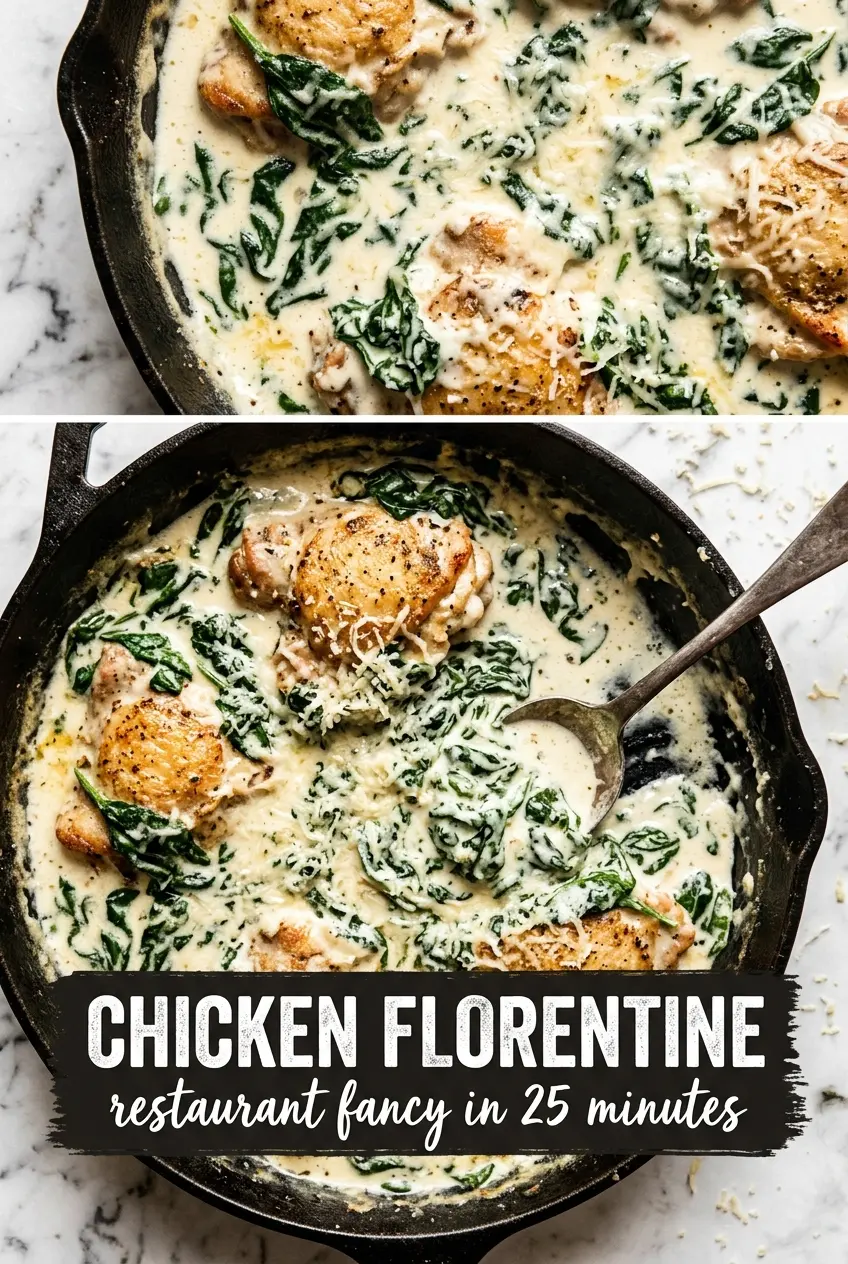
Chicken Florentine
Ingredients
Equipment
Method
- Season the chicken breasts generously on both sides with salt, pepper, garlic powder, and Italian seasoning. Let sit briefly while you heat the pan so the coating adheres.
- Heat the olive oil in a large skillet over medium-high heat until shimmering. Sear the chicken breasts for 5-6 minutes per side until golden and cooked through to 165°F, then remove and set aside.
- In the same pan, cook the minced garlic for 30 seconds until fragrant. Stir to prevent browning.
- Pour in the dry white wine and deglaze the browned bits, then simmer for 2 minutes. Scrape the pan well so the sauce picks up flavor.
- Add the heavy cream and chicken broth and simmer for 4-5 minutes until slightly thickened. Keep the heat steady so the sauce reduces without boiling hard.
- Stir in the grated Parmesan, fresh lemon juice, and lemon zest until smooth. The sauce should look silky and pale.
- Add the baby spinach and stir until wilted, about 1-2 minutes. Stop once the spinach turns bright green and tender.
- Return the chicken to the pan and spoon the sauce over each breast. Ensure each piece is partially coated with spinach-flecked cream sauce.
- Garnish with fresh parsley and lemon slices, then serve over pasta or rice. Spoon any extra sauce from the skillet over the top.