Thick, smoky chicken enchilada soup lands in the bowl with the kind of body that makes you want a spoon in one hand and tortilla strips in the other. The broth turns a deep red, the chicken stays tender, and the beans and corn give every bite enough texture to keep it from feeling flat. Topped with cheddar, sour cream, avocado, and a few crisp tortilla strips, it eats like a full meal, not just a starter.
What makes this version work is the order of operations. The enchilada sauce gets a chance to simmer with the broth and spices before the chicken goes in, which gives the base time to mellow and deepen instead of tasting sharp or canned. Black beans and corn add contrast, while Rotel brings acidity and a little heat without needing extra chopping. If your soup ever tastes thin or one-note, it usually needs more simmer time and a better hit of salt, cumin, or chili powder.
Below, I’ve included the one timing detail that keeps the chicken from drying out, plus a few smart swaps for making the soup creamier, spicier, or lighter without losing the Tex-Mex feel.
The broth got thick and smoky, and the tortilla strips stayed crisp long enough to eat. I added a little extra cumin at the end and it tasted like something from my favorite Tex-Mex place.
Save this Chicken Enchilada Soup for a fast, smoky dinner with tender chicken and a chunky Tex-Mex broth.
The Trick Is Letting the Broth Taste Like More Than Enchilada Sauce
The most common mistake with chicken enchilada soup is treating the sauce like the whole finished broth. Enchilada sauce gives you color and base flavor, but on its own it can taste flat or a little one-dimensional once it hits the pot. The chicken broth loosens it up, the Rotel adds acidity, and the cumin and chili powder round out the edges so the soup tastes layered instead of canned.
The simmer matters more than people think. Fifteen to twenty minutes gives the tomatoes time to soften into the broth and the spices time to bloom, which is where the smoky depth starts showing up. If the soup tastes sharp at the end, it usually just needs another pinch of salt and a few more minutes on the stove. That extra time is what turns it from a quick mix-in soup into something that tastes deliberate.
What Each Ingredient Is Actually Doing Here
- Red enchilada sauce — This is the backbone of the soup, so use one you already like the taste of. A milder sauce gives you a rounder, more family-friendly bowl, while a spicier one pushes the heat without needing extra peppers.
- Chicken broth — Broth thins the enchilada sauce into a true soup and gives the seasonings room to spread out. Homemade or boxed both work here, but if your broth is bland, the whole pot will taste flat.
- Rotel — The diced tomatoes with green chiles bring acidity, moisture, and a little bite in one can. Don’t drain it; that liquid is part of the finished broth.
- Black beans and corn — These add substance and make each spoonful feel complete. Canned is fine, just rinse the beans so the broth doesn’t turn muddy.
- Cooked shredded chicken — This is the place for rotisserie chicken, leftover roast chicken, or poached chicken breasts. Add it near the end so it heats through without turning stringy and dry.
- Cheddar, sour cream, avocado, cilantro, tortilla strips — The toppings matter because the soup itself is savory and brothy. The cheese melts into the hot surface, sour cream softens the spice, and the tortilla strips give you the crunch the broth can’t provide.
Building the Broth Before the Chicken Goes In
Starting With the Pot Base
Combine the enchilada sauce, broth, Rotel, beans, corn, cumin, chili powder, garlic powder, salt, and pepper in a large pot and bring it up over medium-high heat. You want the mixture hot enough to start moving, then bubbling steadily, not boiling so hard that it splatters everywhere. This first stage is where the soup begins to taste integrated instead of like separate pantry items dumped together.
Letting the Simmer Do the Work
Once it boils, drop the heat and let it settle into a gentle simmer for 15 to 20 minutes. The broth should bubble lazily at the edges, and the tomatoes will soften into the liquid while the spices mellow out. If you rush this part, the soup can taste thin and harsh, especially if your enchilada sauce is strong.
Warming the Chicken Without Drying It Out
Stir in the shredded chicken and simmer for another 10 minutes, just long enough to heat it through and let it pick up the broth. If the chicken sits in the pot the whole time, especially if it’s breast meat, it can go dry and stringy. Adding it later keeps the texture tender and lets the soup finish with good body.
Finishing the Bowl the Right Way
Taste the soup before you serve it and adjust with more cumin, chili powder, or salt if needed. The finished broth should taste bold enough to stand up to the toppings, because sour cream and cheese will soften it as soon as they hit the bowl. Ladle it hot and top it while it’s steaming so the cheese starts melting right away.
Ways to Make It Fit What’s in Your Kitchen
Make It Creamier
Stir in a splash of heavy cream or a few tablespoons of softened cream cheese at the end if you want a richer, softer broth. Add it off the heat or over low heat so it blends smoothly instead of turning grainy. This changes the soup from smoky and brothy to more velvety and filling.
Make It Gluten-Free
The soup itself is naturally close to gluten-free, but the enchilada sauce and tortilla strips are the places to check. Use a certified gluten-free enchilada sauce and top with corn tortilla strips or crushed gluten-free tortilla chips. The flavor stays the same, but the label-reading matters here.
Make It Vegetarian
Swap the chicken for extra black beans, pinto beans, or diced zucchini, and use vegetable broth instead of chicken broth. You’ll still get the smoky enchilada base, but the soup will read more like a bean-heavy Tex-Mex stew than a chicken soup. Add the vegetables early enough to soften, but not so long that they disappear.
Make It Spicier Without Changing the Whole Recipe
Add diced jalapeños, a pinch of cayenne, or a hotter enchilada sauce if you want more heat. Start small, because the toppings cool the bowl down and the spice will feel stronger once the soup sits for a minute. Heat builds fast in a soup like this, so it’s easier to add more than to back it off.
Storage and Reheating
- Refrigerator: Store leftovers in an airtight container for up to 4 days. The broth may thicken a little as it chills.
- Freezer: It freezes well for up to 3 months, though the corn and beans may soften slightly after thawing. Leave off the toppings and freeze the soup flat in portions for easier reheating.
- Reheating: Warm it gently on the stove over medium-low heat, adding a splash of broth if it has tightened up in the fridge. Don’t blast it on high heat, or the chicken can go stringy and the broth can reduce too much.
Questions I Get Asked About This Recipe
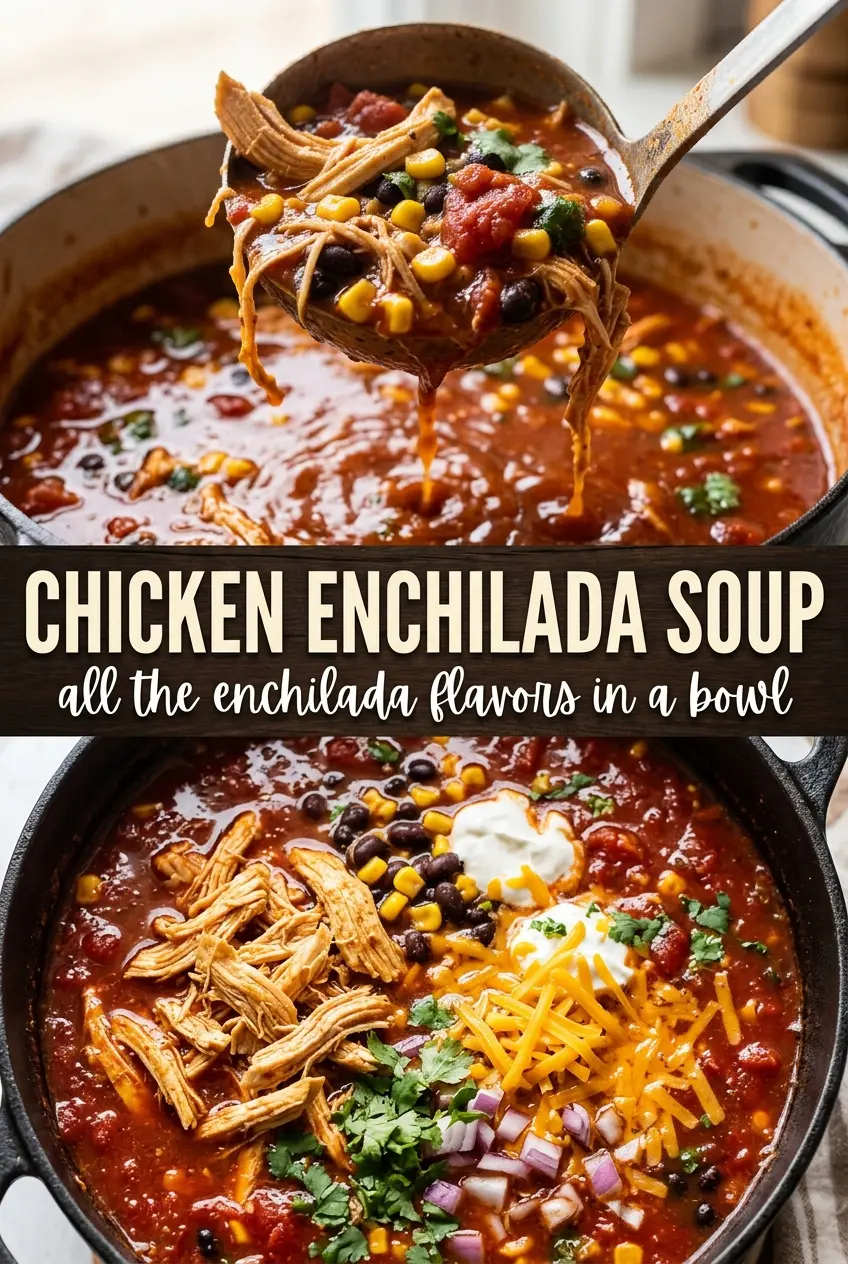
Chicken Enchilada Soup
Ingredients
Equipment
Method
- Combine red enchilada sauce, chicken broth, diced tomatoes with green chiles (Rotel), black beans, corn, cumin, chili powder, garlic powder, salt, and pepper in a large pot over medium-high heat.
- Bring the mixture to a boil, then reduce heat to a simmer and cook for 15-20 minutes, stirring occasionally, until the broth looks deep red and flavors meld.
- Stir in the shredded chicken and simmer for 10 minutes until heated through and evenly distributed.
- Taste the soup and adjust with more cumin, chili powder, or salt as needed for a balanced enchilada-style flavor.
- Ladle into bowls and top generously with shredded cheddar, sour cream, avocado, cilantro, and tortilla strips.
- Serve immediately while the cheese is ready to melt slightly from the hot broth.