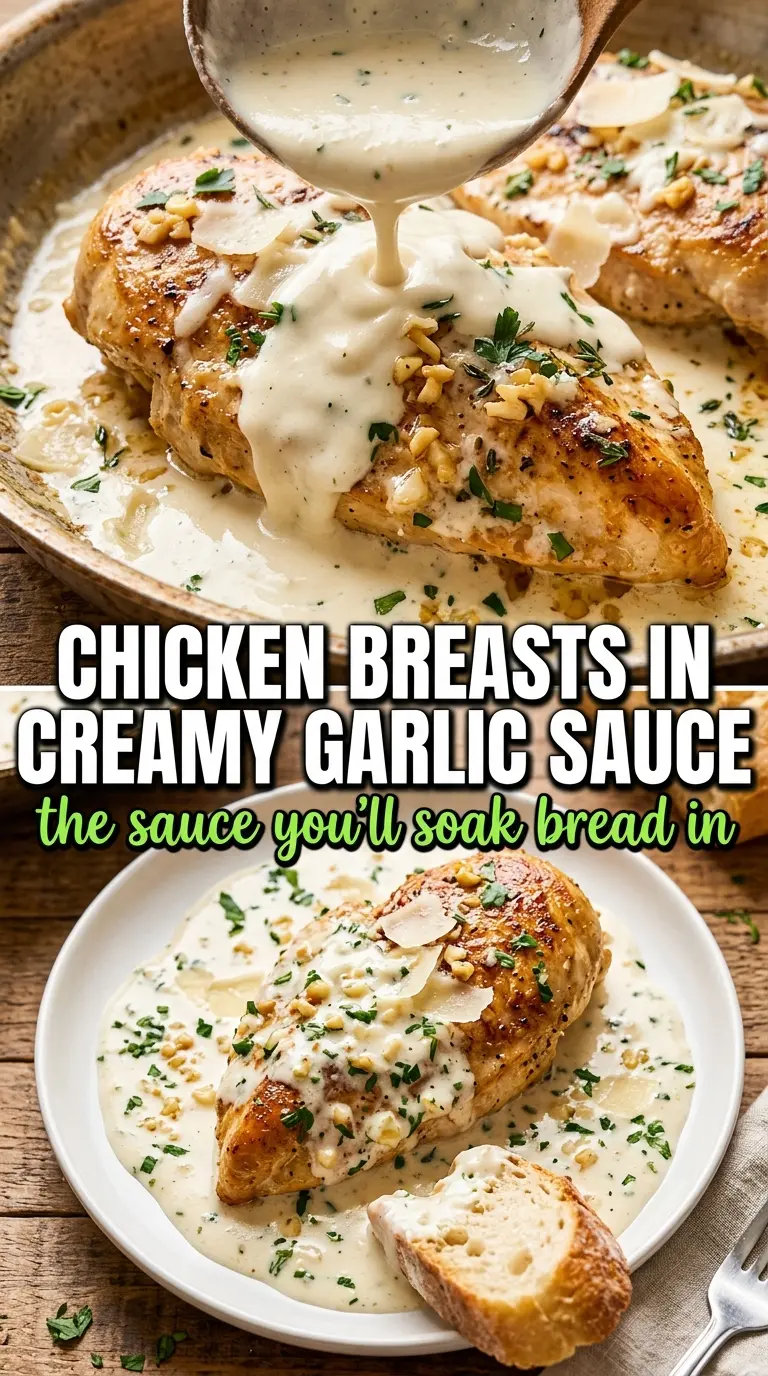
Juicy chicken breasts covered in a thick, garlicky cream sauce are the kind of dinner that makes a plain skillet feel like it’s doing real work. The chicken stays tender because it’s seared first and finished gently in the sauce, and the sauce itself turns glossy enough to cling to every slice instead of running all over the plate.
What makes this version work is the way the garlic is handled. It goes in after the butter melts, before the liquid, so it has time to soften and deepen without turning sharp or burnt. The wine or broth lifts the browned bits from the pan, and the Parmesan goes in once the cream is hot and gently simmering, which keeps the sauce smooth instead of grainy.
Below you’ll find the small details that matter here: how to get a good sear without drying out the chicken, how to keep the sauce thick, and what to swap if you don’t have wine on hand.
The sauce thickened up beautifully and stayed silky when I added the Parmesan off the heat for a minute. My husband kept spooning extra over the chicken and asked if we could have it again next week.
Save this creamy garlic chicken for the nights when you want a silky skillet sauce that coats the chicken instead of puddling thinly on the plate.
The Pan Sauce Falls Apart When the Heat Is Too High
The biggest mistake with creamy garlic chicken is rushing the sauce once the dairy goes in. If the pan is still raging hot when the cream and Parmesan hit, the sauce can split or turn grainy before it ever has a chance to thicken. This version keeps the chicken sear separate from the sauce build, then brings everything together over a lower, steadier heat.
That first sear matters more than people think. You want a deep golden crust on the chicken, not a pale steamed surface, because those browned bits left behind are what give the sauce its backbone. Once the garlic goes in, the heat drops and the pan gets deglazed immediately so the fond lifts cleanly instead of burning.
- Chicken breasts — Boneless, skinless breasts work because they sear fast and stay neat in the skillet. If yours are thick in the middle, pound them to even thickness so the outside doesn’t overcook before the center is done.
- Garlic — Fresh minced garlic is the whole point of this sauce. Jarred garlic can work in a pinch, but it tastes flatter and is more likely to turn harsh if it sits in the butter too long.
- Dry white wine or chicken broth — Wine gives the sauce a brighter edge and helps balance the cream. Broth is the easy swap, and it still lifts the browned bits well, though the final sauce will taste a little rounder and less sharp.
- Parmesan — Grate it finely so it melts smoothly into the cream. Pre-shredded cheese often has anti-caking agents that can leave the sauce a little sandy.
What Each Ingredient Is Actually Doing in This Baked Chicken
- Chicken breasts (the lean protein) — Cut evenly so pieces cook at the same rate. Let them sit at room temperature for 15 minutes before baking so they cook evenly.
- Olive oil or butter (the cooking medium and richness) — Good fat keeps the chicken from drying out in the oven. It also carries herb and spice flavors throughout the meat.
- Garlic (the aromatic foundation) — Fresh minced or thin slices mellow and become sweet when baked, adding depth without overpowering the chicken.
- Cream or broth (the sauce base) — This creates the glossy sauce that keeps baked chicken from tasting dry. It also helps flavors develop and carry.
- Lemon juice or vinegar (the brightness) — Acid prevents the cream sauce from tasting too heavy and keeps the dish from being one-dimensional.
- Fresh herbs or spices (the personality) — Basil, thyme, oregano, paprika, or Italian seasoning all work. Choose ones that complement your other flavors.
- Cheese (optional richness) — Parmesan or feta adds creaminess and salt that enhances all other flavors. Don’t overdo it or the dish becomes heavy.
- Proper oven temperature (the key to juicy chicken) — 375-400°F bakes chicken through without drying the edges. Check with a thermometer for 165°F internal temp.
Building the Sauce in the Same Skillet
Seasoning and Searing the Chicken
Pat the chicken dry before it ever hits the pan. Moisture on the surface is what keeps it from browning, and a dry breast develops a better crust in less time. Season it well with salt, pepper, and smoked paprika, then cook it in hot olive oil until it releases easily from the pan and the first side has a deep golden color. If it sticks hard, it needs another minute; if it’s pulling away cleanly, it’s ready to turn.
Waking Up the Garlic
Once the chicken comes out, the butter goes into the same skillet along with the garlic. Stir constantly and keep the heat at medium, because garlic goes from fragrant to bitter fast once it starts taking on color. You’re looking for softened, lightly golden pieces and a smell that turns sweet instead of sharp. If the garlic darkens too quickly, lower the heat immediately before adding the wine or broth.
Reducing the Cream to a Glossy Finish
After the pan is deglazed, pour in the cream and let it come to a gentle simmer, not a hard boil. Hard boiling can make the sauce greasy or cause the Parmesan to seize. Stir in the cheese gradually, then let the sauce bubble quietly until it coats the back of a spoon. It should look thick enough to cling to the chicken but still loose enough to move when you tilt the pan.
Bringing the Chicken Back Home
Return the chicken to the skillet and spoon the sauce over the top so it can finish in that garlic cream. This last minute in the pan keeps the breasts juicy and lets the sauce settle into every browned edge. If you sliced the chicken before returning it, it would dry out faster and lose the benefit of that final basting.
Make It Without Wine
Chicken broth steps in cleanly if you don’t want to cook with wine. The sauce will be a little less bright, so a small squeeze of lemon at the end can bring back that lift without making it taste citrusy.
Dairy-Free Version
Use a full-fat unsweetened coconut cream or a plain dairy-free cooking cream, and skip the Parmesan unless you have a version that melts well. You’ll lose some of the nutty sharpness, but the sauce still turns silky if you keep the heat gentle and reduce it long enough.
Lighter Chicken Breasts
You can use half-and-half instead of heavy cream, but the sauce will be thinner and a little more delicate. Let it simmer longer before the cheese goes in, and don’t expect the same rich coating power you get from full cream.
Storage and Reheating
- Refrigerator: Store in an airtight container for up to 3 days. The sauce will thicken as it chills, which is normal.
- Freezer: It doesn’t freeze well. Cream sauces can separate after thawing, and the chicken can turn grainy.
- Reheating: Warm slowly over low heat with a splash of broth or cream. High heat is what breaks the sauce, so don’t rush it in the microwave if you want that silky texture back.
Questions I Get Asked About This Recipe

Chicken Breasts in Creamy Garlic Sauce
Ingredients
Equipment
Method
- Pat chicken breasts dry and season all over with salt, pepper, and smoked paprika. Heat olive oil in a large cast iron skillet over medium-high heat, then sear chicken for 5-6 minutes per side until golden and the internal temperature reaches 165°F.
- Remove chicken from the skillet and set aside while you make the sauce.
- Melt butter in the same skillet over medium heat, then add minced garlic and cook for 2 minutes, stirring constantly, until fragrant and starting to turn golden.
- Add white wine (or chicken broth) and deglaze the pan, then cook for 2 minutes.
- Pour in heavy cream and bring to a simmer, stirring to combine.
- Stir in Parmesan, Italian seasoning, and cayenne pepper, then simmer 4-5 minutes until the sauce is thick and glossy.
- Return chicken breasts to the skillet and spoon the garlic cream sauce over each breast so the sauce pools around the edges.
- Garnish with fresh thyme and fresh parsley, then serve hot.