Golden chicken, blistered peppers, and tender zucchini come together in this chicken and vegetables skillet with the kind of pan sauce that keeps everything tasting fresh instead of heavy. The chicken sears hard, the vegetables pick up a little char at the edges, and the buttered garlic broth ties the whole pan together without turning it into a swampy mess. It’s the sort of dinner that looks colorful, cooks fast, and clears the plate without a lot of fuss.
What makes this version work is the order. The chicken gets its own hot sear first so it can brown instead of steam, then the vegetables hit the same pan over high heat so they stay crisp-tender with a little color. A small splash of broth loosens the browned bits, and the butter goes in at the end for a light sauce that clings to the vegetables and coats the chicken instead of disappearing.
Below you’ll find the exact cues I watch for in the skillet, plus a few smart swaps for making it with what you have on hand. The goal is simple: juicy chicken, vegetables with texture, and a pan sauce that tastes like you meant to make it this good.
The chicken stayed juicy and the peppers still had a little bite, which I loved. The broth and butter at the end made the whole skillet taste finished without getting greasy.
Save this chicken and vegetables skillet for a fast one-pan dinner with golden seared chicken and charred vegetables.
The trick to keeping the chicken golden before the vegetables go in
The chicken needs direct contact with the hot pan before anything else touches it. If you crowd the skillet or move it too soon, the surface moisture turns into steam and you lose that deep golden color that makes the dish taste cooked, not merely heated. A cast iron skillet helps, but the real win is giving the chicken enough room to sear in a single layer.
Once the chicken is out, resist the urge to lower the heat before the vegetables go in. Bell peppers, zucchini, and onion need aggressive heat to pick up those charred edges in just a few minutes. If the pan looks dry or the browned bits start to darken too fast, that’s the moment for the broth, not extra oil.
What each ingredient is doing in the pan
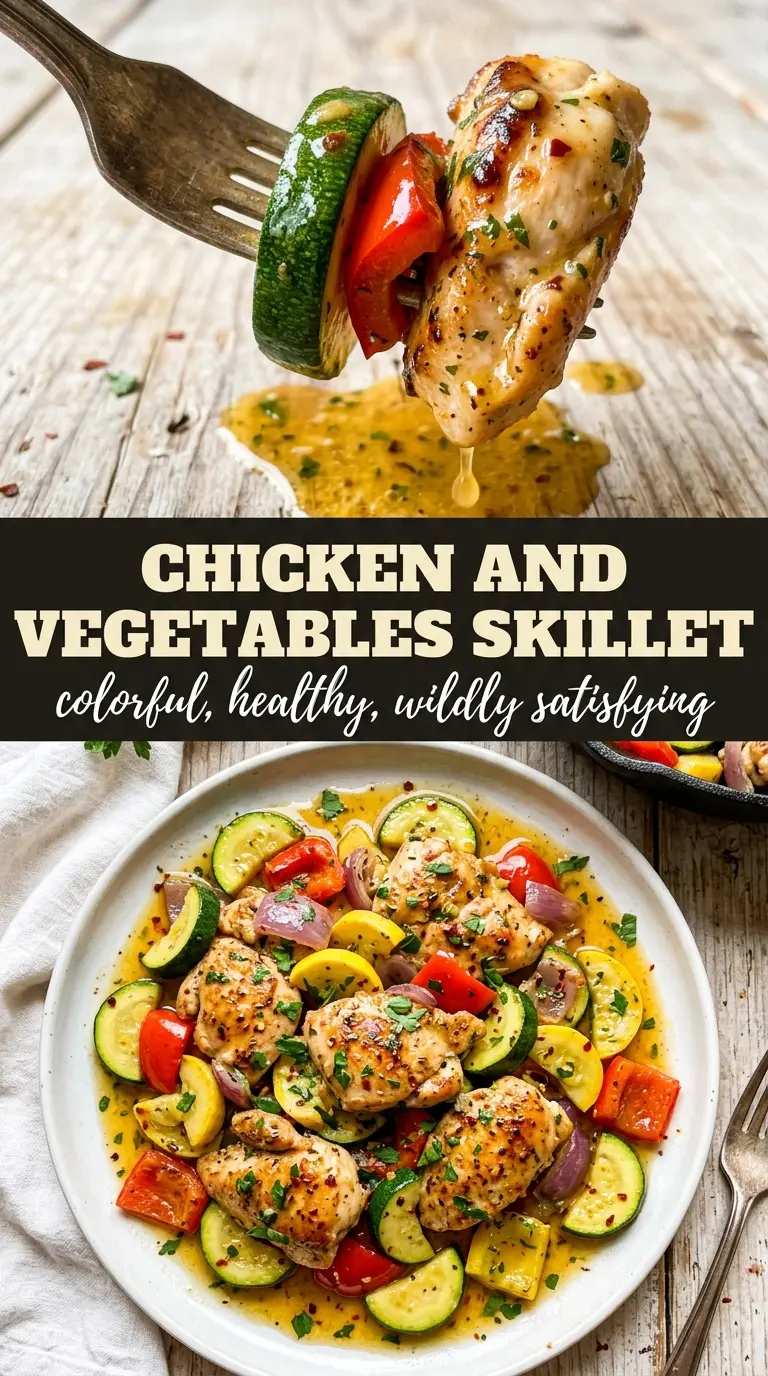
- Chicken breasts — Cutting them into strips helps them cook quickly and evenly, which is what keeps them juicy in a fast skillet dinner. Thighs also work if you want a little more forgiveness and richer flavor.
- Bell peppers, zucchini, and red onion — These vegetables hold their shape under high heat and give you the best mix of sweetness, bite, and color. Slice them on the thicker side so they char at the edges before they collapse.
- Italian seasoning and smoked paprika — This is the backbone of the dish’s flavor. Italian seasoning brings the herbiness, while smoked paprika gives the chicken that warm, savory color even before the pan sauce goes in.
- Chicken broth — Just a little is enough to loosen the browned bits without turning the skillet into a soup. If you use water instead, the sauce tastes flatter, so broth is the better small upgrade here.
- Butter — Added at the end, it softens the sharp edges of the garlic and gives the sauce a silky finish. If you want a dairy-free version, a spoonful of olive oil works, but you’ll lose some of that rounded finish.
How to build the skillet so nothing turns soggy
Seasoning the chicken first
Toss the chicken with the seasoning before it ever hits the pan so every strip is coated instead of patchy. The spices cling better to the dry surface, and the paprika has a chance to toast on contact. If the chicken looks wet, pat it dry first or it’ll pale in the skillet instead of browning.
Getting a hard sear
Add the chicken to hot olive oil and leave it alone for the first few minutes. You’re listening for a steady sizzle, not a frantic pop, and you want the underside to turn a deep golden brown before you flip. If the pan is overcrowded, cook in two batches; otherwise the chicken steams and the vegetables never get a fair shot at the heat.
Blistering the vegetables
Once the chicken is out, the vegetables go into the same pan so they can pick up the flavor left behind. Stir only enough to keep them from burning, because they need direct contact with the hot surface to char at the edges. The zucchini should still have some structure when you add the garlic; if it goes soft before that, the heat was too low.
Finishing with broth and butter
Garlic only needs about a minute before the broth goes in, because it burns fast and turns bitter. Pour the broth in and scrape the bottom of the pan until the browned bits dissolve into the liquid, then add the butter and toss everything until the sauce looks glossy. The skillet is done when the chicken is hot through, the vegetables are tender with bite, and the sauce lightly coats the pan instead of pooling underneath.
How to adapt this skillet when you need a different version
Dairy-free skillet
Skip the butter and finish with an extra tablespoon of olive oil instead. The sauce won’t have quite the same creamy sheen, but the garlic, broth, and browned bits still make the pan taste complete.
Chicken thighs instead of breasts
Use boneless skinless thighs for a richer, juicier result. They can take a little more heat and won’t dry out as fast, but they do release a bit more fat, so keep the skillet hot enough to keep the vegetables from softening too much.
Low-carb serving swap
Serve the skillet as written or spoon it over cauliflower rice instead of regular rice. The vegetables already carry most of the volume here, so the dish stays satisfying without needing a starch underneath.
Storage and Reheating
- Refrigerator: Store leftovers in an airtight container for up to 4 days. The vegetables will soften a little, but the flavor holds up well.
- Freezer: It freezes, but the zucchini softens after thawing, so the texture is better fresh. If you do freeze it, cool it completely first and use within 2 months.
- Reheating: Warm it in a skillet over medium heat with a splash of broth or water so the chicken doesn’t dry out. The biggest mistake is blasting it in the microwave, which turns the vegetables limp and the chicken tough.
Answers to the questions worth asking
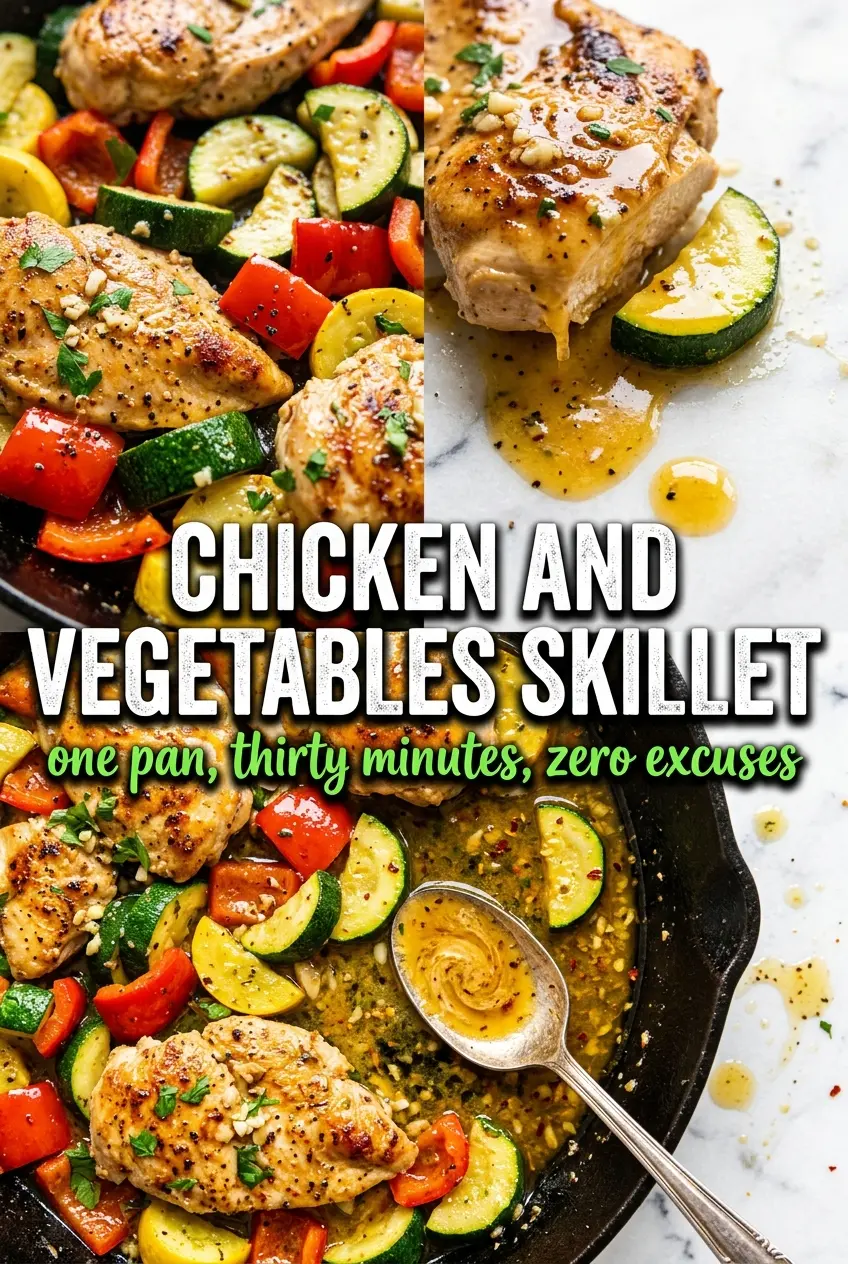
Chicken and Vegetables Skillet
Ingredients
Equipment
Method
- Season chicken strips evenly with Italian seasoning, smoked paprika, salt, and pepper. Set aside while you heat the skillet.
- Heat olive oil in a large cast iron skillet over high heat and sear chicken for 4-5 minutes until deeply golden and cooked through to 165°F, then remove to a plate. Visual cue: the strips should look browned and no longer pink in the thickest area.
- Add bell peppers, zucchini, and red onion to the same pan and cook over high heat for 5-6 minutes until blistered and slightly charred. Visual cue: you should see dark edges and glossy, caramelizing spots.
- Add garlic and cook for 1 minute until fragrant. Visual cue: the garlic should look lightly golden, not burnt.
- Pour in chicken broth and deglaze, scraping up the browned bits from the pan. Cook until the liquid loosens into a light pan sauce.
- Return chicken to the pan, add butter, and toss everything to coat. Visual cue: the sauce should turn glossy and cling to the chicken and vegetables.
- Garnish with fresh parsley and serve with lemon wedges. Visual cue: parsley should look bright green, with lemon for fresh brightness at the table.